Letter-sound association Normal Worksheets for Ages 7-8
3 filtered results
-
From - To
Explore our engaging Letter-Sound Association Normal Worksheets designed specifically for children aged 7-8! These worksheets offer a fun and interactive way to enhance phonemic awareness and boost reading skills. Ideal for classroom activities or at-home learning, each worksheet encourages kids to connect letters with their corresponding sounds through a variety of exercises. From matching games to fill-in-the-blank challenges, our resources provide a comprehensive approach to mastering phonics. By using these worksheets, children will gain confidence in their reading abilities while developing a solid foundation for literacy success. Download now and support your child’s journey to becoming a proficient reader!
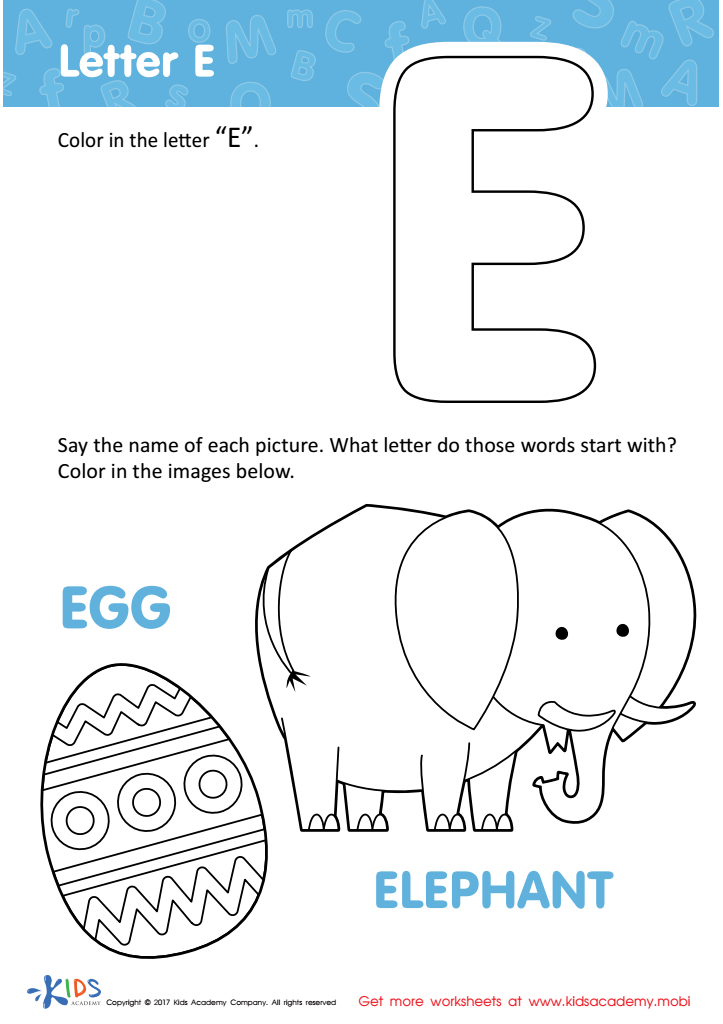
Letter E Coloring Sheet
 Assign to My Students
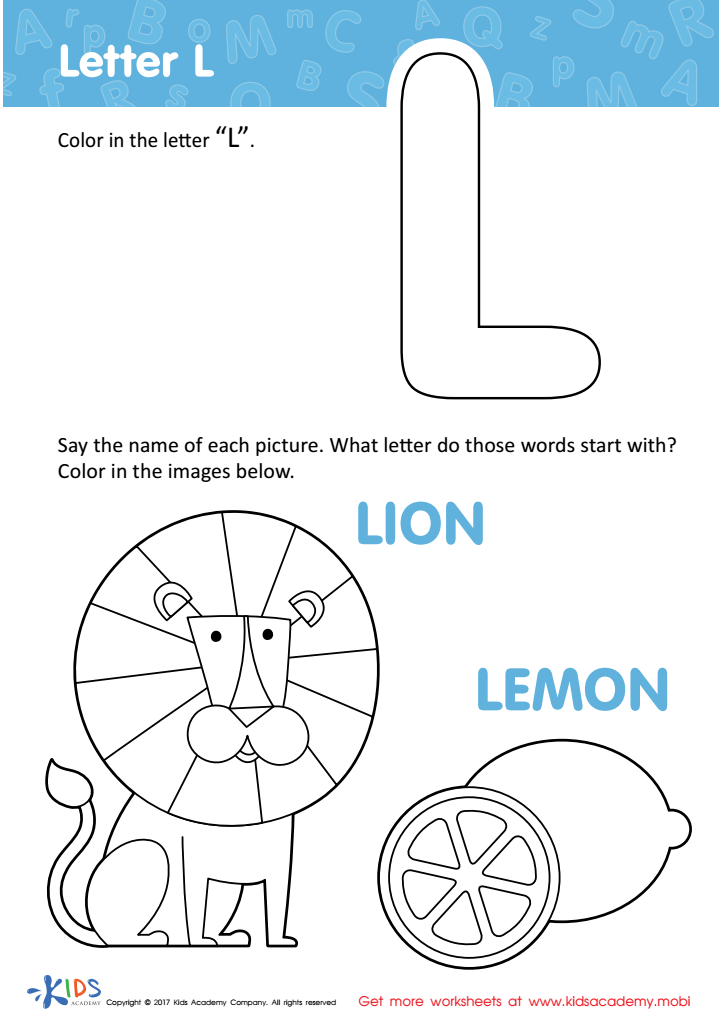
Letter L Coloring Sheet
Assign to My Students
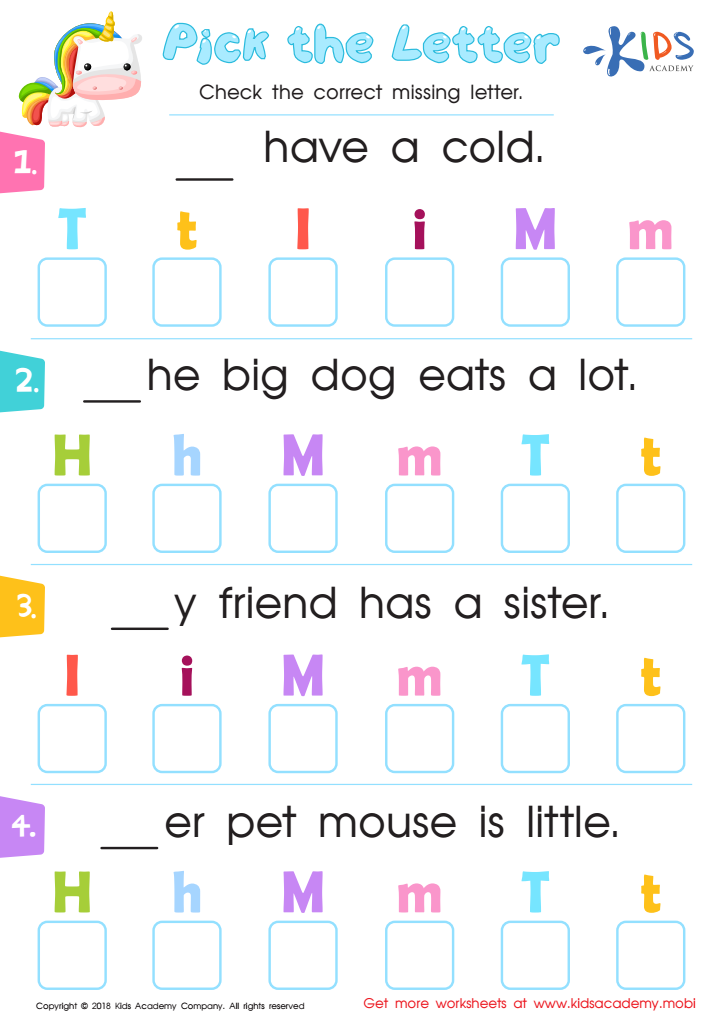
Pick the Letter Worksheet




Letter-sound association is crucial for children ages 7-8, as it fundamentally underpins their reading and writing skills. At this developmental stage, children refine and expand their understanding of the alphabetic principle—the idea that letters correspond to specific sounds, enabling them to decode words. By equipping children with strong letter-sound associations, parents and teachers foster literacy skills that form the foundation for their academic success.
Understanding letter-sound relationships enhances a child's ability to sound out unfamiliar words, promoting confidence and independent reading. This skill not only supports literacy but also encourages critical thinking, as children learn to make connections between letters, sounds, and meanings. Moreover, proficient letter-sound association allows children to improve their spelling, contributing to clearer communication in writing assignments and everyday tasks.
Additionally, being adept in letter-sound relationships can ignite a lifelong love of reading. When children develop a strong sense of phonemic awareness, they become more engaged with texts, which broadens their vocabulary and comprehension skills. Ultimately, prioritizing letter-sound association in education ensures that children are equipped with necessary skills that will benefit them throughout their educational journey and beyond.








