Reading analog clocks Normal Worksheets for Ages 7-8
3 filtered results
-
From - To
Unlock the timeless skill of reading analog clocks with our engaging worksheets for ages 7-8! Designed to enhance learning, these fun and educational printables support your child's ability to tell time accurately. Through a series of progressively challenging exercises, young learners will master the positions of the hour and minute hands, recognizing time to the nearest minute. Perfect for reinforcing classroom lessons or extra practice at home, our worksheets combine clear instructions with playful illustrations to make learning enjoyable. Equip your child with essential life skills and boost their confidence in reading analog clocks today!
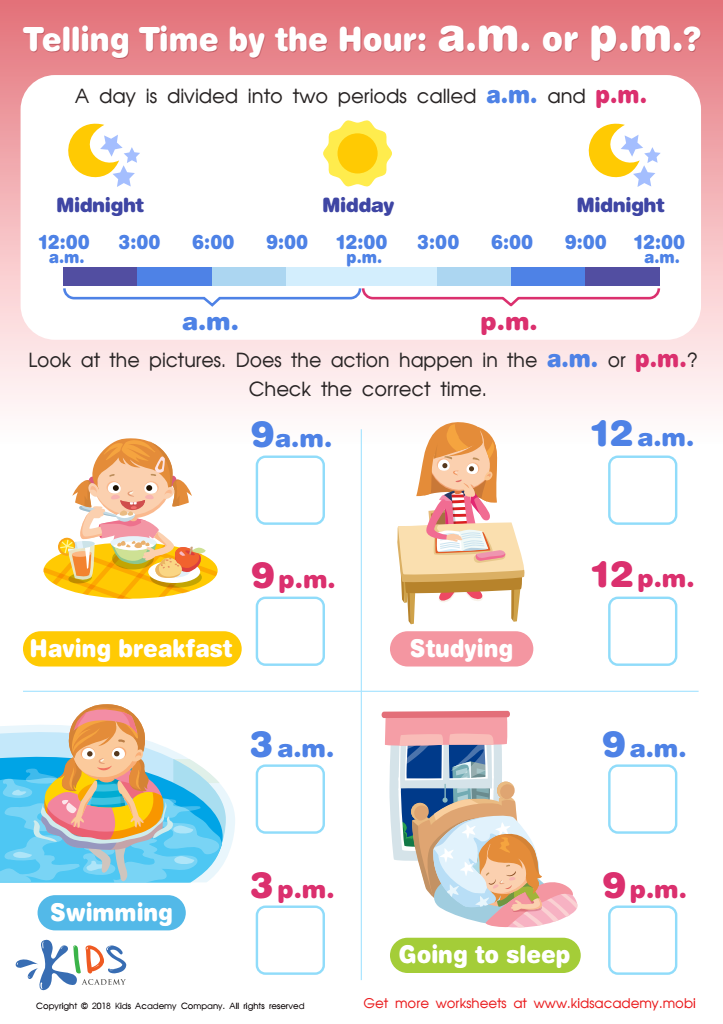
Tilling Time by the Hour: a.m. or p.m.? Worksheet
 Assign to My Students
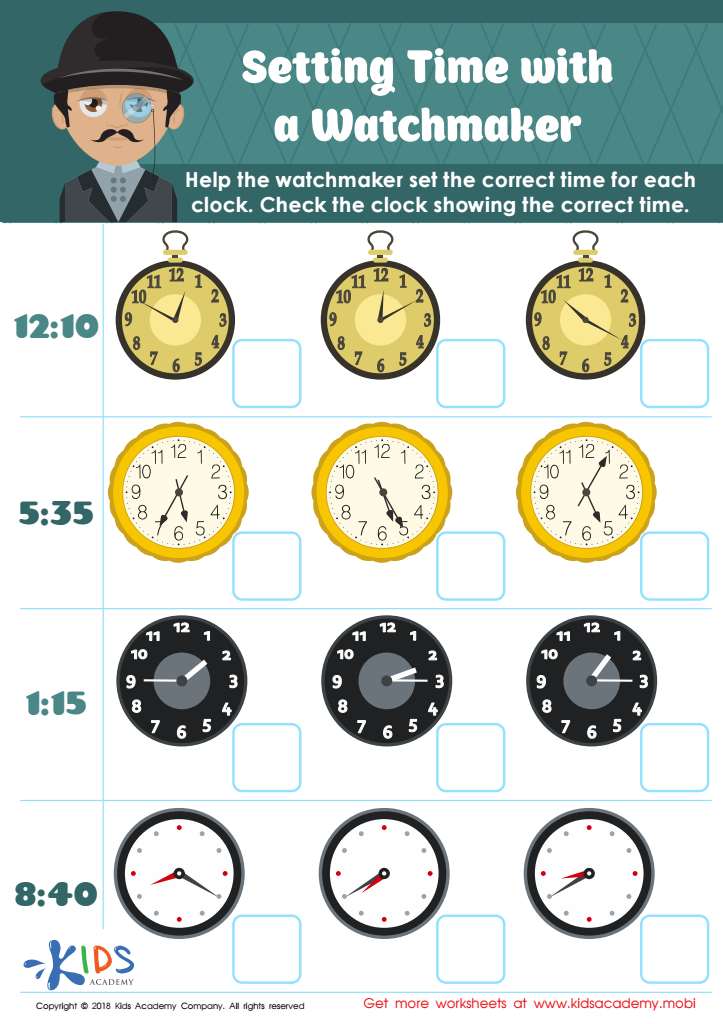
Setting Time with Watchmaker Worksheet
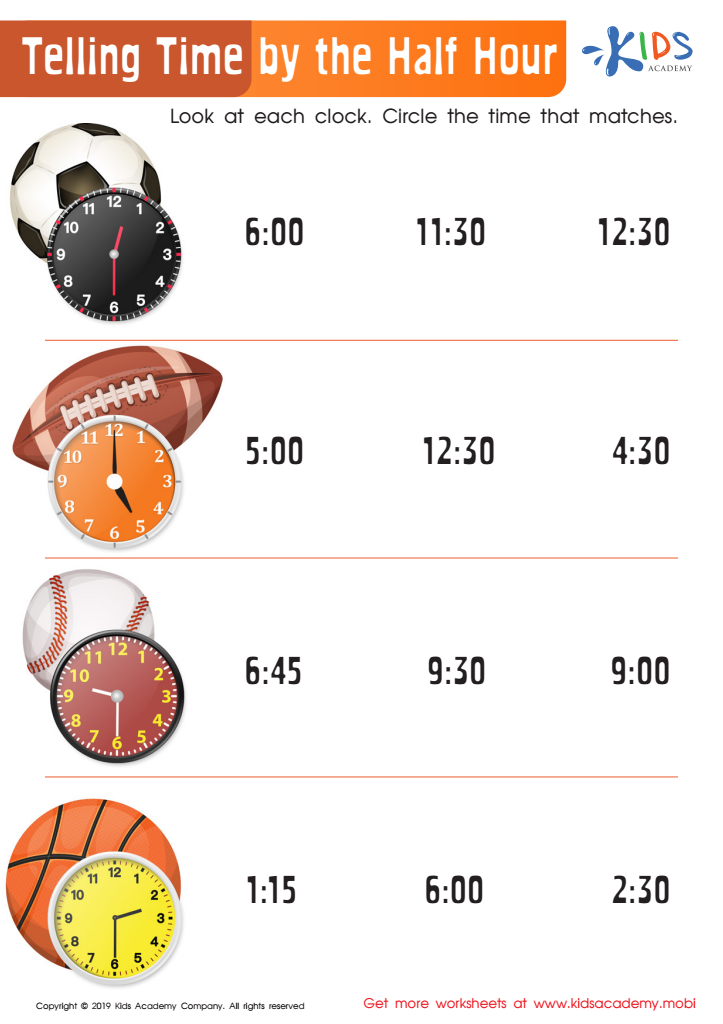
Telling Time by the Half Hour Worksheet








Teaching kids to read analog clocks at ages 7-8 is crucial for several important reasons. First, understanding analog clocks helps develop their sense of time. Unlike digital clocks that simply present the numbers, analog clocks require kids to understand the positions of the hands and how they represent hours and minutes. This process can enhance their cognitive abilities by encouraging problem-solving and critical-thinking skills.
Additionally, analog clocks teach children how to break down time increments into manageable parts, essential for mastering time management skills. They'll learn how to estimate the length of activities and better organize their daily routines. This can translate into improved performance in school and extracurricular activities as they become more adept at managing their time.
Reading analog clocks also familiarizes children with the concept of clockwise and counterclockwise movements. It's a spatial skill that has applications in numerous real-life scenarios, from understanding angles in geometry to following directions.
Importantly, analog clocks are still widely used in various environments. Whether it's a classroom setting, a doctor's office, or even home appliances, the ability to read analog time ensures that kids are well-prepared for these common situations.
In essence, knowing how to read analog clocks equips children with critical life skills that lay the foundation for academic success and practical day-to-day functioning.








