Rhyming skills development Normal Worksheets for Ages 7-8
4 filtered results
-
From - To
Enhance your child’s phonemic awareness with our Rhyming Skills Development Worksheets for ages 7-8. These engaging and educational printables are designed to make learning fun, helping kids identify and generate rhyming words effortlessly. Each worksheet incorporates enjoyable exercises to boost reading and listening skills, essential for early literacy. By practicing with these printable activities, your child will build a strong foundation in language arts, all while enjoying the process. Ideal for home or classroom use, our rhyming worksheets support various learning styles, ensuring every young learner can thrive. Download today to begin an exciting rhyming adventure!
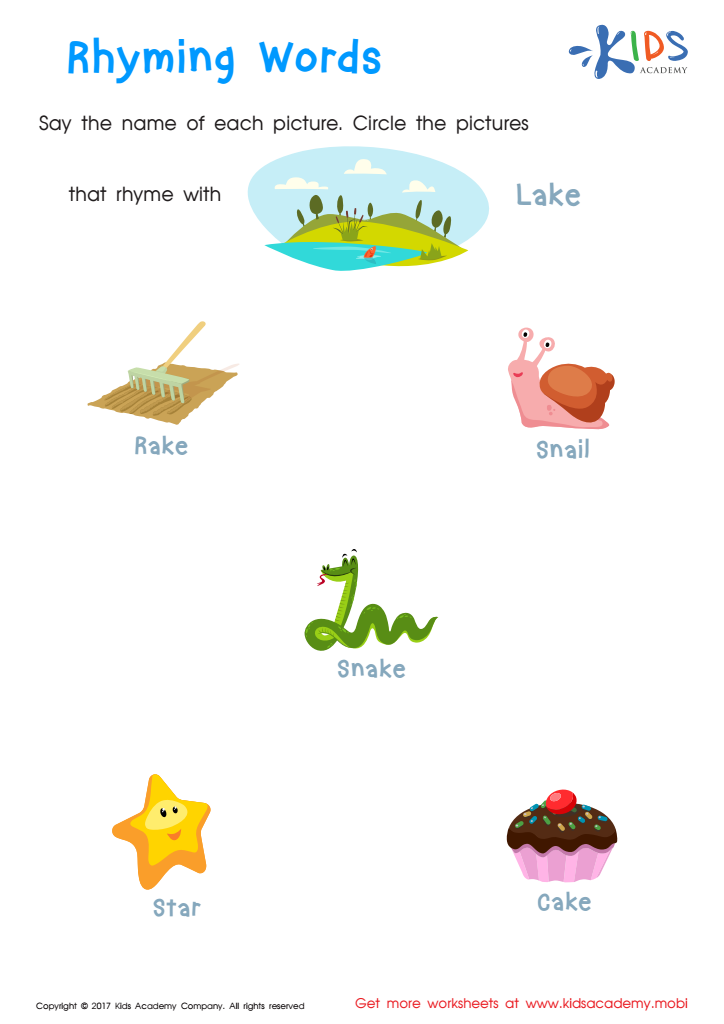
Rhyming Words Rhyming Worksheet
 Assign to My Students
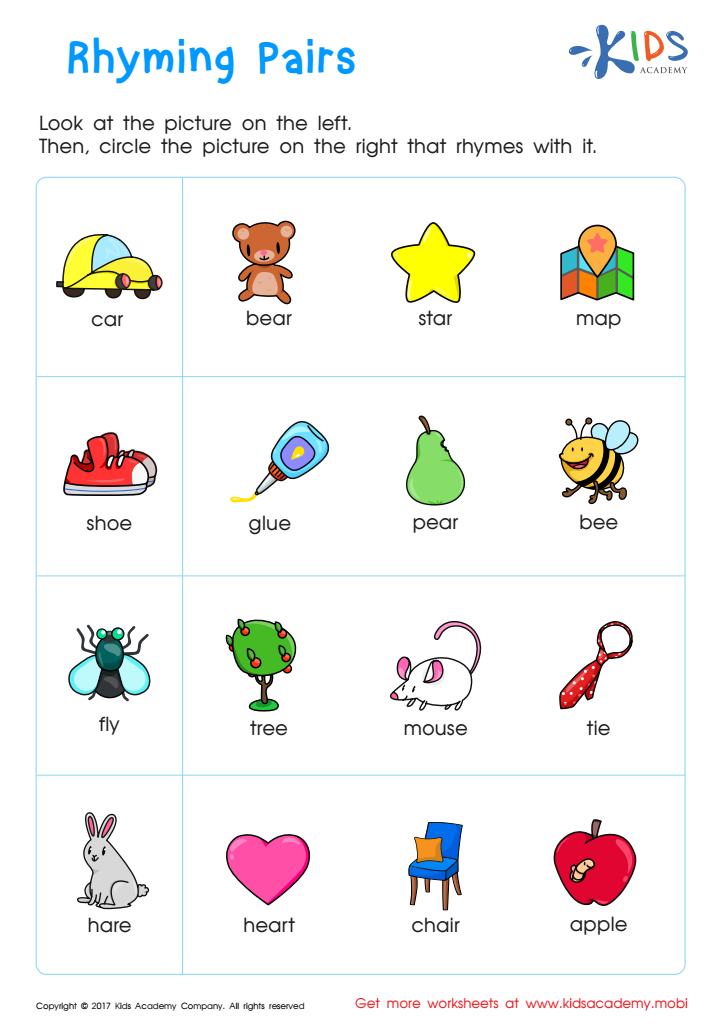
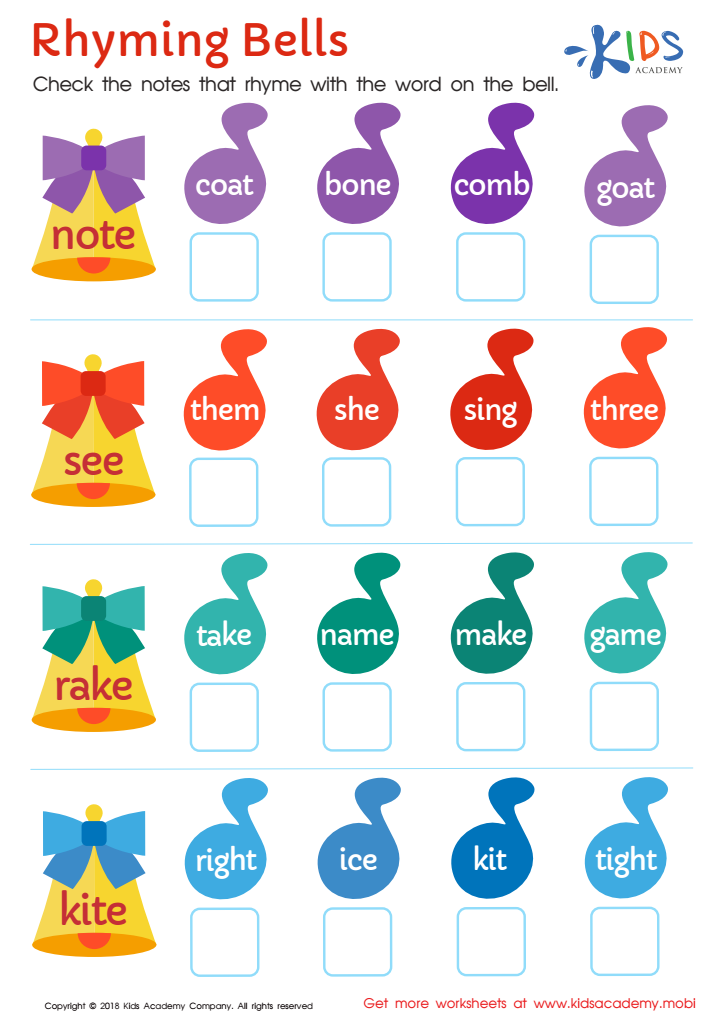
Rhyming Bells Worksheet
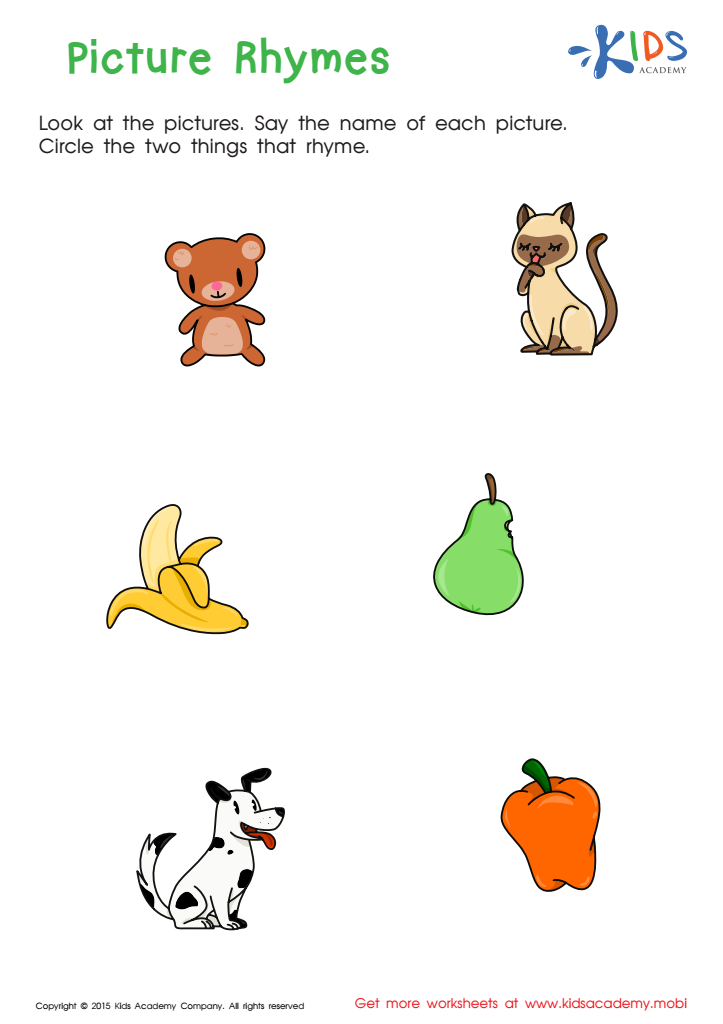
First Words: Picture Rhymes Worksheet







Rhyming skills play a significant role in the early literacy development of children, particularly those aged 7-8. At this stage, kids are solidifying their reading foundations, and rhyming becomes a crucial tool for fostering phonemic awareness, an ability necessary for proficient reading. Phonemic awareness involves recognizing and manipulating the individual sounds in words, and rhyming directly supports this by helping children understand sound patterns and create sound associations.
Moreover, rhyming exercises enhance vocabulary development. As children engage with rhyming words, they are exposed to a wide array of new terms, enhancing their word bank. This also aids in spelling, as recognizing common sounds and spellings assists in memorizing and predicting word structures. Additionally, rhymes often come in the form of playful, memorable verse, which makes learning enjoyable and engaging, thus reinforcing retention.
Cognitively, rhyming promotes auditory discrimination and auditory sequencing, crucial skills for following directions and understanding the order of sounds and events. Meanwhile, socially and emotionally, shared rhyming activities such as singing and reading aloud foster a love for language, build confidence, and create meaningful interactions between parents or teachers and children. Therefore, nurturing rhyming skills by integrating fun, rhyming activities into daily routines can significantly contribute to a child's linguistic, cognitive, and social development.








