
Sound-letter association Normal Worksheets for Ages 7-8
4 filtered results
Difficulty Level
Grade
Age
-
From - To
Subject
Activity
Standards
Unlock your child's reading potential with our "Sound-letter Association Normal Worksheets" for ages 7-8! These expertly designed sheets are crafted to enhance phonemic awareness and decoding skills through engaging exercises. Kids will match sounds to their corresponding letters, reinforcing the connection between oral language and written text. Our vibrant, age-appropriate worksheets foster literacy development and build a strong foundation for fluent reading. Perfect for teachers and parents, these printable activities make learning interactive and fun. Elevate your child’s reading proficiency today with our dynamic sound-letter association resources!
Favorites
With answer key
Interactive
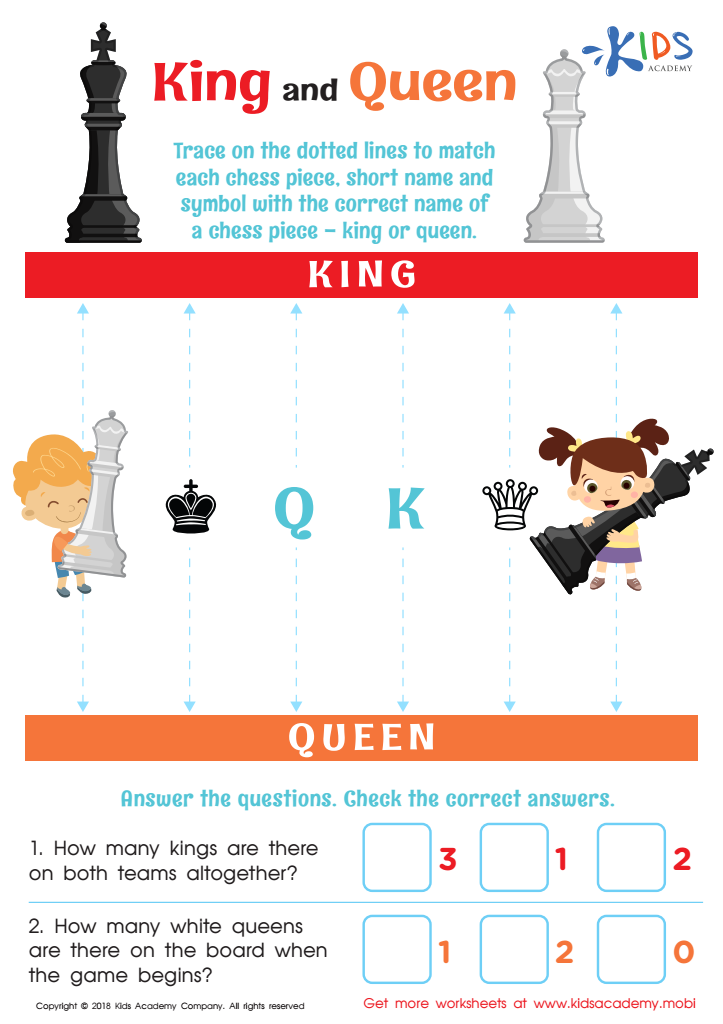
King and Queen Worksheet
Instruct your kids to trace the dotted lines to match each chess piece, short name, and symbol with either king or queen.Answer the questions at the bottom and check the answers. This exercise will help your children to differentiate between a king and queen chess piece and know their symbols.
King and Queen Worksheet
Worksheet
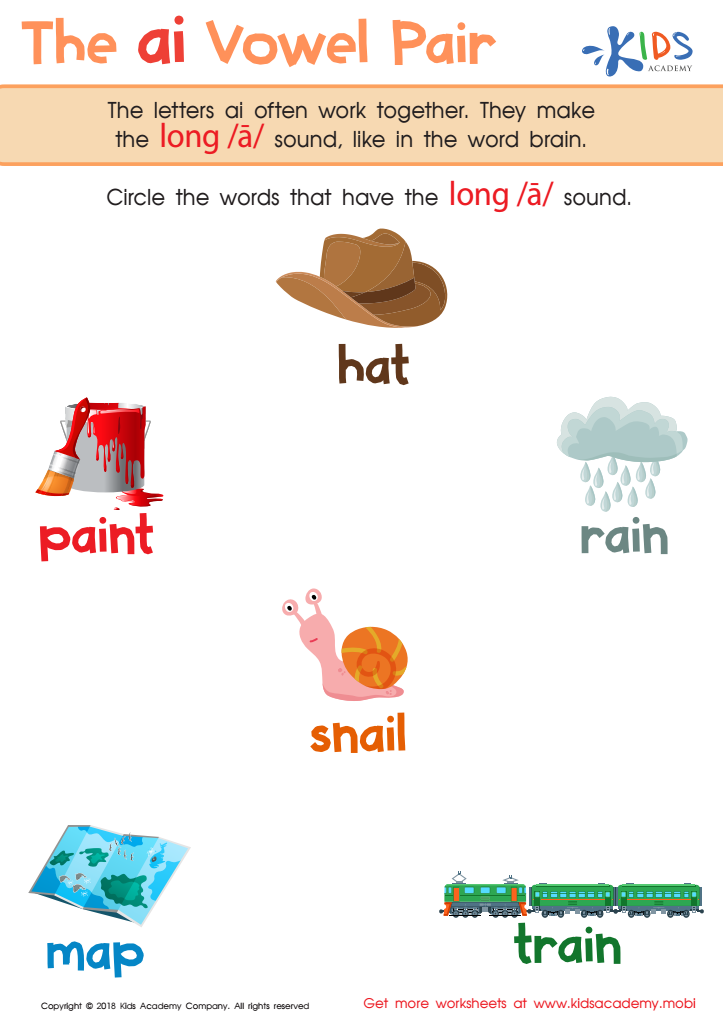
The AI Vowel Pair Worksheet
Vowel pairs make different sounds than individual letters. The 'ai' combination often forms the long /a/ sound, like in 'brain' and 'strain'. Get your kids to look at the pictures in the worksheet, identify each and say the name aloud. Help them circle the words with the long /a/ sound.
The AI Vowel Pair Worksheet
Worksheet
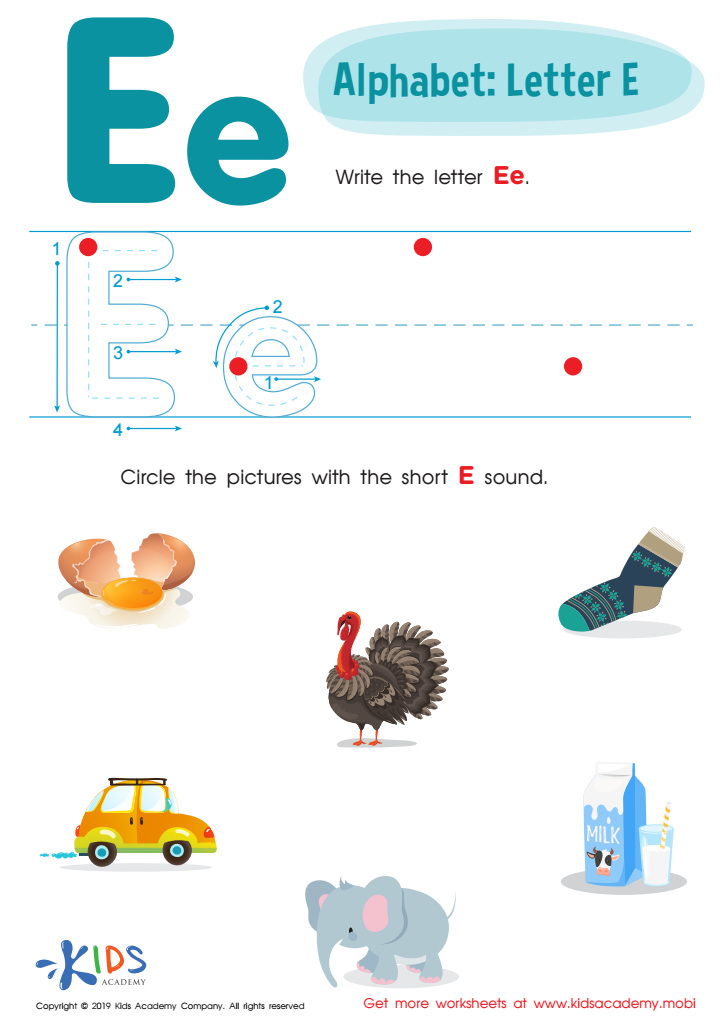
Letter E Tracing Worksheet
Students trace and write uppercase and lowercase letter E. They sound out "E" words, choosing those with short "E" sounds. Preschoolers identify the difference between the 'E' sounds in words like "egg" and "turkey." A tracing sheet helps them to understand.
Letter E Tracing Worksheet
Worksheet
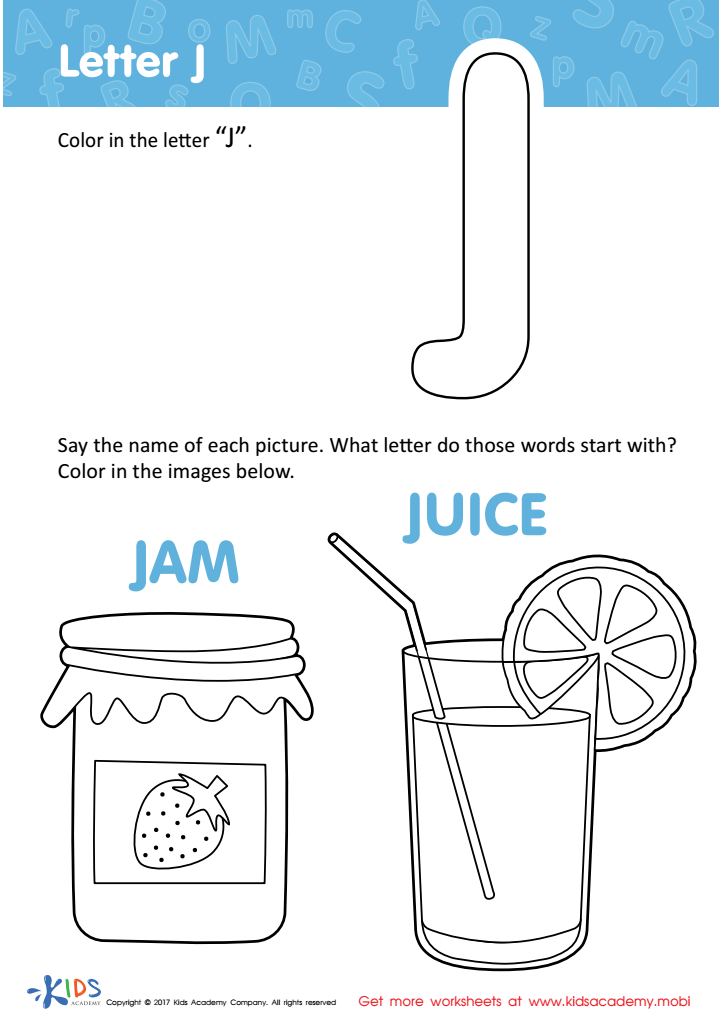
Letter J Coloring Sheet
Practice the letter 'J' with your little one with this fun coloring page! Pictures of jar, juice, jam and jelly make it an enjoyable experience for kids. Learning the letter and coloring is fun for even the youngest learners.
Download (PDF)
 Assign to My Students
Assign to My Students
Letter J Coloring Sheet
Worksheet
Join Kids Academy for Free
Who is primarily going to use this learning content?






Understanding sound-letter associations, also known as phonics, is critical for children around ages 7-8 because it lays the foundation for successful reading and writing. At this developmental stage, children transition from recognizing simple words to decoding more complex ones, making phonics knowledge essential.
Sound-letter association helps children understand that words are made up of individual sounds connected to specific letters or combinations of letters. This understanding improves their ability to spell words correctly. For example, if children can link the sound "p" to the letter "p," they’ll find it easier to decode and spell words like "pat" or "map."
Additionally, fluency in phonics leads to improved reading comprehension. When children can quickly and accurately decode words, they devote more mental energy to understanding the text’s meaning rather than agonizing over word recognition. This positive cycle boosts their confidence and fosters a love for reading.
Moreover, phonics aids in distinguishing between similar-sounding words, facilitating better communication skills. Accurate pronunciation and spelling in written and spoken language reduce misunderstandings and enhance clarity.
All these competencies are vital across all subjects, not just language arts. Children with strong phonics skills are better equipped to engage with complex material across the curriculum, reinforcing the idea that phonics is fundamental to future academic success. Therefore, investments in mastering sound-letter associations pay lifelong dividends.








