Understanding biodiversity Normal Worksheets for Ages 7-8
4 filtered results
-
From - To
Explore the wonders of our natural world with our "Understanding Biodiversity" worksheets for ages 7-8, available on Kids Academy! These engaging, educational resources help young learners identify and appreciate the diverse range of living organisms in their environment. Through interactive activities and thought-provoking exercises, students develop critical thinking skills and learn about the importance of ecosystem balance. Each worksheet is designed to align with educational standards, making it easy for parents and teachers to integrate them into daily learning. Inspire a passion for nature and science in your child or student today with our comprehensive biodiversity worksheets.
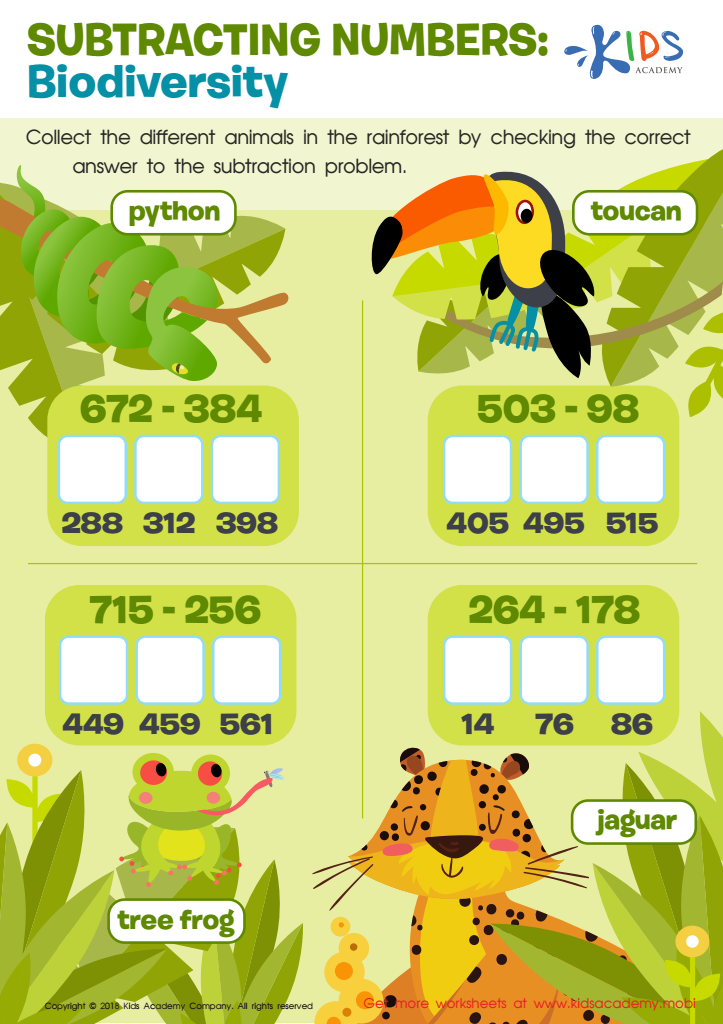
Subtracting Numbers: Biodiversity Worksheet
 Assign to My Students
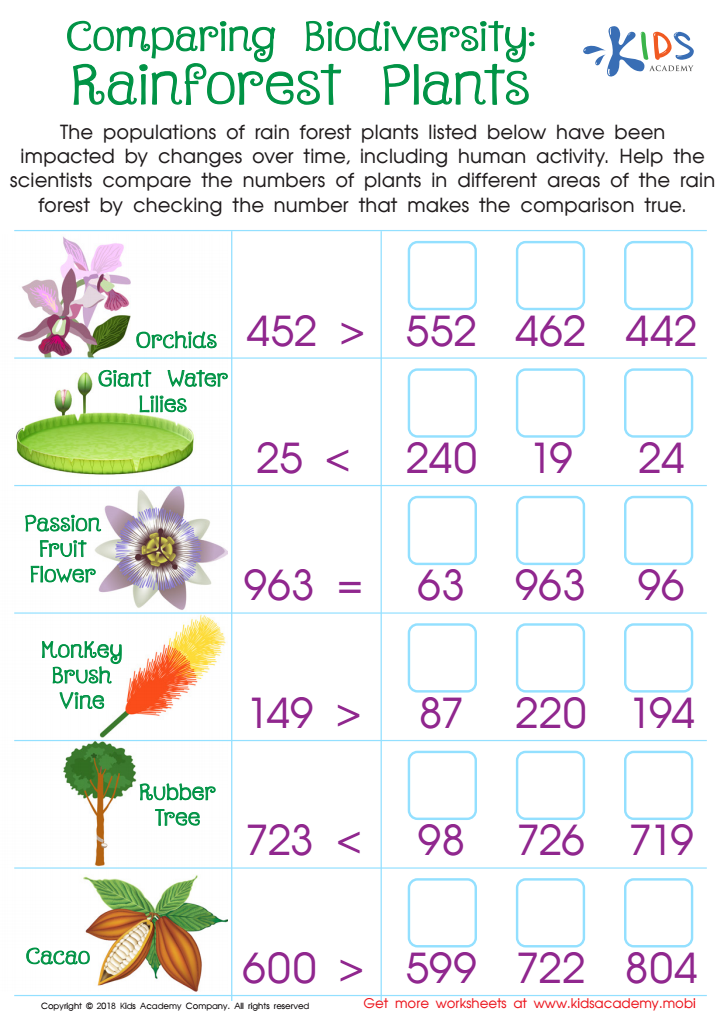
Comparing Biodiversity: Rainforest Plants Worksheet
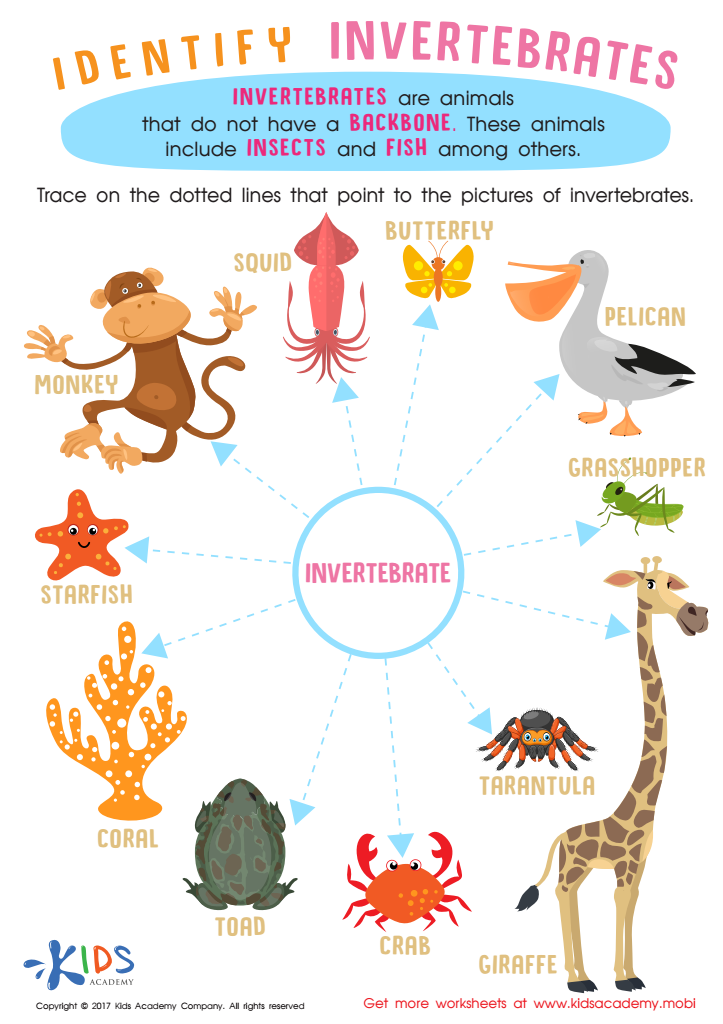
Invertebrates Worksheet for Grade 3
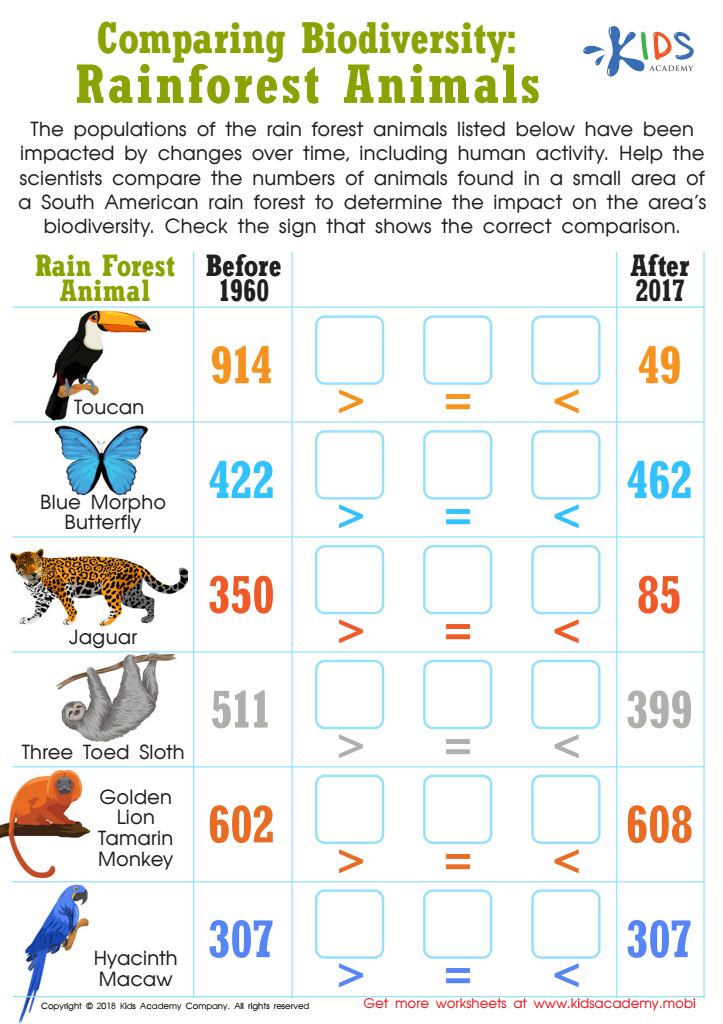
Comparing Biodiversity: Rainforest Animals Worksheet


.jpg)



.jpg)
Understanding biodiversity is crucial for young children, and parents and teachers play a vital role in cultivating this awareness. At ages 7-8, children are naturally curious and more receptive to learning about the world around them. Biodiversity, or the variety of life in a particular habitat or ecosystem, can teach them about interdependency, adaptation, and respect for living organisms.
When children understand biodiversity, they learn that plants, animals, and microorganisms all have specific roles in maintaining the balance of nature. This knowledge enhances their appreciation for nature and fosters environmental stewardship from a young age. For example, knowing how bees pollinate flowers can make them aware of why bees are crucial and what could happen if they disappeared.
Parents and teachers can use simple activities and observations, like exploring a garden or visiting a zoo, to illustrate the diverse forms of life and their importance. Such experiences can also improve kids' problem-solving skills, as they think about how different species interact and adapt to their environments.
By teaching children about biodiversity, adults are not only nurturing well-rounded, nature-conscious individuals but also contributing to a generation that values and strives to protect the planet, ensuring its health for future generations. This early grounding can have long-lasting impacts on how children view and interact with the natural world.








