Understanding natural resources Normal Worksheets for Ages 7-8
6 filtered results
-
From - To
"Understanding Natural Resources" worksheets for ages 7-8 offer engaging activities that help children comprehend the key concepts of natural resources. These expertly crafted worksheets will captivate young learners, teaching them to identify and differentiate between renewable and non-renewable resources. Through interactive exercises and age-appropriate content, students will develop critical thinking and problem-solving skills. Perfect for home or classroom use, these worksheets make learning fun and educational. Empower your child with the knowledge to appreciate and conserve the natural world. Visit our page now to download and start nurturing a sense of environmental stewardship in young minds!
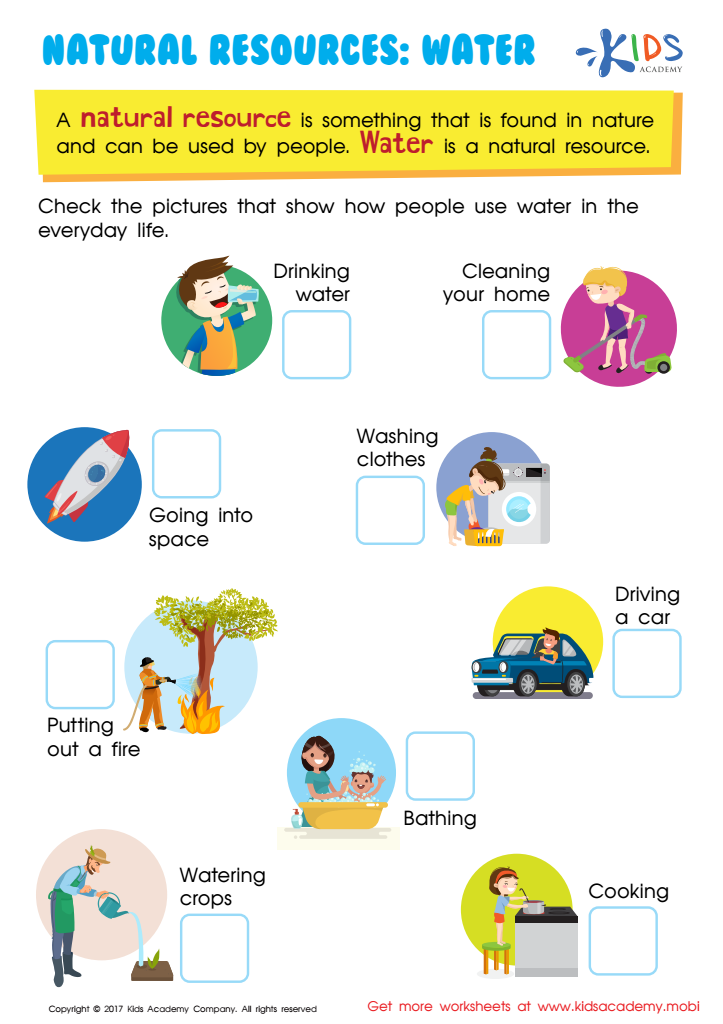
Natural Resources: Water Worksheet
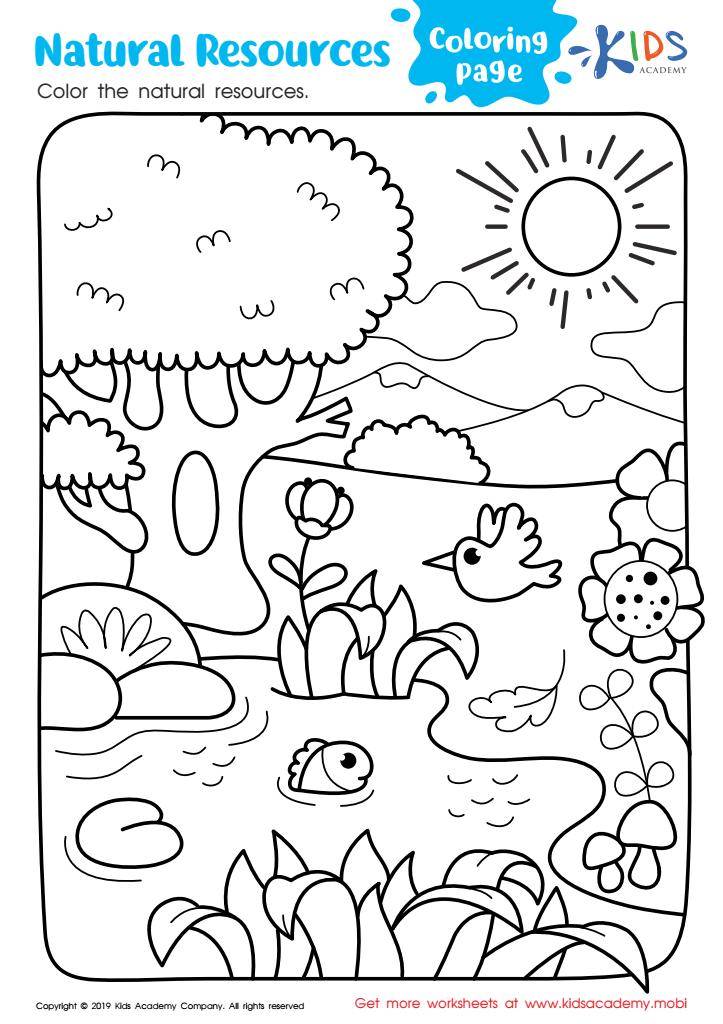
Natural Resources Coloring Page Worksheet
 Assign to My Students
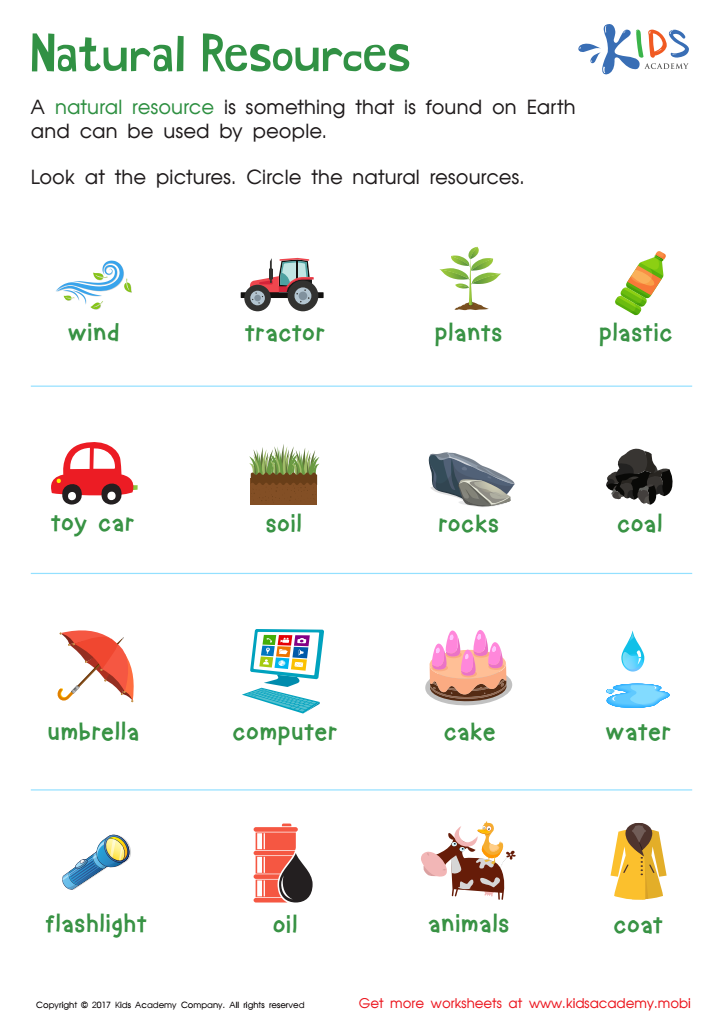
Natural Resources Worksheet
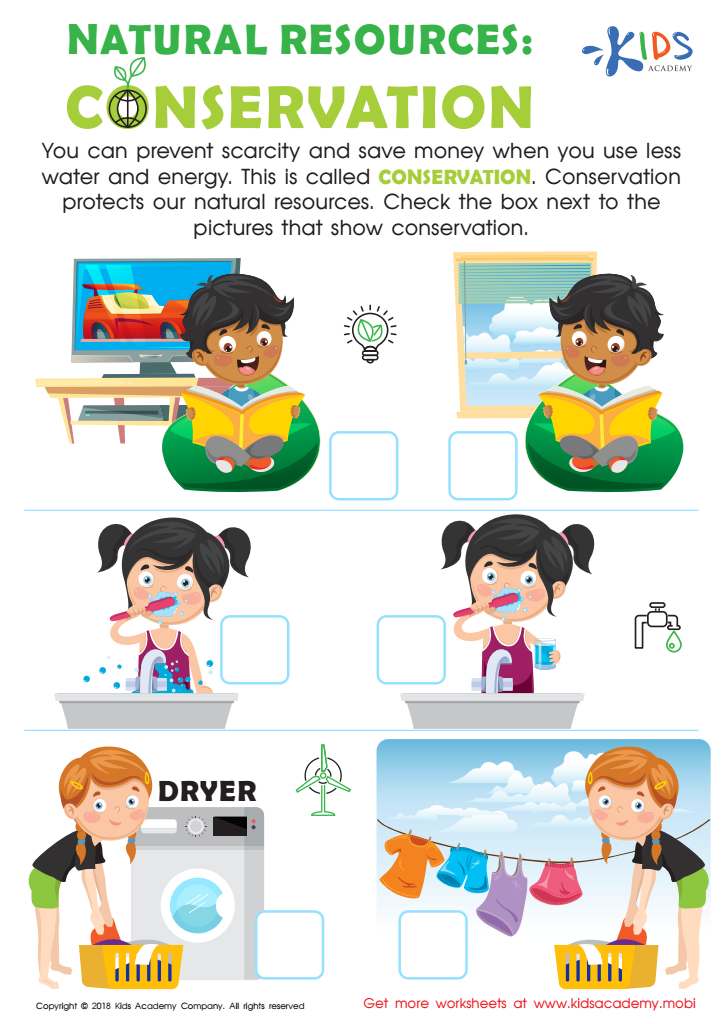
Natural Resources: Conservation Worksheet
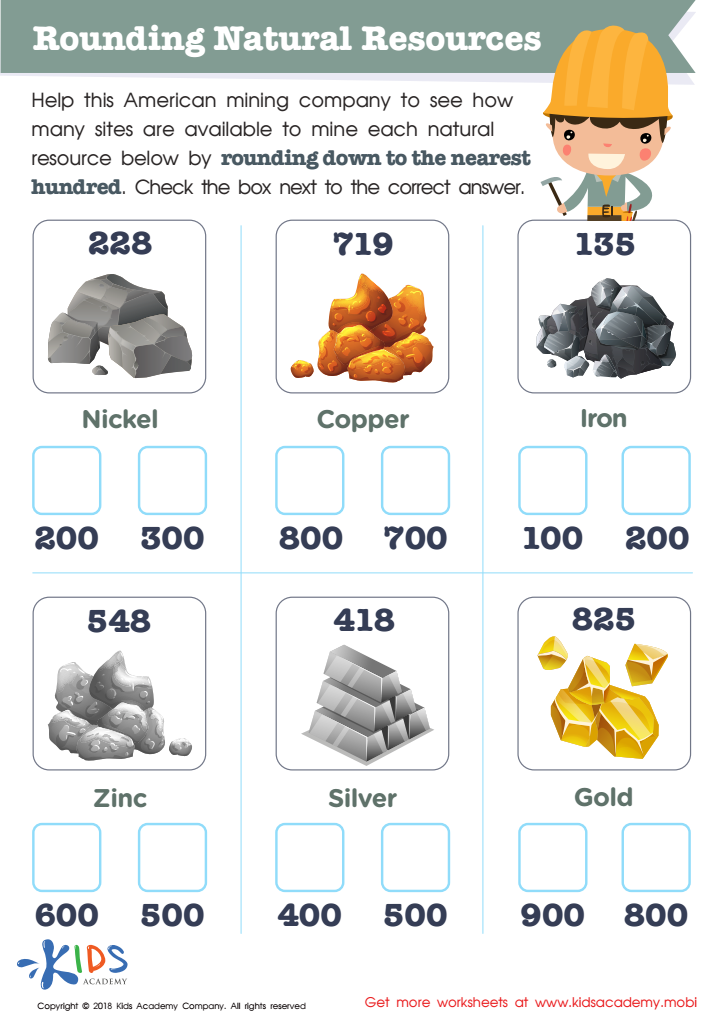
Rounding Natural Resources Worksheet
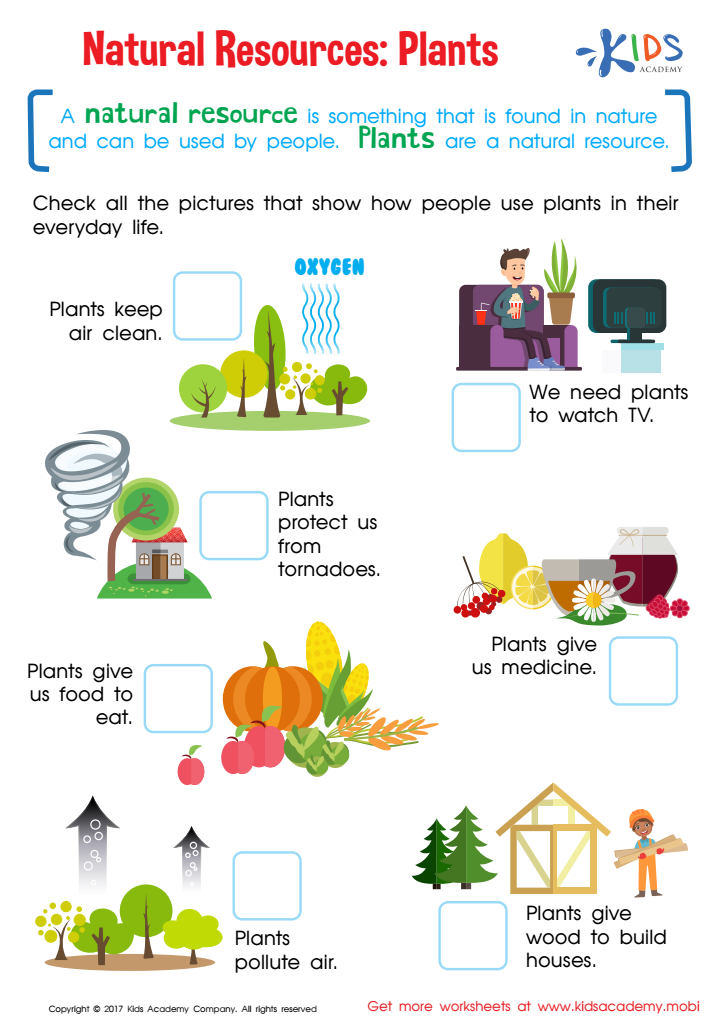
Natural Resources: Plants Worksheet






Understanding natural resources is crucial for young children, particularly those aged 7-8, as it lays the foundation for responsible citizenship and environmental stewardship. At this age, children are naturally curious and eager to understand the world around them. Teaching them about natural resources—such as water, trees, and minerals—helps them appreciate where the things they use every day come from and the importance of these resources.
First, by learning about natural resources, children become more aware of the limited nature of many of these materials. This awareness can lead to a lifelong habit of conservation and thoughtful use. For instance, understanding that water is a precious resource can encourage kids to turn off taps while brushing their teeth, initiating good habits early.
Second, knowledge of natural resources can inspire a sense of curiosity and respect for nature. Children who understand the value and interconnectedness of natural resources are more likely to develop an interest in science, the environment, and perhaps future careers in related fields.
Lastly, early education on this topic helps build a sense of responsibility. It empowers children to make informed decisions and take actions—like recycling and planting trees—that contribute to the health and sustainability of our planet. By integrating this understanding into their daily lives, young children grow up more mindful of their impact on the world, contributing to a more sustainable future for all.








