Visual Learning Normal Geometry Worksheets for Ages 7-8
3 filtered results
-
From - To
Unlock the power of visual learning with our meticulously designed Geometry Worksheets for ages 7-8. Exclusively curated by Kids Academy, these engaging worksheets make mastering geometric concepts enjoyable and effective. Young learners will explore essential geometry topics through colorful, illustrative exercises that enhance spatial awareness and critical thinking skills. From shapes and patterns to symmetry and spatial relationships, these worksheets provide a hands-on, visual approach that keeps kids intrigued and motivated. Ideal for classroom use or supplemental home practice, our worksheets are perfect for nurturing foundational math skills during those crucial early learning years. Transform geometry learning into a fun adventure!
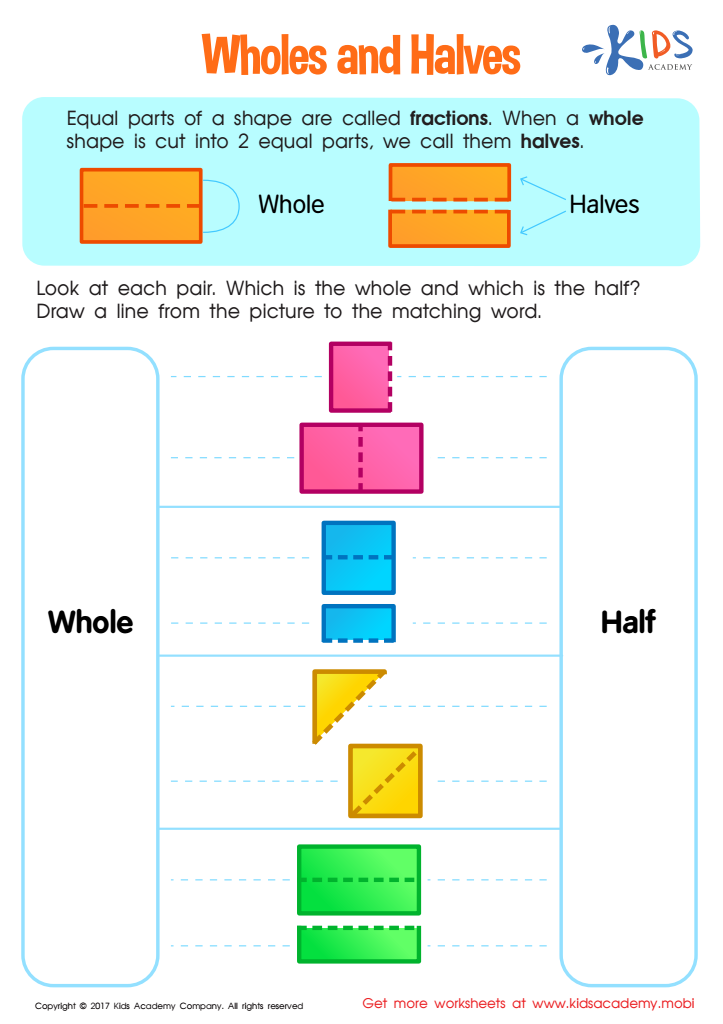
Wholes and Halves Worksheet
 Assign to My Students











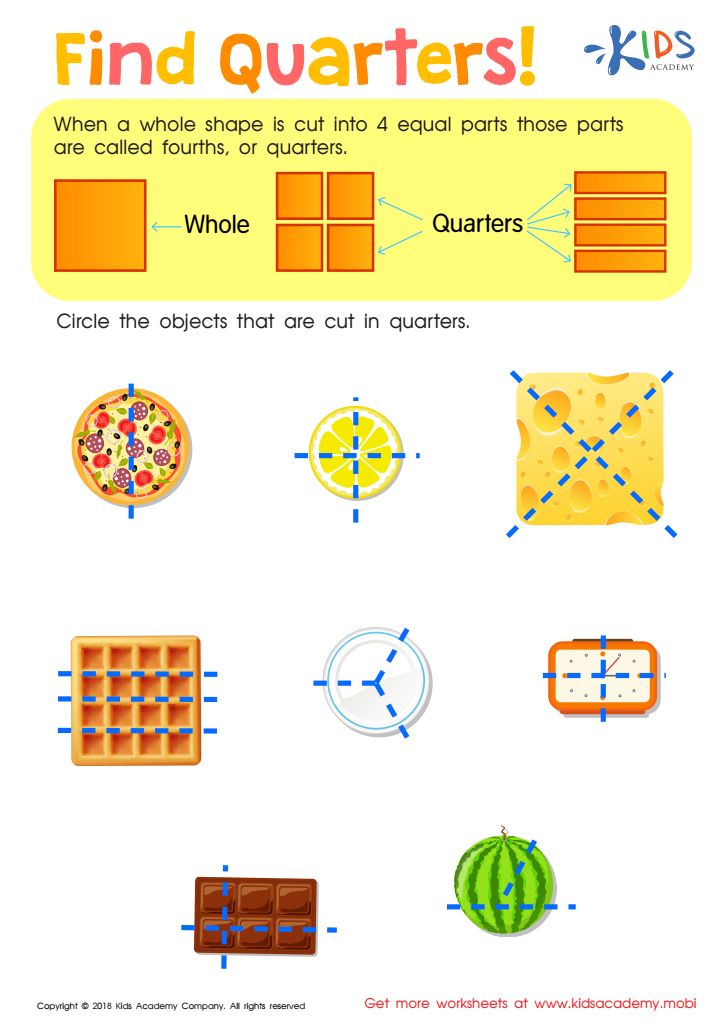
Find Quarters Worksheet
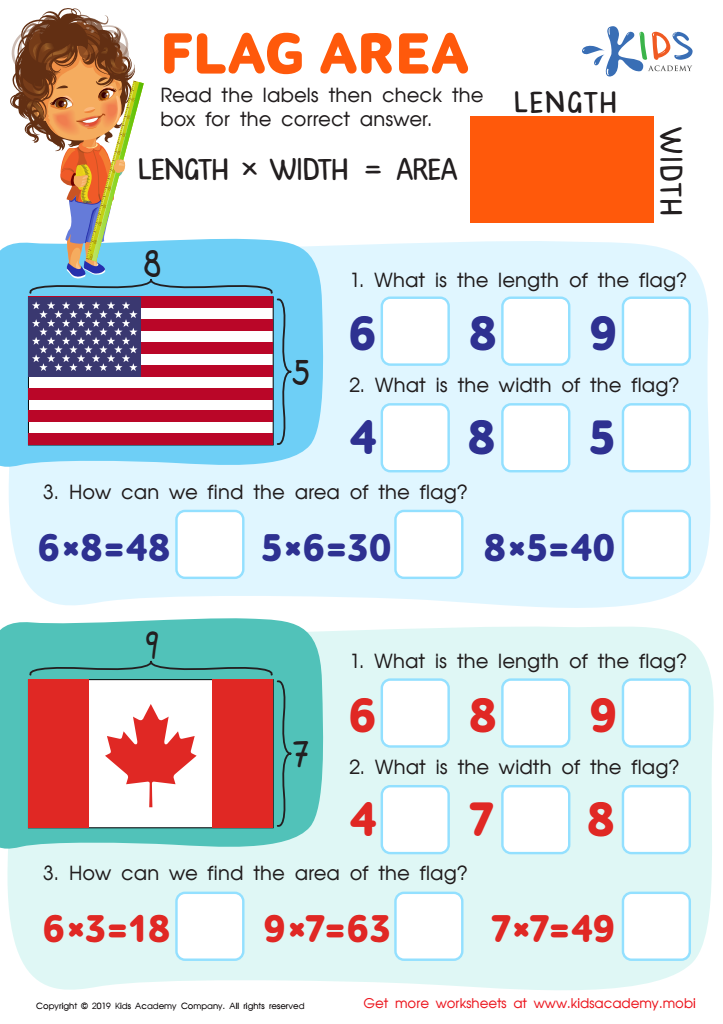
Flag Area Worksheet








Visual learning in geometry for children aged 7-8 is crucial to their cognitive development and comprehension of mathematical concepts. At this age, kids are naturally inclined towards visual and spatial reasoning. Using visual aids such as shapes, patterns, and diagrams helps make abstract concepts more understandable and engaging. Visual learning tools aid in concretizing geometry lessons, ensuring that foundational ideas are solid and retainable.
When children visualize geometric concepts, they can grasp the properties and relationships between shapes more effectively. This lays the groundwork for more advanced topics in mathematics and other subjects. For example, understanding shapes can improve problem-solving skills, boost logical reasoning, and foster creative thinking. By introducing these concepts visually, children learn to see mathematics as a dynamic and accessible subject rather than a set of intimidating numbers.
Furthermore, integrating visual learning caters to different learning styles. Children who struggle with textual or auditory instructions might find visual explanations more accessible, thus enhancing their overall academic performance. Engaging students with geometry through visual learning not only aligns with their developmental stage but also helps in building confidence, encouraging curiosity, and promoting a love for learning.
Parents and teachers play a vital role in leveraging these benefits. When they prioritize visual learning in geometry, they equip children with essential tools that support academic progress and joy in discovering new concepts.








