Color Identification Normal Numbers Worksheets for Ages 7-8
3 filtered results
-
From - To
Discover our engaging "Color Identification Normal Numbers Worksheets" designed specifically for children ages 7-8! These printable worksheets encourage kids to explore number recognition while incorporating vibrant colors. Perfect for enhancing young learners' math skills and promoting creativity, these worksheets foster a fun, interactive learning environment. Kids will enjoy identifying colors and numbers through various creative activities tailored to enhance their cognitive development. Suitable for home or classroom use, these resources help reinforce essential skills, build confidence, and support academic success. Explore our collection today and make learning numbers a colorful adventure! Get started with our worksheets to inspire a love for learning!
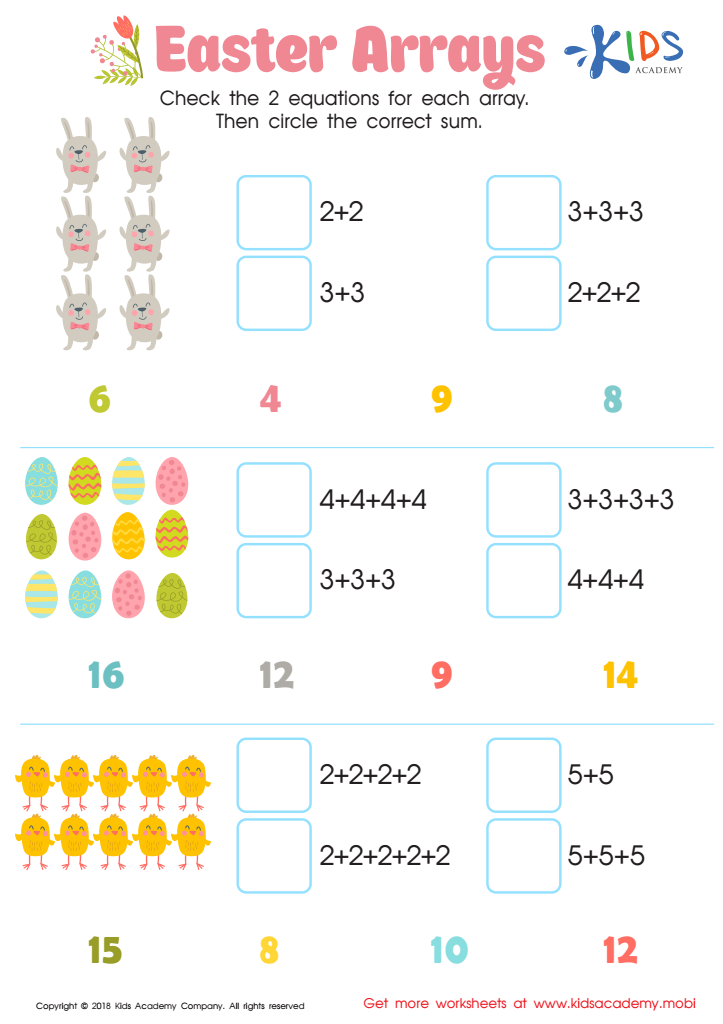
Easter Arrays Worksheet
 Assign to My Students
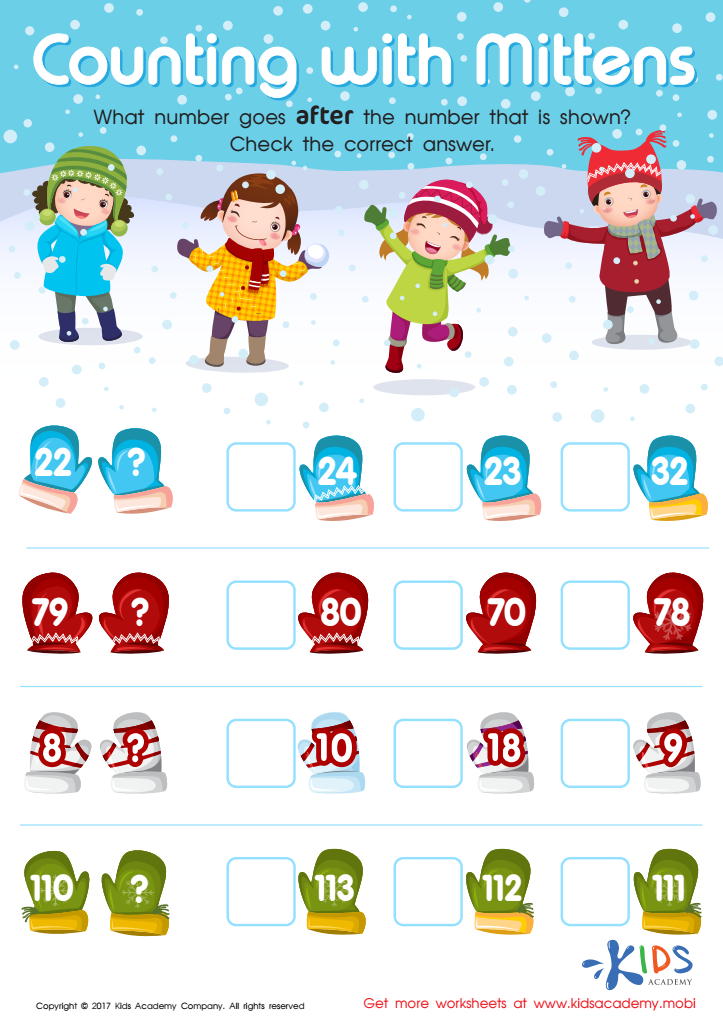
Counting with Mittens Worksheet
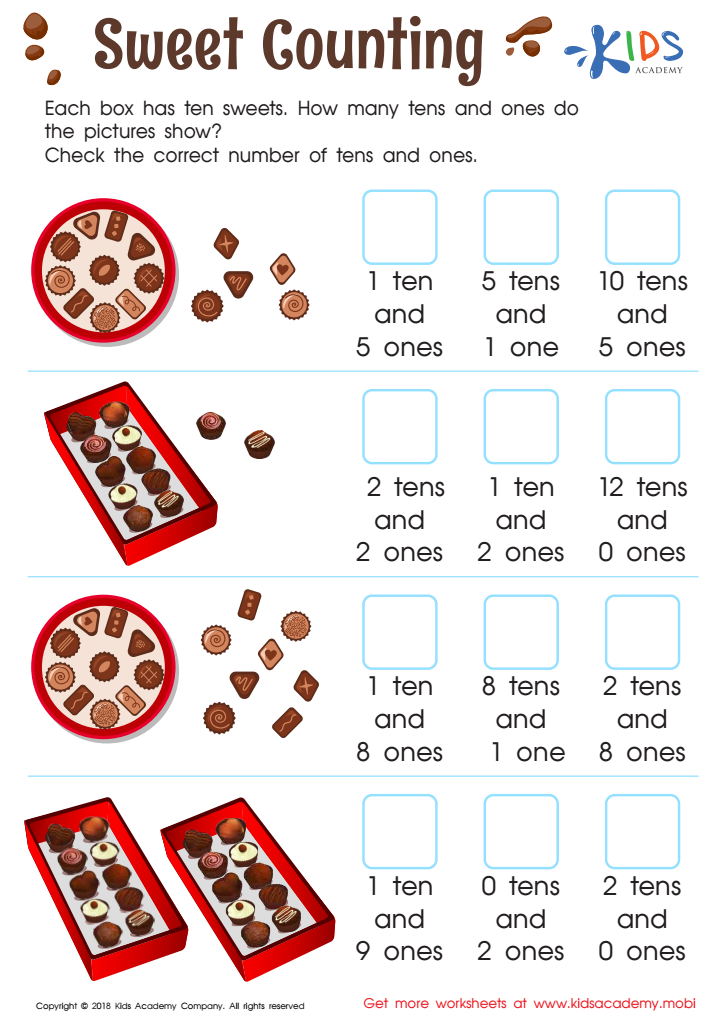
Sweet Counting - Part 2 Worksheet








Color identification and understanding normal numbers are foundational skills for children ages 7-8, igniting their cognitive development and enhancing learning opportunities. At this age, children should be able to recognize colors beyond the basics and grasp the concept of numbers within real-world contexts.
Encouraging color identification is vital as it aids in language and vocabulary expansion. Describing colors stimulates a child's ability to communicate, compare, and categorize objects in their surroundings, supporting critical thinking and reasoning skills. Children who can differentiate colors tend to demonstrate improved creativity and problem-solving abilities, which are essential in all areas of learning.
On the other hand, mastering normal numbers enhances mathematical proficiency. By recognizing and understanding numbers, children develop a strong number sense, enabling them to perform calculations and understand numerical relationships. This knowledge promotes logical reasoning and helps children grasp more complex mathematical concepts rather quickly.
Parents and teachers who nurture these areas contribute to a well-rounded education, ensuring children develop important life skills. Engaging kids through colorful activities or mathematical games fosters a love for learning while building foundational capabilities, setting the stage for future academic success. Ultimately, attention to these developmental milestones reflects a commitment to holistic child growth.








