Color Identification Normal Math Worksheets for Ages 7-8
7 filtered results
-
From - To
Explore our engaging Color Identification Normal Math Worksheets designed specifically for children aged 7-8! These worksheets not only reinforce mathematical concepts but also integrate color recognition into learning, helping students enhance their cognitive skills. Each worksheet features vibrant illustrations and captivating activities that keep young learners motivated while fostering their ability to identify and associate colors with numbers and shapes. Perfect for classroom settings or home practice, our resources promote critical thinking and creativity. Download and print these worksheets easily to support your child’s learning journey, ensuring they build a strong foundation in both math and color identification skills!
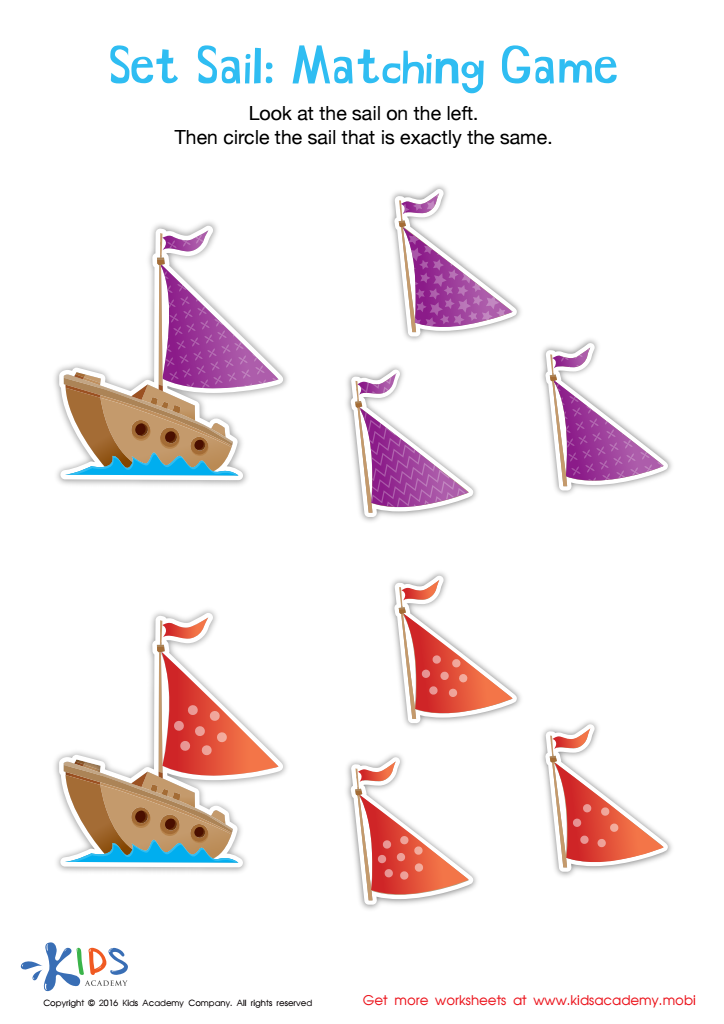
Set Sail Worksheet
 Assign to My Students
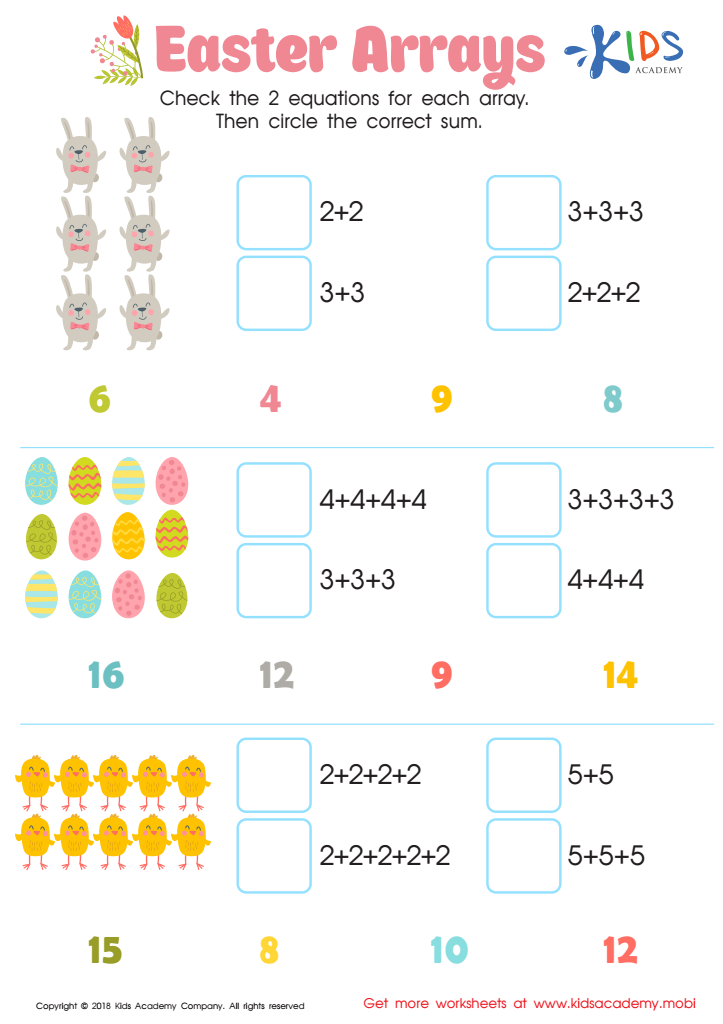
Easter Arrays Worksheet
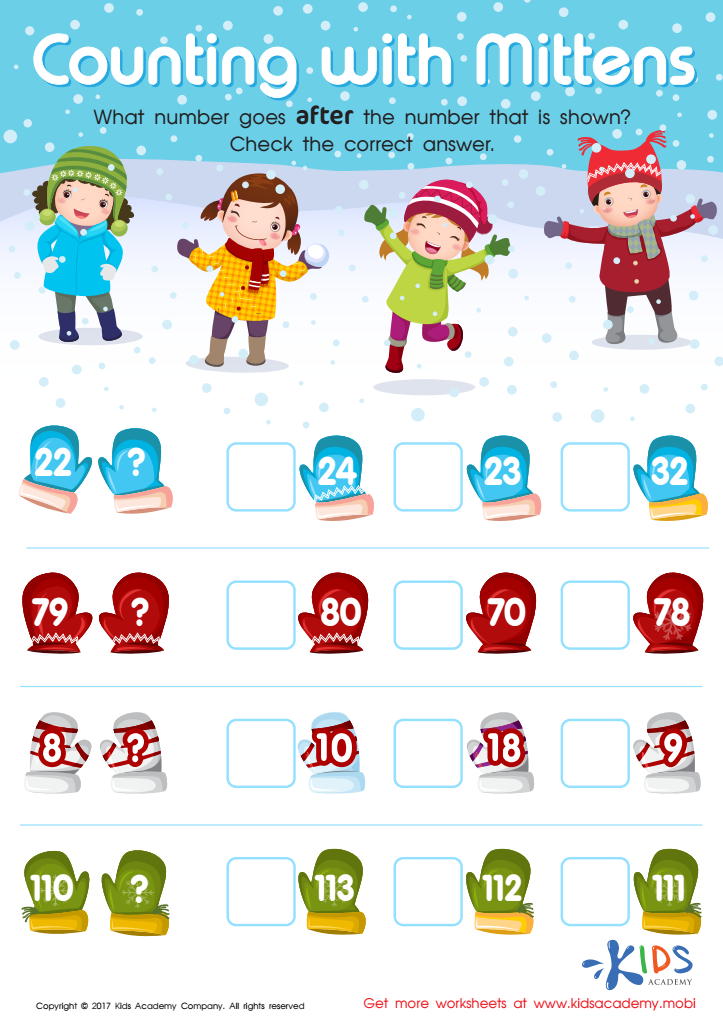
Counting with Mittens Worksheet
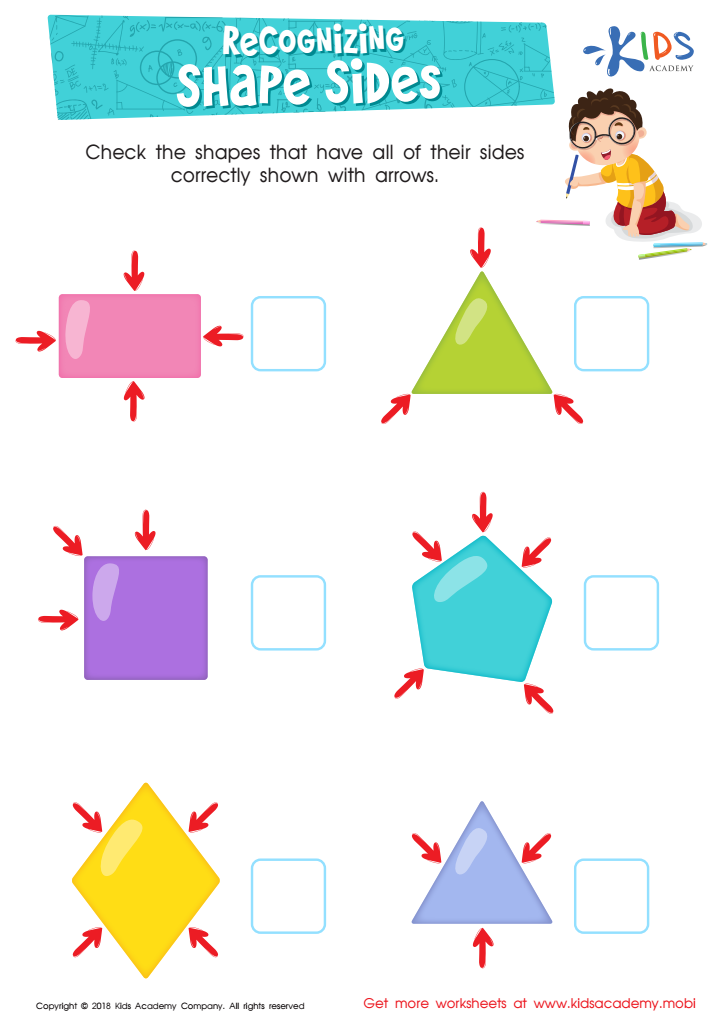
Recognizing Shape Sides Worksheet
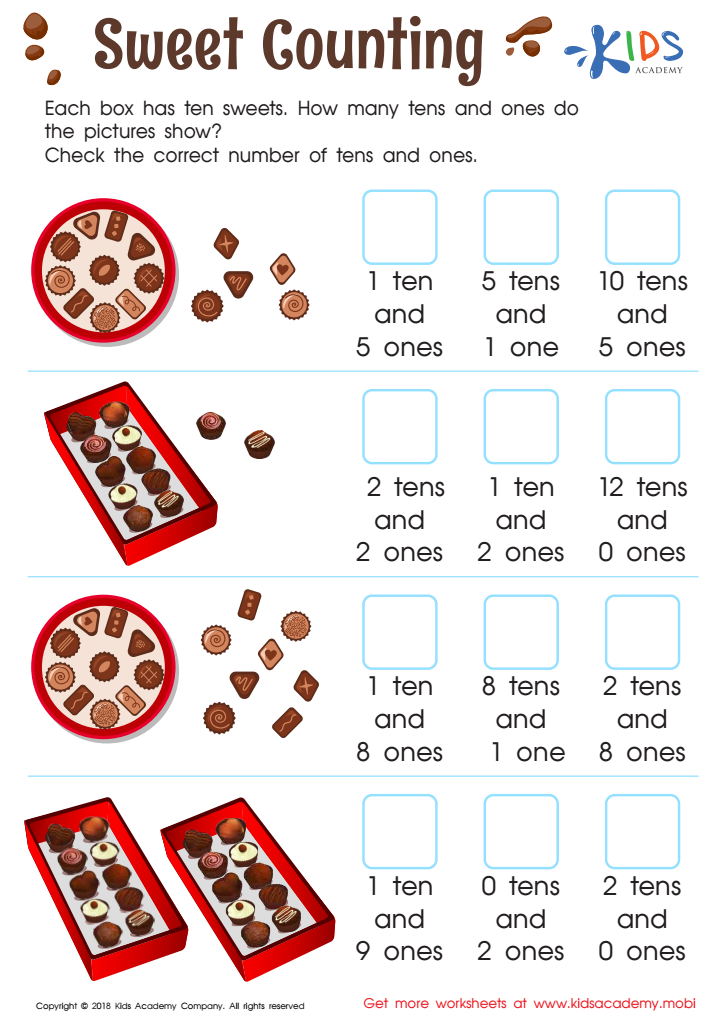
Sweet Counting - Part 2 Worksheet
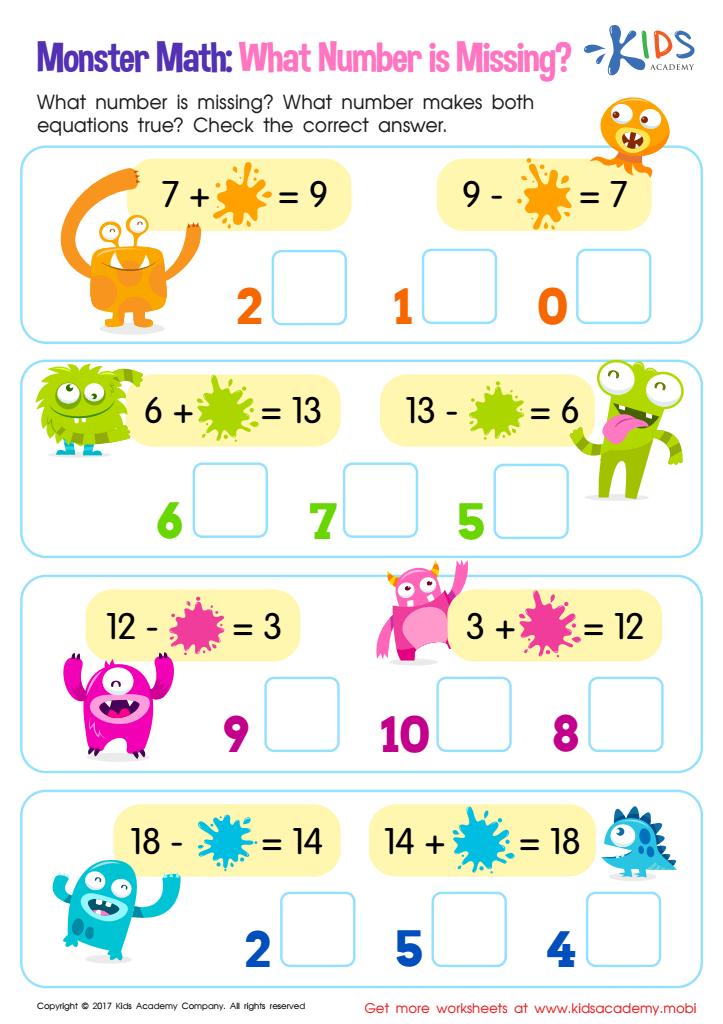
Missing Number: Monster Math Worksheet
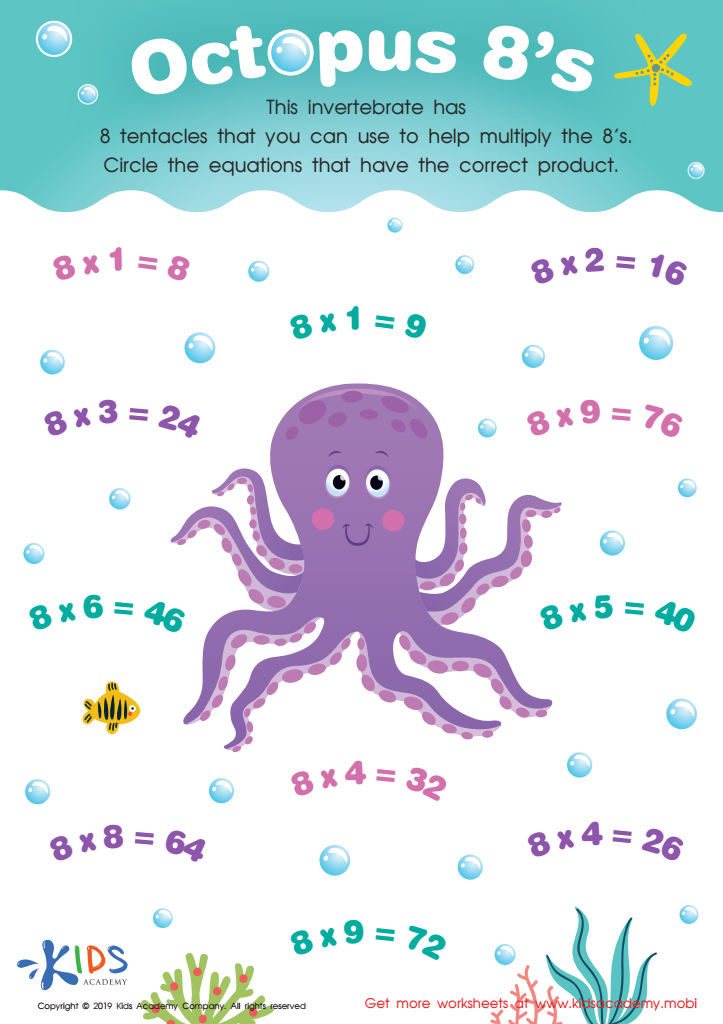
Octopus 8’s Worksheet








Color identification can significantly enhance cognitive development in children ages 7-8. At this age, children are not only mastering basic academic skills but are also developing critical thinking and observational abilities. Understanding colors lays a foundation for more complex concepts in math and science. For instance, integrating colors into math activities can make learning more engaging and relatable; teaching patterns, sorting, and even addition or subtraction using colored objects can captivate young learners’ interest.
Moreover, color identification can foster creativity and expressiveness in children. By recognizing and understanding colors, children can better appreciate visual arts, which often accompany mathematical concepts such as symmetry and geometry. Art can be seamlessly blended into lesson plans, enhancing their learning experiences.
Parents and teachers should also consider the social implications. Group activities involving color recognition encourage cooperation and communication, essential skills in today’s society. When children play and learn together using colors, it also promotes emotional wellness, reducing feelings of isolation.
Ultimately, fostering color identification provides children with the tools they need for a well-rounded educational experience. Investing time in understanding colors leads to building a strong foundational schema for mathematics and social skills, which can benefit their overall learning journey.








