Comparing lengths Normal Math Worksheets for Ages 7-8
4 filtered results
-
From - To
Help children master the essential skill of comparing lengths with these engaging Normal Math Worksheets designed for ages 7-8. Perfectly tailored for young learners, these worksheets make measuring fun through a variety of activities that include comparing objects and understanding length concepts. Our carefully crafted exercises support educational standards while enhancing critical thinking and problem-solving abilities. Ideal for both classroom use and home practice, these worksheets boost confidence in young mathematicians. Dive into a world of fun and learning where kids gain practical measurement skills, setting a strong foundation for future math success.
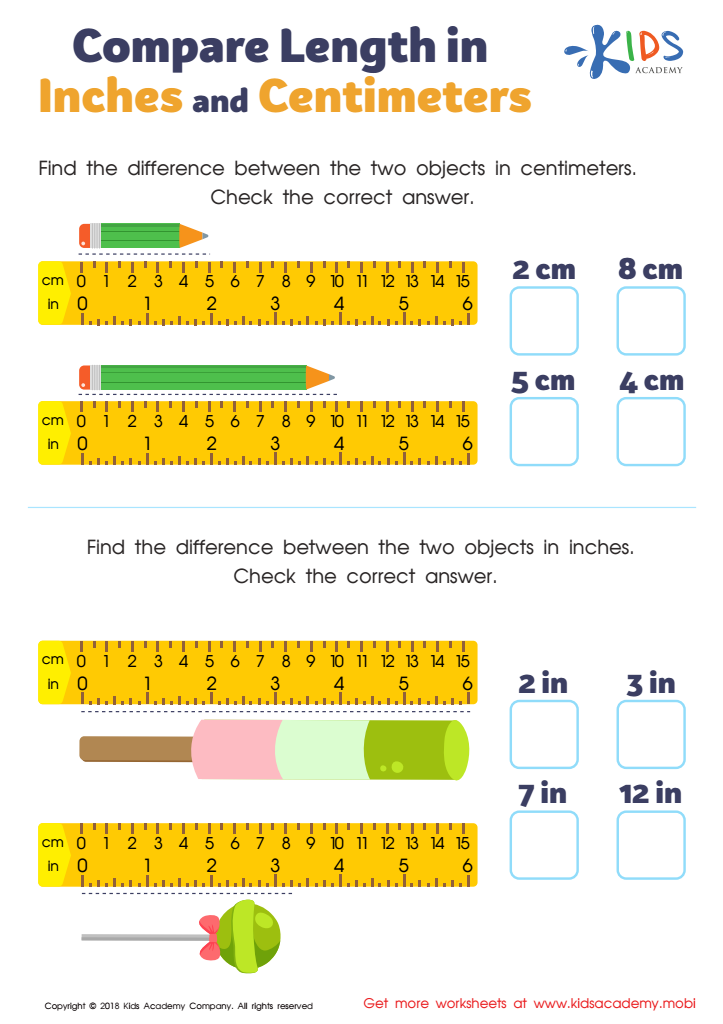
Compare Length in Inches and Centimeters Worksheet
 Assign to My Students
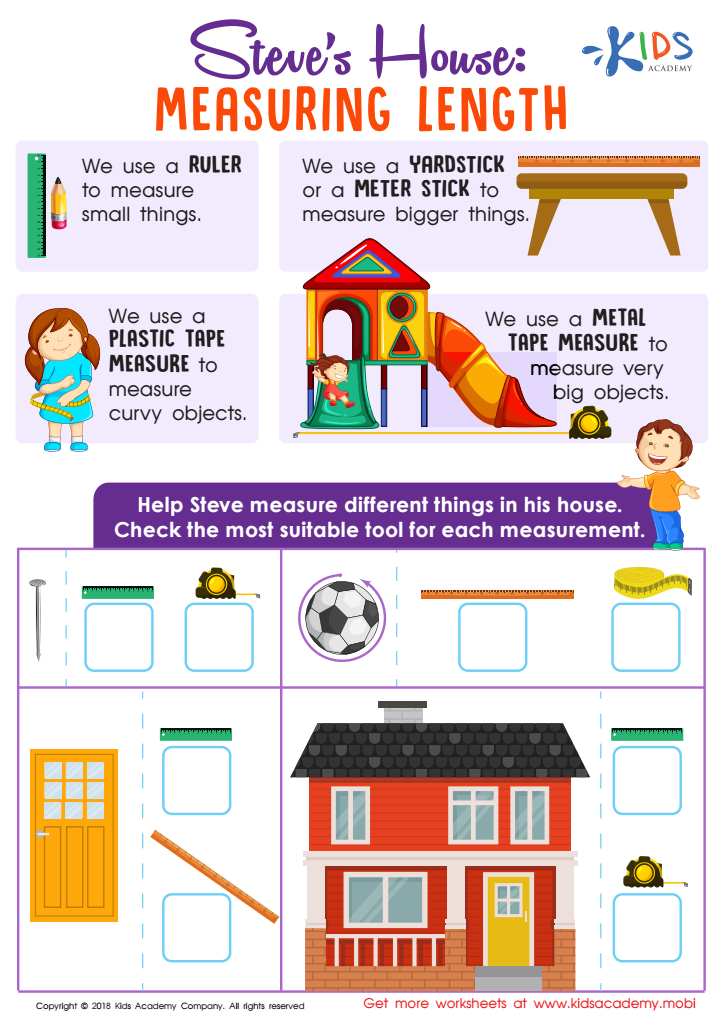
Steve's House: Measuring Length Worksheet
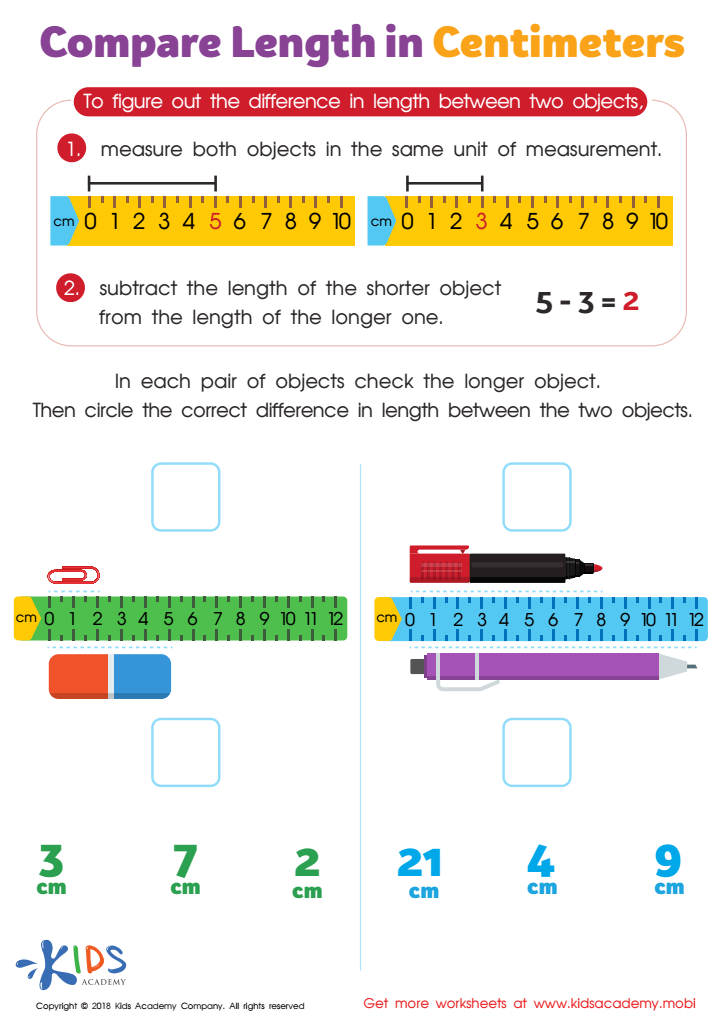
Compare Length in Centimeters Worksheet
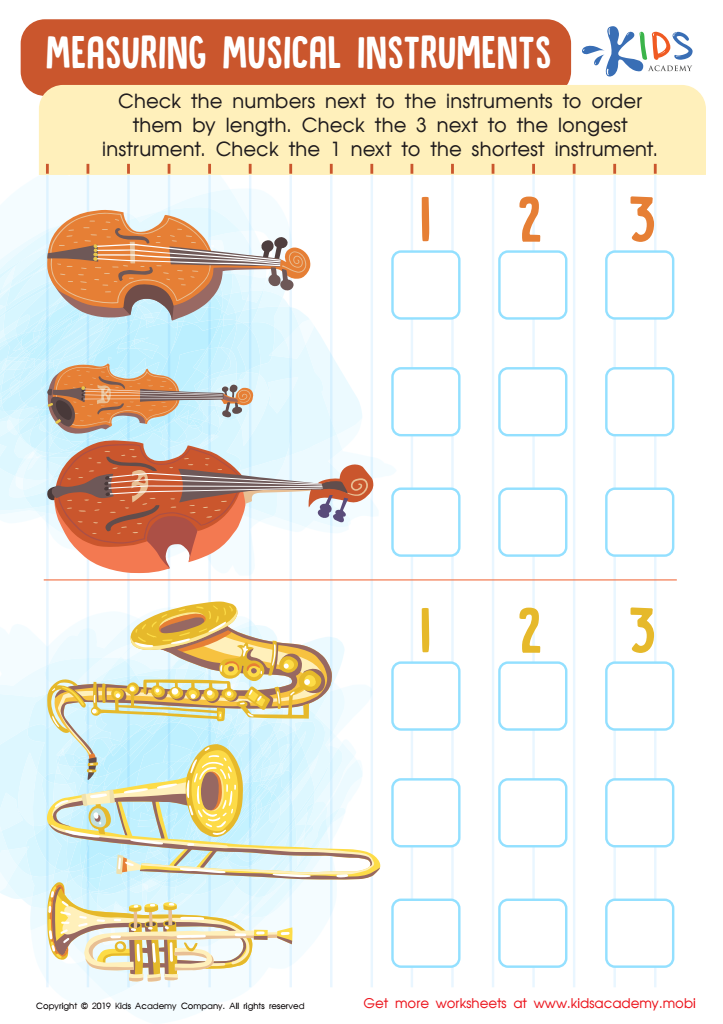
Measuring Musical Instruments Worksheet








Comparing lengths is a fundamental aspect of early math education for children aged 7-8. At this developmental stage, understanding length comparison is more than just a math skill; it establishes a foundation for critical cognitive and spatial reasoning abilities.
For parents and teachers, emphasizing the concept of length comparison helps children make sense of the world around them. It teaches them how to observe, measure, and make decisions based on quantitative information—a skill that is vital in everyday life. Moreover, this lays the groundwork for more complex math concepts, such as addition, subtraction, and the introduction of geometric properties.
When children engage in activities that involve comparing lengths, they cultivate their problem-solving and analytical thinking skills. For example, if a child is asked whether their toy car is longer than their pencil, they must assess, compare, and deduce the answer. Such exercises enhance their logical reasoning and attention to detail.
Additionally, mastering basic math concepts like length comparison builds self-confidence and positive attitudes toward learning. As children experience success in these straightforward tasks, they become more inclined to tackle more challenging subjects in the future.
Thus, comparing lengths in normal math curriculum isn't just a routine educational duty; it's a critical step in fostering broader developmental growth and preparing children for lifelong learning.








