Hand-eye Coordination Normal Math Worksheets for Ages 7-8
5 filtered results
-
From - To
Enhance your child's learning experience with our Hand-eye Coordination Normal Math Worksheets designed specifically for ages 7-8. These engaging, printable worksheets focus on developing essential hand-eye coordination skills while reinforcing mathematical concepts. Children will enjoy a variety of fun activities that blend math challenges with coordinated exercises, fostering both cognitive and physical development. Ideal for young learners, our worksheets promote not just problem-solving abilities but also fine motor skills crucial for future academic success. Accessible and easy to use, these resources will help your child build confidence as they master math while honing their coordination. Download today and support their learning journey!
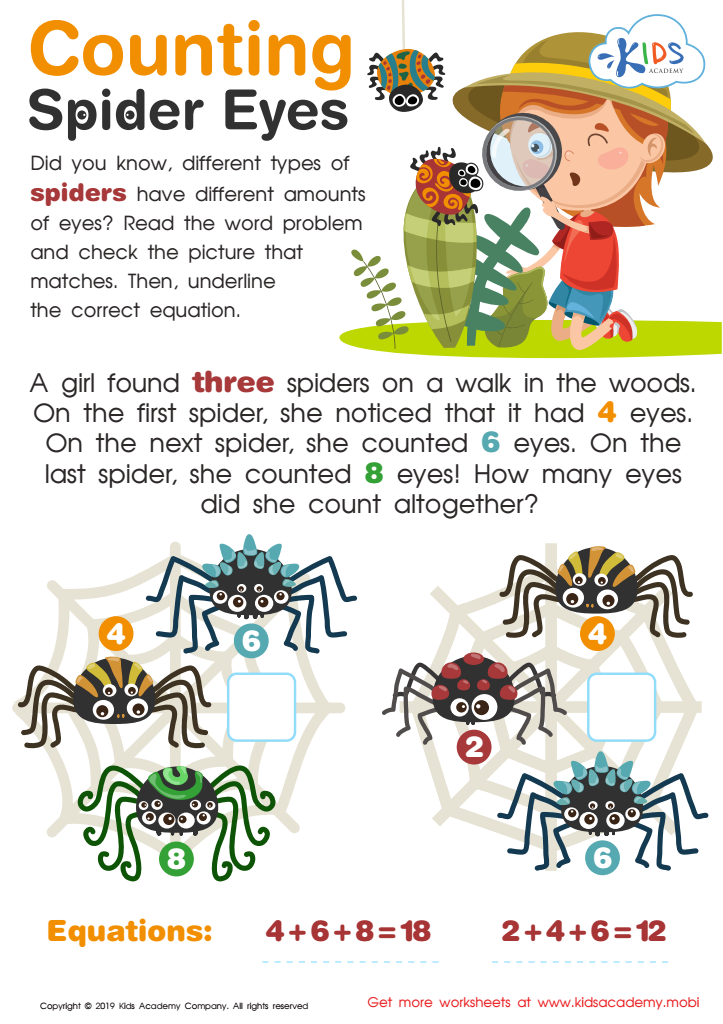
Counting Spider Eyes Worksheet
 Assign to My Students
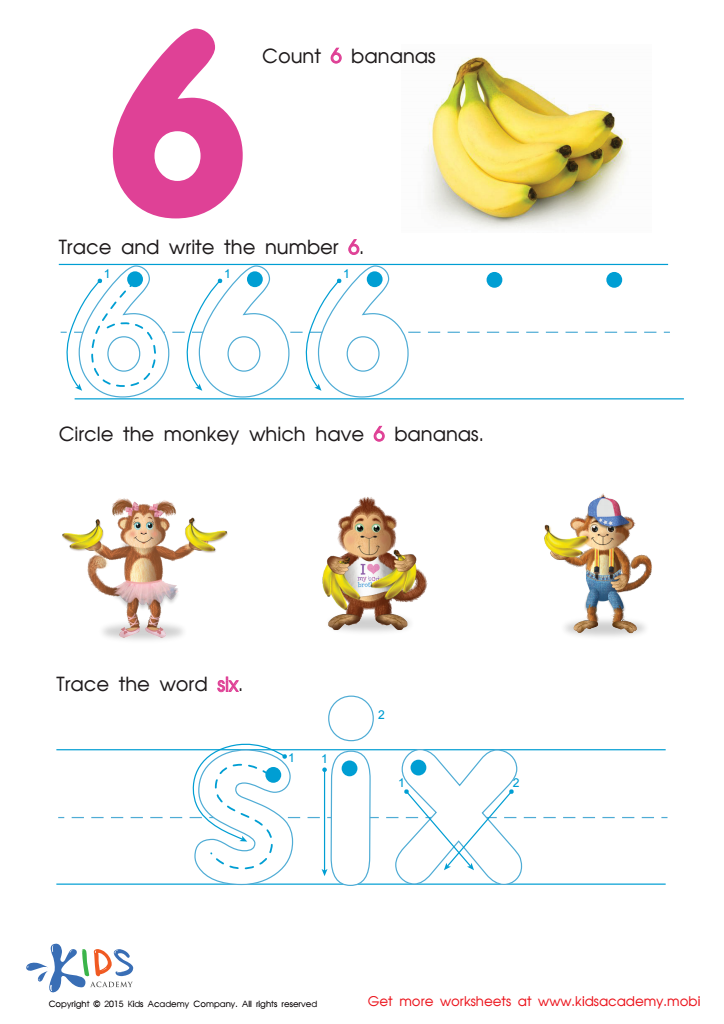
Tracing And Writing Number 6 Worksheet
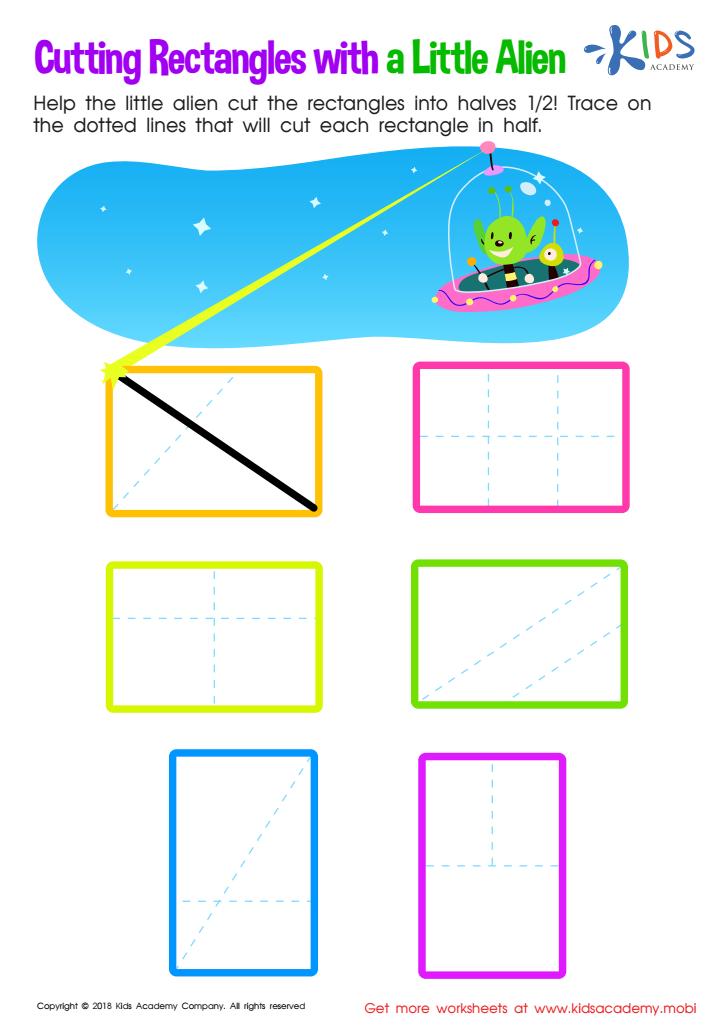
Cutting Rectangles with Alien Worksheet
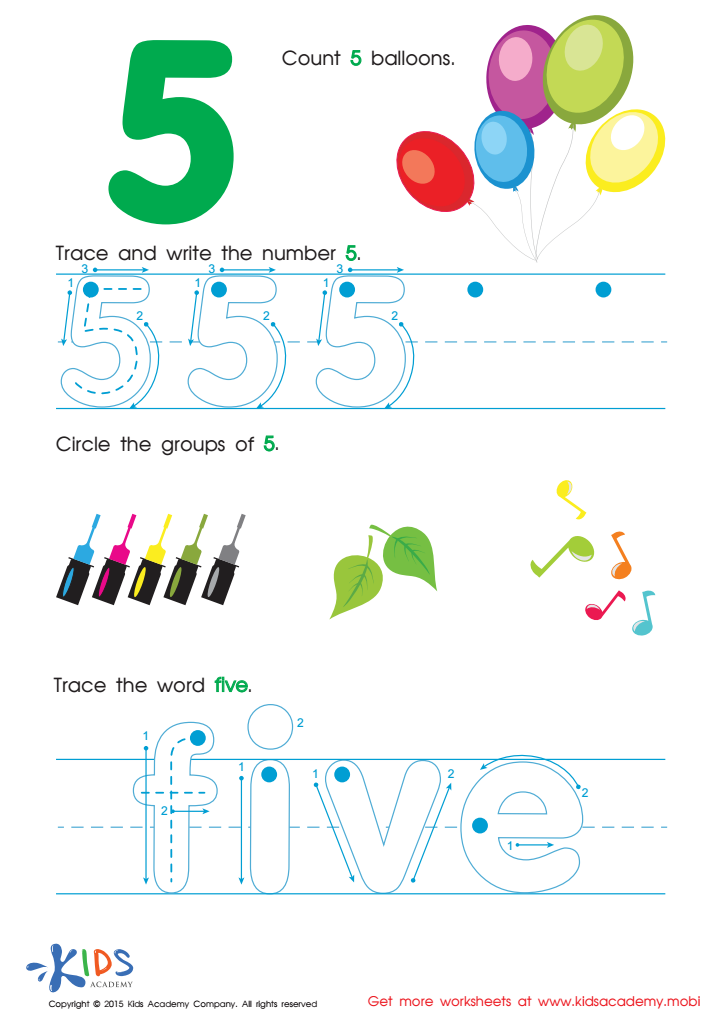
Practice Writing Number 5 Worksheet








Hand-eye coordination is a crucial skill for children aged 7-8, impacting their ability to perform various tasks effectively, including mathematical activities. This age group is typically transitioning from concrete to more abstract mathematical concepts, and optimal hand-eye coordination can enhance their engagement and success in learning.
Parents and teachers should prioritize developing this skill because it directly influences children's ability to manipulate tools such as pencils, rulers, and calculators, which are essential for solving mathematical problems. Improved hand-eye coordination allows for better spatial awareness and fine motor skills, both of which are important for drawing shapes, measuring lengths, and creating graphs—key components of early math lessons.
Moreover, when children have better hand-eye coordination, they are likely to experience increased confidence in their mathematical abilities, which can foster a positive attitude toward learning. This confidence can translate into better classroom participation and enthusiasm for tackling new concepts.
In summary, fostering hand-eye coordination is vital not only for improving practical math skills but also for building a child's overall cognitive development, motivation, and self-esteem in learning environments. By supporting these abilities early on, parents and teachers can set the foundation for long-term academic success.








