Spatial awareness Normal Math Worksheets for Ages 7-8
6 filtered results
-
From - To
Our Spatial Awareness Normal Math Worksheets for Ages 7-8 are designed to enhance your child's cognitive and problem-solving skills through interactive and engaging activities. The worksheets offer a variety of exercises that help young learners understand spatial relationships, improve their geometry skills, and boost their overall math comprehension. Each worksheet is crafted to make learning fun, featuring colorful designs and age-appropriate challenges that align with core math standards. Perfect for both classroom and home practice, these worksheets will give your child the confidence and proficiency they need to excel in math. Accessible, effective, and enjoyable – bring spatial awareness to life!
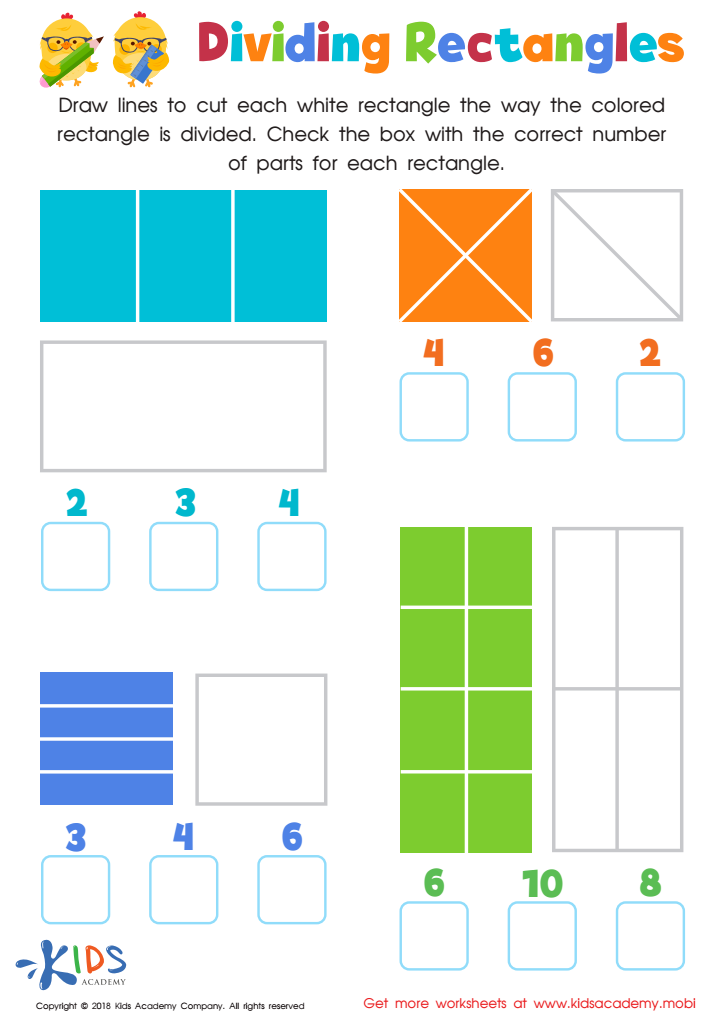
Dividing Rectangles Worksheet
 Assign to My Students
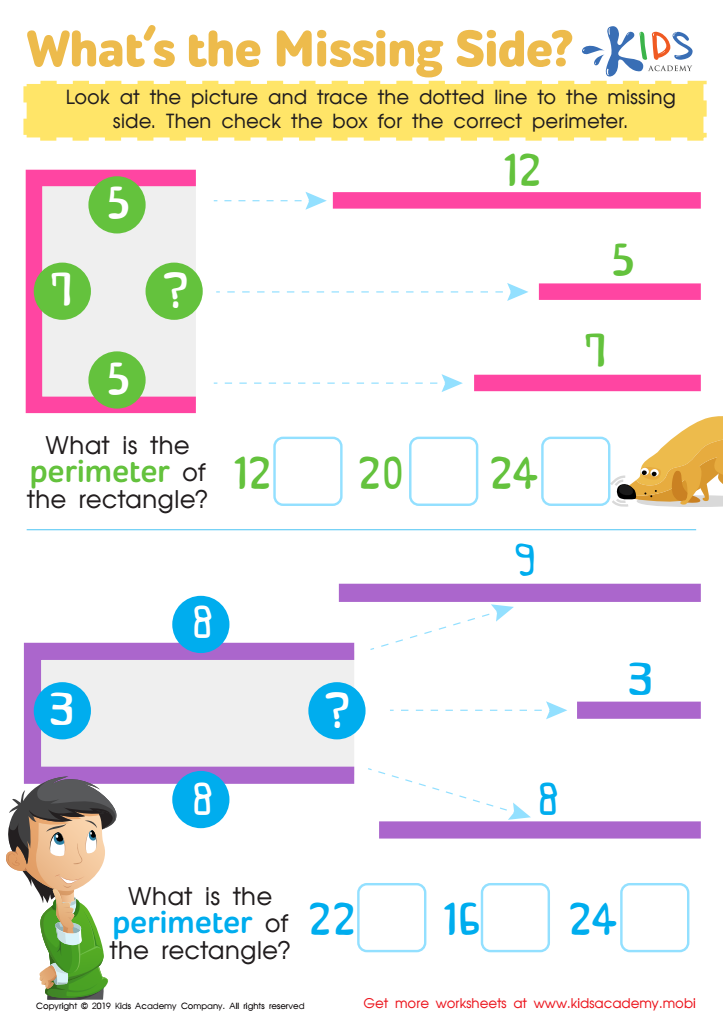
What's the Missing Side Worksheet
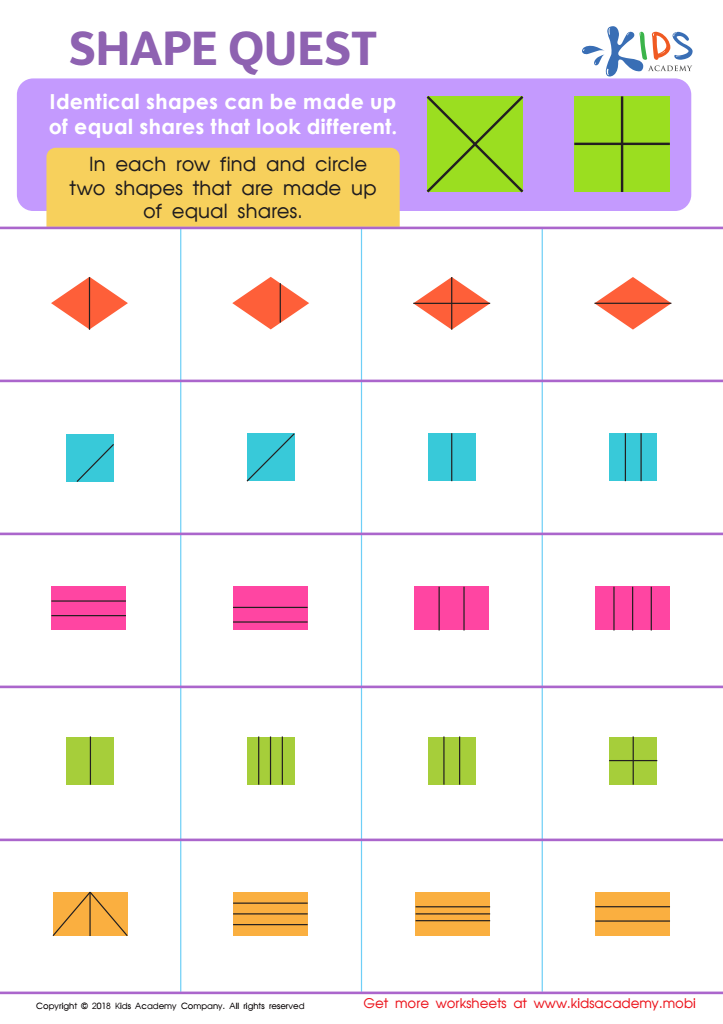
Shape Quest Worksheet
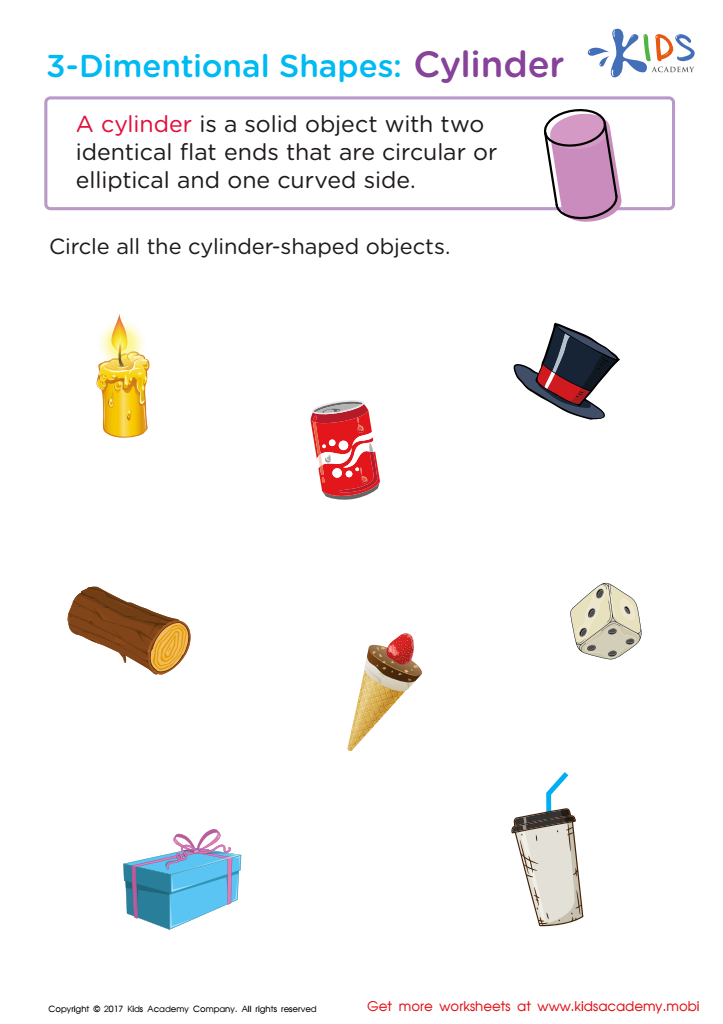
Three–Dimensional Shapes: Cylinder Worksheet
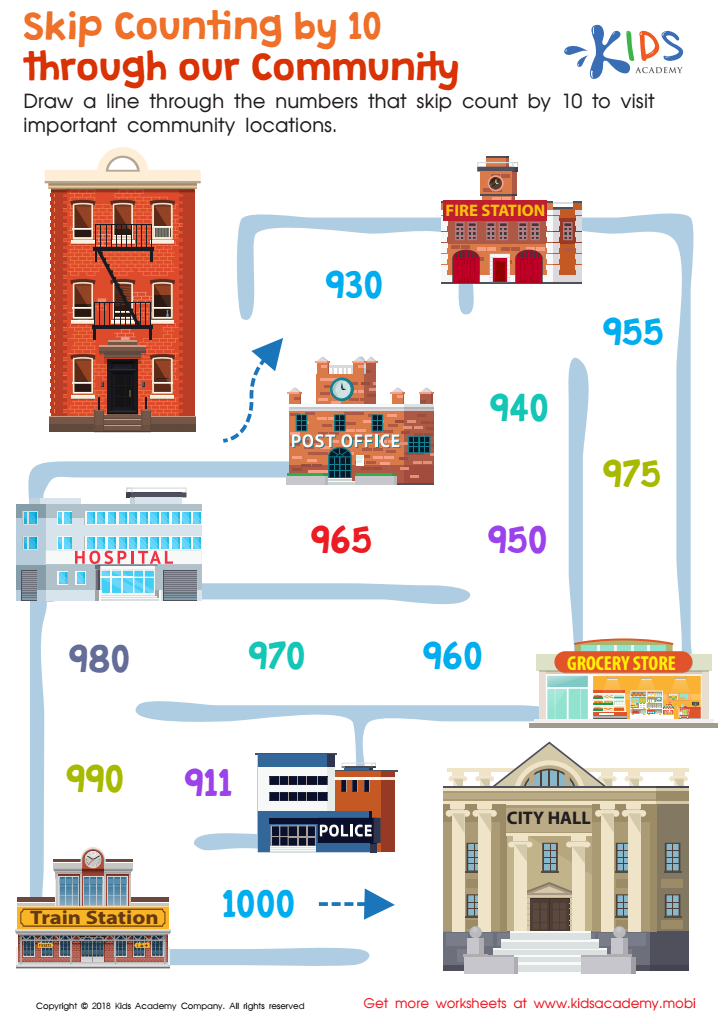
Skip Counting by 10 Through Our Community Worksheet
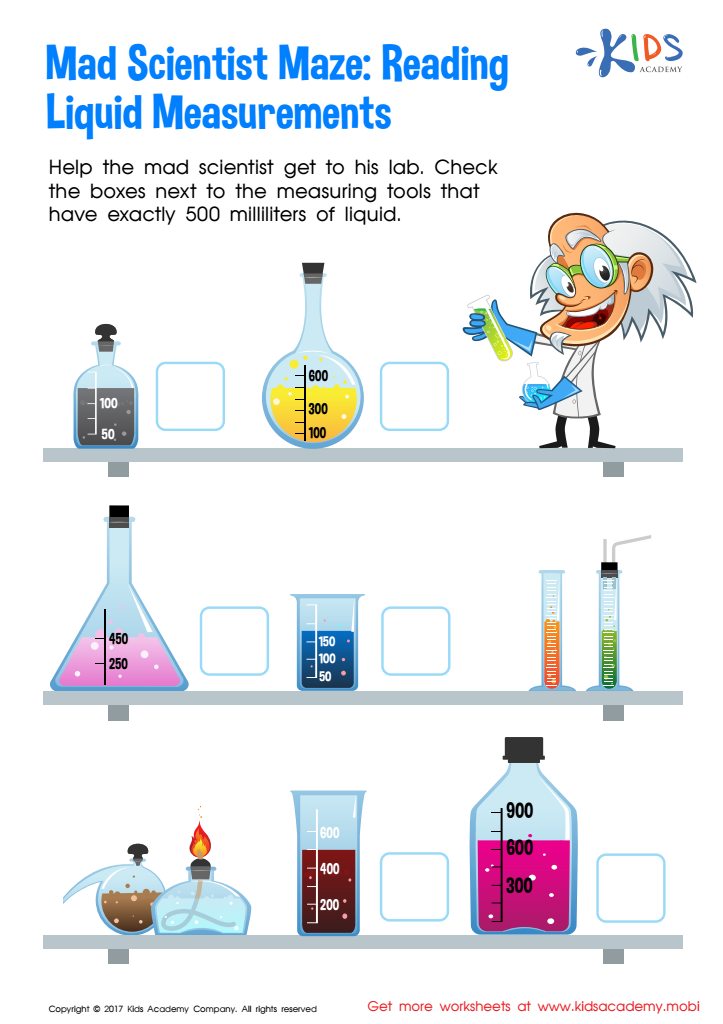
Reading Liquid Measurement Worksheet







Spatial awareness in children aged 7-8 is crucial for their overall cognitive development, including math proficiency. This skill involves understanding and remembering the spatial relationships between objects, including their shapes, sizes, and positions in space. Strong spatial awareness is a foundation for various mathematical concepts and problem-solving skills.
In math, spatial awareness helps children grasp geometry concepts, such as recognizing shapes, understanding symmetry, and visualizing transformations. It supports comprehension of measurement, by aiding in the understanding of length, volume, and area. Activities like puzzles, building blocks, and drawing can enhance these skills, leading to better academic performance.
For parents and teachers, fostering spatial awareness can ease the transition from concrete to abstract mathematical thinking. This is particularly useful when kids tackle more complex problems that involve visualizing steps or predicting outcomes. Additionally, improving spatial skills can support reading comprehension, as children are better able to understand the relationship between parts of a text.
Moreover, spatial awareness contributes to everyday tasks and overall intelligence. It aids in navigation, sports, and even future careers in STEM (Science, Technology, Engineering, and Mathematics). Thus, paying attention to and nurturing spatial awareness in 7-8 year-olds prepares them for a wide range of educational and life challenges, fostering well-rounded cognitive development.








