Understanding place values Normal Math Worksheets for Ages 7-8
9 filtered results
-
From - To
Dive into the world of numbers with our “Understanding Place Values” math worksheets, specially designed for children aged 7-8. These engaging activities help young learners grasp the concept of place values, transforming abstract math into clear, manageable tasks. Each worksheet offers practice with units, tens, hundreds, and beyond, solidifying foundational math skills. Perfect for both classroom use and at-home practice, our worksheets ensure comprehensive understanding through hands-on activities and interactive problems. Watch your child's confidence and proficiency with numbers soar as they master this essential math skill. Make learning fun and effective with our expertly crafted place value worksheets.
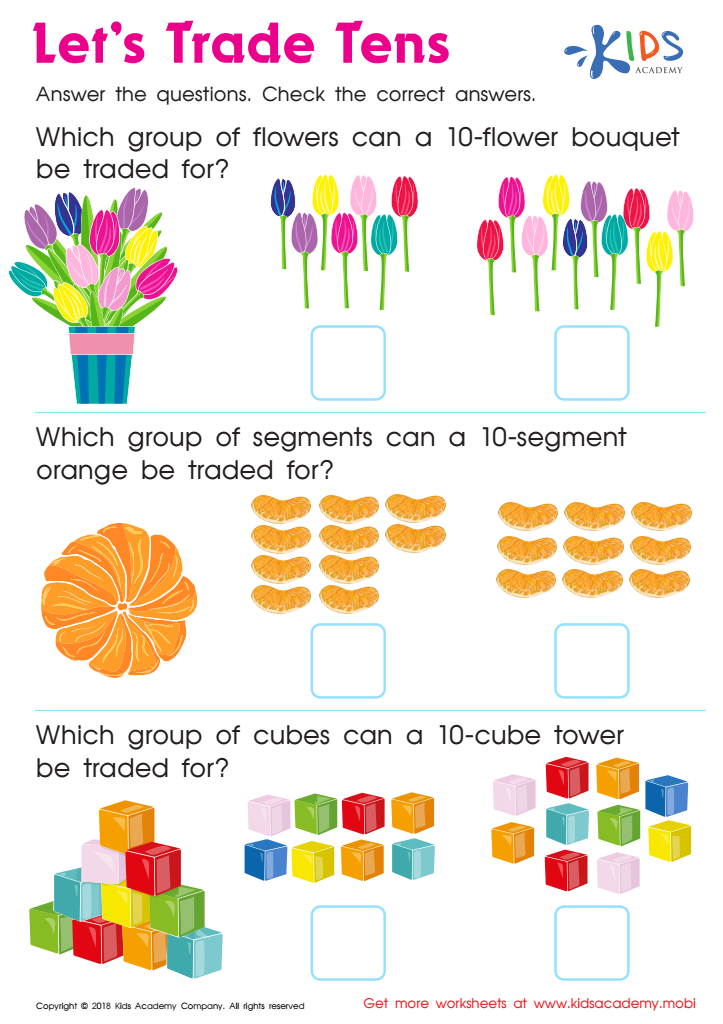
Lets Trade Tens Worksheet
 Assign to My Students
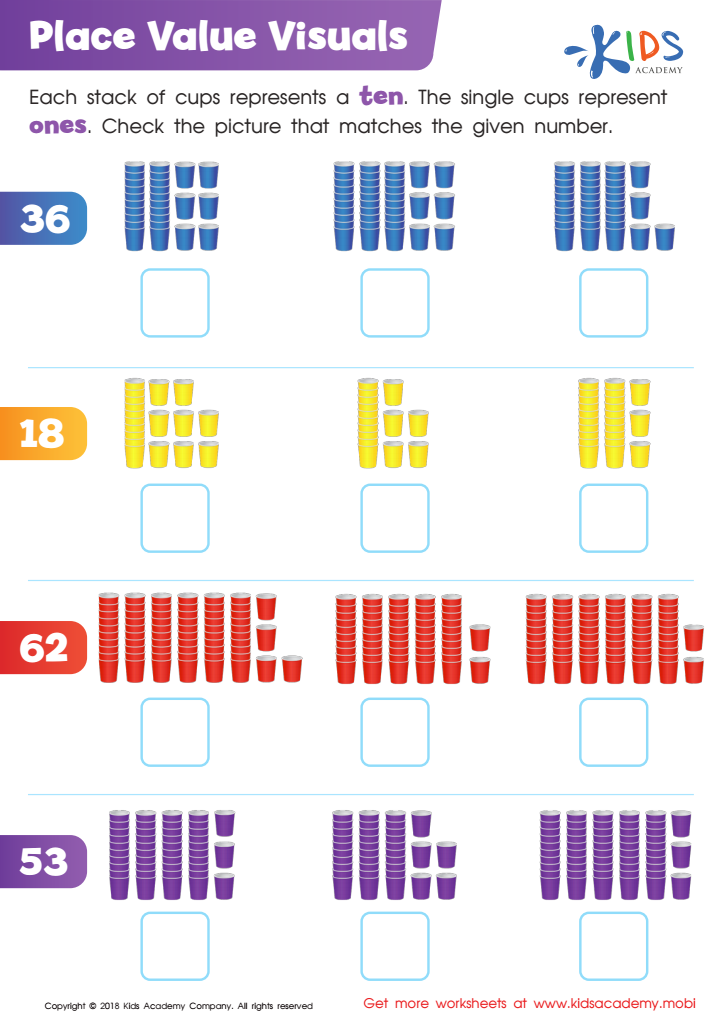
Place Value Visuals Worksheet
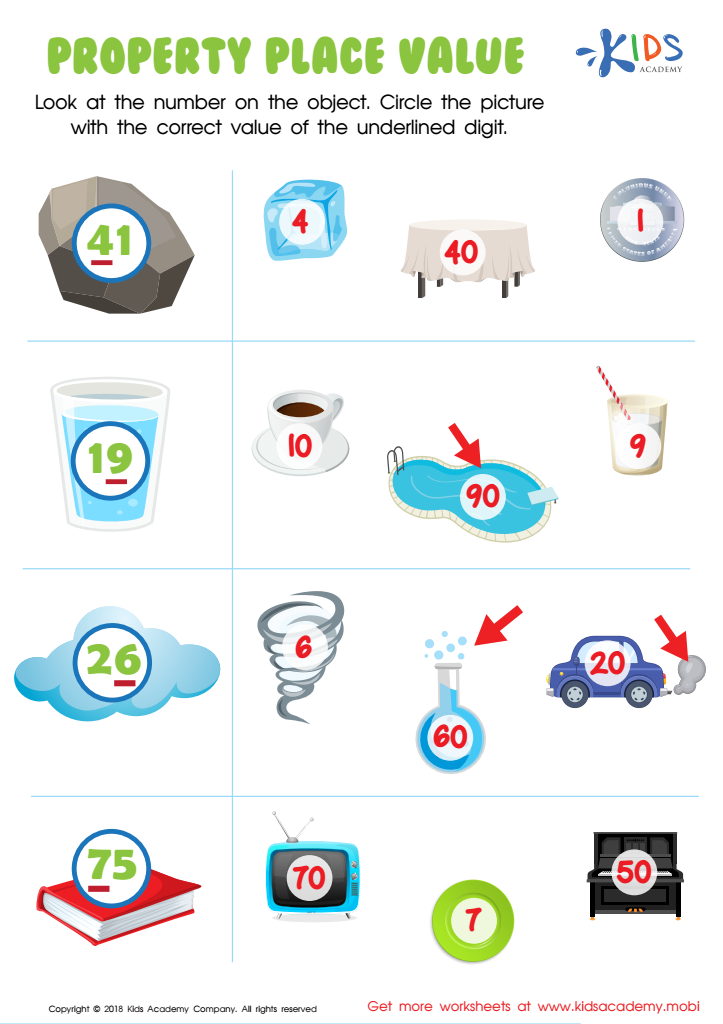
Property Place Value Worksheet
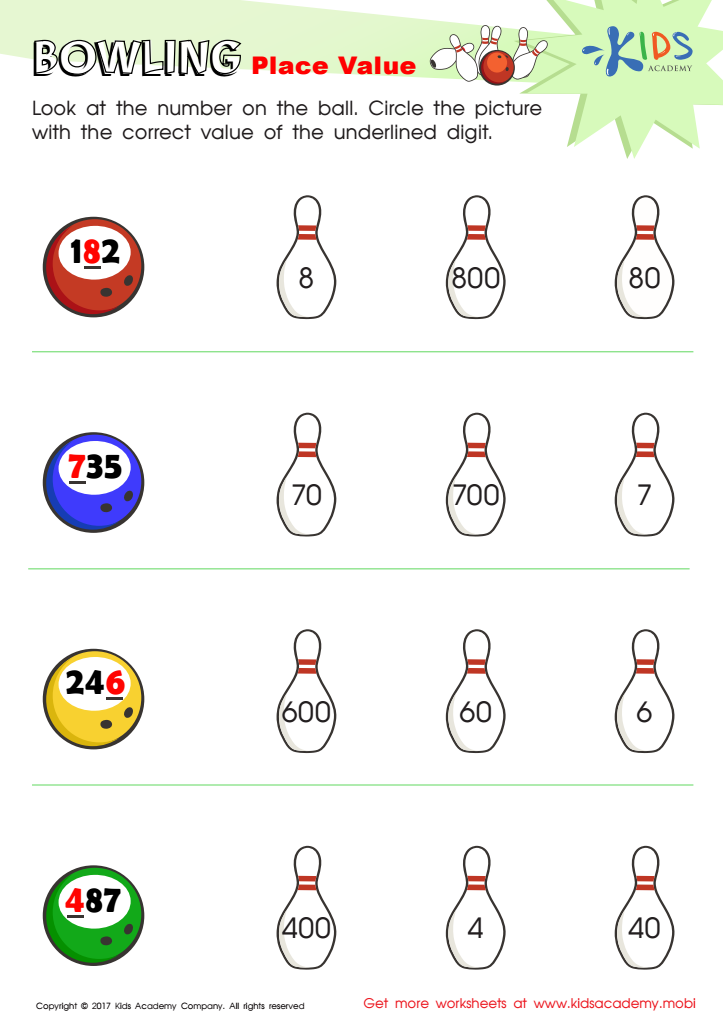
Place Value Worksheet
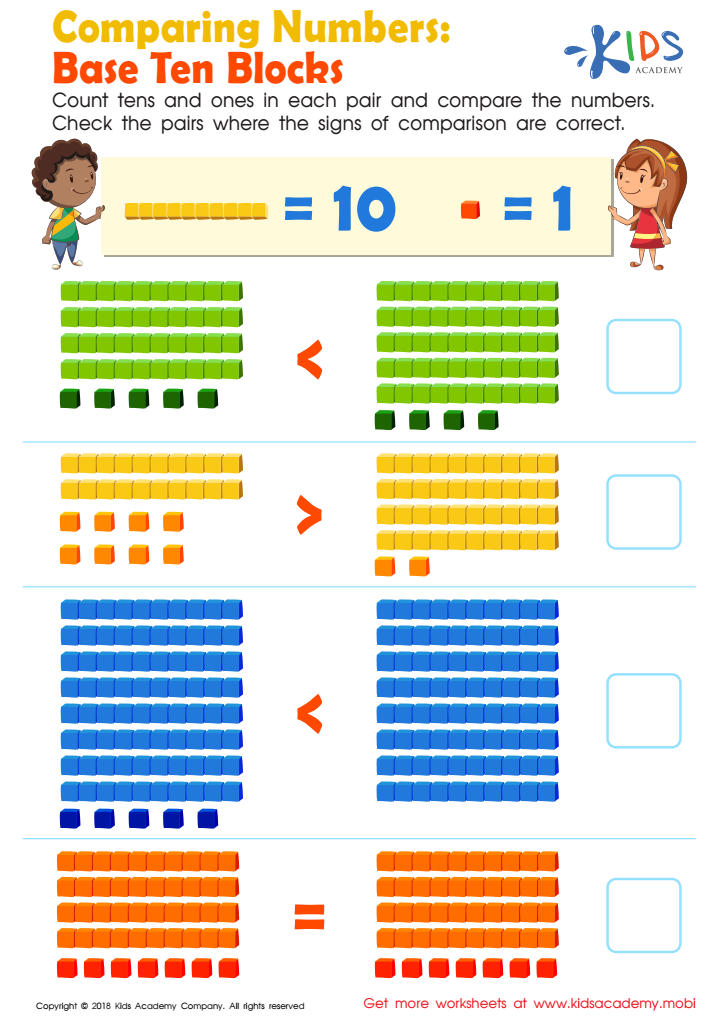
Comparing Numbers: Base Ten Blocks Worksheet
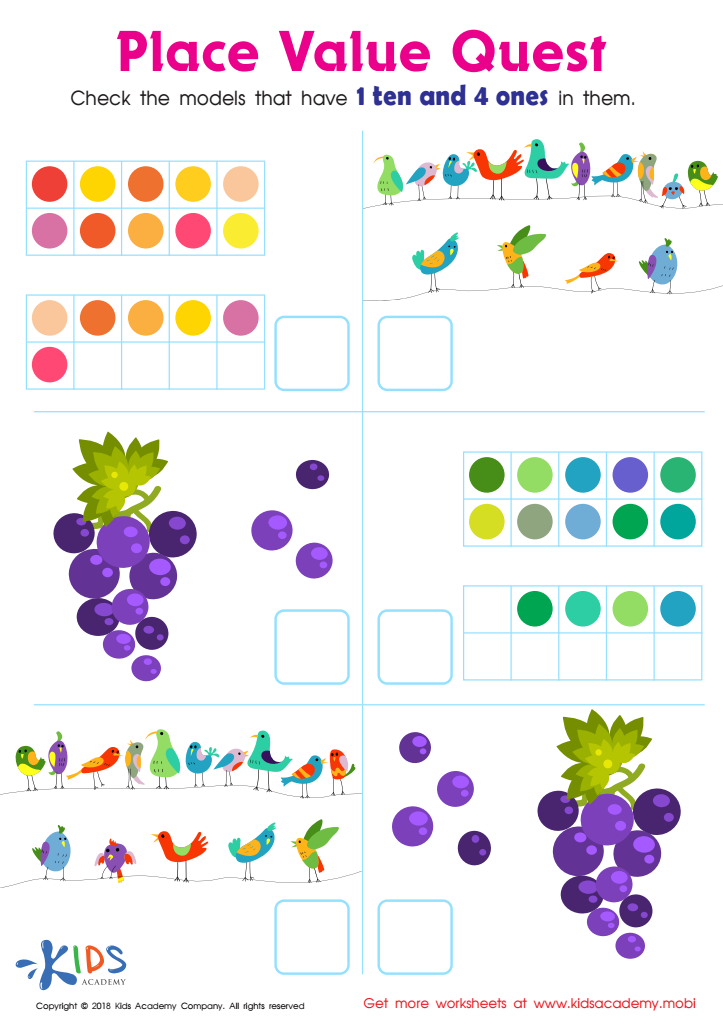
Place Value Quest Worksheet
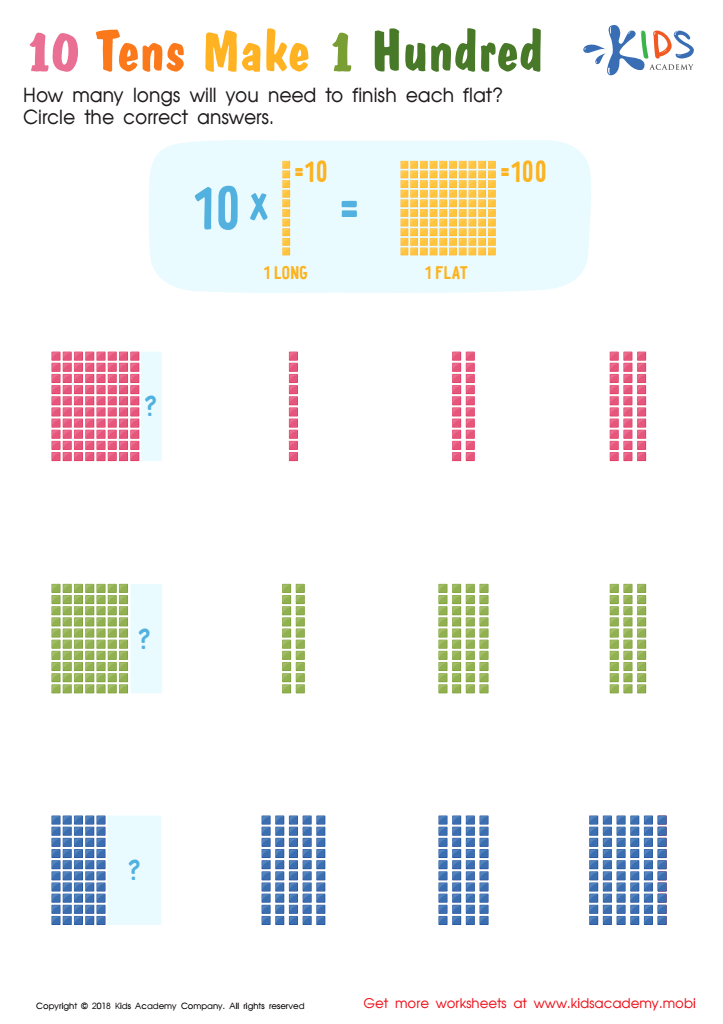
10 Tens Make 1 Hundred Worksheet
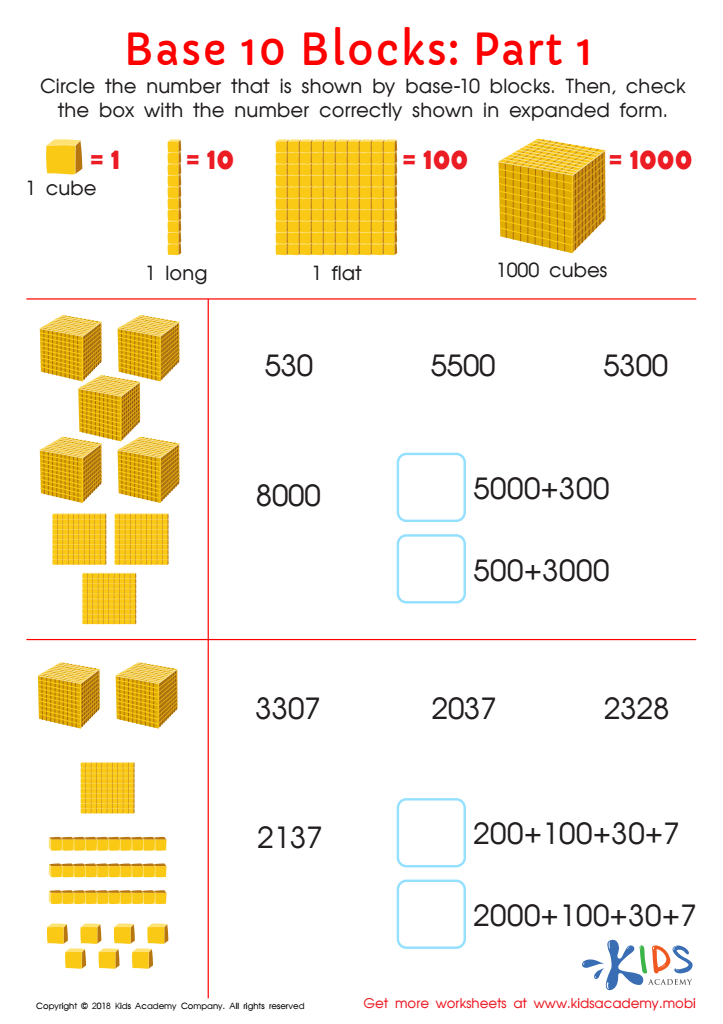
Base 10 Blocks Worksheet: Part 1
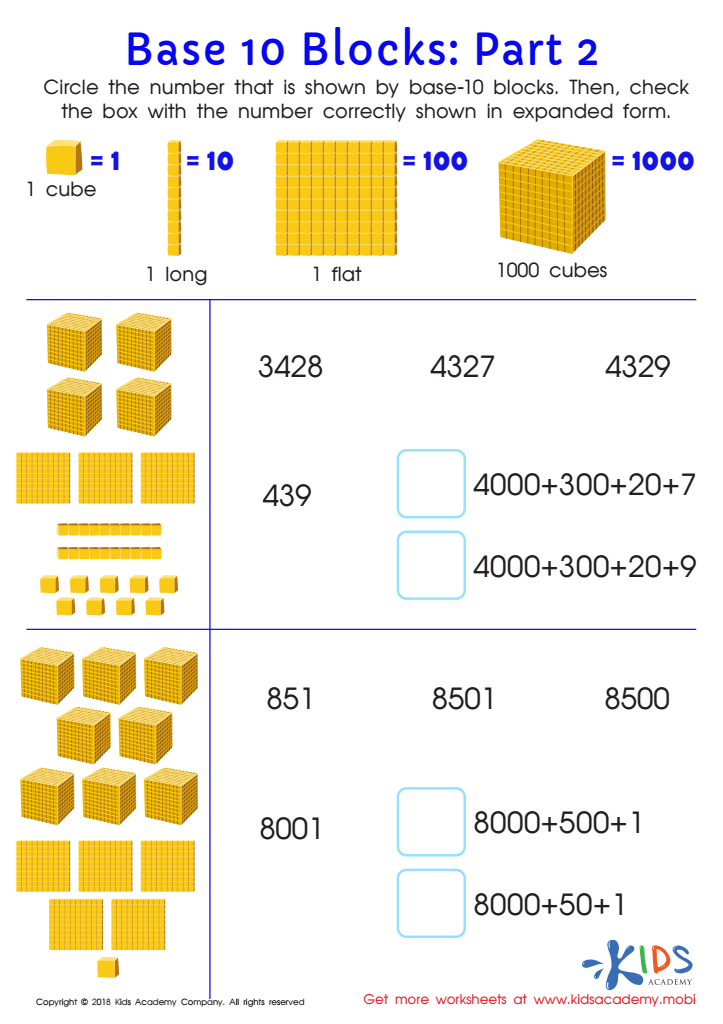
Base 10 Blocks Worksheet: Part 2




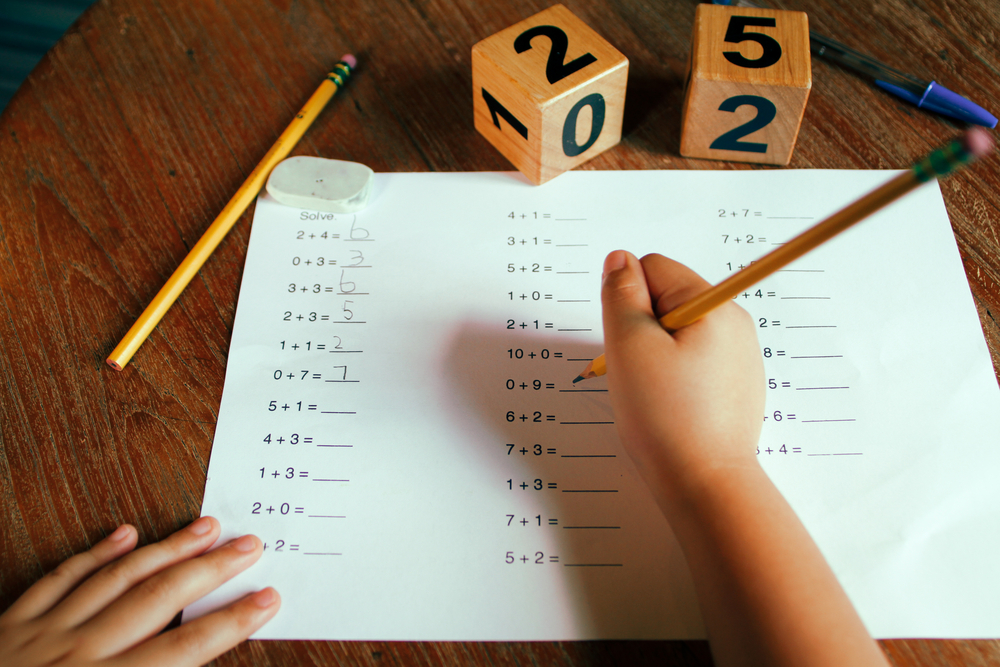


Understanding place values is fundamental in early math education, particularly for children ages 7-8. Place values form the building block for all subsequent mathematical concepts, such as addition, subtraction, multiplication, and division. When kids grasp place value, they recognize that the position of a digit in a number determines its actual value (units, tens, hundreds, etc.).
This understanding enhances their ability to perform arithmetic operations more efficiently and accurately. For example, in the number 547, knowing that 5 stands for five hundred rather than just five is crucial for accuracy. It lays the groundwork for not just arithmetic but also for more advanced topics like decimals, fractions, and even algebra.
Moreover, proficiency in place value is correlated with better number sense, a critical skill for logical reasoning and problem-solving. Teachers and parents should focus on place values because a weak understanding can lead to confusion and mistakes, making future math learning more difficult and less enjoyable.
Investing time in ensuring that children master this concept early on can foster a positive and confident outlook towards math, paving the way for academic success and developing skills useful in everyday life, such as in managing money and time. By prioritizing place values, adults support their children in building a robust mathematical foundation.








