Understanding rounding Normal Math Worksheets for Ages 7-8
5 filtered results
-
From - To
Welcome to our "Understanding Rounding Normal Math Worksheets" for ages 7-8! These engaging worksheets are designed to enhance young learners' math skills by introducing the concept of rounding numbers. Through fun and interactive exercises, children will practice identifying place values and determining whether to round up or down. Our worksheets provide clear instructions and varied problems, ensuring that students can grasp the essentials of rounding in a structured manner. Perfect for homeschooling or classroom use, these resources will boost confidence and competency in math. Download now to make learning rounding a delightful experience for your budding mathematicians!
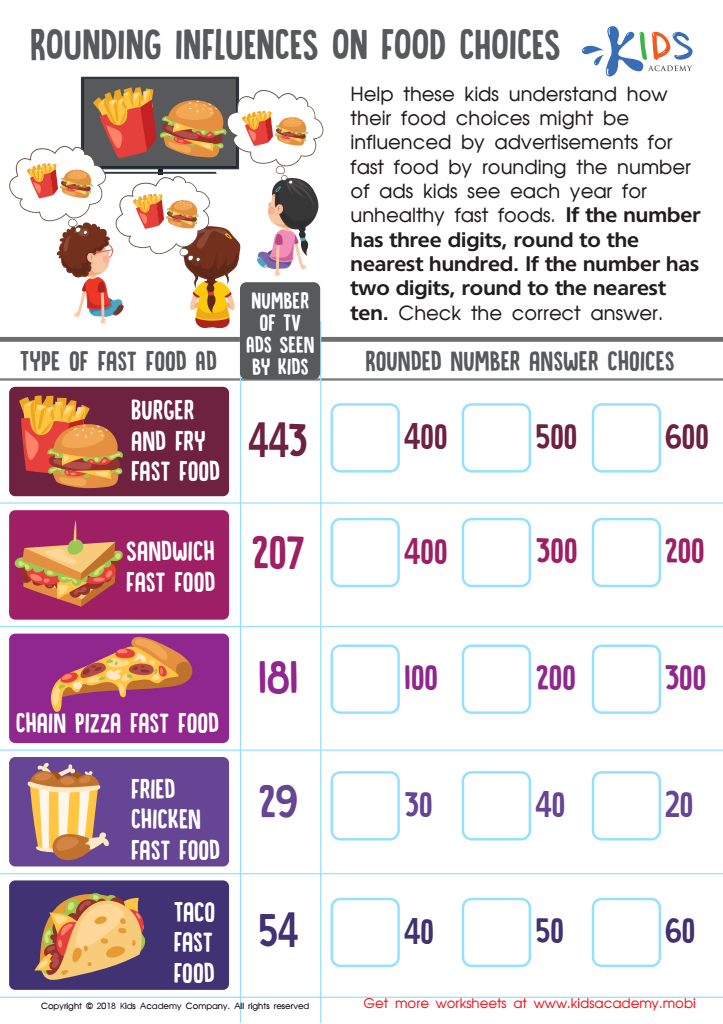
Rounding Influences Food Choices Worksheet
 Assign to My Students
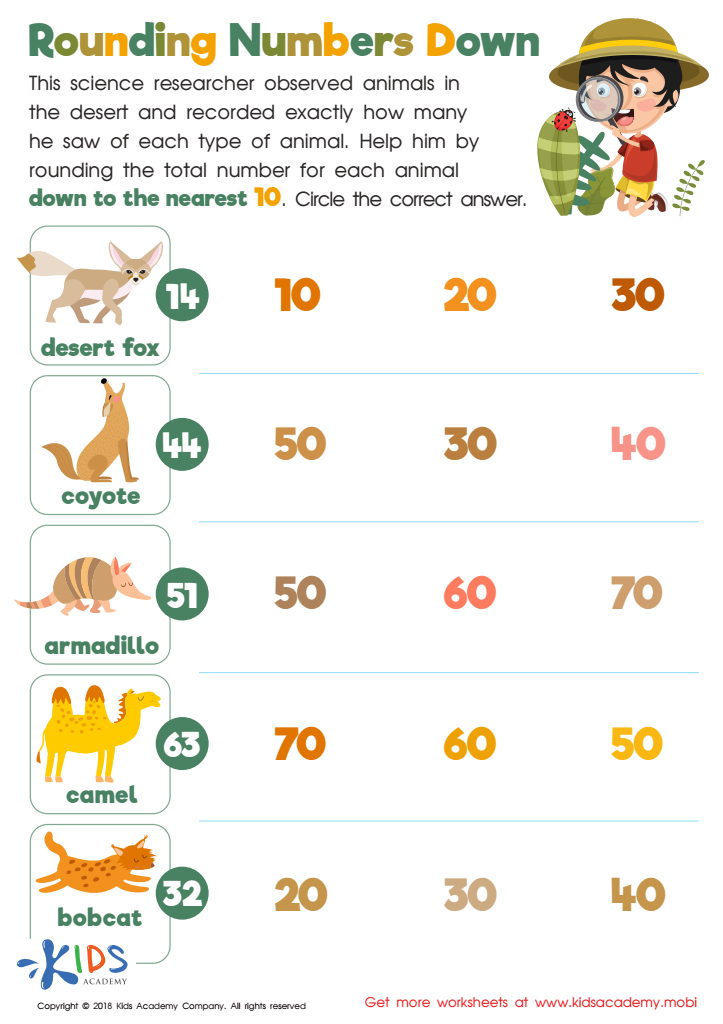
Rounding Numbers Down Worksheet
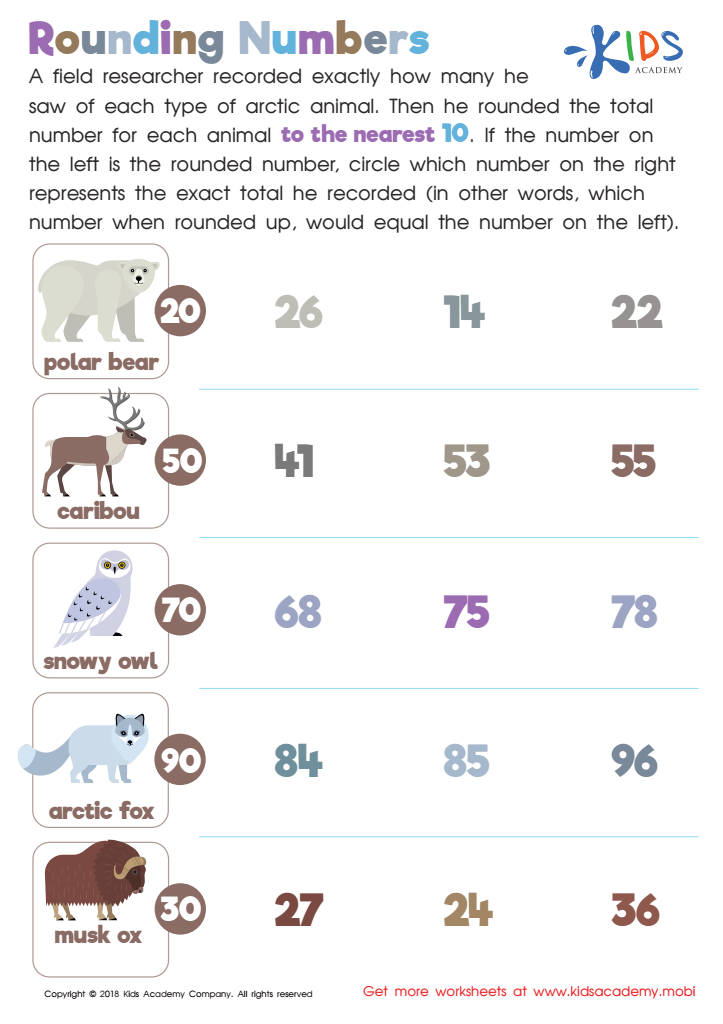
Rounding Numbers Worksheet
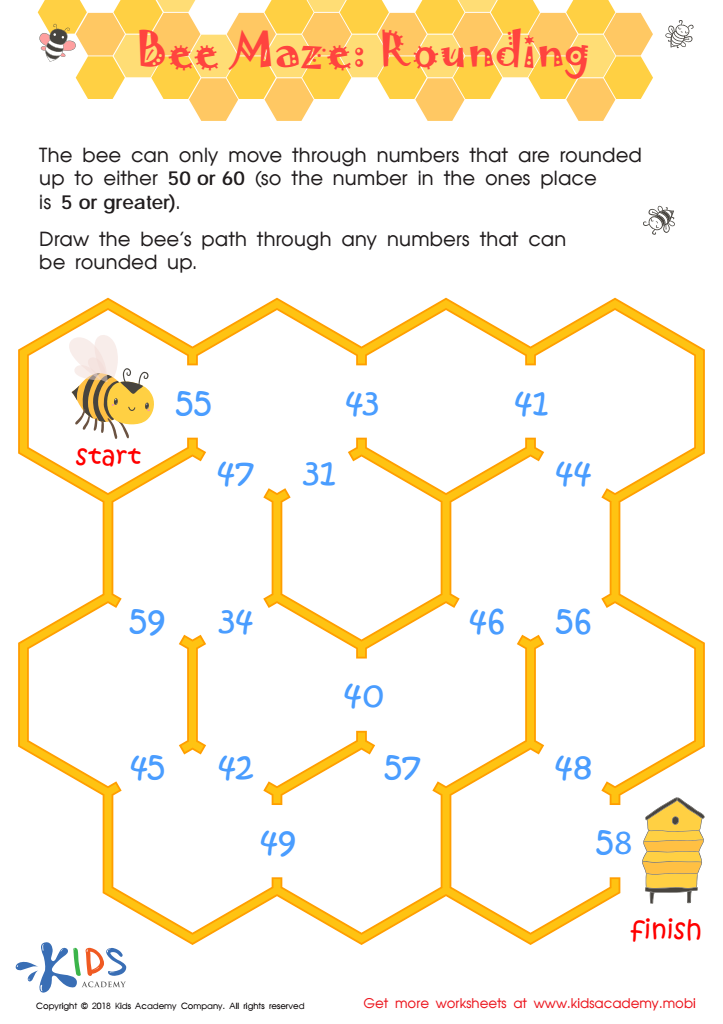
Bee Maze Rounding Worksheet
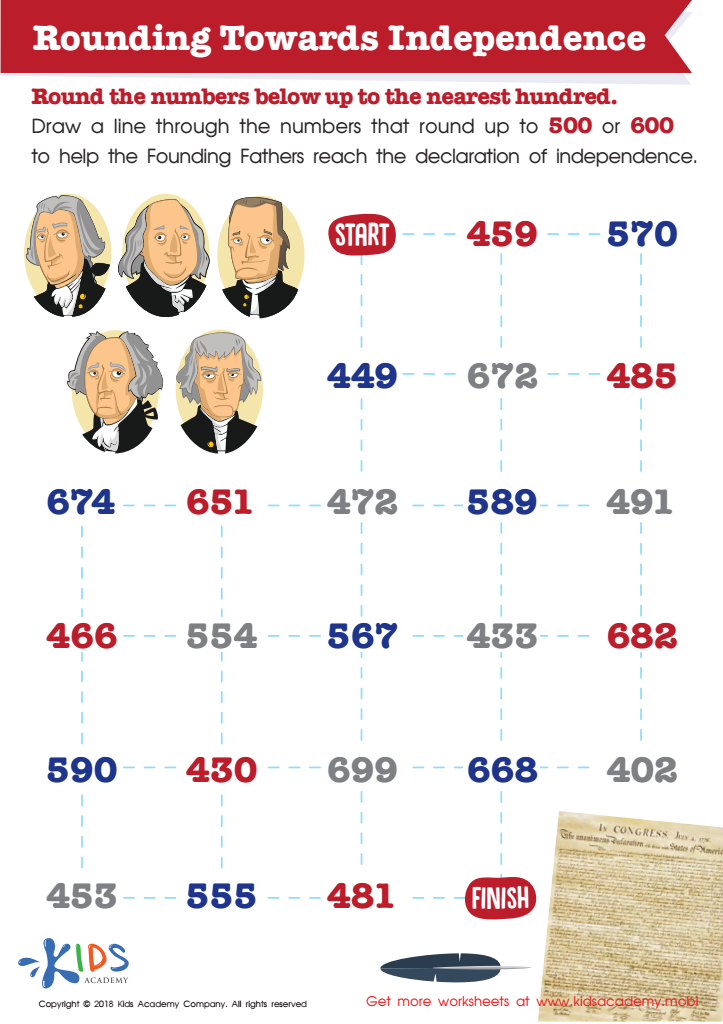
Rounding Towards Independence Worksheet






Understanding rounding is a fundamental math skill crucial for children aged 7-8, and both parents and teachers should prioritize it for several reasons.
Firstly, rounding helps children estimate and simplify numbers, making complex arithmetic more manageable. At this stage, young learners encounter situations where they need to make quick calculations, such as budgeting for small purchases or estimating distances. Mastery of rounding equips them with the ability to make informed decisions in everyday scenarios.
Moreover, rounding serves as a stepping stone to more advanced mathematical concepts. It lays the groundwork for understanding place value and improves number sense. This skill is vital not just in math classes but across subjects, as reasoning and analytical skills develop.
Additionally, rounding fosters critical thinking. Children learn to assess the relevance of numbers, deciding when precision is necessary and when a rounded number suffices. This also enhances their confidence in handling numbers, reducing math anxiety.
Finally, practicing rounding in school involves engaging and playful activities that can promote collaboration between parents and teachers, such as games or real-life problem-solving tasks, fostering a supportive learning environment.
In summary, valuing rounding enhances mathematically literacy, critical thinking, and confidence in young learners.








