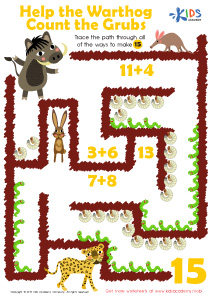
Subtraction practice Normal Subtraction Worksheets for Ages 7-8
6 filtered results
-
From - To
Welcome to our Subtraction Practice Worksheets tailored for children ages 7-8! Designed to enhance your child's arithmetic skills, these printable worksheets offer engaging exercises focused on normal subtraction. With a variety of problems, students will build proficiency in subtracting single and double-digit numbers, developing confidence in their mathematical abilities. Our worksheets incorporate fun themes and colorful illustrations to keep young learners motivated. Perfect for classroom activities or at-home practice, these subtraction exercises support curriculum goals while making learning enjoyable. Help your child master subtraction concepts with our easy-to-use resources, and watch them shine in their math journey!
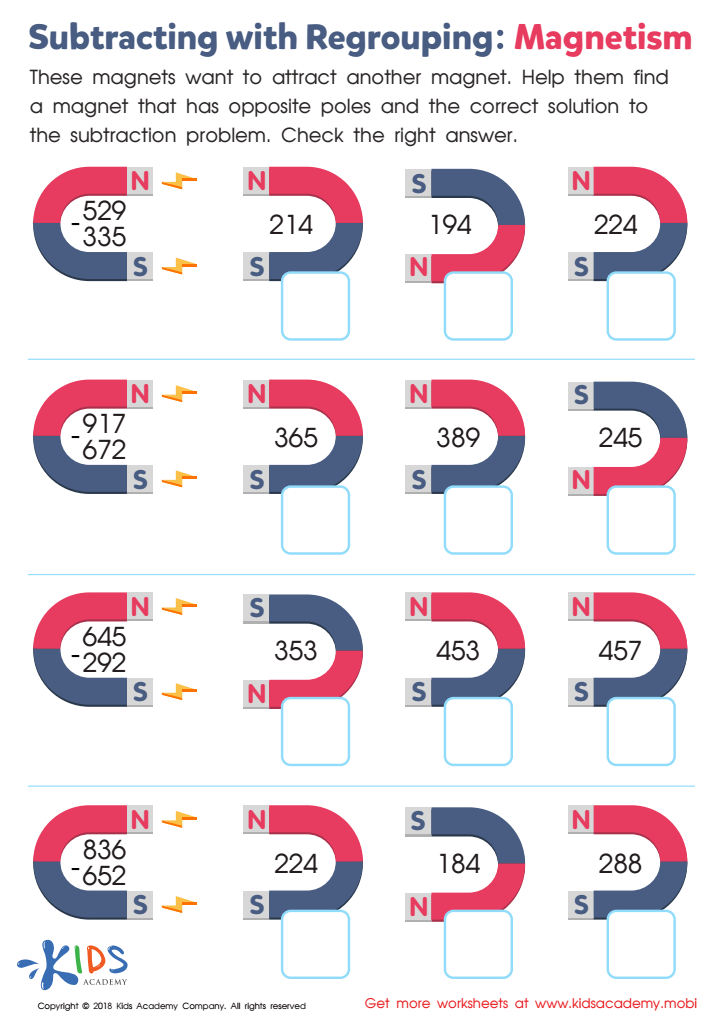
Subtracting with Regrouping: Magnetism Worksheet
 Assign to My Students
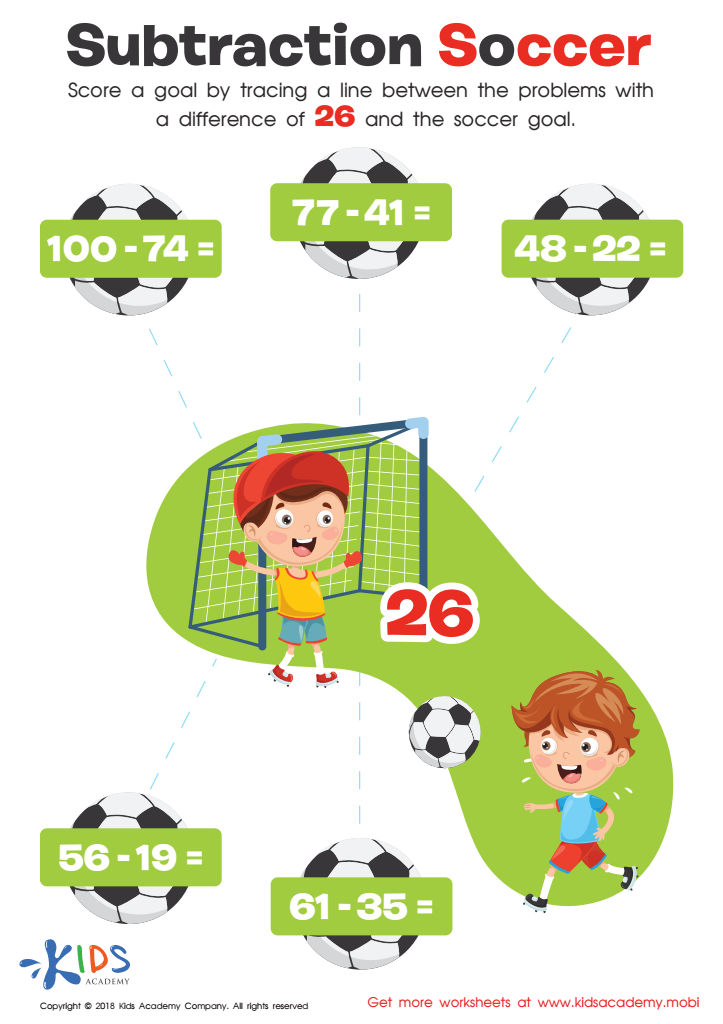
Subtraction Soccer Worksheet
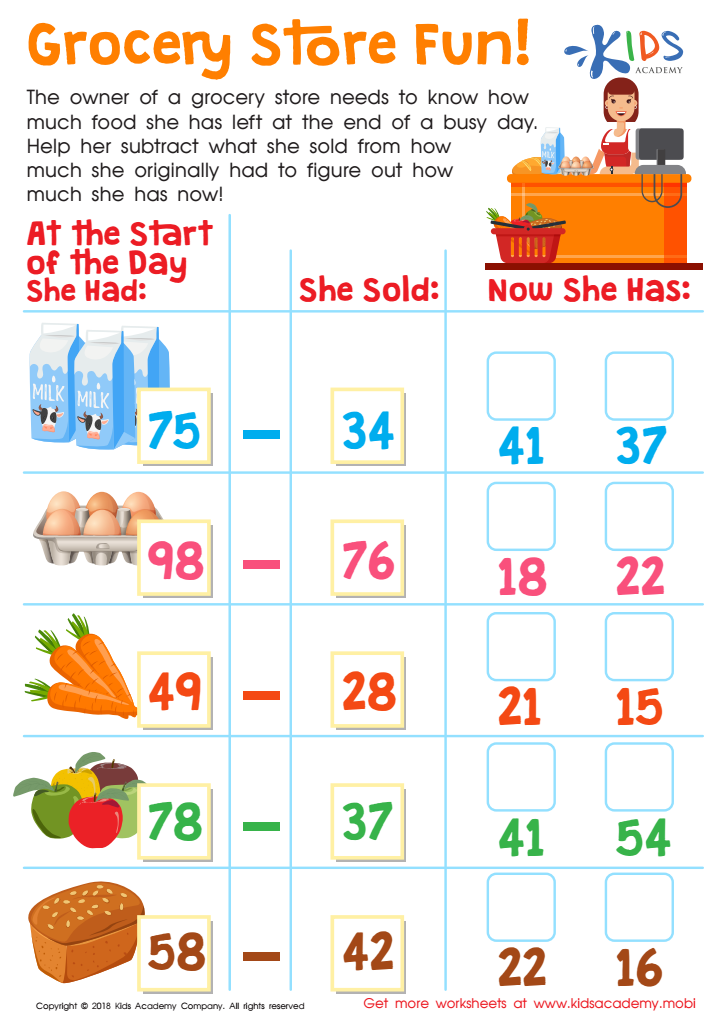
Grocery Store Fun! Worksheet
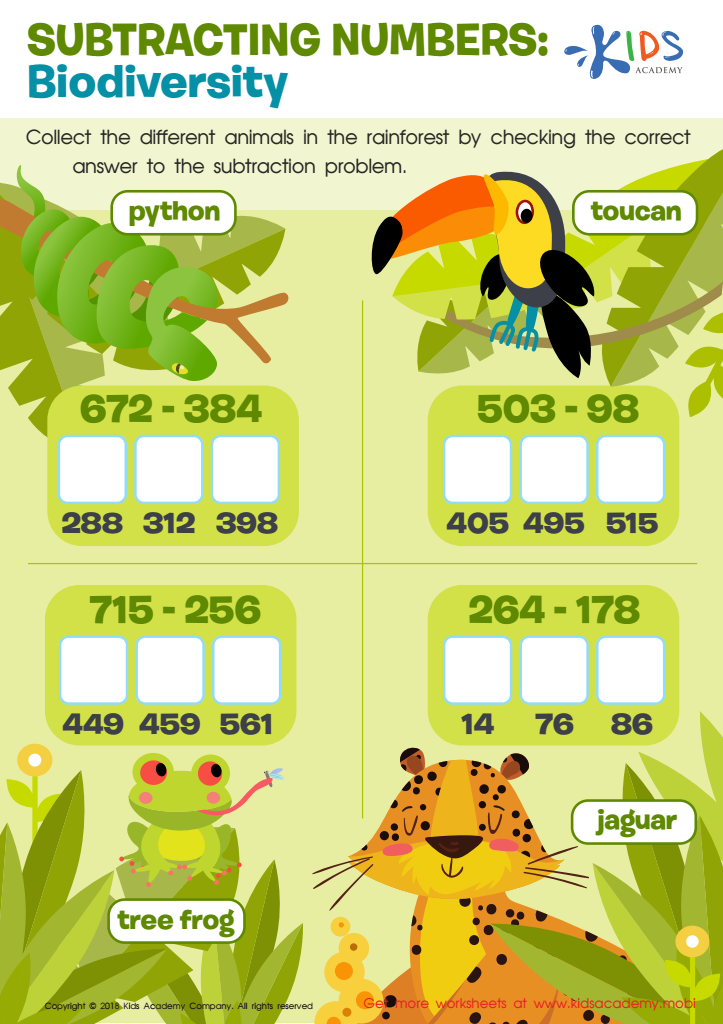
Subtracting Numbers: Biodiversity Worksheet
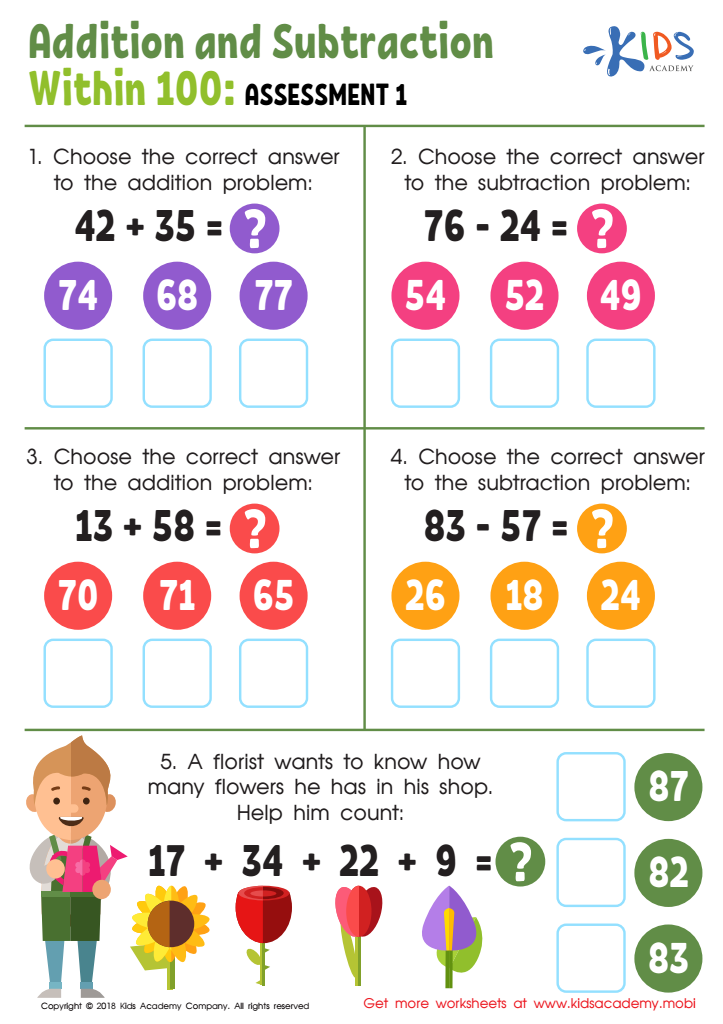
Addition and Subtraction Within 100 Worksheet
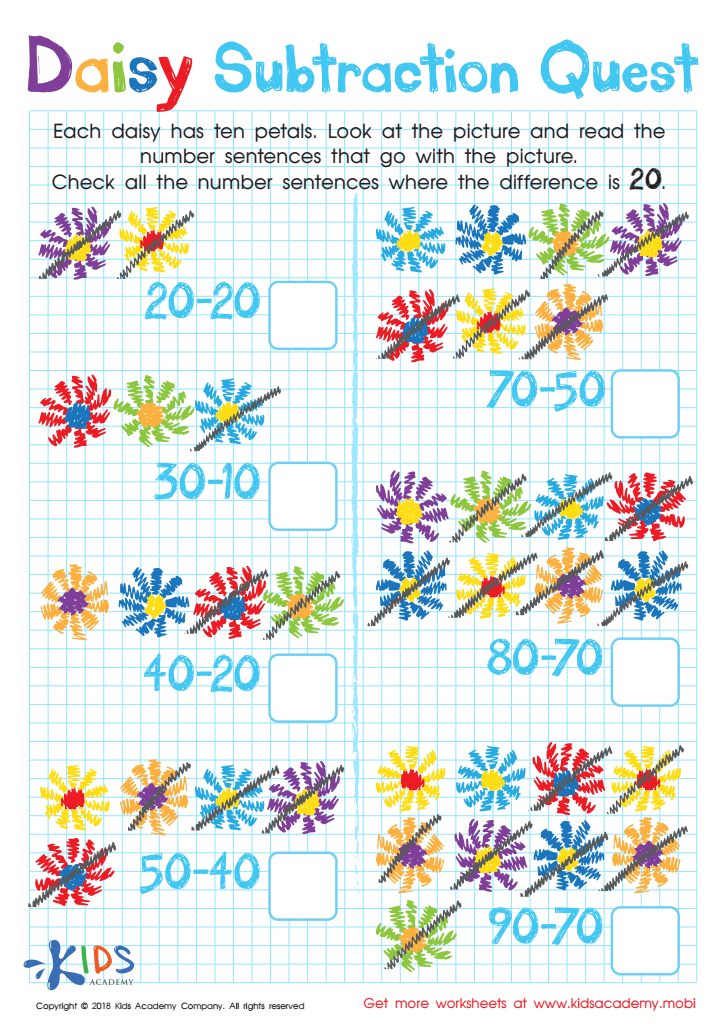
Daisy Subtraction Quest Worksheet



.jpg)




Subtraction practice is crucial for children aged 7-8, as it lays the foundation for their mathematical skills. At this developmental stage, children transition from concrete understanding to more abstract mathematical concepts. Regular subtraction practice enhances their fluency and confidence in basic arithmetic, which is essential for more advanced topics like multiplication, division, and problem-solving.
Fostering subtraction skills also promotes critical thinking. When children encounter real-world scenarios involving quantities—such as calculating change or measuring time—they can apply their subtraction knowledge effectively. Additionally, a solid grasp of subtraction can reduce math anxiety, as children feel more comfortable tackling challenges in school and standardized tests.
Moreover, effective subtraction practice helps develop perseverance and discipline. By engaging in consistent exercises, children learn to approach complex problems methodically, boosting their overall academic performance. For teachers and parents, incorporating enjoyable and interactive subtraction activities can make learning more engaging, ensuring that children remain motivated and invested in their education.
In conclusion, prioritizing subtraction practice for children aged 7-8 promotes not only mathematical proficiency but also essential life skills, setting them on a path for future success in learning and everyday situations.