Critical Thinking Normal Reading Worksheets for Ages 7-8 - Page 2
30 filtered results
-
From - To
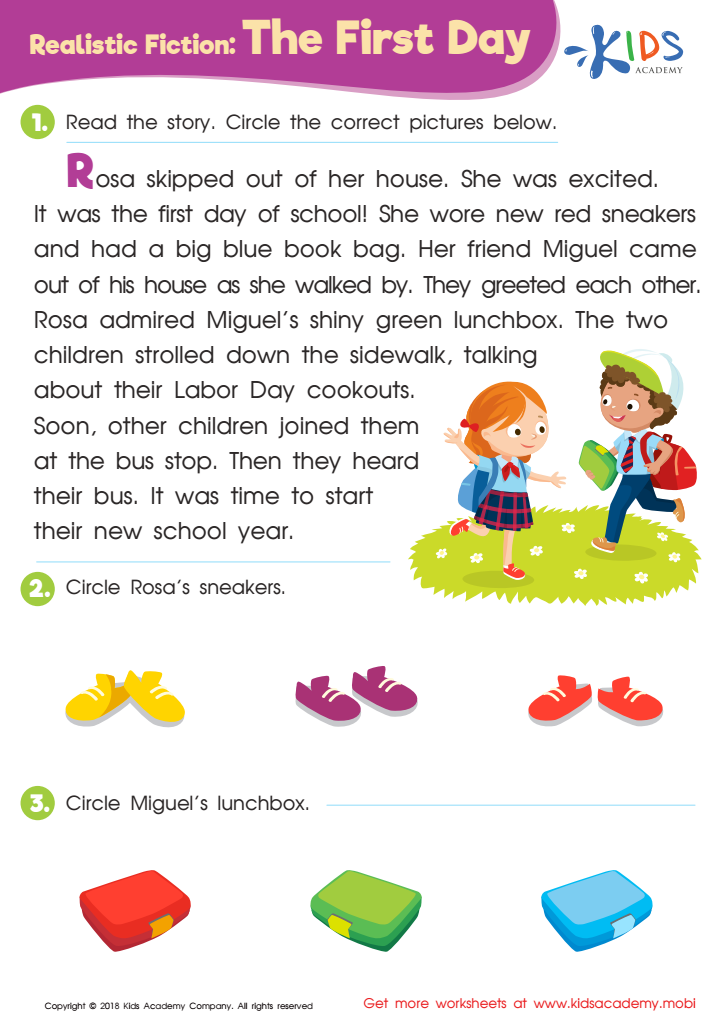
Realistic Fiction: The First Day Worksheet
 Assign to My Students
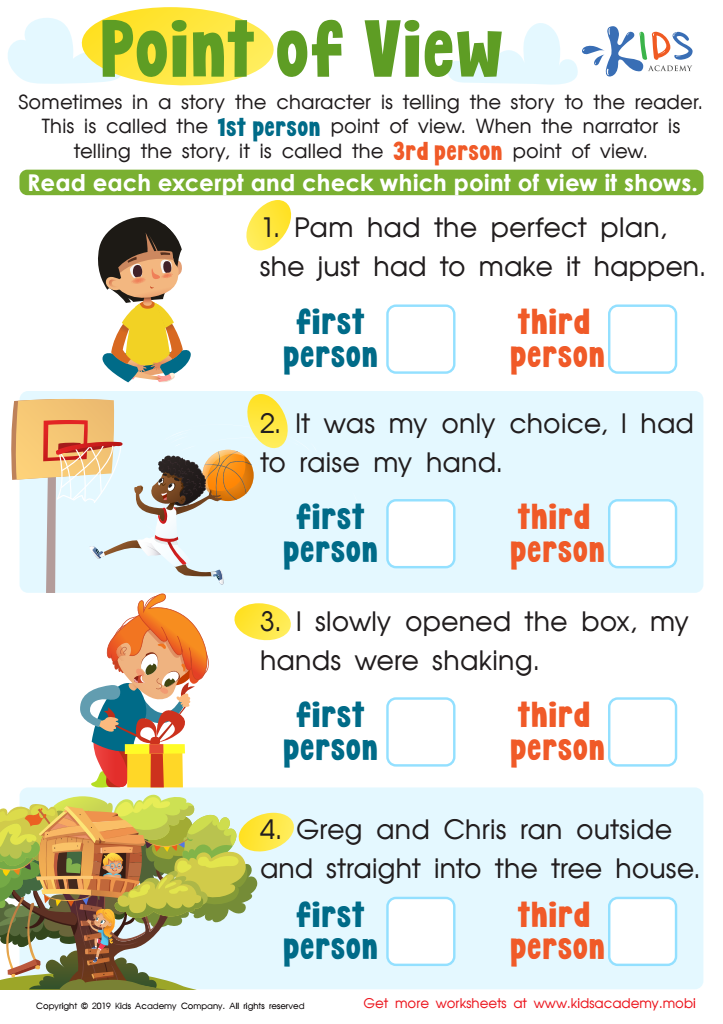
Point of View Printable
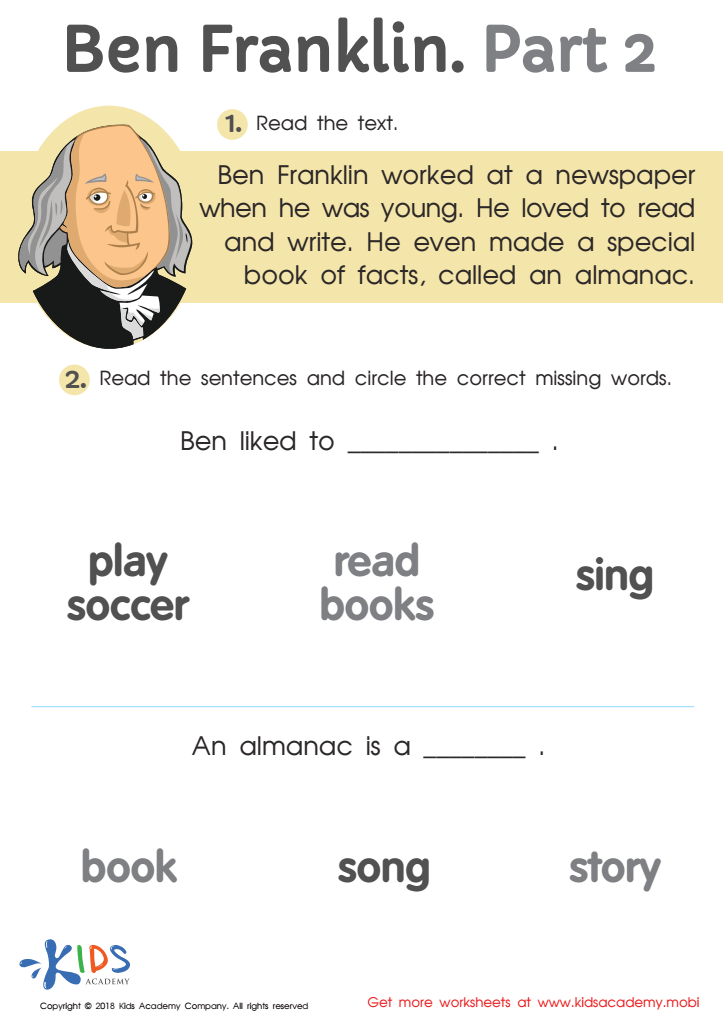
Ben Franklin Part 2 Worksheet
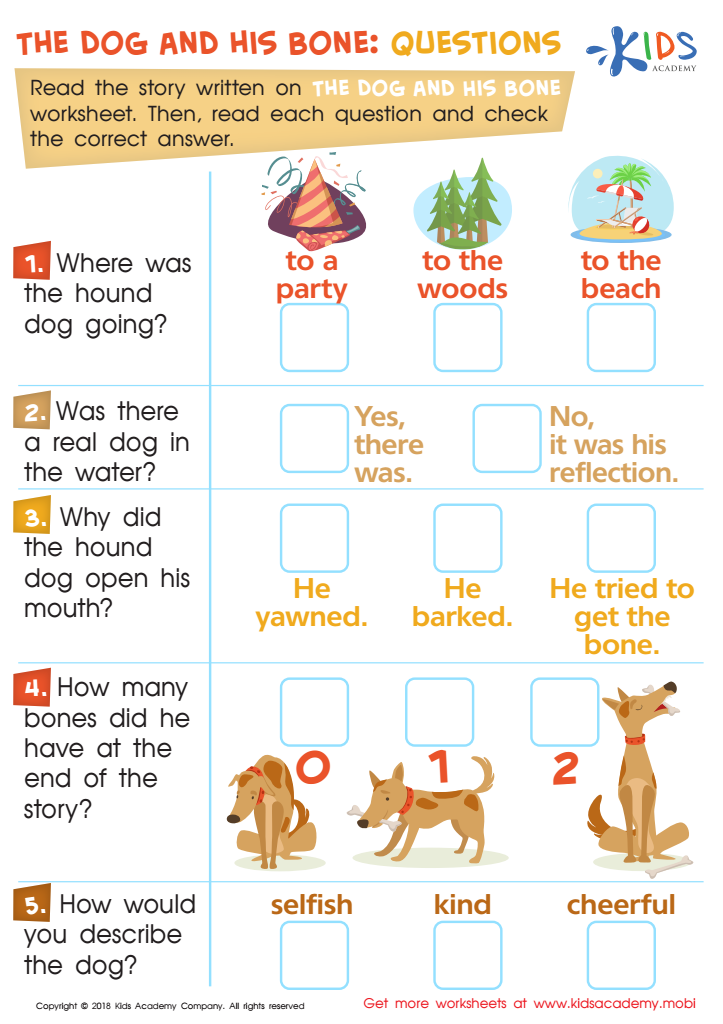
The Dog and His Bone: Questions Worksheet
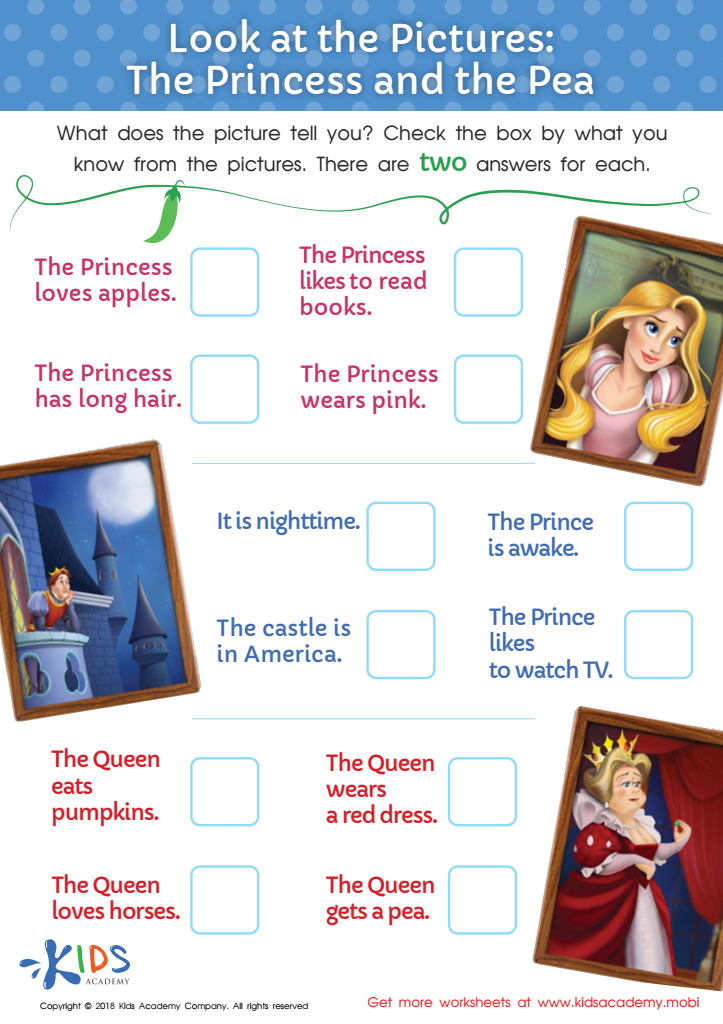
Look at the Pictures: The Princess and the Pea Worksheet
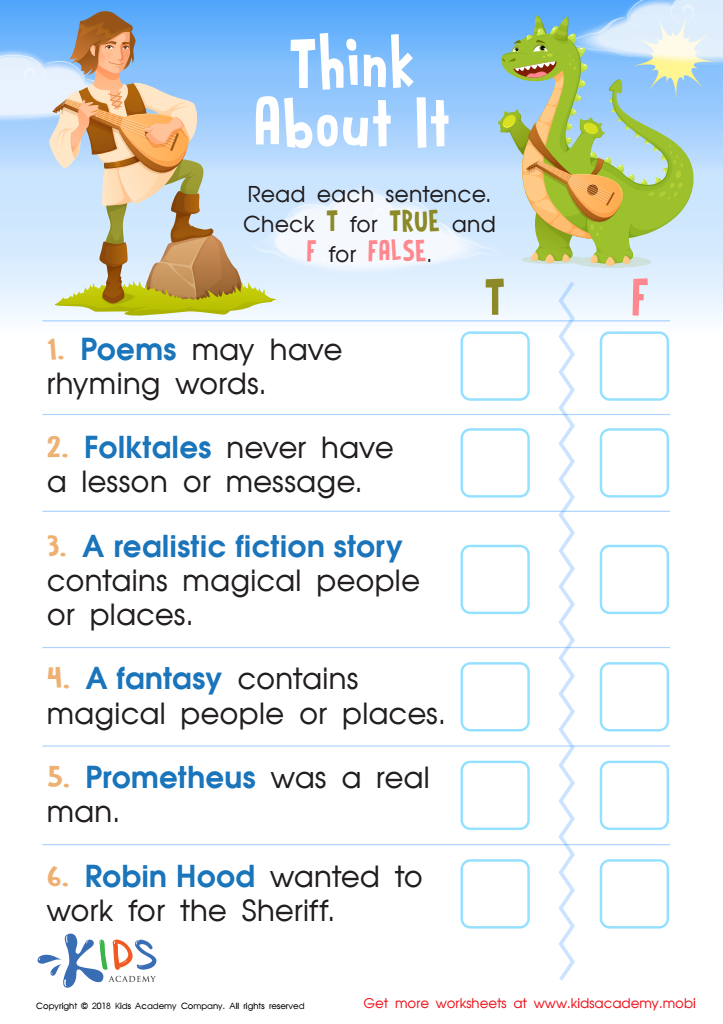
Think About It: Assessment Worksheet








Critical thinking is essential for students aged 7-8 as they begin to navigate a world filled with information and different perspectives. At this developmental stage, children refine their ability to analyze, evaluate, and synthesize information, laying the groundwork for lifelong learning. By promoting critical thinking during normal reading activities, parents and teachers can enhance children’s comprehension skills, enabling them to better understand and engage with texts.
Fostering critical thinking encourages children to ask questions, make connections, and draw inferences about the material they read. This skill not only improves academic performance but also empowers children to approach problems systematically and evaluate outcomes critically. Engaging with diverse texts helps children learn to differentiate facts from opinions and recognize bias, which is crucial in today’s media landscape.
Moreover, developing critical thinking skills instills confidence and independence in children. As they learn to articulate their thoughts and opinions, they become more engaged learners who are willing to explore ideas broader. Supporting critical thinking during normal reading sessions nurtures curiosity and creativity, ultimately shaping well-rounded individuals who can navigate the complexities of the world. For parents and teachers, investing in these skills is vital for helping children thrive academically and socially.








