
Letter recognition Normal Reading Worksheets for Ages 7-8
5 filtered results
Difficulty Level
Grade
Age
-
From - To
Subject
Activity
Standards
Enhance your child's reading skills with our "Letter Recognition Normal Reading Worksheets for Ages 7-8." These engaging and educational worksheets are designed to help 7-8 year olds master letter recognition, an essential foundation for successful reading. Our carefully crafted exercises make learning fun, combining visual and auditory practices to cement letter differentiation and familiarity. Boost your child's confidence and love for reading by letting them explore varied activities aimed at seamless letter recognition. Perfect for both classroom and home use, these resources support early literacy development and pave the way for academic success. Download now and watch your child thrive!
Favorites
With answer key
Interactive

Long and Short U Worksheet
Revised: Spice up your lesson on long and short vowels with this fun printout! Kids read the words "tube" and "tub," then reinforce the sound by coloring in the words and pictures. It's a great way to make phonics class enjoyable!
Download (PDF)
 Assign to My Students
Assign to My Students
Long and Short U Worksheet
Worksheet
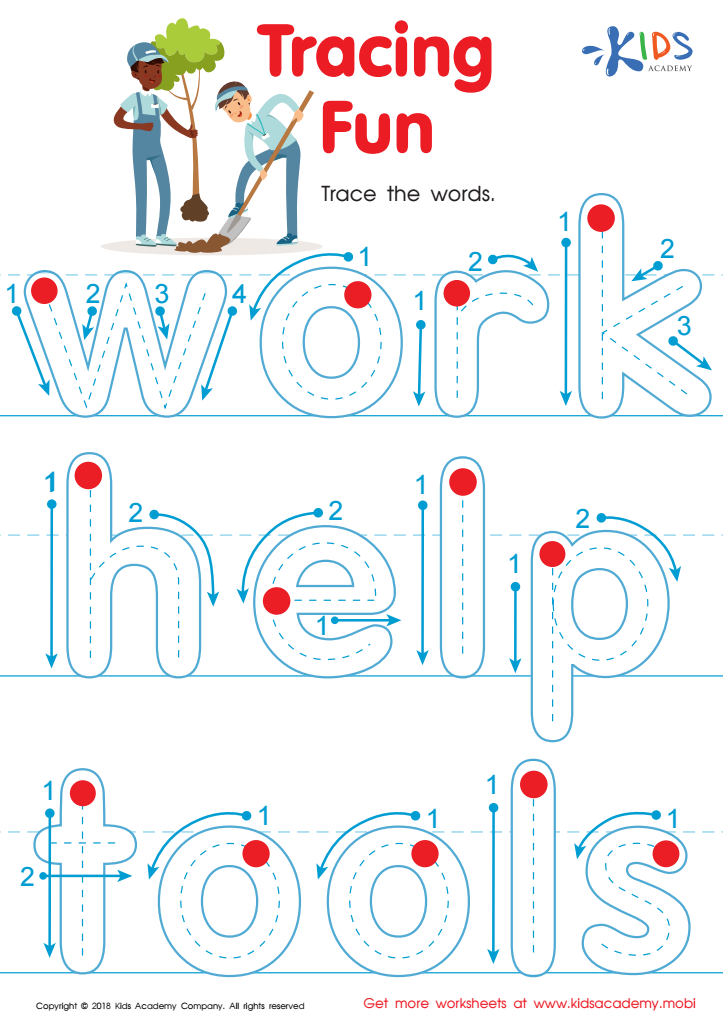
Tracing Fun Worksheet
Believe it or not, good handwriting helps with reading! Starting at the top left and writing legibly builds reading skills. This free worksheet helps little learners practice basic sight words. Red dots show them where to start and the words provide reinforcement without them realising. An enjoyable way to boost their reading and writing.
Tracing Fun Worksheet
Worksheet
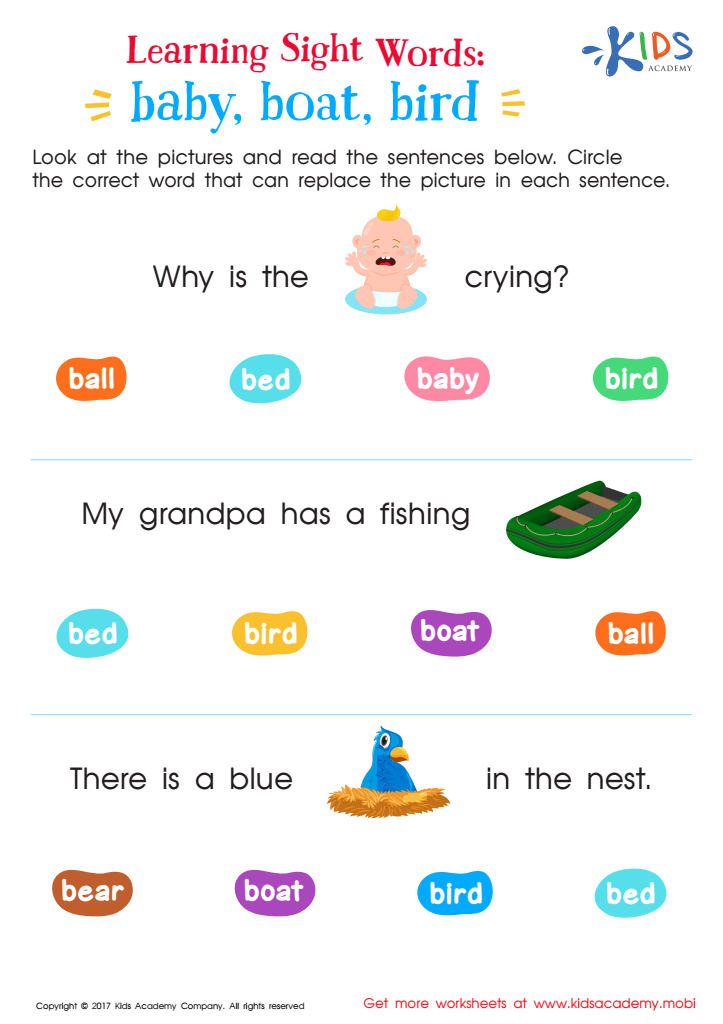
Baby, Boat, Bird Worksheet Sight Words Worksheet
Sight words are an essential part of fluency; help kids build it by writing and reading them. This worksheet is a great way to start.
Baby, Boat, Bird Worksheet Sight Words Worksheet
Worksheet
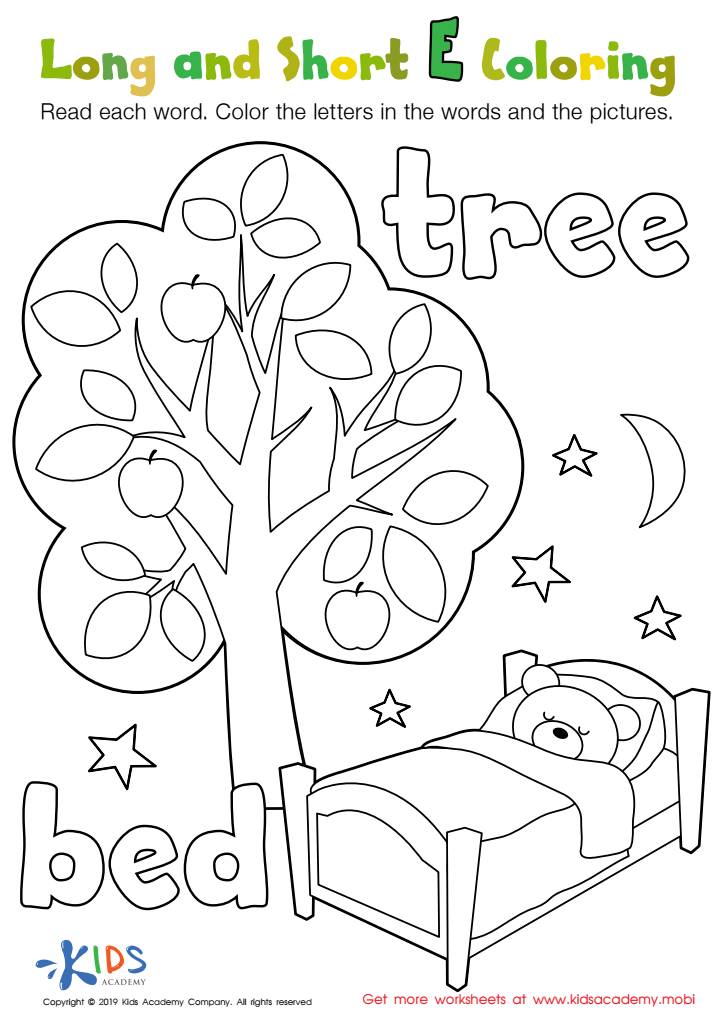
Long and Short E Worksheet
This fun printout makes learning phonics enjoyable for Grade 3 students. Get them to read the words “tree” and “bed” to recognize the different sounds of the letter “E”. After hearing the words they can color the words and the pictures to understand differences between long and short vowels.
Download (PDF)
Assign to My Students
Assign to My Students
Long and Short E Worksheet
Worksheet
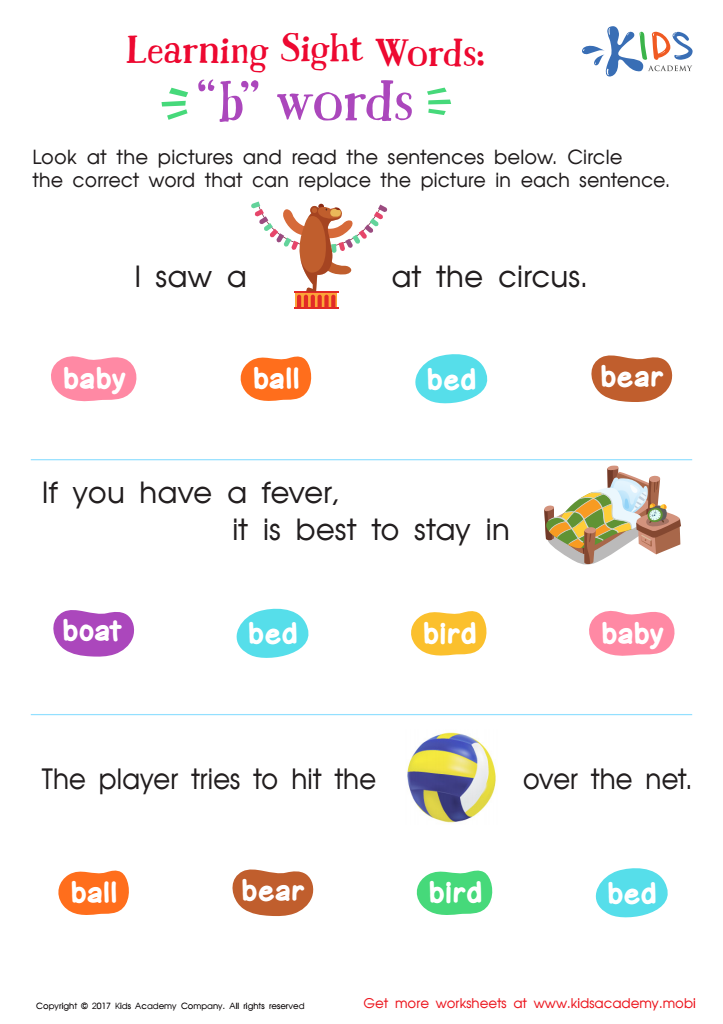
"B" Words Printable Sight Words Worksheet
Kids will learn sight words quickly with this fun worksheet! "B" Words offers guided practice with simple sentences and pictures. Build your child's reading confidence with this helpful worksheet and watch them become a master!
"B" Words Printable Sight Words Worksheet
Worksheet
Join Kids Academy for Free
Who is primarily going to use this learning content?





Letter recognition is a fundamental cornerstone in a child's reading development, especially around the ages of 7-8, which typically correspond to early elementary grades like first and second. By this stage, children are transitioning from basic letter-sound relationships to more advanced reading skills. When parents and teachers prioritize and support letter recognition, it ensures a smoother and more enjoyable reading journey for young learners.
Effective letter recognition not only helps children identify letters but also aids in recognizing word patterns and understanding phonics. This foundational skill is critical for decoding new words, which enhances fluency and comprehension. Without strong letter recognition, children are likely to struggle with reading challenges, which can lead to frustration and disengagement from learning.
Furthermore, literacy is not just about reading; it involves various intellectual tasks such as writing, spelling, and critical thinking. Strong letter recognition enables children to better express themselves, follow instructions, and participate actively in classroom discussions, fostering both academic achievement and social interaction.
For concerned adults, supporting letter recognition can involve engaging children with alphabet games, reading together, and providing a print-rich environment. By taking these steps, parents and teachers cultivate a love for reading and establish a foundation for lifelong learning and success.








