Rhyming skills development Normal Reading Worksheets for Ages 7-8
3 filtered results
-
From - To
Enhance your child’s reading skills with our Rhyming Skills Development Normal Reading Worksheets, designed specifically for children aged 7-8. These engaging worksheets promote phonemic awareness, essential for literacy development. Through fun activities and exercises, children will learn to recognize and produce rhyming words, improving their pronunciation and vocabulary. Each worksheet is crafted to captivate young learners, encouraging interaction with words in a playful manner. As they explore rhymes, kids also strengthen their critical thinking and reading comprehension skills. Visit our website to access a variety of worksheets that make learning enjoyable and effective, laying a strong foundation for your child’s educational journey!
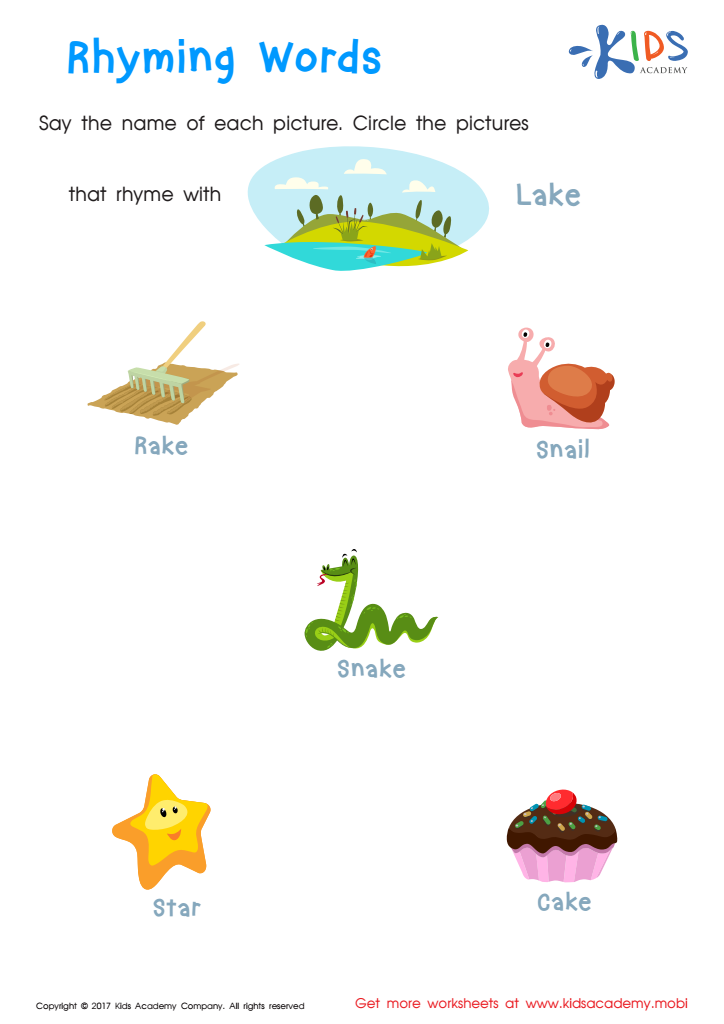
Rhyming Words Rhyming Worksheet
 Assign to My Students
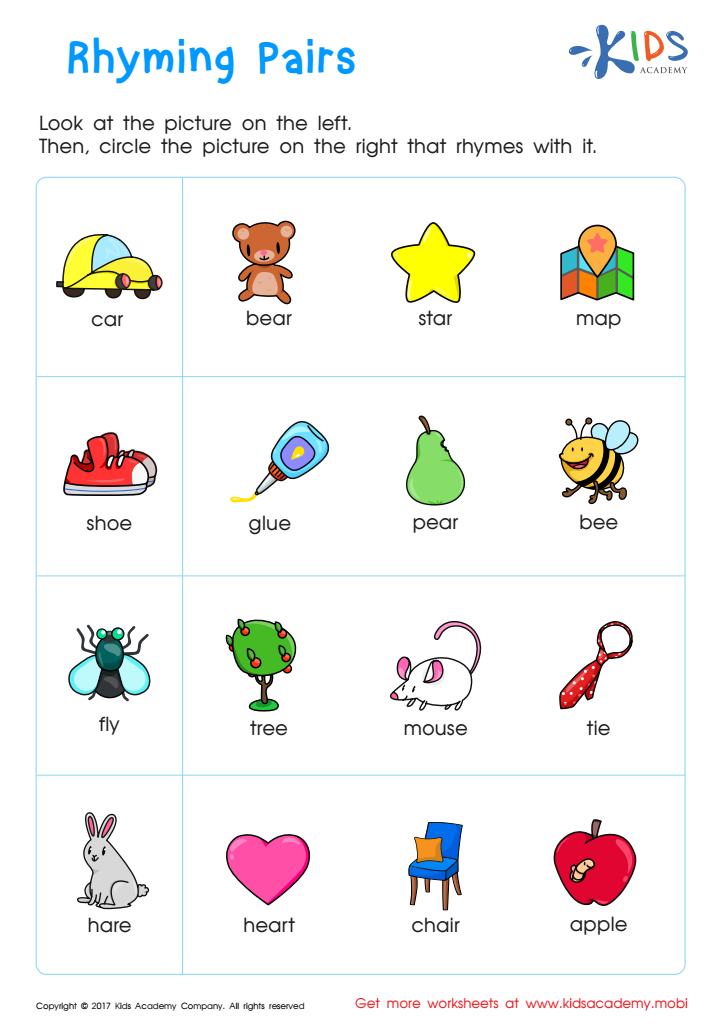
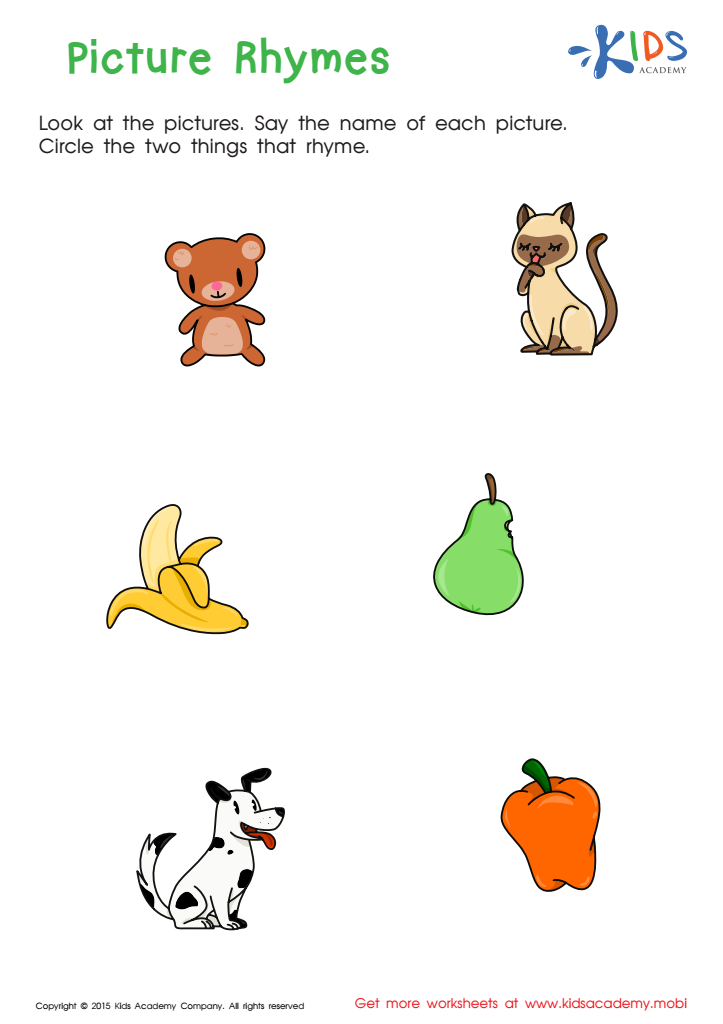
First Words: Picture Rhymes Worksheet







Rhyming skills are a fundamental component in the development of reading abilities in children aged 7-8. At this age, children are transitioning from learning to read to reading to learn. Developing strong rhyming skills enhances phonemic awareness, which is essential for decoding words and understanding the sounds that each letter and combination of letters produce. This awareness not only aids in reading but also improves spelling skills.
Additionally, engaging with rhymes cultivates a love for language and literature, making reading a more enjoyable experience. Rhyming texts, such as poetry or songs, capture children's interest and encourage them to experiment with language, enriching their vocabulary and comprehension. Furthermore, rhymes assist in memorization, as children often find it easier to recall information presented in a rhythmic pattern.
Parents and teachers play a crucial role in fostering these skills through fun activities like reading rhyming books, playing rhyming games, or creating their own rhymes. By focusing on rhyming development, caregivers can build a solid foundation for literacy that not only supports academic success but also encourages a lifelong appreciation for reading and language. Therefore, prioritizing rhyming skills is beneficial for a child's cognitive and emotional growth related to literacy.








