Moral understanding Normal Reading Fiction Worksheets for Ages 7-8
5 filtered results
-
From - To
Explore our engaging Moral Understanding Normal Reading Fiction Worksheets designed for children ages 7-8, perfect for enhancing their comprehension skills. These thoughtfully crafted worksheets encourage young readers to delve into captivating stories while identifying and reflecting on moral lessons and values. Through fun activities and relatable narratives, your child will cultivate critical thinking by exploring themes of empathy, responsibility, and honesty. Ideal for classroom or home use, these resources promote interactive learning and discussion, helping children develop a deeper understanding of character actions and consequences. Inspire meaningful conversations with your little learners and take their reading skills to new heights!
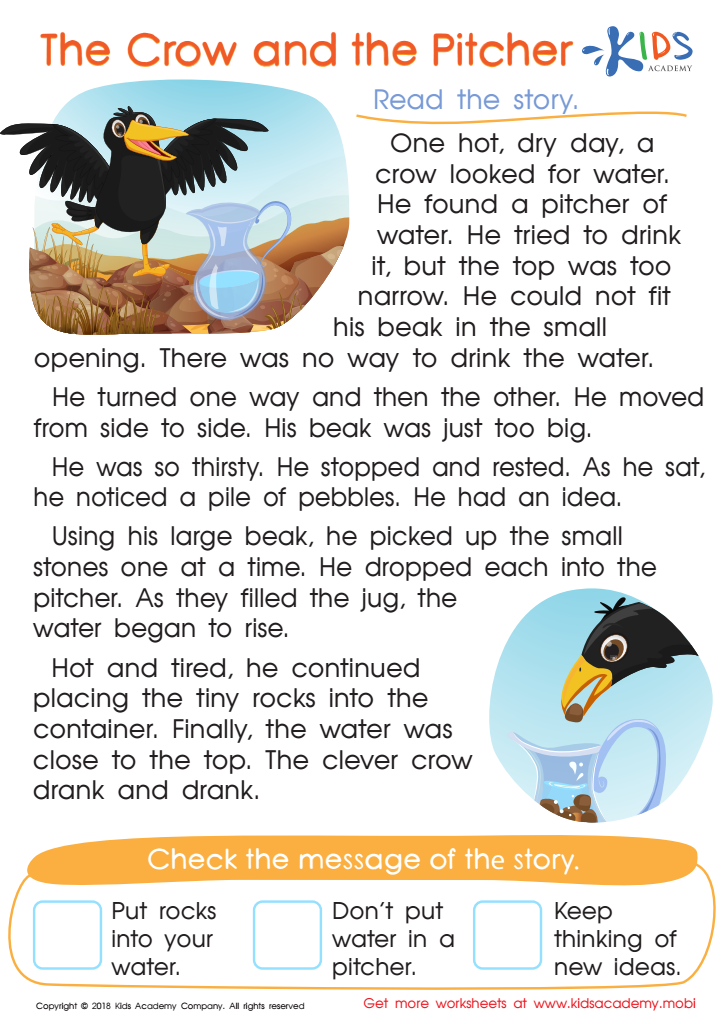
The Crow and the Pitcher Worksheet
 Assign to My Students
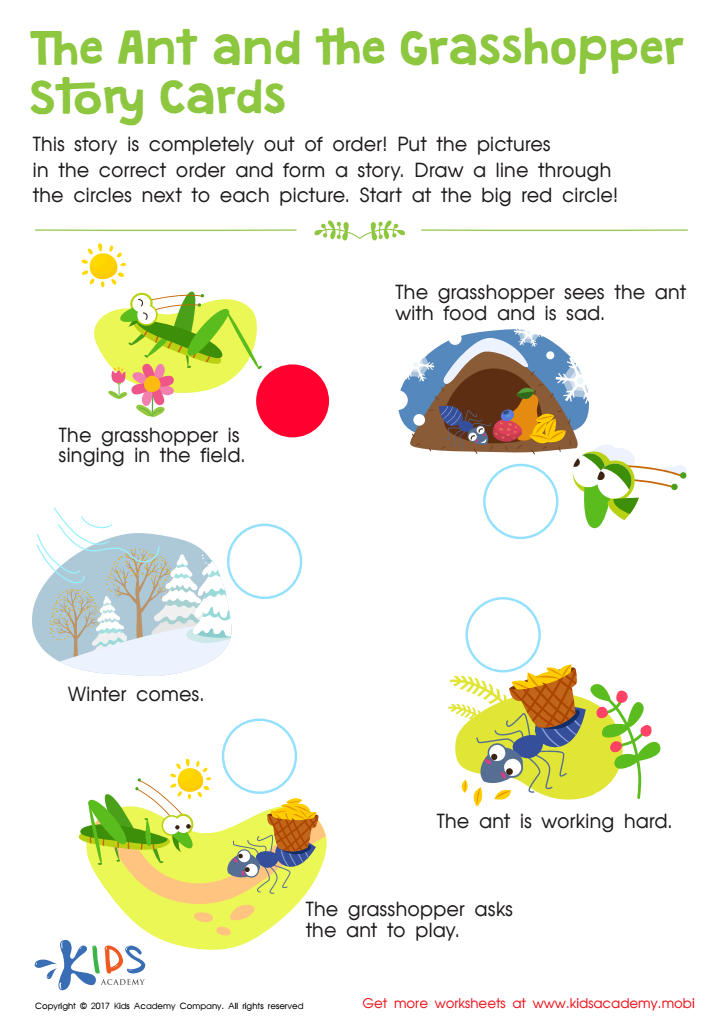
The Ant and The Grasshopper Worksheet
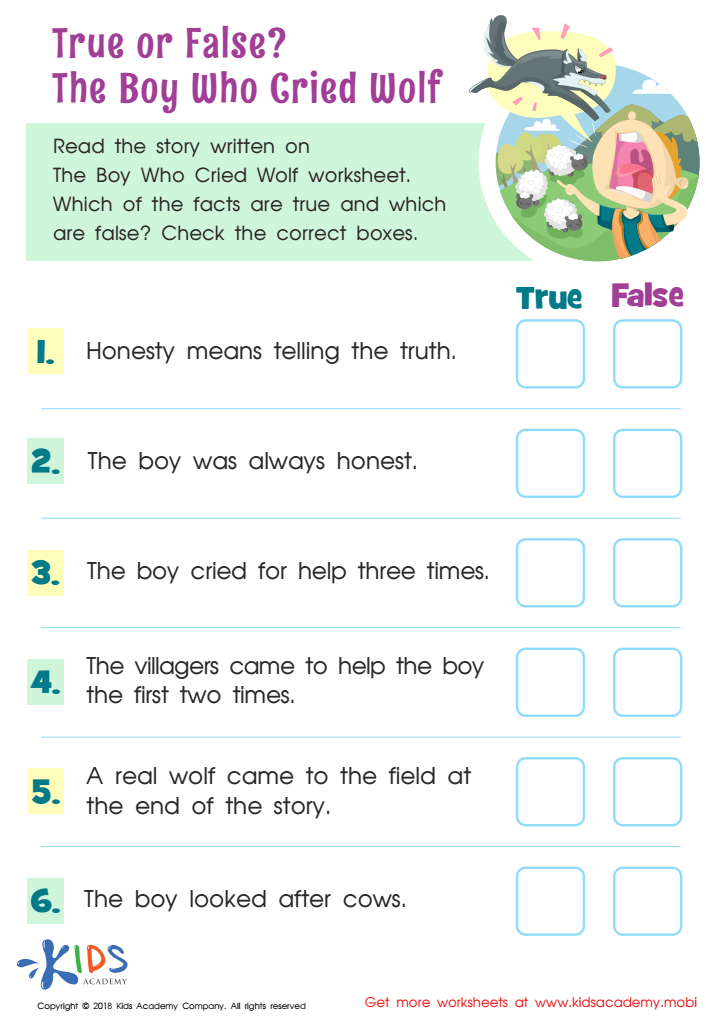
True or False? The Boy Who Cried Wolf Worksheet
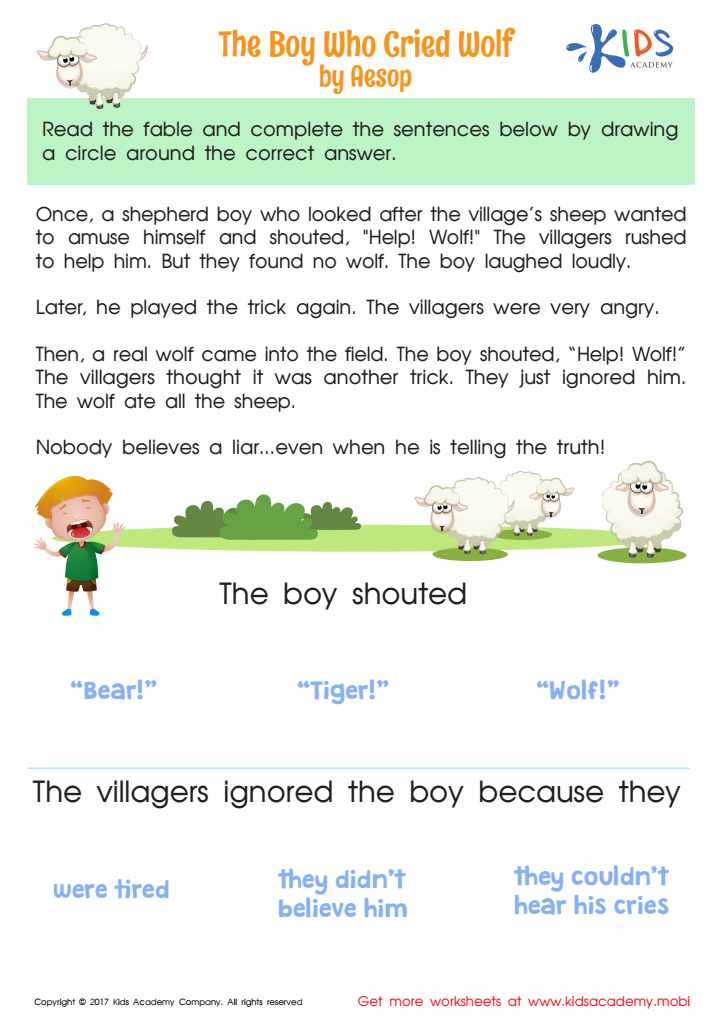
The Boy Who Cried Wolf Worksheet
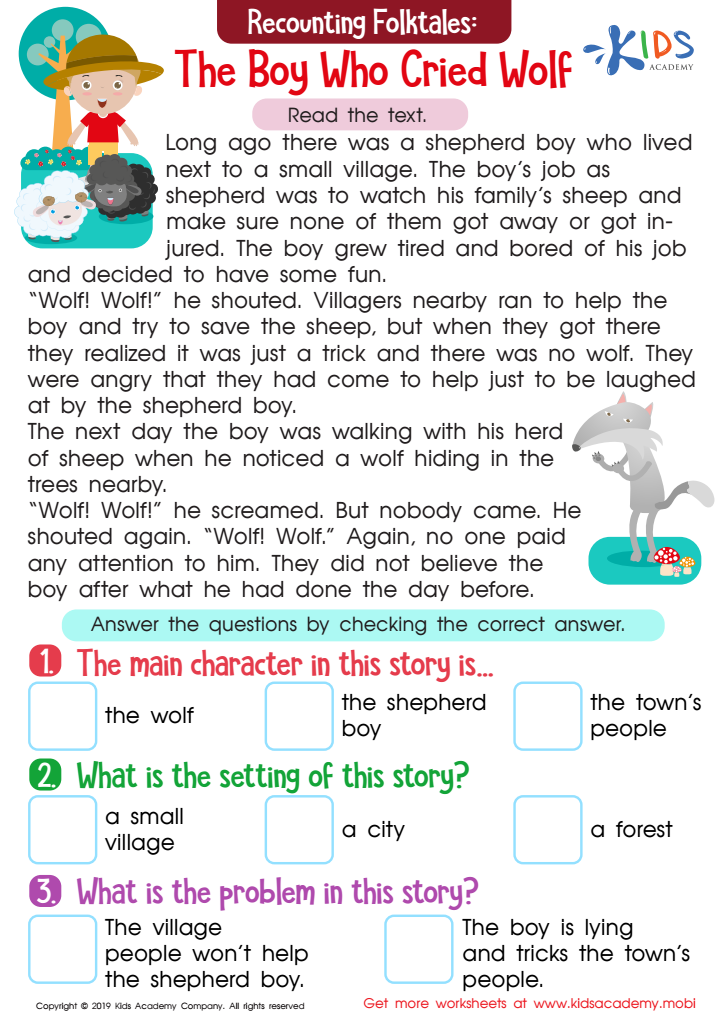
The Boy Who Cried Wolf Part 1 Worksheet







.jpg)
Moral understanding in children's literature, especially for ages 7-8, is crucial for fostering socio-emotional growth. At this stage, children are increasingly exploring themes of fairness, empathy, and injustice. Engaging with fiction that presents moral dilemmas helps them navigate complex social situations. When parents or teachers prioritize reading stories with rich moral themes, they provide opportunities for children to reflect on their values and the impact of their choices on others.
These narratives serve as platforms for discussions. Children learn to articulate their thoughts on right and wrong, developing critical thinking skills. Literature can introduce them to diverse perspectives, enhancing their understanding of empathy and kindness. It's through characters’ experiences that kids begin to recognize emotions and motivations, strengthening their interpersonal skills.
Moreover, normal reading fiction fosters a love for reading and enhances comprehension skills. Children learn not just to read, but to analyze situations and discern moral lessons. This kind of reading becomes foundational for their character development, raising morally aware individuals. Overall, supporting moral understanding through reading creates compassionate, thoughtful children equipped to contribute positively to society. Parents and teachers play a vital role in guiding this process, making their involvement essential.







