Categorizing objects Normal Science Worksheets for Ages 7-8
3 filtered results
-
From - To
Explore our engaging "Categorizing Objects" science worksheets designed specifically for ages 7-8. These educational resources help young learners enhance their critical thinking and organizational skills by classifying various items based on different attributes such as size, color, and shape. Each worksheet features age-appropriate activities that make learning fun and interactive, encouraging children to observe their surroundings and make connections. Perfect for classroom use or home practice, these printable worksheets foster curiosity about the natural world while reinforcing essential scientific concepts. Download today and empower your child to discover the joy of categorization through hands-on learning experiences!
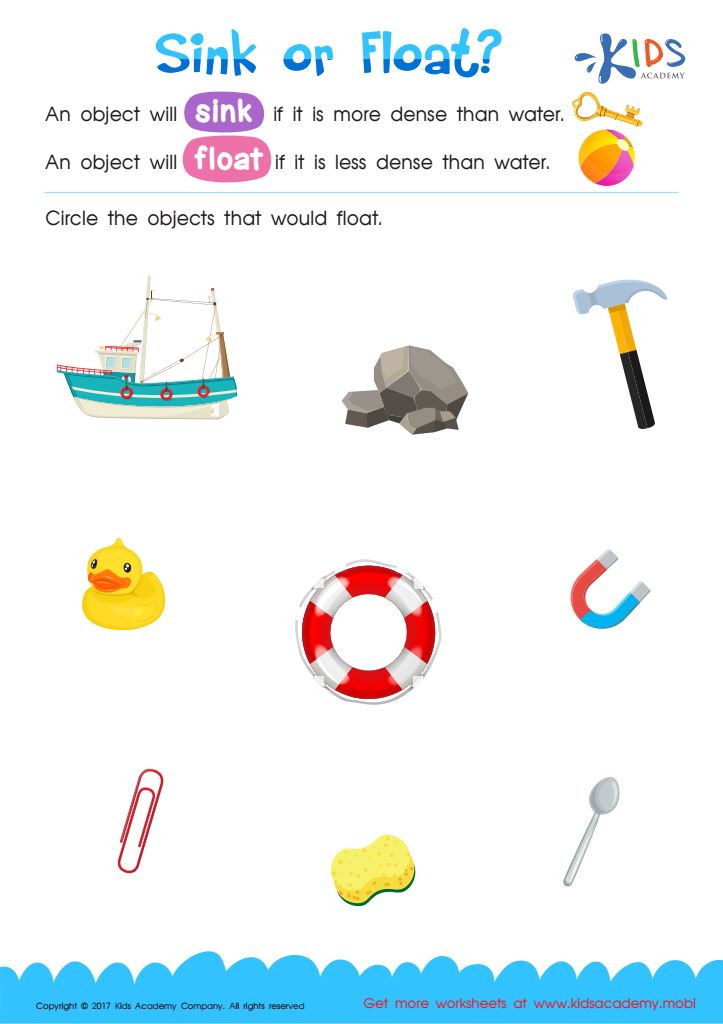
Sink or Float Printable
 Assign to My Students
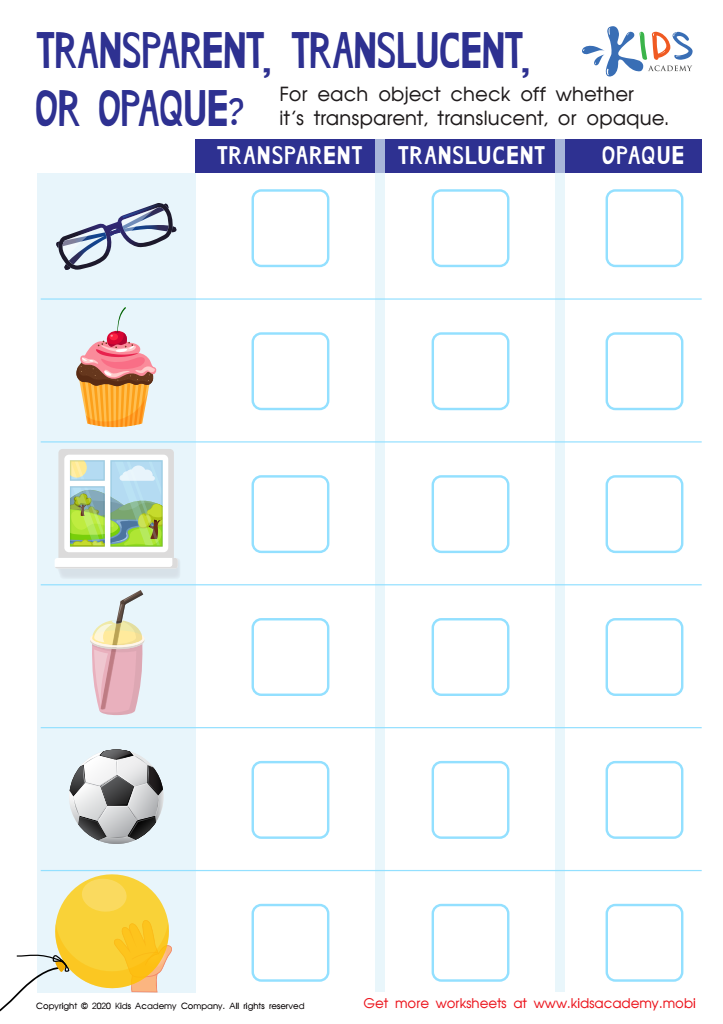
Transparent, Translucent, or Opaque Worksheet
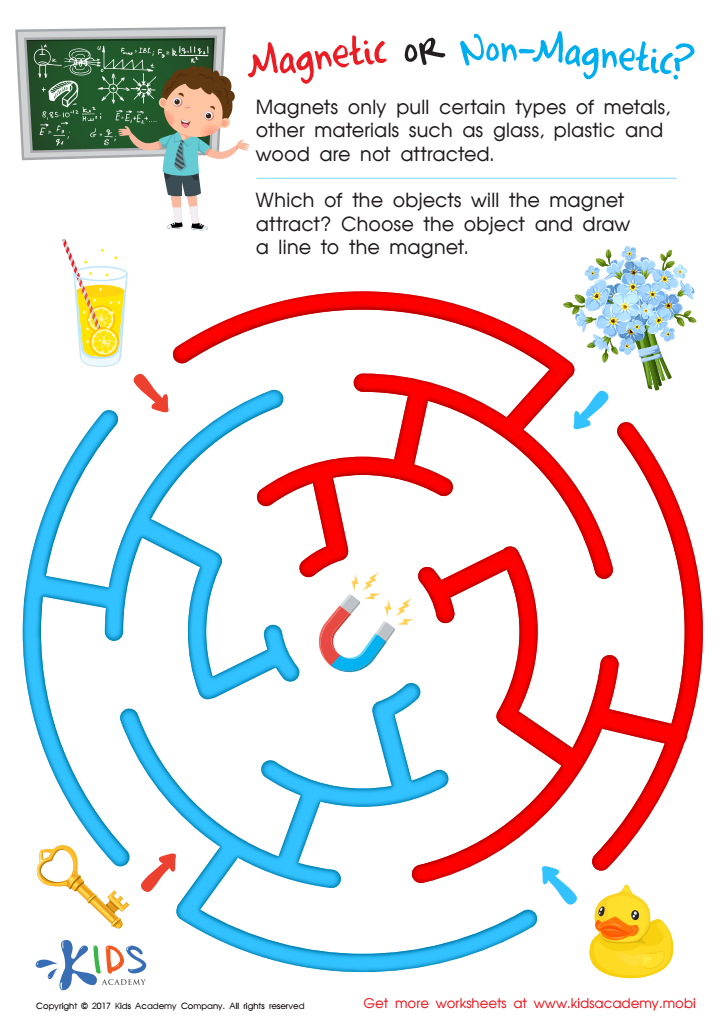
Magnetic or Non–Magnetic Worksheet






Categorizing objects is a fundamental aspect of early learning, particularly for children aged 7-8, as it lays the groundwork for critical thinking and scientific reasoning. As children begin to encounter more complexity in their world, understanding how to classify objects based on common characteristics—such as size, shape, color, or function—becomes vital. This process fosters cognitive development, helping children organize and make sense of their experiences.
Parents and teachers should prioritize categorization because it enhances skills in observation, analysis, and problem-solving. By engaging in activities that involve sorting and classifying, children learn to identify similarities and differences, which are foundational skills in scientific inquiry. This exploration promotes curiosity and encourages questioning, vital components in a child’s intellectual growth.
Moreover, categorizing can greatly enhance vocabulary development, as children learn new terms related to different categories—such as animals, plants, or household items. This vocabulary growth supports effective communication and strengthens language skills critical for reading and writing.
Ultimately, fostering an understanding of categorization empowers children to be more organized thinkers, better equipped to tackle challenges in science and beyond. As they progress in their education, these skills will serve as essential building blocks for advanced learning and discovery.







