Geography skills Normal Social Studies Worksheets for Ages 7-8
3 filtered results
-
From - To
Unlock the world of geography for your 7 to 8-year-olds with our Normal Social Studies Worksheets. Designed to spark curiosity and enhance understanding, these printables cover essential geography skills tailored for young learners. From identifying continents and countries to exploring landforms and map symbols, our worksheets engage and educate. Each activity is crafted to build a solid foundation in geography, making learning both fun and informative. Perfect for classroom use or at-home practice, these worksheets help kids grasp vital concepts, boosting their knowledge and confidence in social studies. Start their global journey today with our expertly designed geography resources!
 Assign to My Students
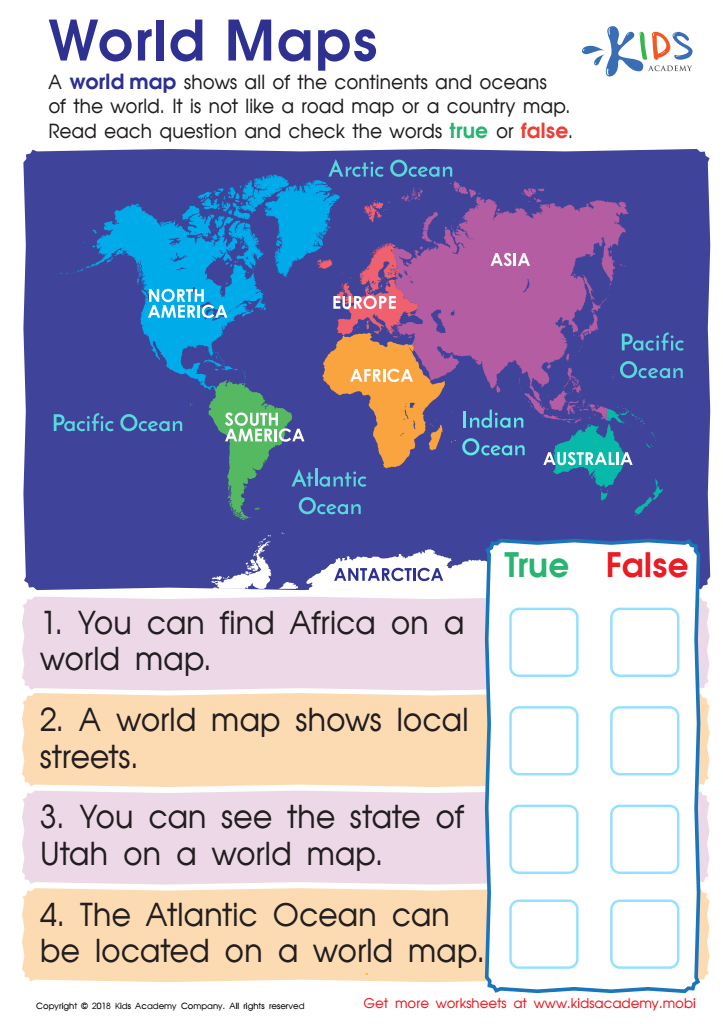
World Maps Worksheet
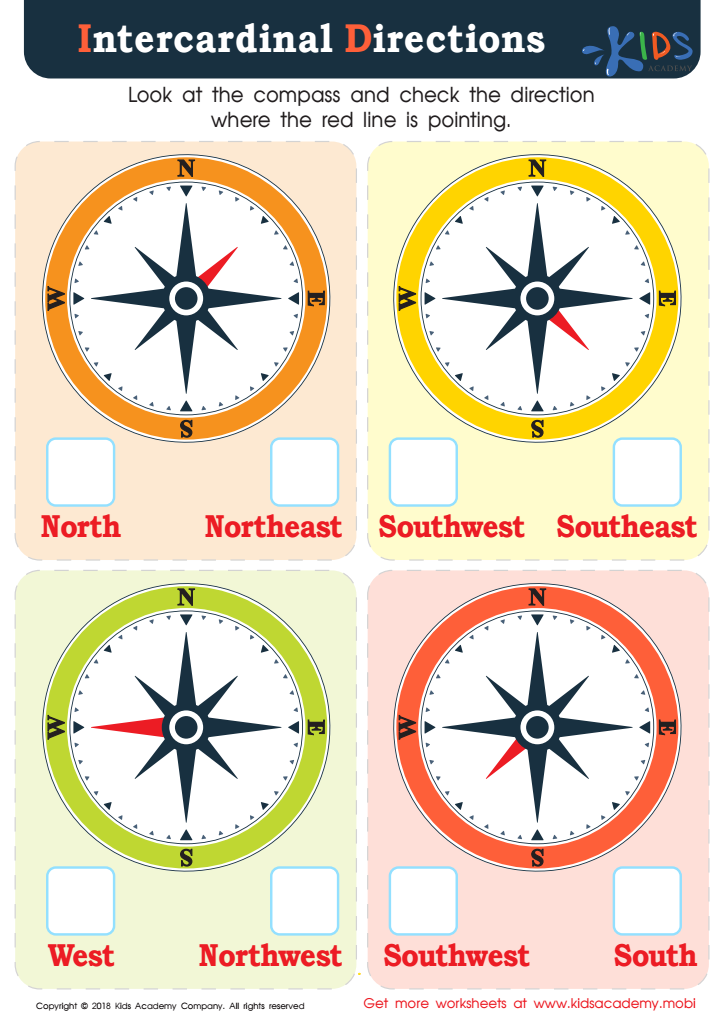
Intercardinal Directions Worksheet








Teaching geography to children aged 7-8 is vital for their overall development and understanding of the world. At this age, kids are naturally curious and ready to absorb information, making it an ideal time to introduce them to fundamentals like continents, countries, maps, and environmental features. Geography isn't just about memorizing locations; it helps build critical thinking and spatial awareness. By understanding how geographic features influence climate, culture, and lifestyles, children can better appreciate diversity and develop a sense of empathy for different people and places.
Geography also connects to important 21st-century skills. It contributes to improved problem-solving abilities as children analyze how different features impact human lives. Map-reading skills, for instance, are not only foundational for navigation but also enhance mathematical abilities, like understanding scales, distances, and patterns. Engaging with geography broadens their perspective, enabling them to make better-informed decisions as they grow.
For parents and teachers, geography serves as a gateway to interdisciplinary learning, tying into history, science, and even economics. It's an effective tool for nurturing global citizens who are connected to their communities and the larger world. Ultimately, instilling strong geography skills at a young age establishes a groundwork for lifelong learning and responsible citizenship.