Verb identification Normal Grammar Worksheets for Ages 7-8
4 filtered results
-
From - To
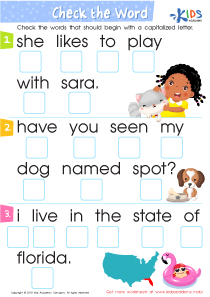
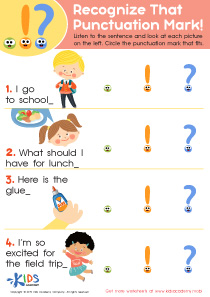
Enhance your child’s grammar skills with our Verb Identification Normal Grammar Worksheets, specially designed for ages 7-8. These engaging and educational worksheets help young learners easily recognize and properly use verbs in sentences. Through fun exercises and creative examples, children can solidify their understanding of essential grammar concepts. Each worksheet aims to build their confidence and mastery in identifying verbs, laying a strong foundation for future language development. Perfect for at-home learning or classroom practice, these worksheets are a valuable resource for parents and teachers dedicated to improving their students' writing and grammar skills.
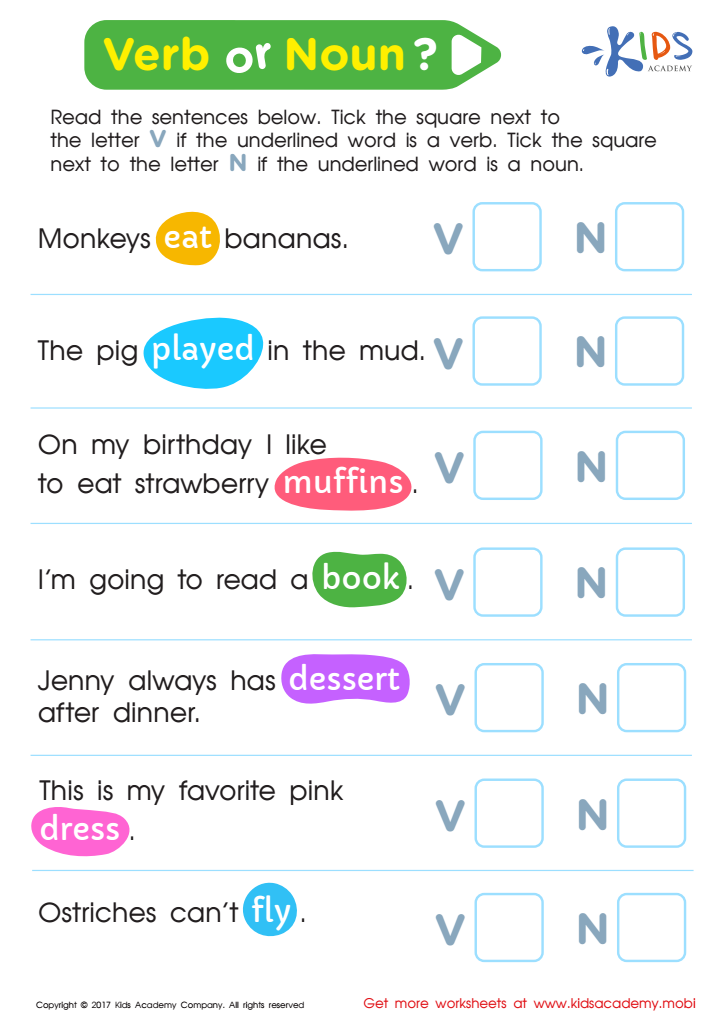
Verb or Noun Worksheet
 Assign to My Students
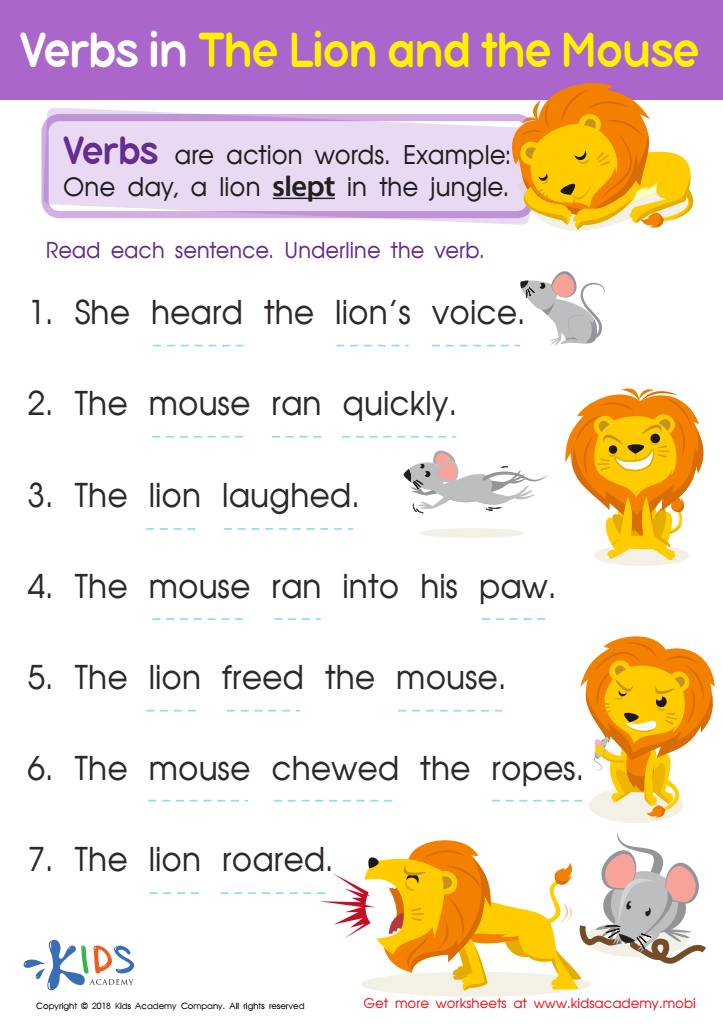
Verbs in The Lion and the Mouse Worksheet
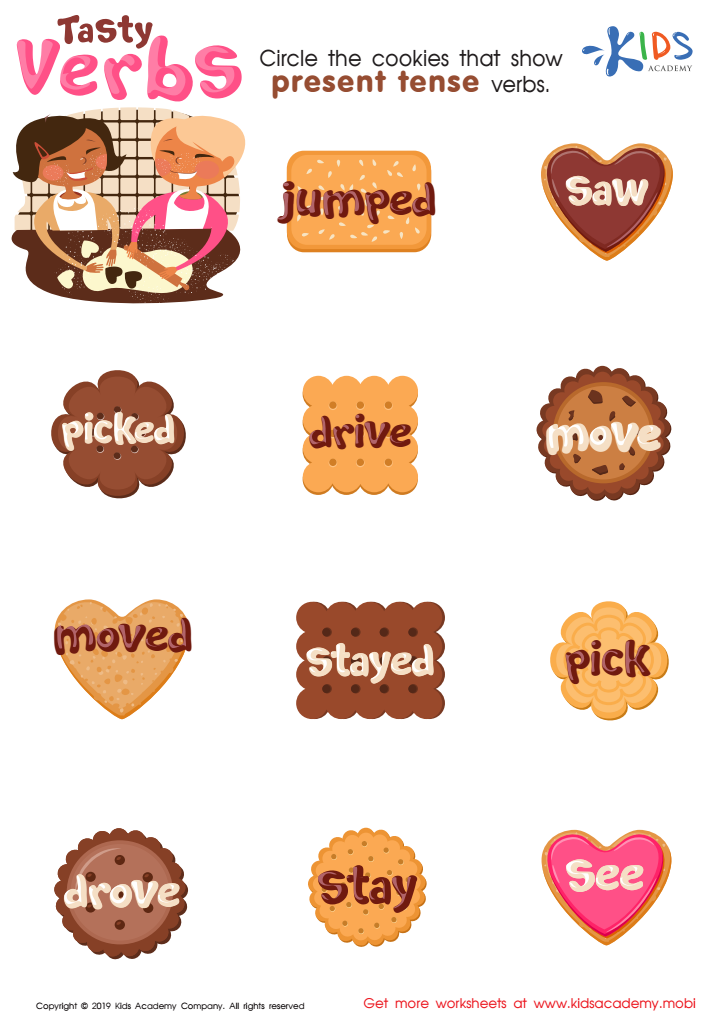
Tasty Verbs Worksheet
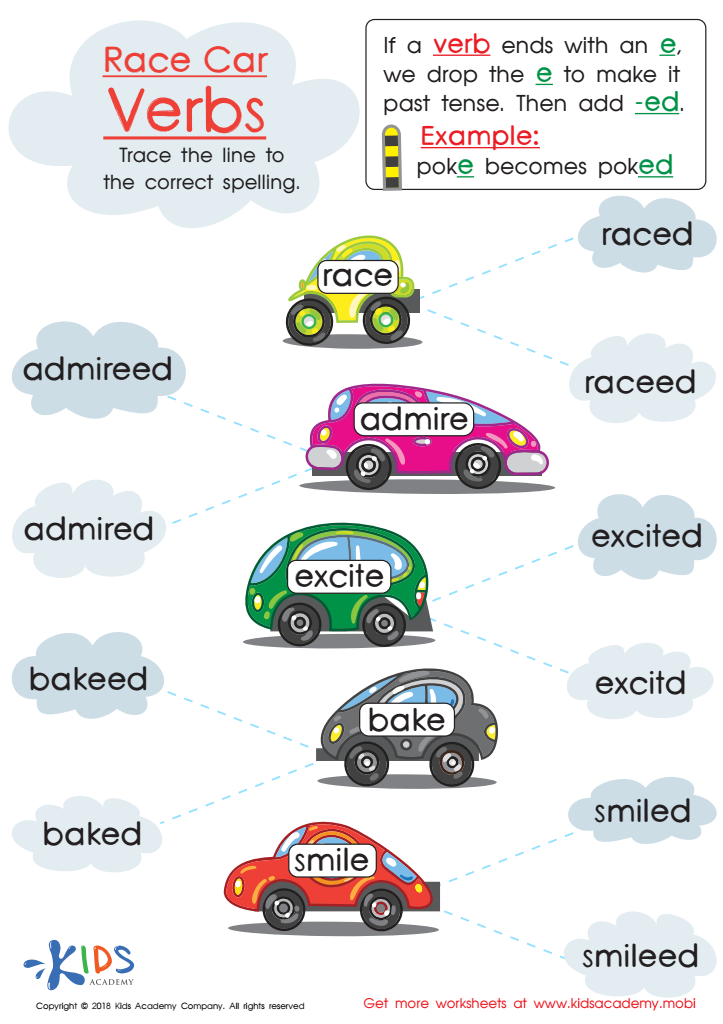
Race Car Verbs Worksheet







.jpg)
Fostering an understanding of verb identification in children aged 7-8 lays a crucial foundation for their future linguistic and cognitive development. Verbs are action words that convey what subject is doing and form the backbone of sentences. By helping children identify verbs at an early stage, parents and teachers empower them to construct grammatically correct sentences, thereby enhancing their communication skills.
At ages 7-8, children are rapidly expanding their vocabulary and beginning to write more complex sentences. Understanding verbs helps them convey actions, experiences, and thoughts more accurately. For instance, distinguishing verbs allows them to better describe daily activities and tell coherent stories. This contributes to developing their narrative skills, which are critical for both academic success and social interaction.
Moreover, grasping verb usage supports the learning of more complex grammatical structures in later stages, such as tenses, subject-verb agreement, and different sentence moods (e.g., interrogative, imperative). This foundational knowledge aids reading comprehension, as identifying action words helps children better understand the context and flow of a story.
In short, teaching verb identification equips children with essential language skills, promoting academic success and effective communication. It sets the stage for richer expression, stronger reading abilities, and a lifetime of improved literacy and learning.