Critical Thinking Normal Writing Worksheets for Ages 7-8
3 filtered results
-
From - To
Enhance your child’s writing skills with our engaging "Critical Thinking Normal Writing Worksheets for Ages 7-8." Designed to foster creativity and analytical abilities, these worksheets challenge young learners to think deeply and express their ideas clearly. Covering various topics, each activity encourages critical thinking through prompts that stimulate imagination and reasoning. Ideal for home or classroom use, our worksheets support language development while promoting thoughtful writing habits. Watch as your child excels in expressing opinions, making connections, and developing narrative skills. Encourage a love for writing and critical analysis that will benefit them throughout their educational journey!
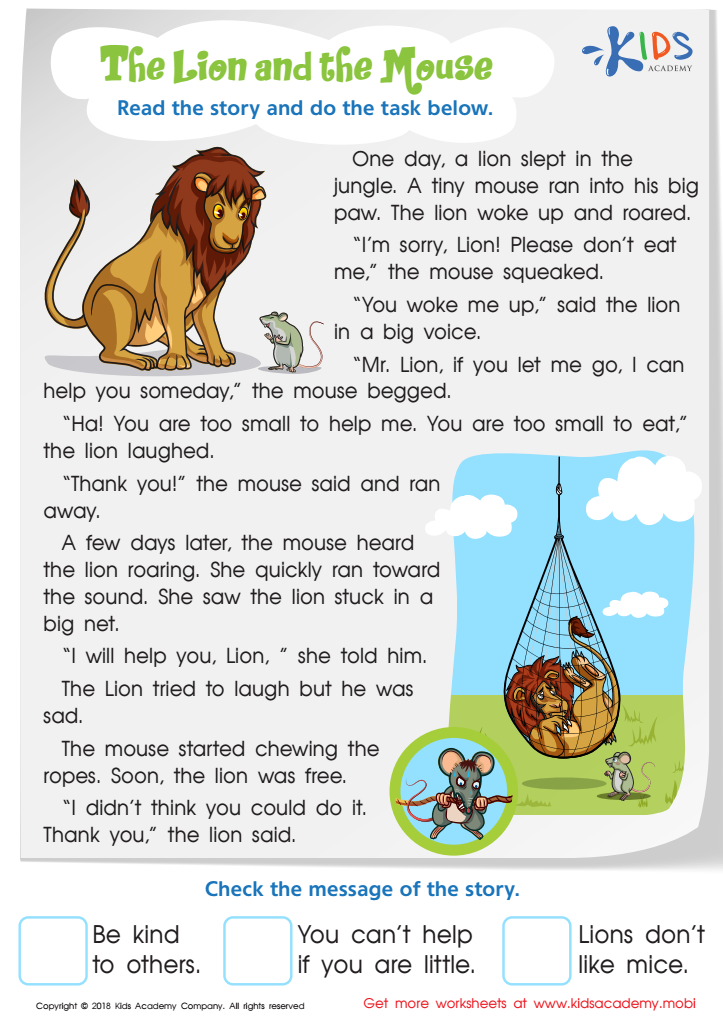
The Lion and the Mouse Worksheet
 Assign to My Students
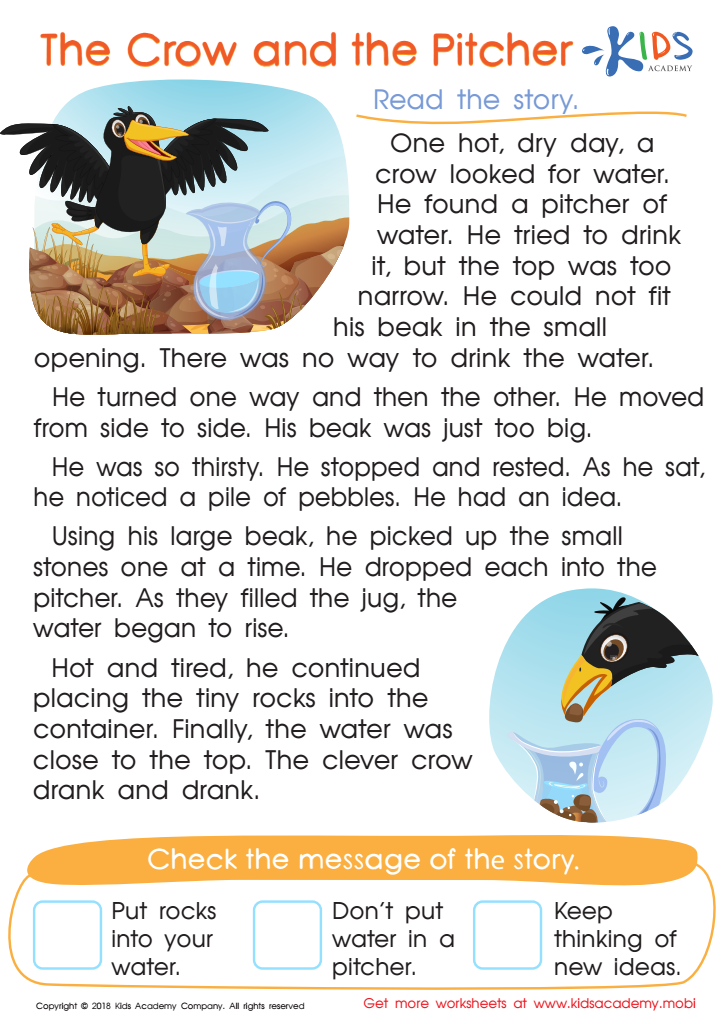
The Crow and the Pitcher Worksheet
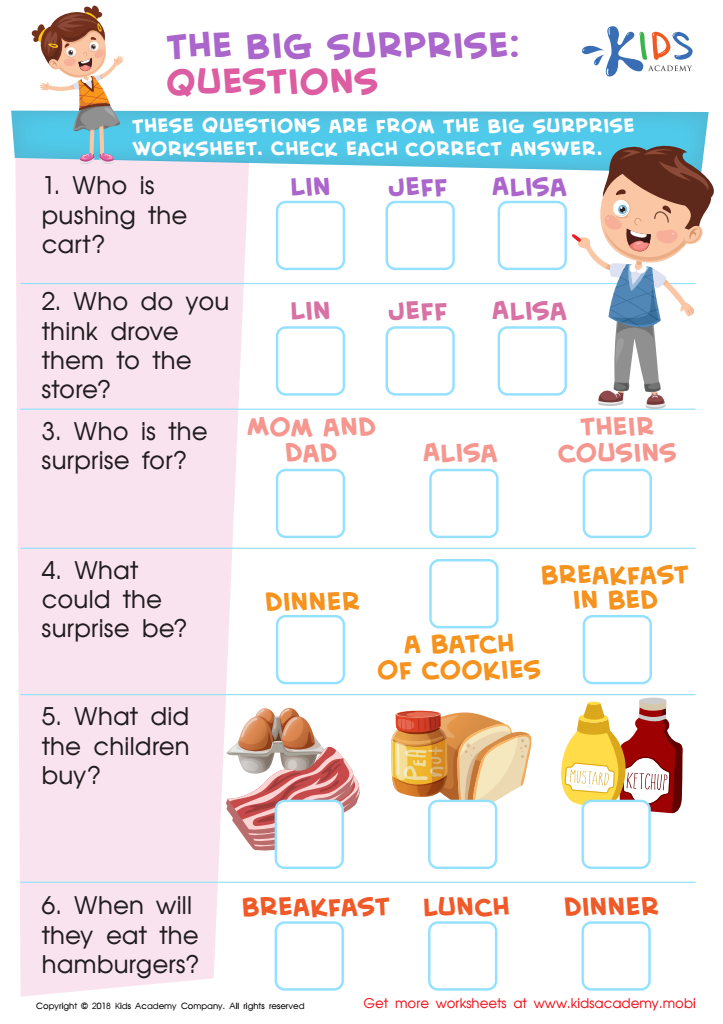
The Big Surprise: Questions Worksheet







.jpg)
Critical thinking is essential for children ages 7-8, as it lays the groundwork for their academic success and personal development. This skill enables them to analyze, evaluate, and create new ideas, promoting deeper understanding and greater engagement in the learning process. As children become more adept at critical thinking, they're likely to ask pertinent questions, solve problems creatively, and make informed decisions, which lays a foundation for lifelong learning.
Parents and teachers should encourage critical thinking through normal writing exercises designed for this age group. Writing helps children express their thoughts clearly, explore different perspectives, and articulate their reasoning. When children engage in writing tasks that challenge them to justify their opinions or explore multiple viewpoints, it hones their analytical skills.
Moreover, fostering critical thinking in writing enhances children's communication abilities, which are crucial for collaborative work and social interactions. In a rapidly changing world filled with complex issues, critical thinking prepares children to navigate challenges effectively. Supporting this skill in early education helps them become curious, independent thinkers who approach problems with confidence and creativity. In essence, nurturing critical thinking through writing cultivates a generation of learners who are equipped to thrive both academically and in society.