Grammar practice Normal Writing Worksheets for Ages 7-8
5 filtered results
-
From - To
Enhance your child's grammar skills with our engaging Normal Writing Worksheets for ages 7-8, designed to boost language proficiency through fun activities. Our customized worksheets provide a comprehensive approach to learning, focusing on key grammar concepts such as sentence structure, punctuation, and word usage. Each worksheet is meticulously crafted to combine creativity with education, ensuring students remain motivated while mastering essential writing skills. Perfect for use at home or in the classroom, these worksheets help young learners build a solid grammar foundation, enabling them to express themselves clearly and confidently. Watch your child grow as a writer with our expertly designed grammar practice worksheets.
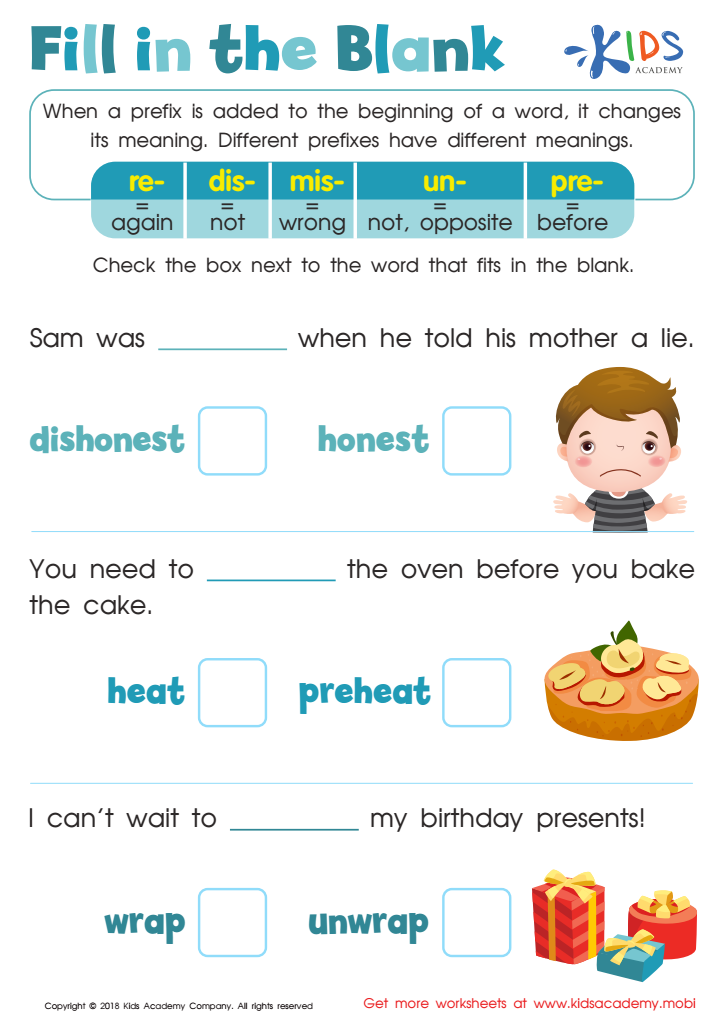
Reading: Fill in the Blank Worksheet
 Assign to My Students
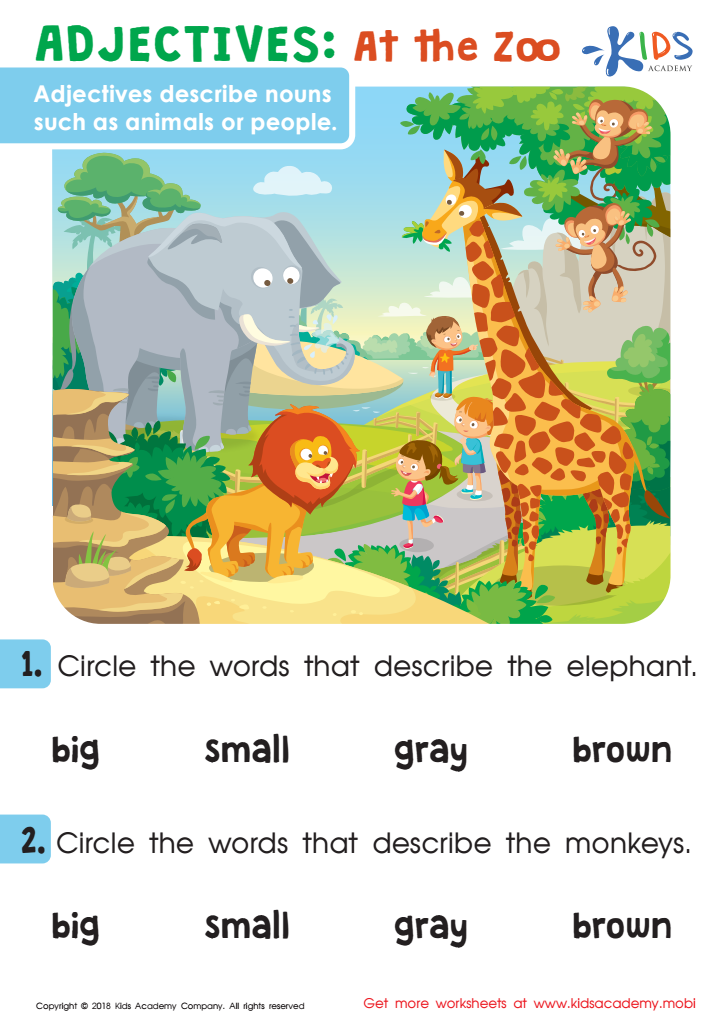
Adjectives: At The Zoo Worksheet
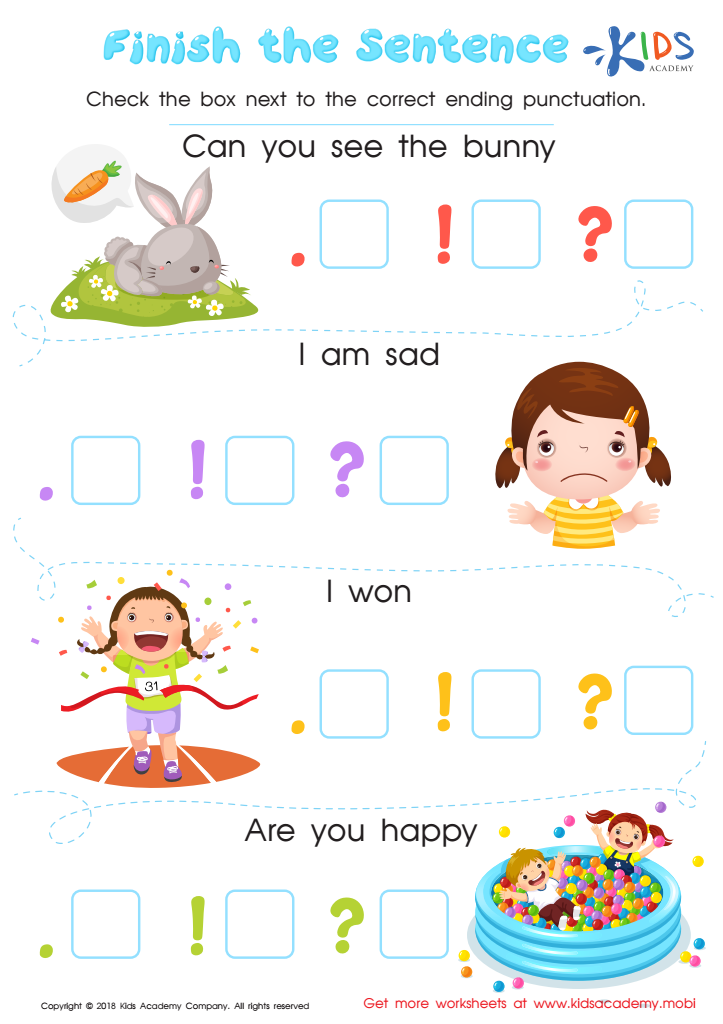
Finish the Sentence Worksheet
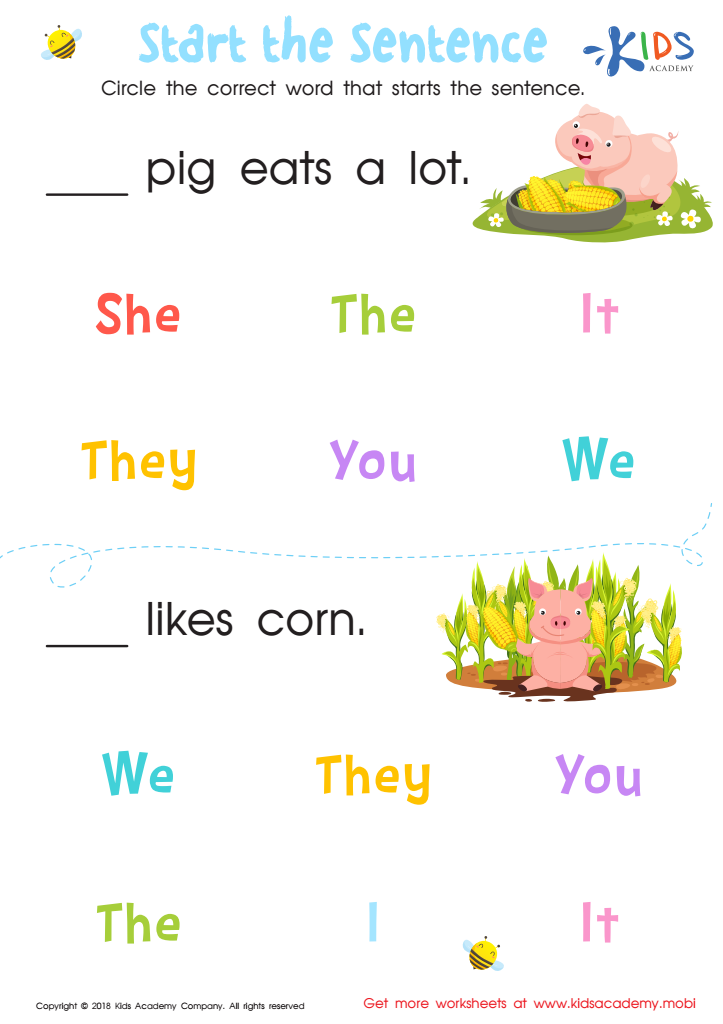
Start the Sentence Worksheet
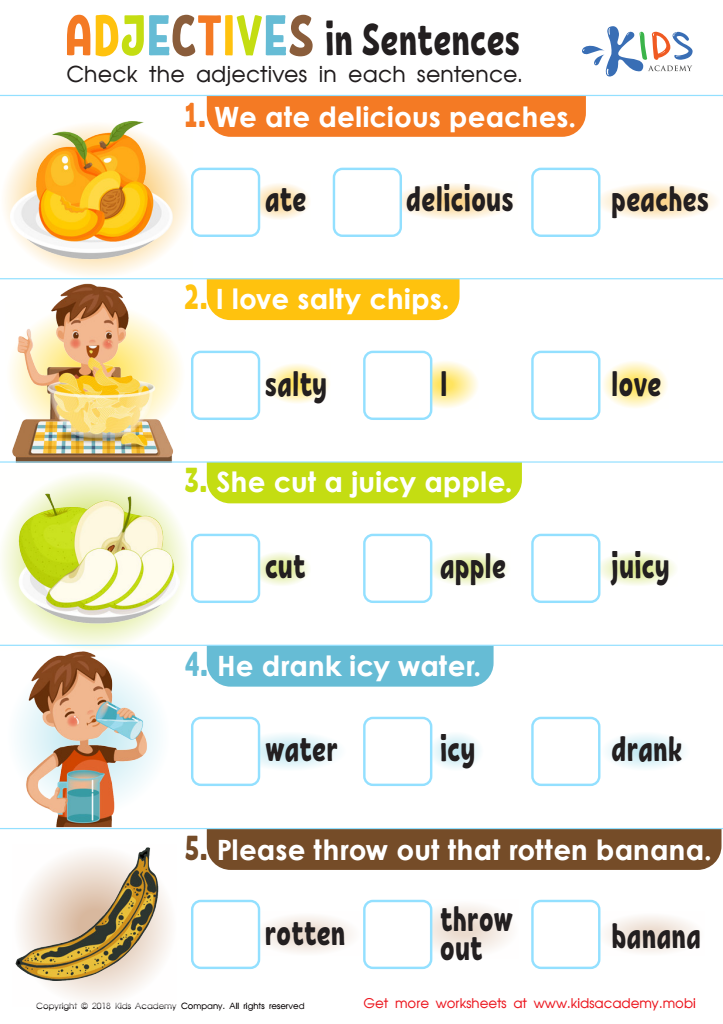
Adjectives in Sentences Worksheet






Grammar practice is crucial for children aged 7-8 because it lays the foundation for their future communication skills. At this age, children are transitioning from learning to read to reading to learn. They are also beginning to craft their sentences and express their thoughts more clearly. Introducing grammar helps them understand how sentences are structured, which enhances both their writing and verbal communication.
Parents and teachers should care about grammar practice for this age group because it strengthens cognitive development. As children grapple with the rules of grammar, they learn to apply logic and reasoning to their writing. This critical thinking skill will benefit them in all areas of education and beyond.
Good grammar also promotes clearer communication. When children understand how to use conjunctions, punctuation, and appropriate verb tense, their ability to convey ideas improves. This clarity not only makes their academic work better but also boosts their confidence in everyday conversations.
Moreover, early exposure to correct grammar reduces the likelihood of ingraining poor language habits. It sets them up for future success by ensuring that they have a solid grasp of language basics, which will be built upon in more advanced subjects.
In sum, grammar practice is not just about following rules; it’s about empowering children with the tools they need for effective communication and lifelong learning.