Understanding suffixes Normal Writing Worksheets for Ages 7-8
6 filtered results
-
From - To
Enhance your child's writing skills with our "Understanding Suffixes Normal Writing Worksheets" designed for ages 7-8! These engaging worksheets help young learners explore suffixes, enhancing their vocabulary and comprehension. By focusing on common suffixes, children will develop a solid foundation in word formation, enabling them to create more complex and varied sentences. Our user-friendly format encourages independent learning, making it fun and easy for kids to practice their writing skills. With a variety of exercises, your child will gain confidence in their writing abilities while mastering the use of suffixes. Perfect for homeschooling or classroom activities! Try them today!
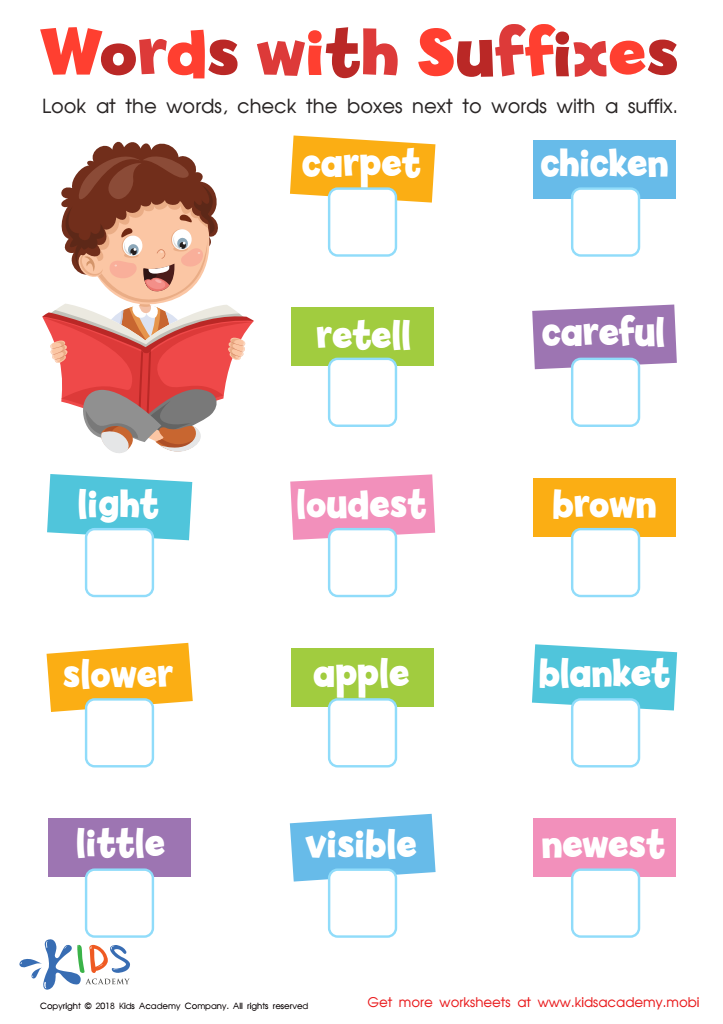
Reading: Words With Suffixes Worksheet
 Assign to My Students
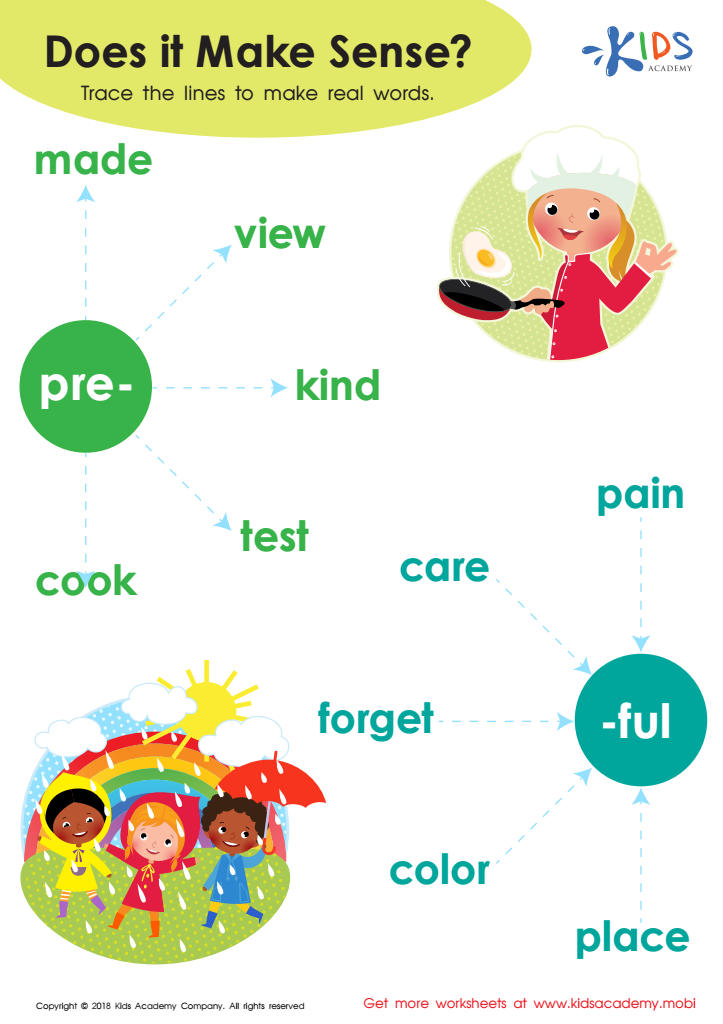
Prefix pre– and Suffix ful– Worksheet
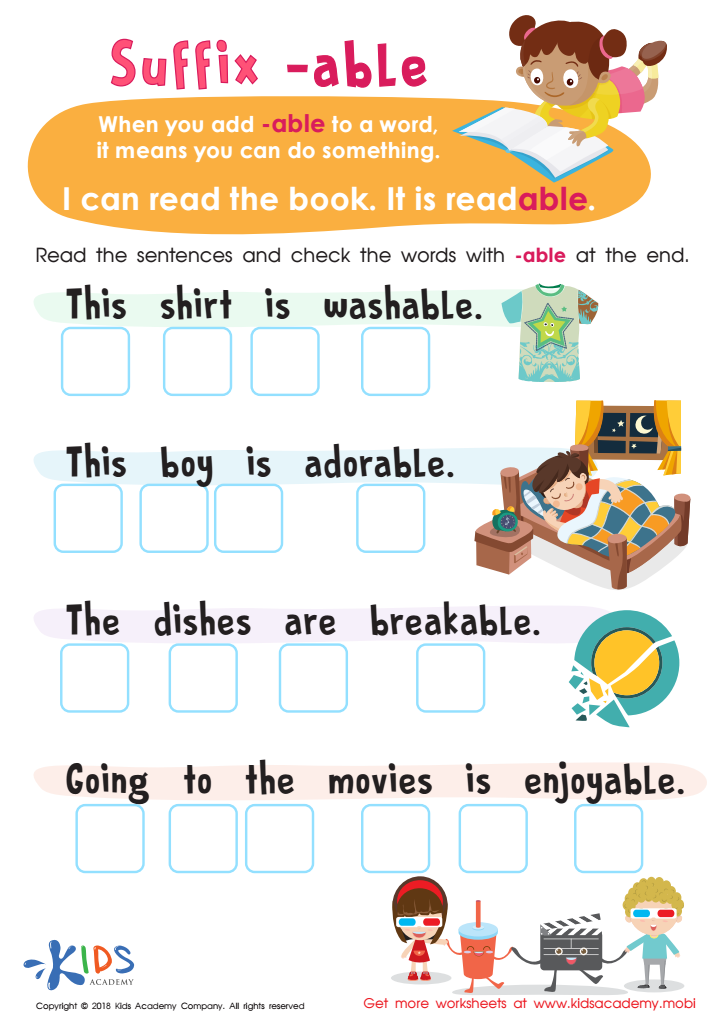
Suffix -Able Worksheet
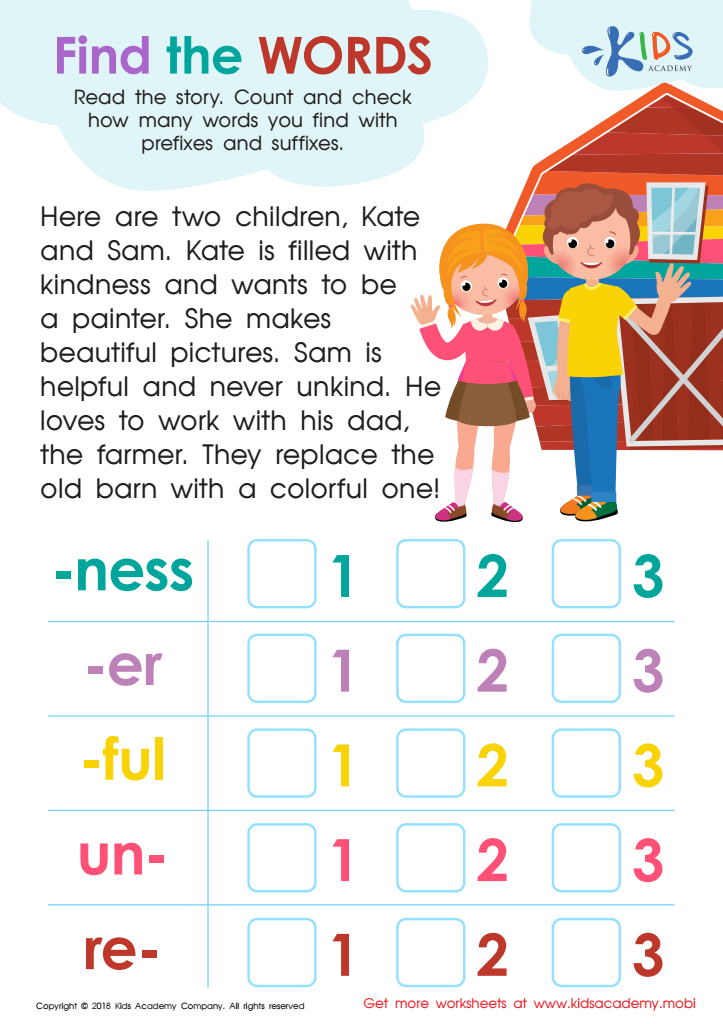
Prefix and Suffix Worksheet For Grade 3
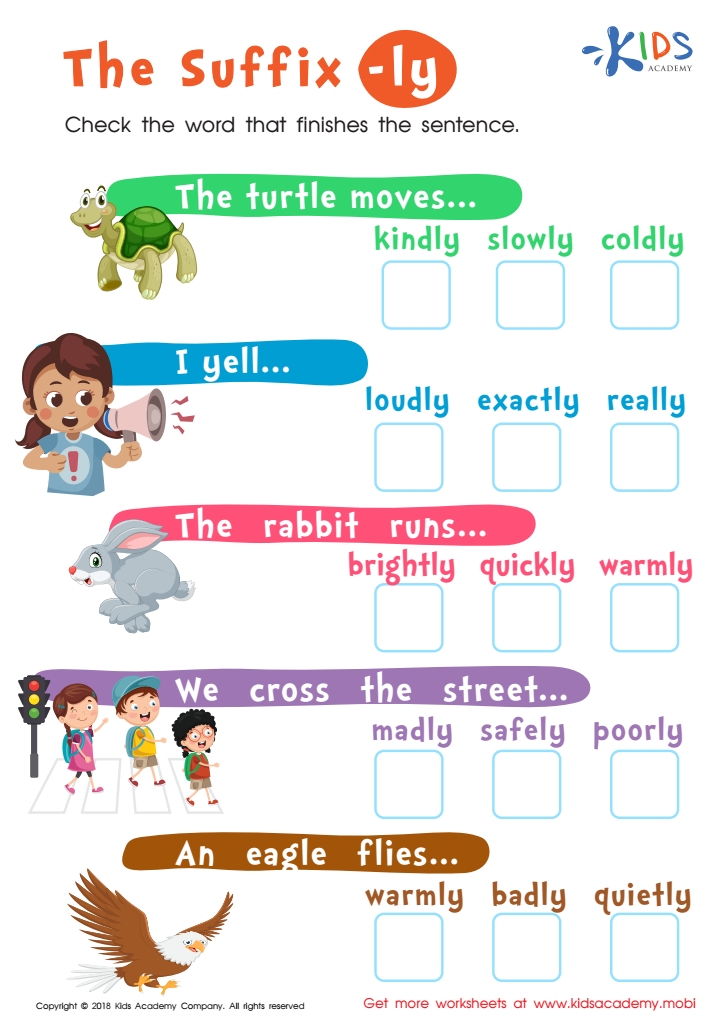
The Suffix -Ly Worksheet
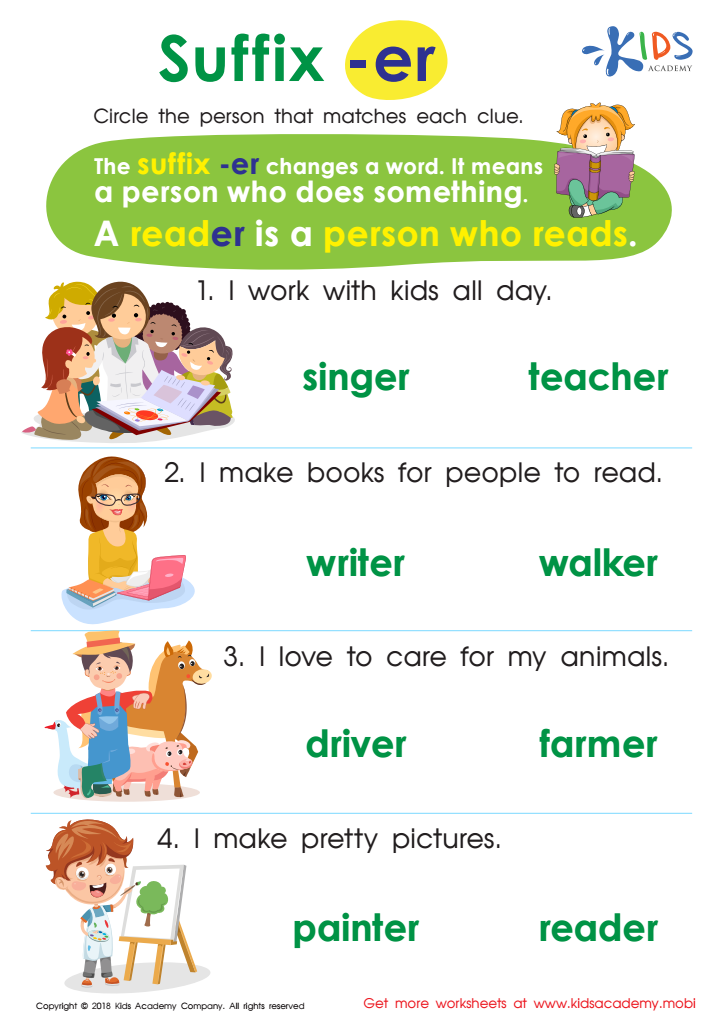
Suffix –er Printable Worksheet





Understanding suffixes is crucial for children aged 7-8 as it plays a significant role in their literacy development. Suffixes are letter groups added to the end of a word to change its meaning or grammatical function, such as "-ing," "-ed," or "-ly." Familiarity with these can empower students to decode and understand new words independently, enhancing their reading comprehension and vocabulary.
For parents and teachers, emphasizing suffixes helps children become more proficient writers. When kids know how suffixes transform words, they can express ideas more succinctly and accurately. For instance, adding "-ful" to "help" creates "helpful," showcasing the ability to convey nuanced meanings.
Moreover, understanding suffixes fosters critical thinking skills as children learn to recognize patterns in words, making it easier for them to tackle unfamiliar terms in the future. This foundation in language not only enhances academic performance but also builds confidence when communicating—skills essential for success in school and later life.
Ultimately, promoting an understanding of suffixes helps children navigate language more effectively and prepares them for more advanced literacy challenges, making it an important focus for caregivers and educators. Investing in this knowledge now lays a solid groundwork for lifelong learning and effective communication.