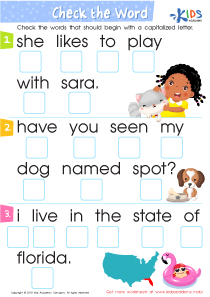
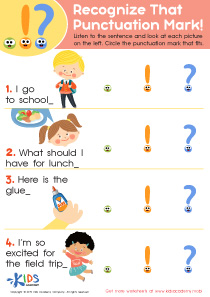
Word identification Normal Writing Worksheets for Ages 7-8
4 filtered results
-
From - To
Discover our specialized Word Identification Normal Writing Worksheets tailored for children aged 7-8. Our engaging, age-appropriate activities help young learners master the critical skill of recognizing and understanding written words. Perfect for early elementary students, these worksheets enhance vocabulary, reading comprehension, and writing capabilities through fun and interactive exercises. Designed by education experts, each worksheet aligns with school standards, ensuring your child receives the best support while practicing at home. Watch your child’s confidence soar as they unlock the power of word identification with these carefully crafted resources. Visit us today at Kids Academy to explore more!
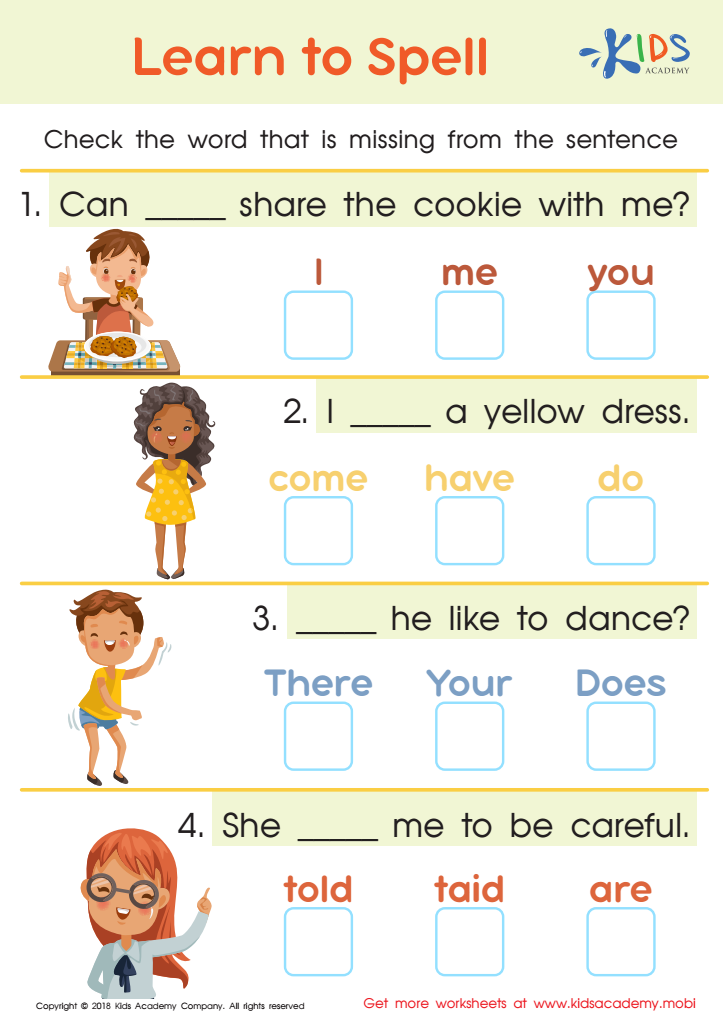
Learn to Spell Worksheet
 Assign to My Students
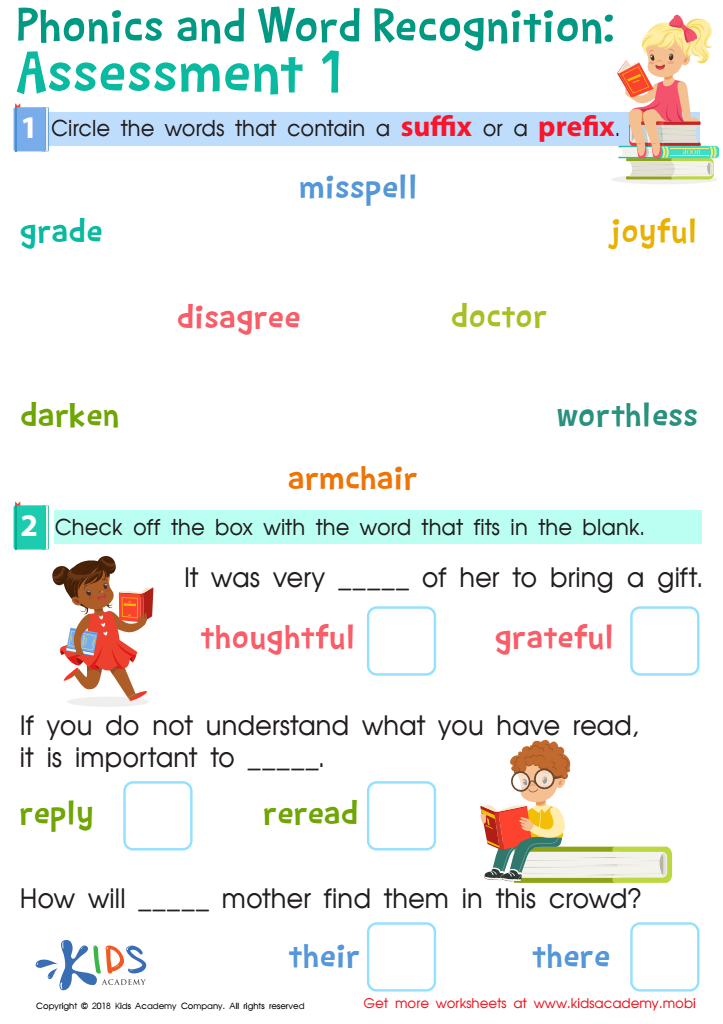
Phonics and Word Recognition: Assessment 1 Worksheet
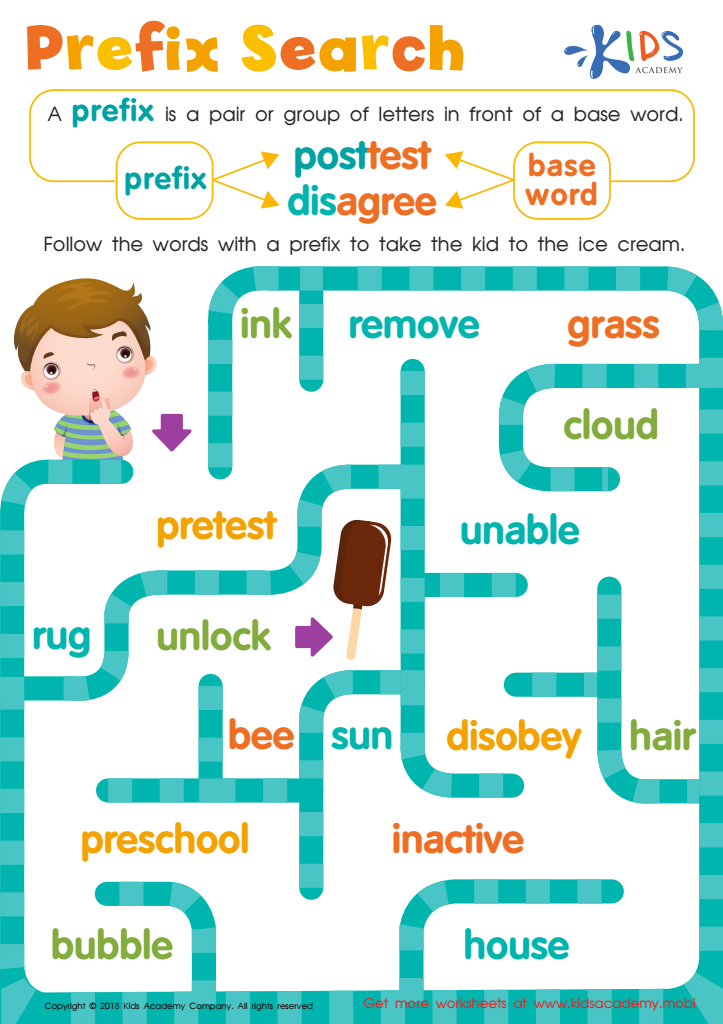
Reading: Prefix Search Worksheet
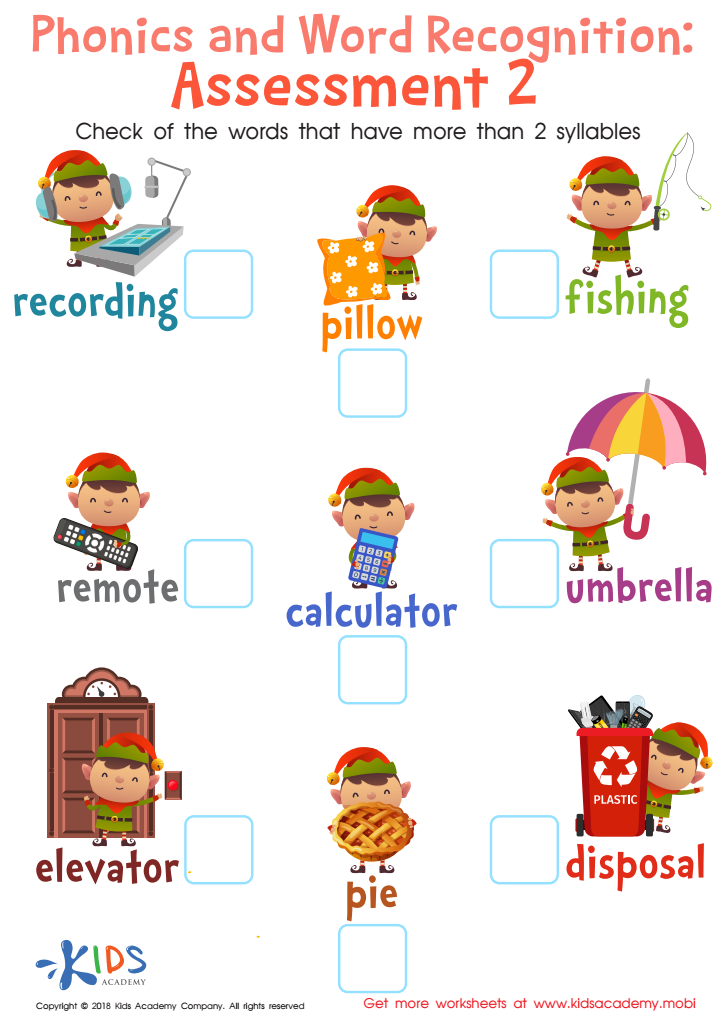
Phonics and Word Recognition: Assessment 2 Worksheet




.jpg)


.jpg)
Word identification and normal writing skills are fundamental building blocks for children aged 7-8, a critical period of cognitive and literacy development. Parents and teachers play a crucial role in nurturing these skills. For children, acquiring robust word identification capabilities enables them to decode text more fluently, aiding comprehension and promoting a lifelong love for reading. This proficiency fosteres self-confidence, making children more willing to engage with diverse reading materials. Simultaneously, normal writing skills involve the ability to form letters correctly, employ appropriate spelling, and construct coherent sentences. This empowers children to express their thoughts and ideas effectively, a vital skill for academic success.
For teachers and parents, supporting word identification and writing means creating a fertile learning environment where children can thrive. Engaging in regular reading sessions, interactive storytelling, and writing exercises can enrich a child's vocabulary and enhance their understanding of language structure. Providing constructive feedback and incorporating fun, pedagogical tools, like phonics games and writing prompts, can make the learning process enjoyable. Ensuring that children possess these essential literacy skills early on lays a strong foundation for their academic journey, influences their ability to articulate ideas clearly, and eventually contributes to their overall development into well-educated and articulate individuals.