Rhyming skills development Normal Alphabet Worksheets for Ages 7-9
4 filtered results
-
From - To
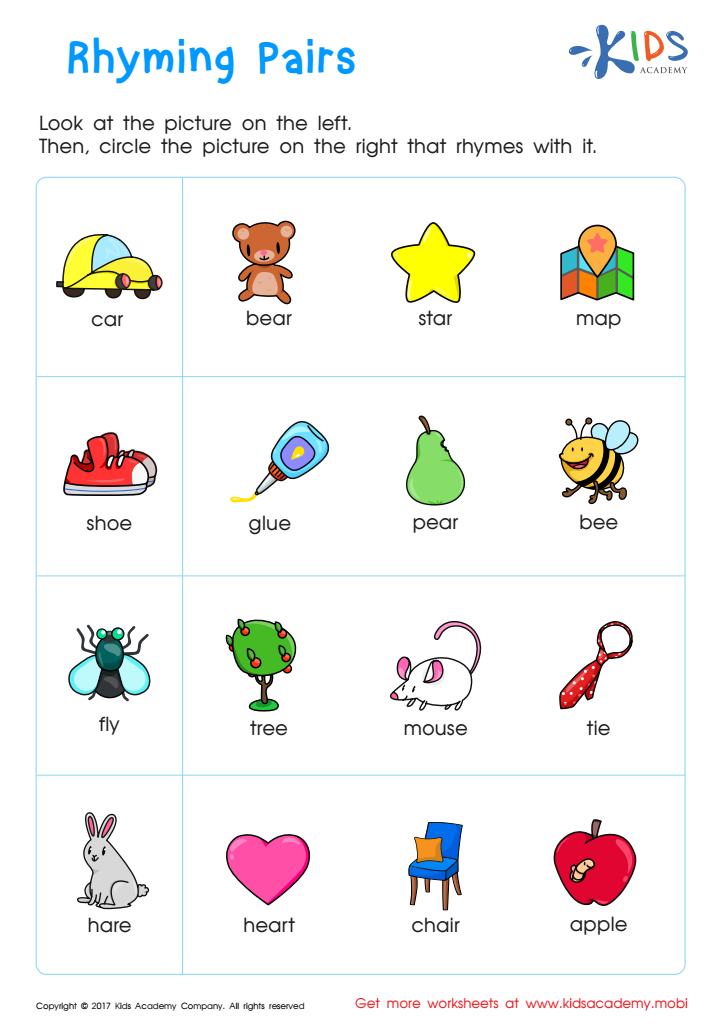
Enhance your child's rhyming skills with our engaging Normal Alphabet Worksheets, specifically designed for ages 7-9! These worksheets provide a fun and interactive way to explore the rhythm and sound of language, fostering an early love for reading. Kids will engage in various activities, including word pairings and creative exercises that strengthen their phonemic awareness and spelling abilities. Our worksheets promote critical thinking as children find connections between words and enhance their vocabulary. Ideal for both home and classroom use, these resources make learning entertaining and effective. Unlock your child's potential with our Rhyming Skills Development Worksheets today!
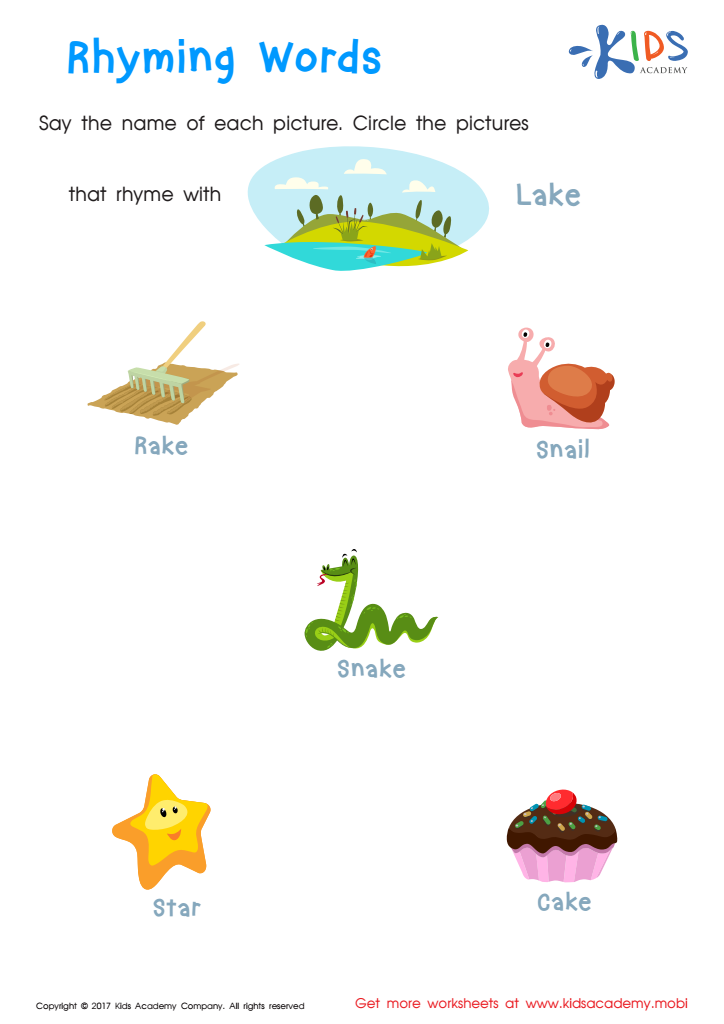
Rhyming Words Rhyming Worksheet
 Assign to My Students
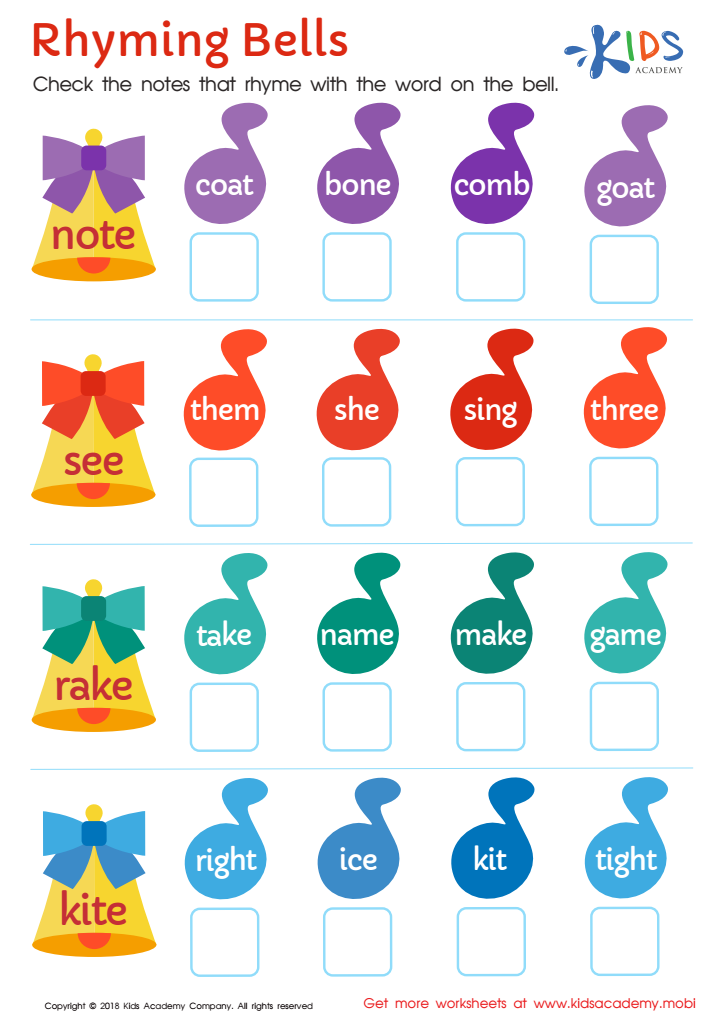
Rhyming Bells Worksheet
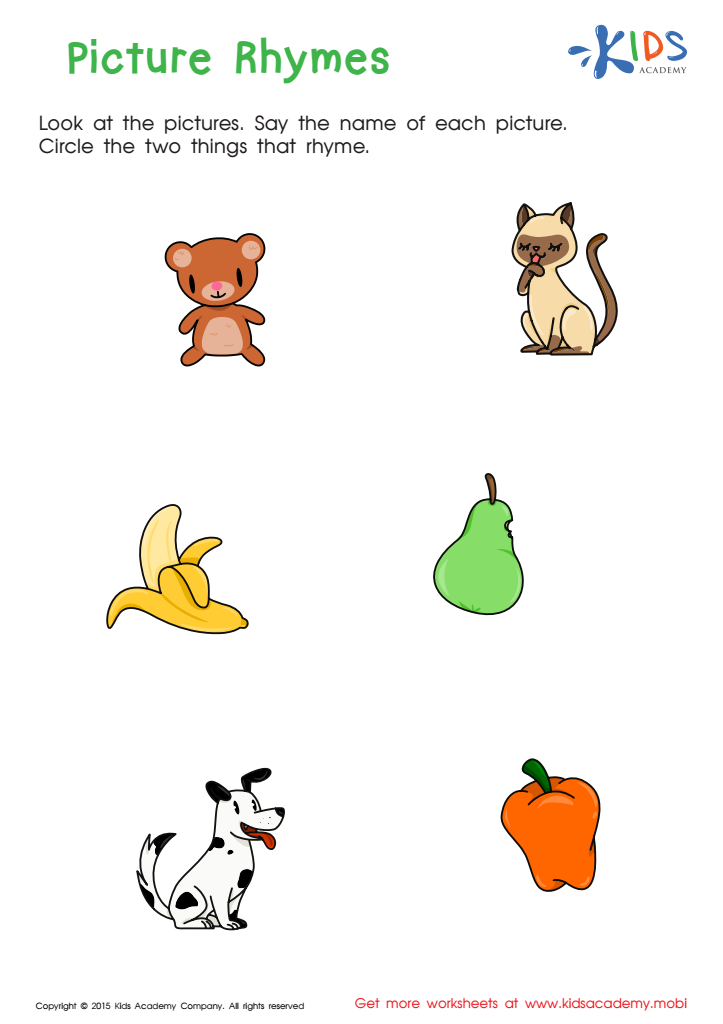
First Words: Picture Rhymes Worksheet








Rhyming skills development for children aged 7-9 is crucial for several reasons. Firstly, these skills are foundational for literacy. Rhyming helps children understand phonemic awareness, which is the ability to hear, identify, and manipulate sounds in words. This is especially important as they progress to reading more complex texts.
Secondly, engaging in rhyming activities enhances vocabulary acquisition. When children play with rhymes, they are exposed to a variety of words, enabling them to expand their language skills. This broad vocabulary supports their reading comprehension as they encounter new words in literature.
Thirdly, rhyming nurtures cognitive skills including memory, attention, and creativity. When children create or identify rhymes, they strengthen their ability to make connections between sounds and meanings, fostering critical thinking skills.
Moreover, rhyming can enhance social-emotional development. By participating in group rhyming games or songs, children improve their collaboration and communication skills while also enjoying activities that promote a sense of community.
In summary, parents and teachers should prioritize rhyming skill development because it plays a fundamental role in a child's literacy, vocabulary growth, cognitive skills, and social engagement, laying the groundwork for future academic success.







