
Spelling Skills Normal Alphabet Worksheets for Ages 7-9
6 filtered results
Difficulty Level
Grade
Age
-
From - To
Subject
Activity
Standards
Boost your child's spelling success with our Spelling Skills Normal Alphabet Worksheets for ages 7-9. Designed specifically for young learners, these engaging printables help enhance their spelling and vocabulary through fun activities. From identifying correct spellings to filling in missing letters, our worksheets make learning an enjoyable experience. Each activity is crafted to align with educational standards, ensuring your child builds a strong foundation in spelling. Ideal for both classroom and at-home practice, these worksheets are a valuable tool for enhancing your child's literacy skills. Unlock a world of words with our comprehensive spelling skill worksheets today!
Favorites
With answer key
Interactive
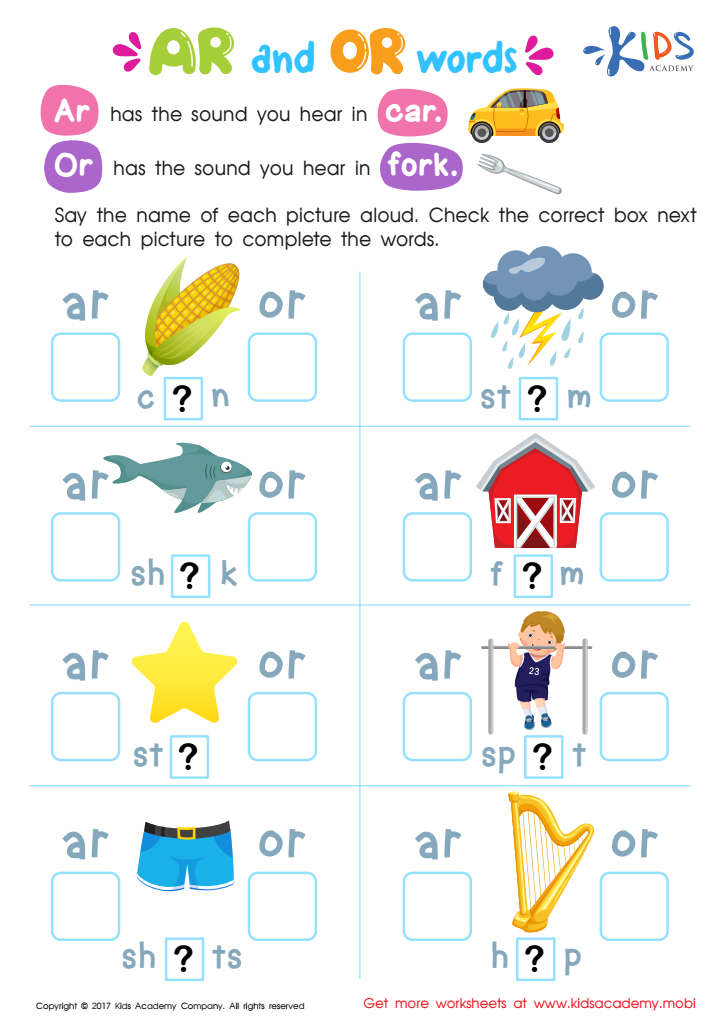
Ar and Or Words Phonics Worksheet
Master the distinct digraphs 'ar' and 'or' with this fun phonics worksheet from Kids Academy! With meaningful illustrations, it'll guide your child to choose the right one. Get ready for the great results!
Ar and Or Words Phonics Worksheet
Worksheet
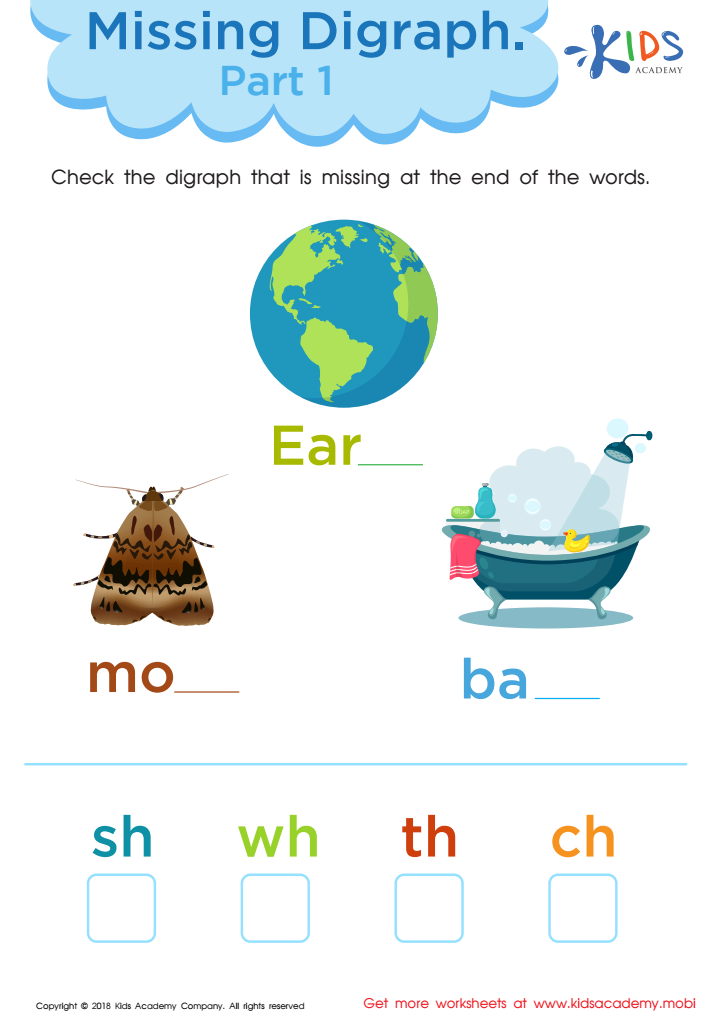
Missing Digraph: Part 1 Worksheet
Practice the 'th' digraph with this worksheet! Ask kids to say the words shown and sound out the letters below each image. Check the box with the correct digraph to complete. Examples include 'earth', 'bath' and 'moth', all ending with the same two letters. Phonics teaches that digraphs are two letters that make one sound.
Missing Digraph: Part 1 Worksheet
Worksheet
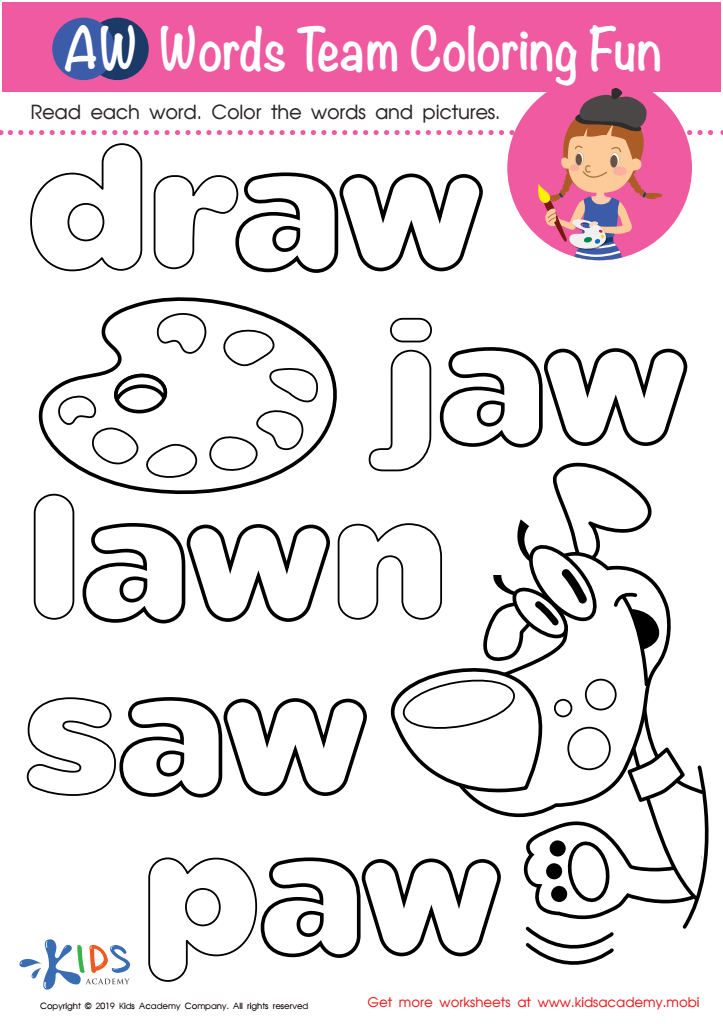
AW Words Team Coloring Fun Worksheet
Coloring words they can read is a blast for little learners! This worksheet offers emerging readers the chance to practice and gain confidence in reading words from the -aw family, while also improving fine-motor and creativity skills. Without knowing it, they'll learn about phonetic teams along the way!
Download (PDF)
 Assign to My Students
Assign to My Students
AW Words Team Coloring Fun Worksheet
Worksheet
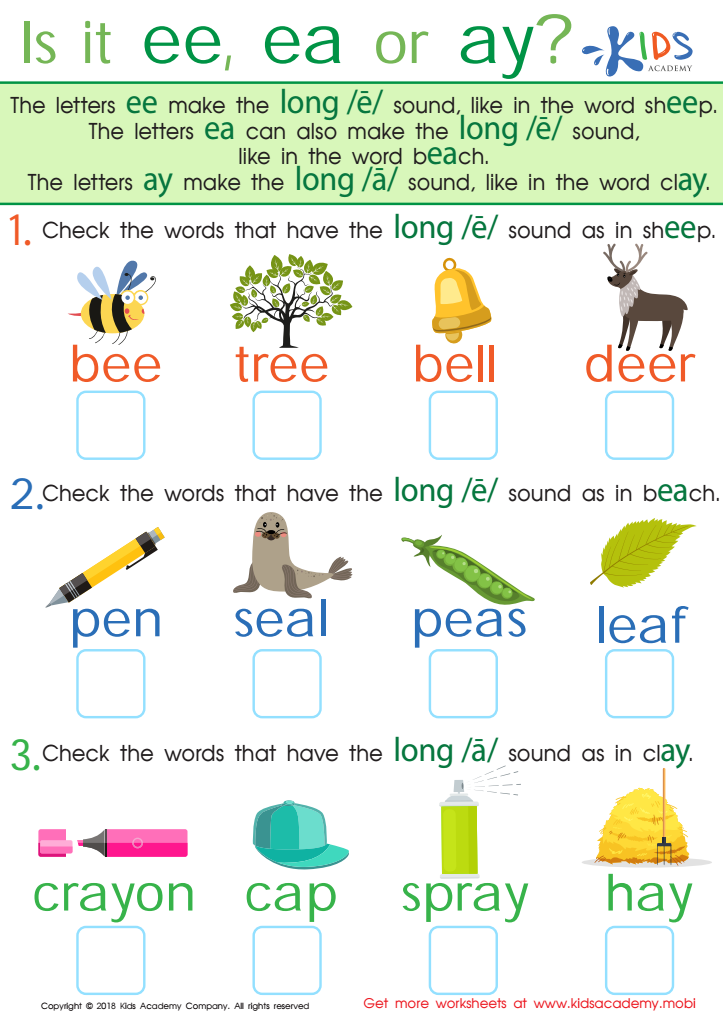
Is It EE, EA, or AY? Worksheet
When 'ee', 'ea' and 'ay' are in words, they usually make the long /e/ and /a/ sounds. Examples of words with 'ee' are "sheep", 'beach' and 'seat' with 'ea', and 'clay' and 'play' with 'ay'. Check this colourful worksheet with your kids; help them find the words that make the long /e/ sound like 'sheep'.
Is It EE, EA, or AY? Worksheet
Worksheet
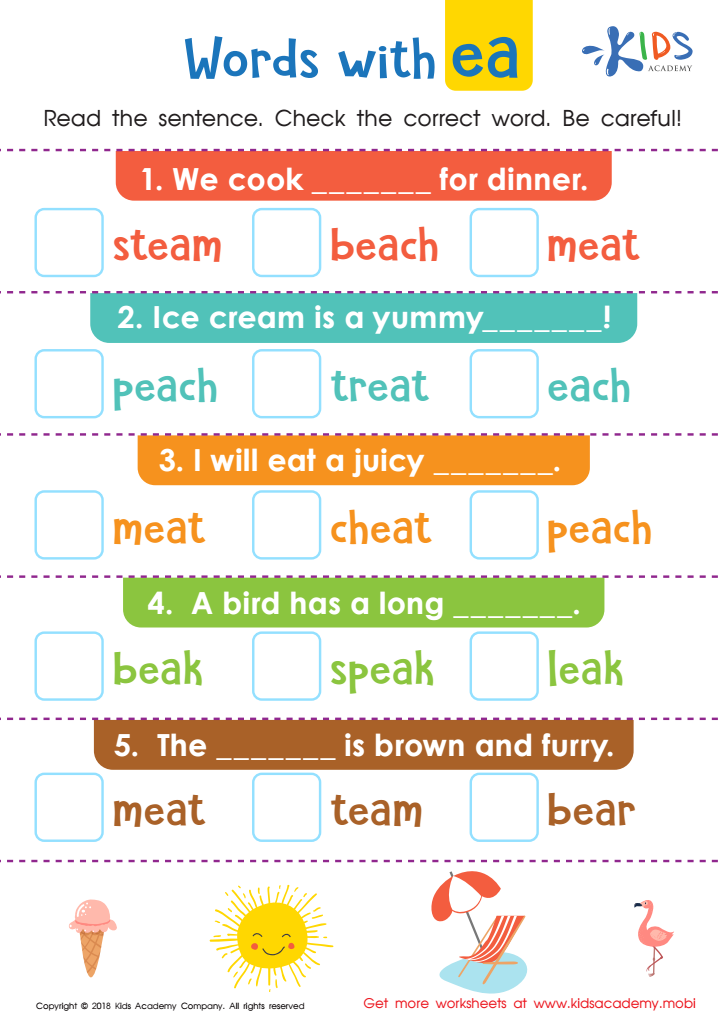
Words with ea Worksheet
Beginning readers may struggle with -ea vowel digraphs, which can have multiple sounds and be tricky to decode. This cheerful worksheet helps kids practice reading sentences with missing -ea words, using context clues to fill in the blanks. They'll also be exposed to various -ea sound examples, and build their sight word knowledge.
Words with ea Worksheet
Worksheet
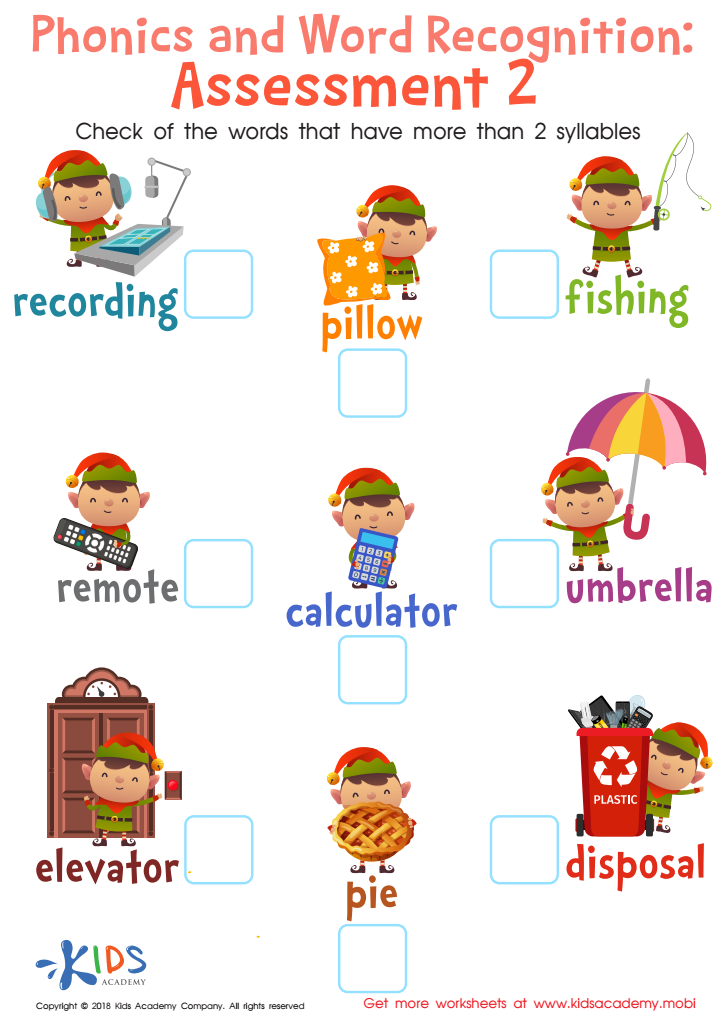
Phonics and Word Recognition: Assessment 2 Worksheet
Help your kids learn proper pronunciation by counting syllables. Most words they'll encounter have 1-3 syllables, making them simple to say. Have them repeat the words in your worksheet after you. Focus on longer words with more than two syllables.
Phonics and Word Recognition: Assessment 2 Worksheet
Worksheet
Join Kids Academy for Free
Who is primarily going to use this learning content?








Fostering strong spelling skills in children ages 7-9 is crucial for their overall language development and academic success. At this critical stage, children transition from learning to read to reading to learn. Proper spelling facilitates better reading comprehension as children no longer struggle with sounding out every word. This improved fluency allows them to focus more on absorbing information and understanding context, both of which are vital for academic achievement across subjects.
Spelling proficiency also enhances writing skills. When students can spell correctly, they can express their thoughts more clearly and creatively without being hindered by worries about spelling errors. This freedom fosters a love for writing, encouraging them to explore storytelling, journaling, and other written forms of communication. Furthermore, accurate spelling supports vocabulary development, as children learn to recognize patterns and word structures, making it easier to decode new words.
For parents and teachers, emphasizing spelling skills means equipping kids with foundational tools for lifelong learning. When children grow confident in their spelling abilities, this confidence can extend to other areas of their education, promoting a positive attitude toward school. Integrating spelling exercises in engaging and fun ways—like games and interactive activities—makes learning enjoyable and reinforces these critical skills effectively.







