Normal Missing Letters Worksheets for Ages 7-9
4 filtered results
-
From - To
Enhance your child’s reading and spelling skills with our "Normal Missing Letters Worksheets for Ages 7-9." These educational sheets are specifically designed to help kids recognize and fill in missing letters within words, boosting their understanding of the alphabet and improving their phonetic skills. Ideal for young learners, these worksheets make learning fun through engaging exercises and colorful illustrations. Perfect for both classroom use and home practice, they provide a solid foundation in literacy and support early language development. Make learning a delightful experience with our expertly crafted, child-friendly worksheets!
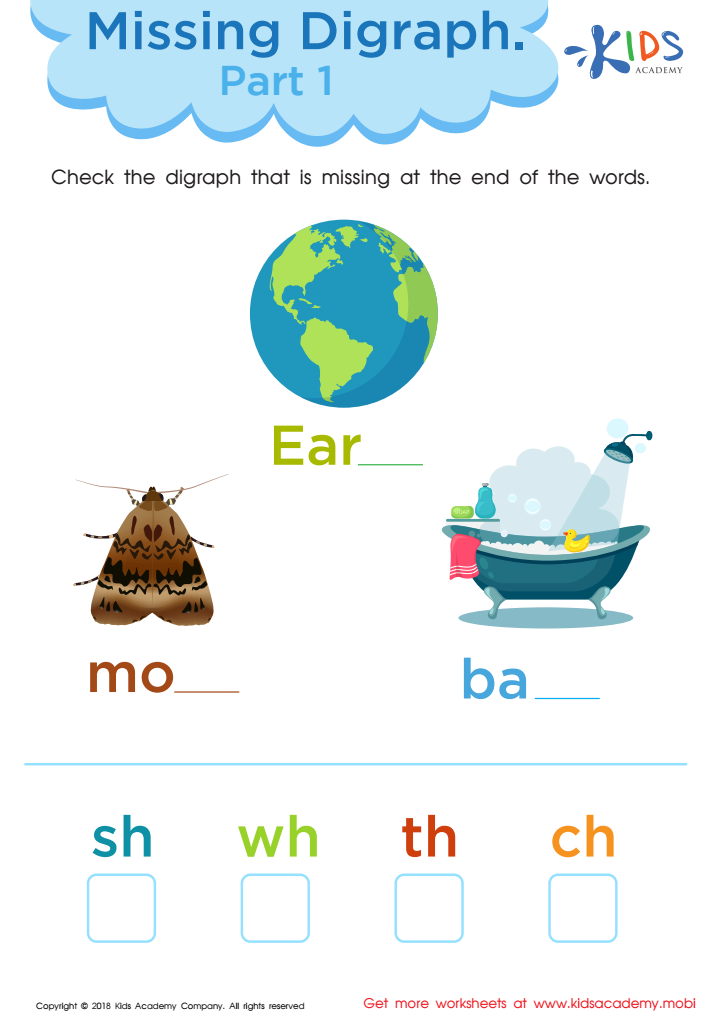
Missing Digraph: Part 1 Worksheet
 Assign to My Students
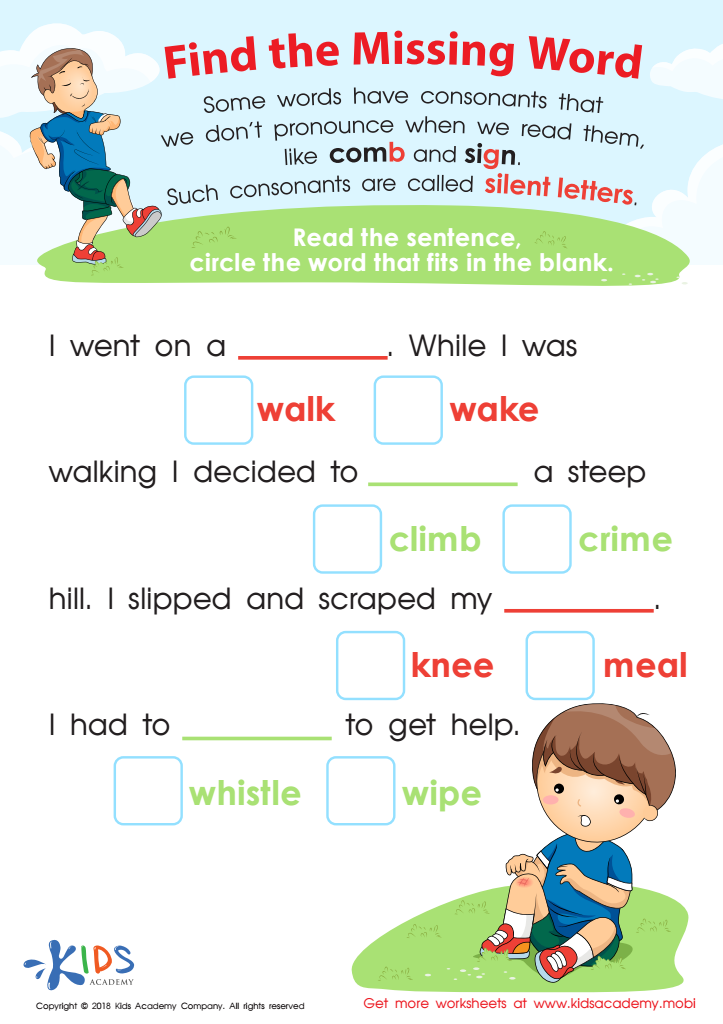
Find The Missing Word Worksheet
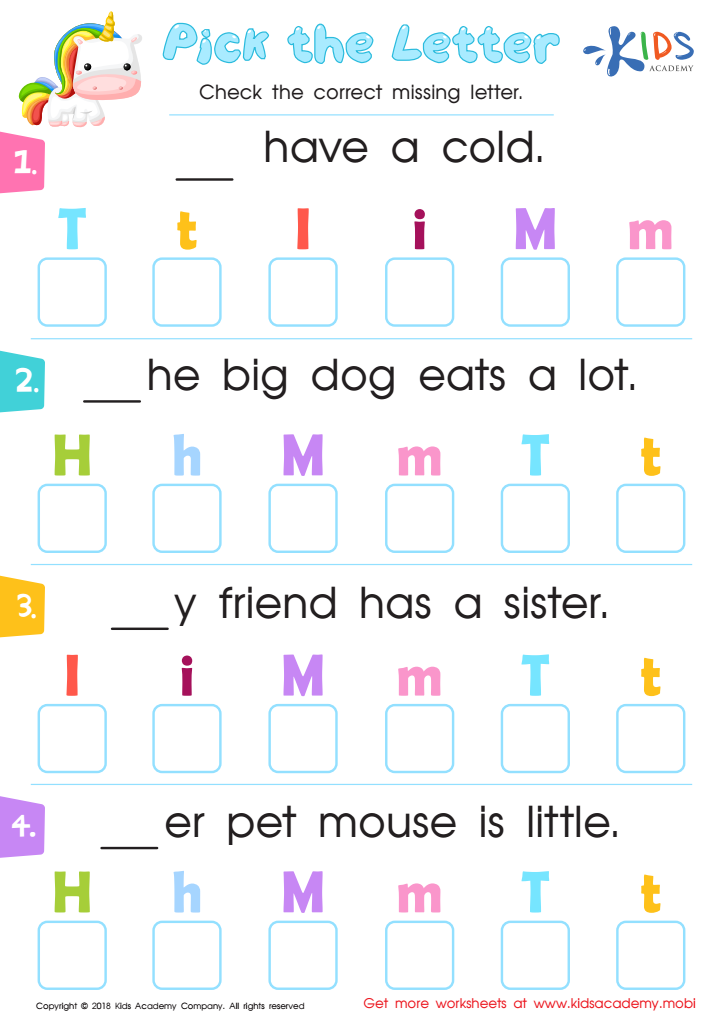
Pick the Letter Worksheet
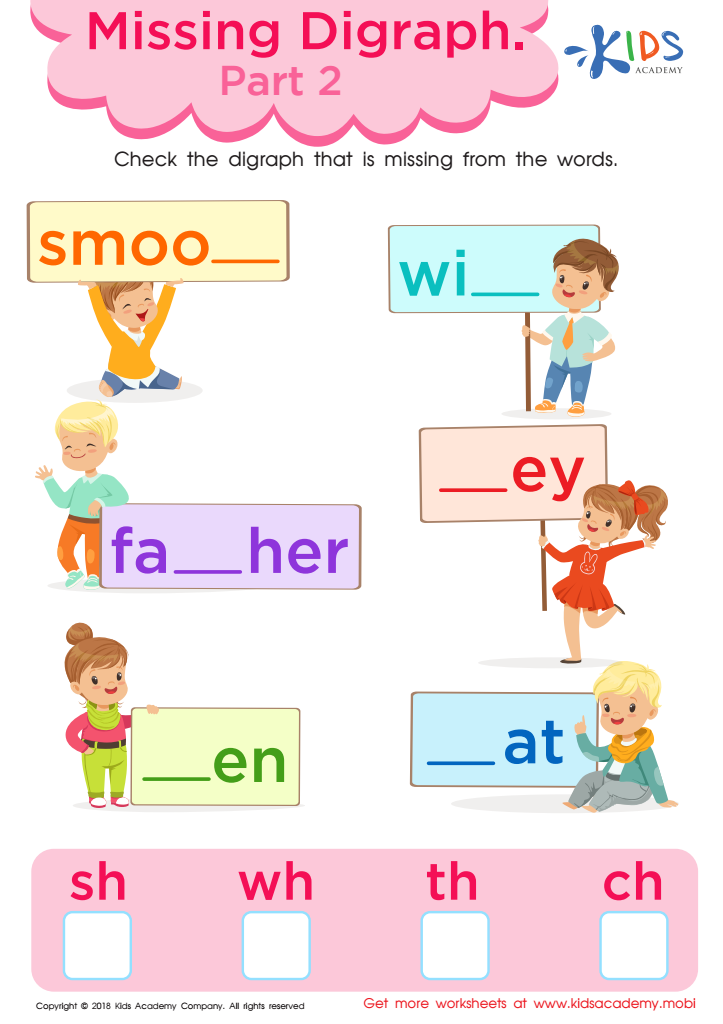
Missing Digraph: Part 2 Worksheet



Parents and teachers should pay close attention to Normal Missing Letters activities for children aged 7-9 because they significantly contribute to literacy development. At this crucial stage, children are transitioning from recognizing letters and sounds to fluent reading and efficient writing. Through activities that focus on missing letters, children enhance their phonemic awareness—understanding how sounds correspond to and form words. This boosts their decoding skills, enabling them to read unfamiliar words more readily.
Moreover, filling in missing letters fosters critical thinking and problem-solving abilities as children analyze the word’s context to identify the correct letters. These activities also aid in spelling proficiency by reinforcing the correct sequence of letters in words, which is fundamental for competent writing. Parents and teachers engaging in these exercises support the development of language patterns and vocabulary, making reading more enjoyable and less frustrating.
Equally important, interactive letter activities nurture a positive learning environment. They can be made into fun games, thus fostering a child's engagement and motivation toward learning. Early and consistent focus on such foundational skills ensures that children build strong literacy capabilities, essential for their academic success and future learning endeavors.







