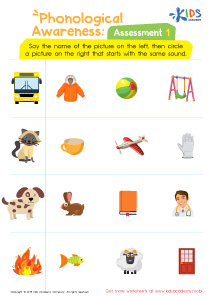
Phonics practice Normal Vowels Worksheets for Ages 7-9
7 filtered results
Difficulty Level
Grade
Age
-
From - To
Subject
Activity
Standards
Enhance your child’s reading and writing skills with our Phonics Practice Normal Vowels Worksheets designed specifically for ages 7-9. These engaging printable activities help children master the core concepts of vowel sounds and their usage in words. With a variety of exercises focused on identifying, matching, and manipulating vowels, these worksheets foster essential phonics skills in a fun and interactive way. Ideal for at-home learning or classroom use, our resources promote phonemic awareness, boost literacy confidence, and support language development. Provide your child with the tools they need to succeed in their reading journey with our expertly crafted vowel worksheets!
Favorites
With answer key
Interactive
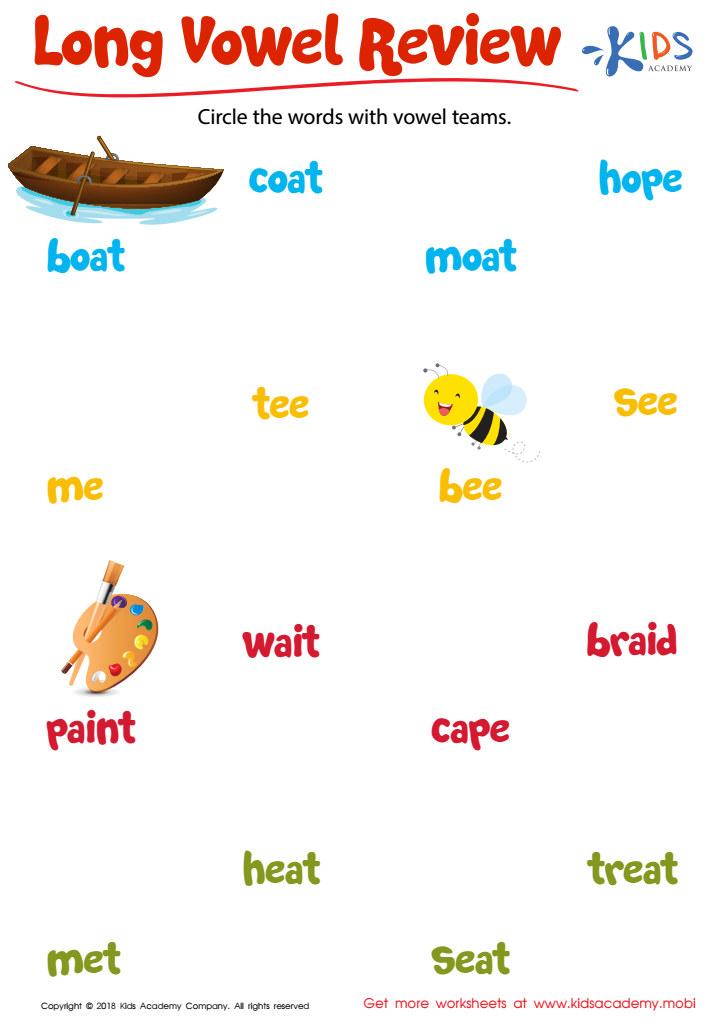
Long Vowel Review Worksheet
Vowel teams like "ea" and "ai" help us make words, and understanding these patterns aids emerging readers in becoming more fluent. This review worksheet has students finding words with vowel teams that make the long vowel sound, and helps them recognize high-frequency words.
 Assign to My Students
Long Vowel Review Worksheet
Worksheet
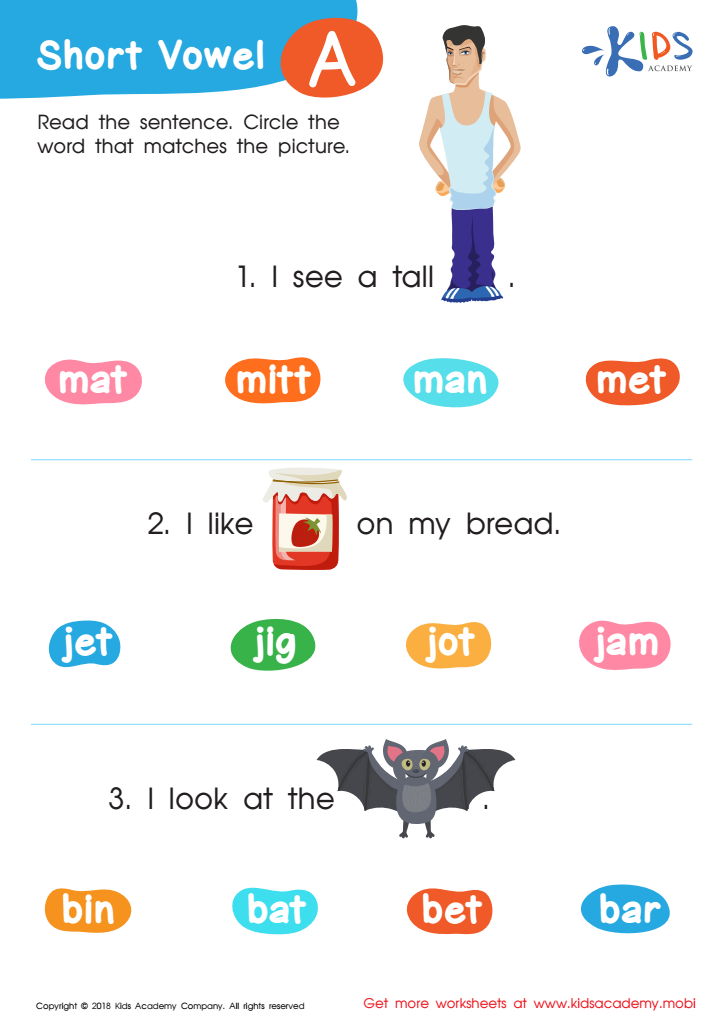
Short Vowel /a/ Worksheet
This free PDF helps new readers use sight words and pictures to read basic sentences. Then, they use accompanying word choices to find the correct word with the short a vowel sound. A key early reading skill, discriminating between short vowel sounds can be tricky in monosyllabic words, so use this PDF to help your reader reinforce it.
Short Vowel /a/ Worksheet
Worksheet
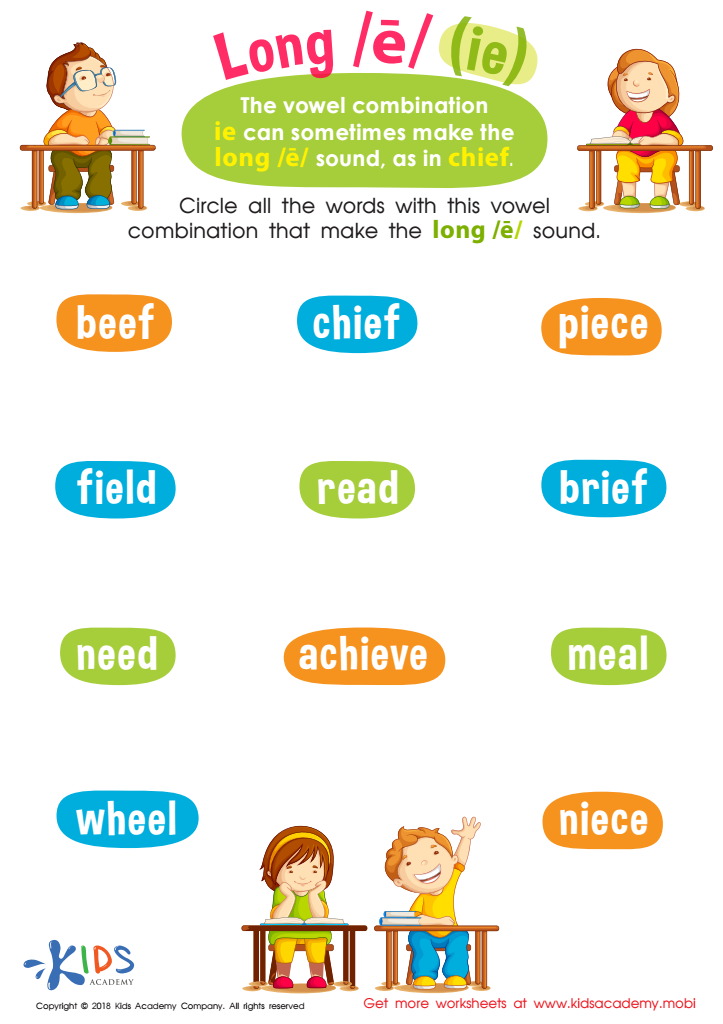
Reading: Long E and IE Worksheet
Ask your child to name some words with the long /e/ sound they hear every day. Then, read aloud all the words in the worksheet with them. Ask them to circle the words containing ie that make this sound.
Reading: Long E and IE Worksheet
Worksheet
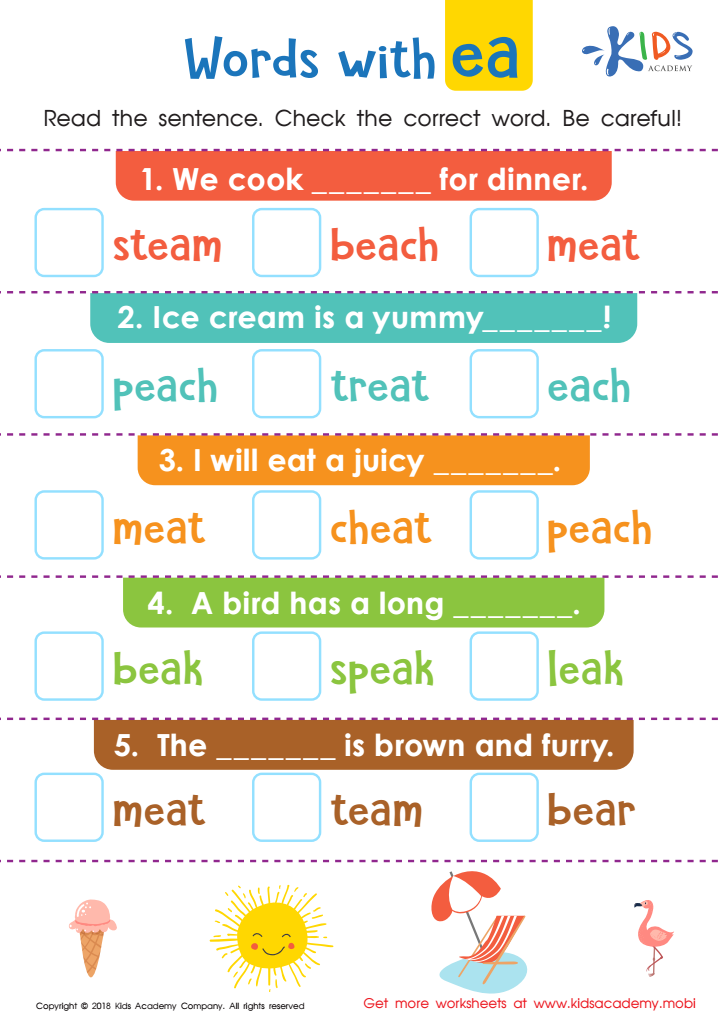
Words with ea Worksheet
Beginning readers may struggle with -ea vowel digraphs, which can have multiple sounds and be tricky to decode. This cheerful worksheet helps kids practice reading sentences with missing -ea words, using context clues to fill in the blanks. They'll also be exposed to various -ea sound examples, and build their sight word knowledge.
Words with ea Worksheet
Worksheet
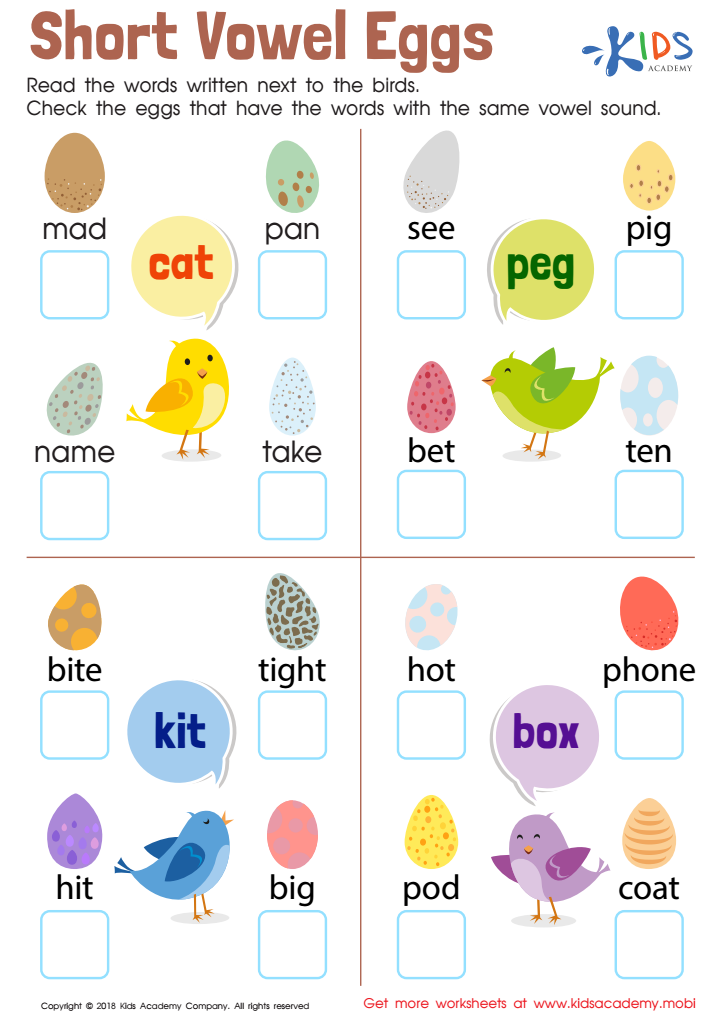
Short Vowel Eggs Worksheet
Your students will love helping these birdies pick the short vowel eggs! Have them read the words in the thought bubbles, then check off the boxes with the same short vowel sounds. The bright colors of this free Worksheet will draw them in and get them practicing their vowels!
Short Vowel Eggs Worksheet
Worksheet
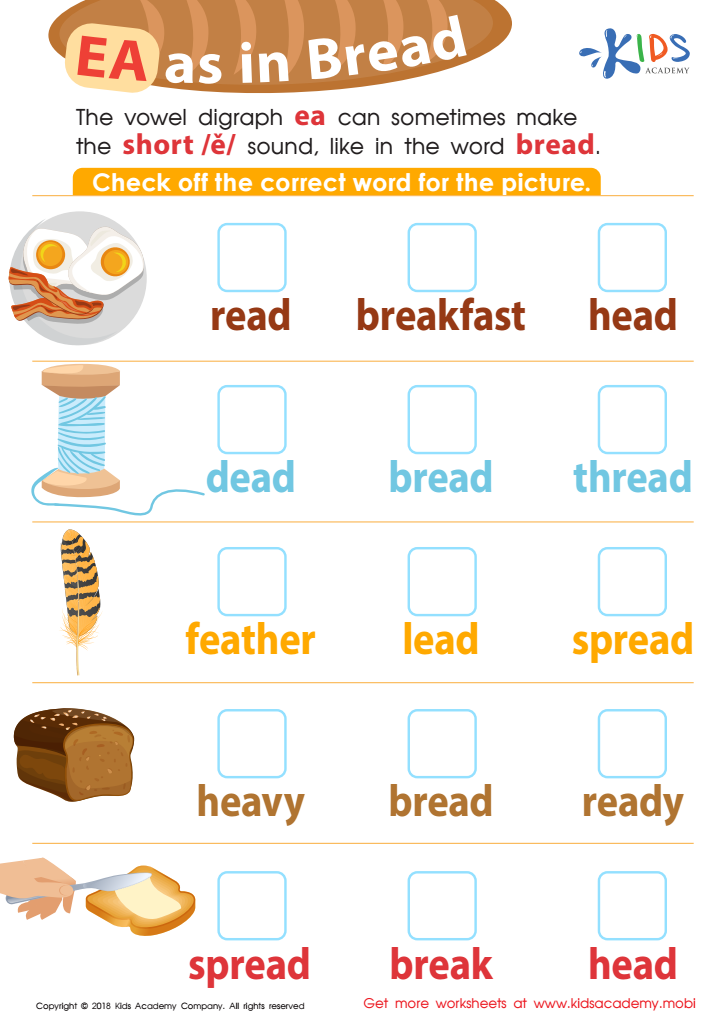
Reading: EA as in Bread Worksheet
The vowel digraph ea can be read in two ways. Examples of the long sound are "read" and "lead"; examples of the short sound are "bread" and "head". Ask your kids to give you more examples and then have them check off the correct word for the pictures on this worksheet. This will help them understand the ea sound.
Reading: EA as in Bread Worksheet
Worksheet
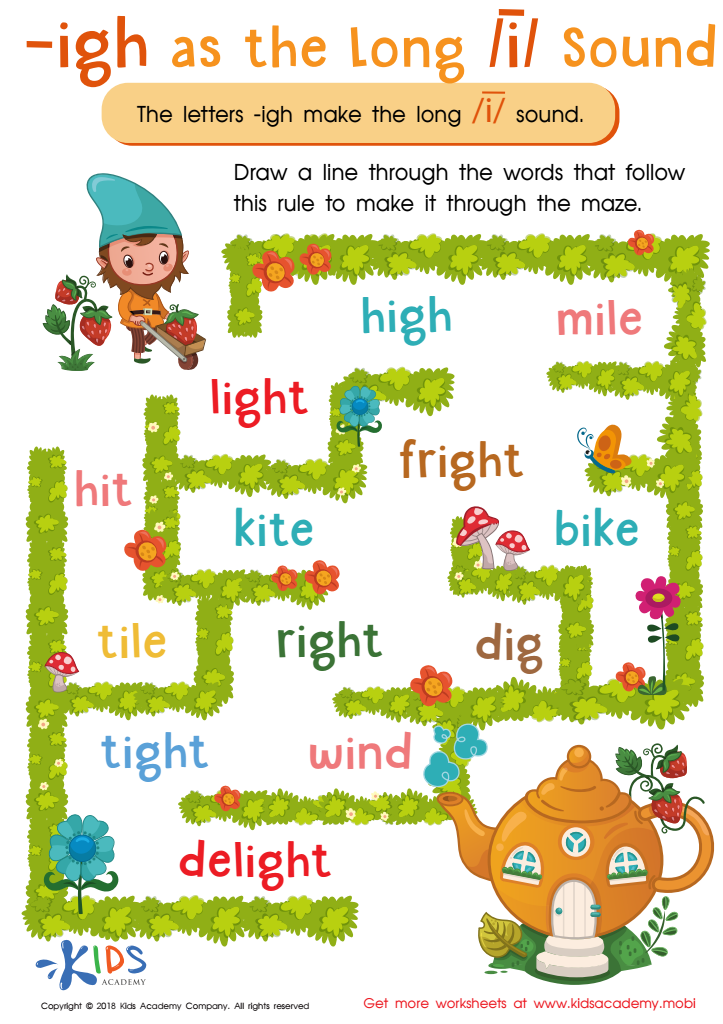
Reading: IGH as Long I Worksheet
Kids can have fun and learn with this maze! They'll look for and read words with the 'long I' sound spelled 'igh'. Most words ending with 'T' have this spelling. Decode words while learning about long vowel sounds and their spellings.
Reading: IGH as Long I Worksheet
Worksheet
Join Kids Academy for Free
Who is primarily going to use this learning content?





Phonics practice, particularly focusing on normal vowels, is crucial for children aged 7-9 as they transition from learning to read to reading to learn. At this age, children are refining their reading skills, and a strong foundation in phonics can significantly enhance their literacy development.
Understanding normal vowels—both short and long sounds—improves children's decoding skills, enabling them to sound out words accurately and quickly. This directly impacts their reading fluency and comprehension. When children grasp vowel patterns, they become more confident readers, fostering a love for books and learning.
Also, phonics is foundational for spelling. As children become familiar with normal vowel sounds, they can apply this knowledge to spell words correctly, aiding their writing skills and overall communication abilities. Furthermore, comprehension of phonics supports verbal expression, as students are encouraged to explore more complex vocabulary.
Teachers and parents should prioritize phonics practice as it equips children with essential tools for academic success. Effective phonics instruction not only enhances reading and writing proficiency but also lays the groundwork for future learning. By investing in phonics practice, adults play a vital role in nurturing confident, skilled, and enthusiastic learners.