
Analyzing data Normal Worksheets for Ages 7-9
5 filtered results
Difficulty Level
Grade
Age
-
From - To
Subject
Activity
Standards
Enhance your child’s math skills with our Analyzing Data Normal Worksheets designed for ages 7-9! These engaging, printable worksheets focus on developing critical thinking and data interpretation skills in a fun and interactive way. Kids will explore various data representations, including charts and graphs, while practicing key concepts such as comparison, addition, and subtraction of data points. Our thoughtfully crafted activities also promote problem-solving abilities and encourage students to make informed decisions based on the data analyzed. With colorful illustrations and clear instructions, these worksheets provide an ideal resource for both classroom learning and at-home practice. Start fostering analytical skills today!
Favorites
With answer key
Interactive
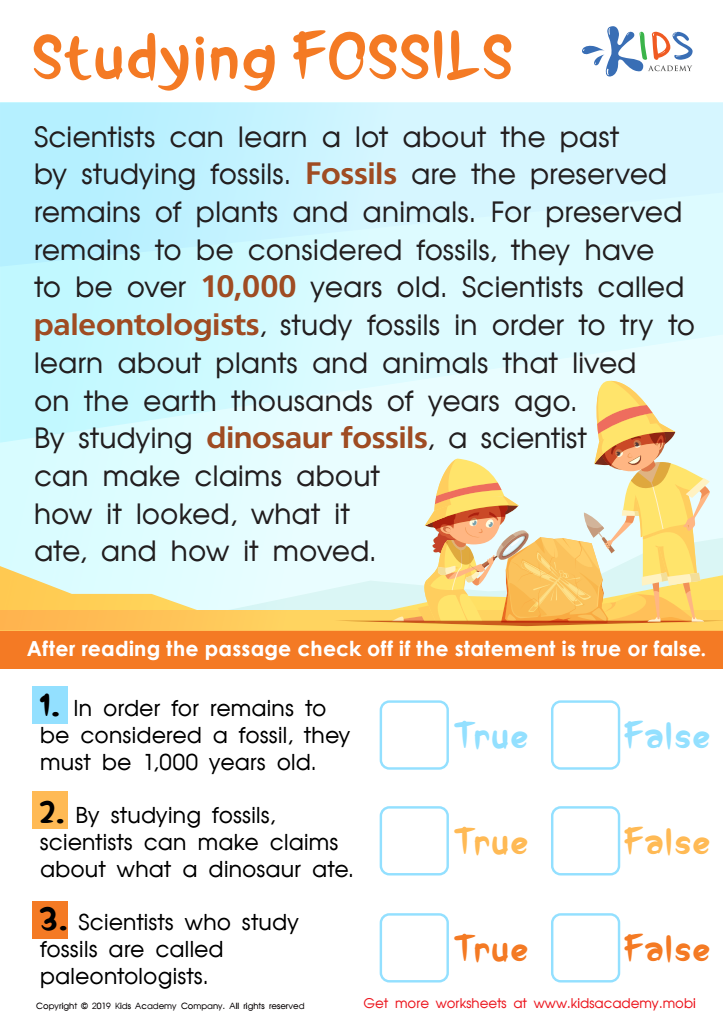
Studying Fossils Worksheet
Fossils captivate children! It's no wonder why; when we learn about them, we are getting a glimpse into history and uncovering old mysteries! With this free download, kids will understand what a paleontologist is and how they use fossils to learn about long-gone plants and animals. They'll discover that old bones are priceless and that exploring ancient history can be exciting!
 Assign to My Students
Studying Fossils Worksheet
Worksheet
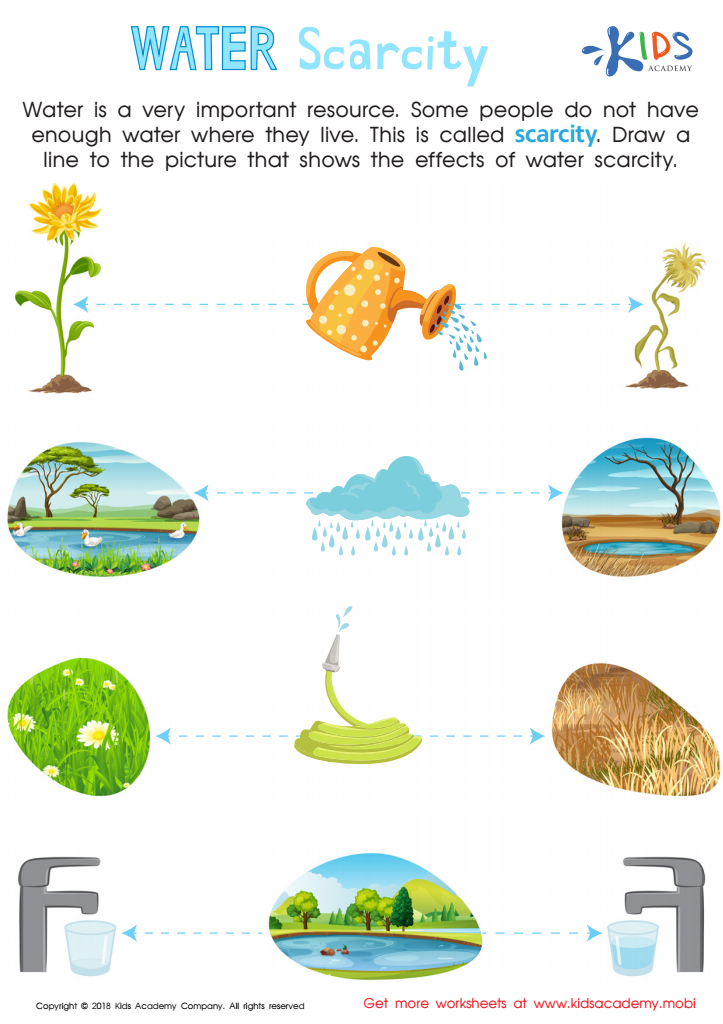
Water Scarcity Worksheet
Water is an essential part of our lives. Ask your students to list five everyday activities which require water. Use this worksheet to explain why water is important and how privileged we are to have access to it. Many people are not as lucky and face water scarcity. Explain this concept with a fun pdf, showing the effects of water scarcity.
Water Scarcity Worksheet
Worksheet
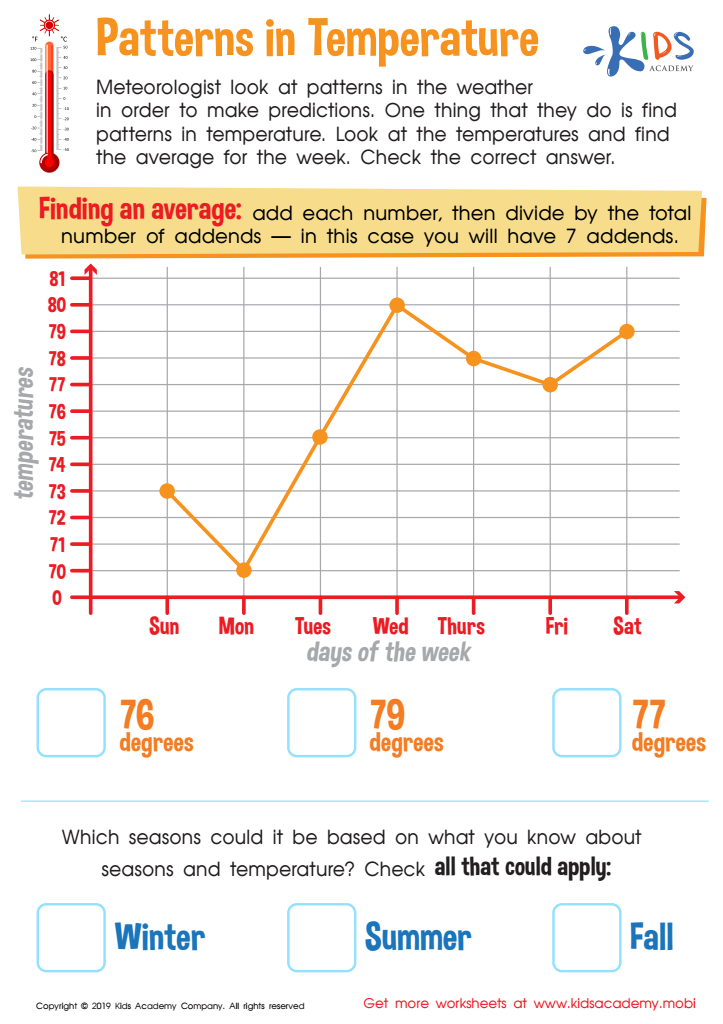
Patterns in Temperature Worksheet
Kids need to learn how to read and interpret data from graphs and charts. This free worksheet on temperature patterns helps them to do just that. They'll practice finding averages and answer questions in multiple-choice format. Plus, it provides a great learning experience!
Patterns in Temperature Worksheet
Worksheet
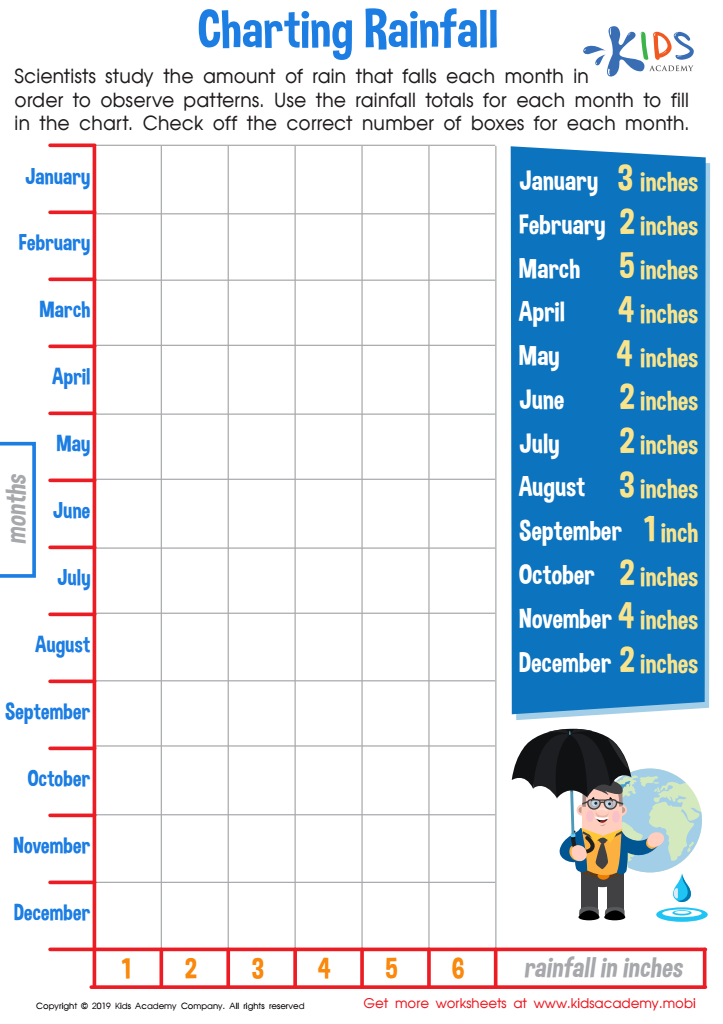
Charting Rainfall Worksheet
Kids need to learn how to graph info in order to understand the world. This rainfall worksheet gives them an opportunity to act as statisticians, charting the amount of rain each month. It also helps them practice data storage and analysis for future math concepts.
Charting Rainfall Worksheet
Worksheet
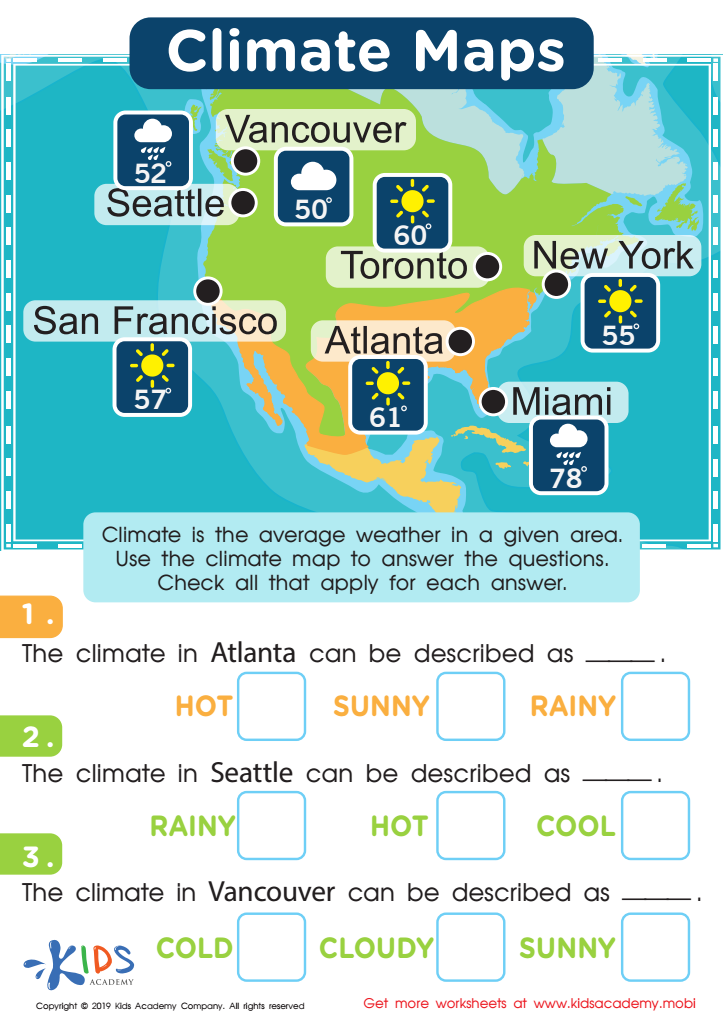
Climate Maps Worksheet
This map offers a fun way to teach kids about the varying climates across North America. They'll learn that Seattle and Miami have different temperatures, yet the same amount of rainfall. Plus other weather facts. This prepares them to answer reading comprehension questions with success!
Climate Maps Worksheet
Worksheet
Join Kids Academy for Free
Who is primarily going to use this learning content?



.jpg)

.jpg)


Analyzing data is a fundamental skill that empowers children aged 7-9 to make informed decisions and enhance their learning. For parents and teachers, understanding how to guide children in this process is crucial for several reasons.
Firstly, data analysis fosters critical thinking. Children learn to interpret information, recognize patterns, and draw conclusions, skills that are vital across subjects and future academic pursuits. By engaging with data, kids develop their analytical abilities and become more curious learners.
Secondly, analyzing data enhances comprehension. Whether it's math, science, or reading, understanding how to read graphs or charts helps children grasp complex concepts more easily. This ensures they can not only report findings but also apply this knowledge in real-life situations, such as interpreting sales signs or understanding sports statistics.
Moreover, it promotes enthusiasm for STEM fields. Encouraging data analysis at this age can help cultivate a love for science, technology, engineering, and mathematics, leading to potential career paths.
Lastly, by fostering these skills early, parents and teachers guide children to become responsible digital citizens. In an age where data is ubiquitous, being able to differentiate between fact and misinformation is essential for navigating the world.
Thus, investing in data analysis education is vital for developing well-rounded, capable individuals.








