Basic counting skills Normal Worksheets for Ages 7-9
5 filtered results
-
From - To
Our "Basic Counting Skills Normal Worksheets for Ages 7-9" are designed to support young learners in mastering fundamental arithmetic. These engaging, printable resources cover essential counting concepts, from simple number sequences to more complex counting strategies. Perfect for home or classroom use, these worksheets help students build a strong numerical foundation through fun activities and exercises. Aligned with educational standards, they enhance core skills like number recognition, addition, and subtraction. Foster confidence and competence in your child’s mathematical journey with these thoughtfully crafted worksheets, perfect for building lasting counting skills. Download now and make learning enjoyable!
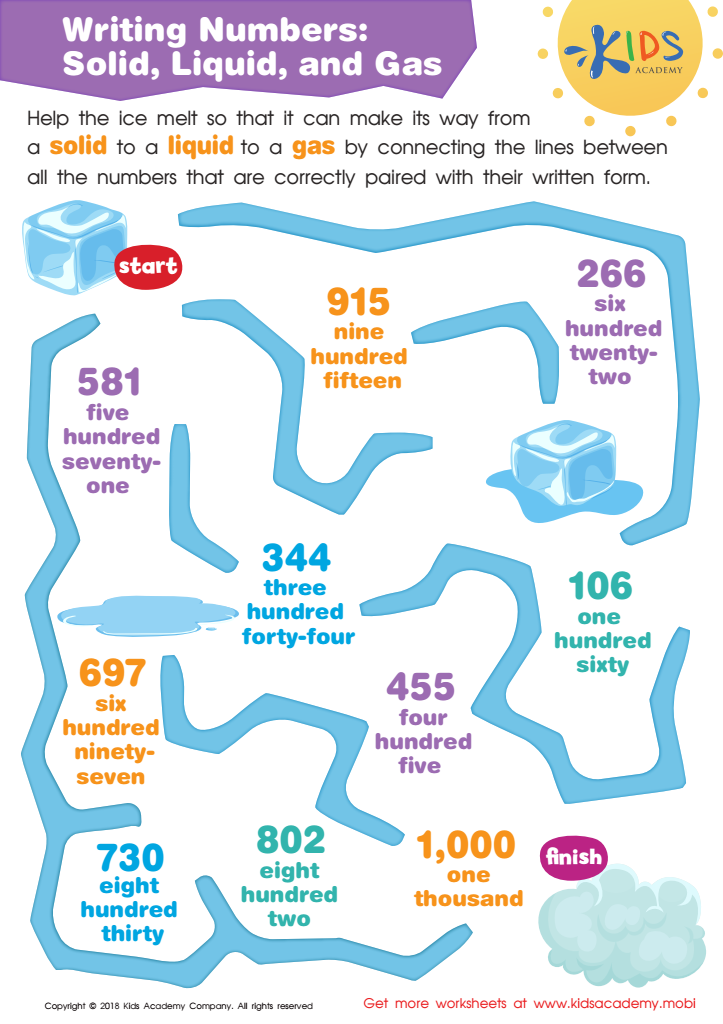
Solid, Liquid, and Gas Writing Numbers Worksheet
 Assign to My Students
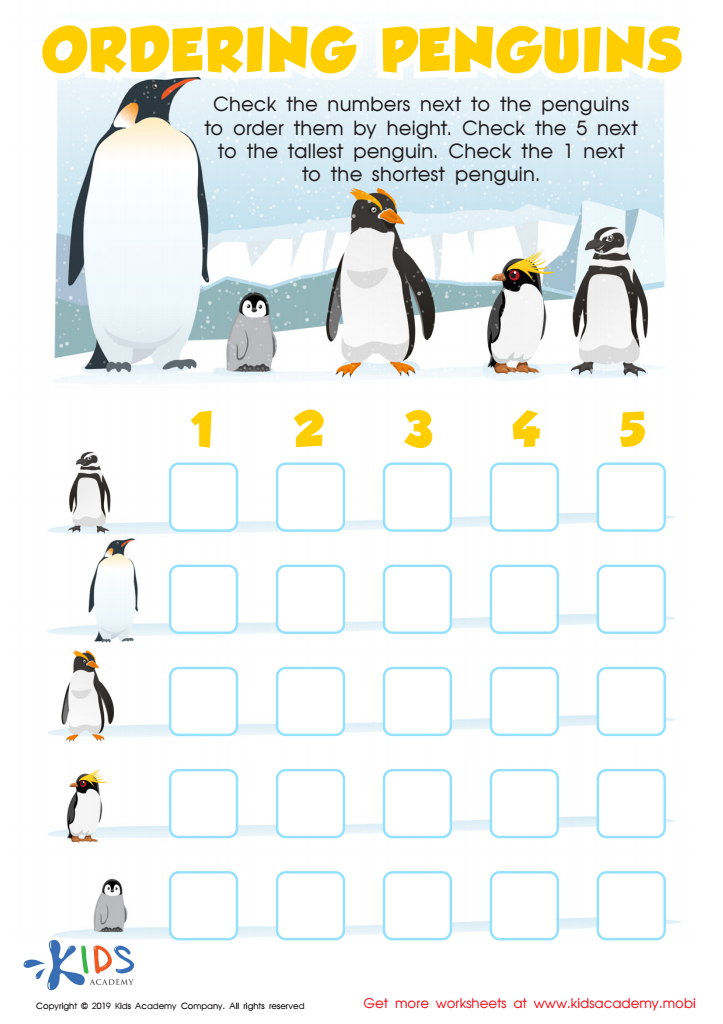
Ordering Penguins Worksheet
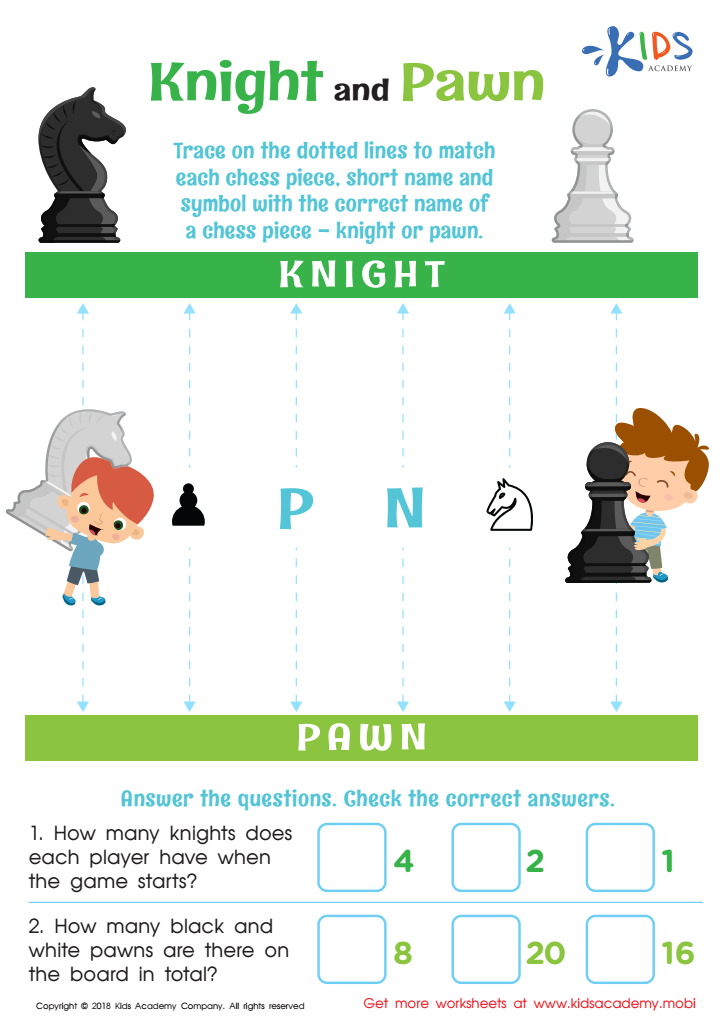
Knight and Pawn Worksheet
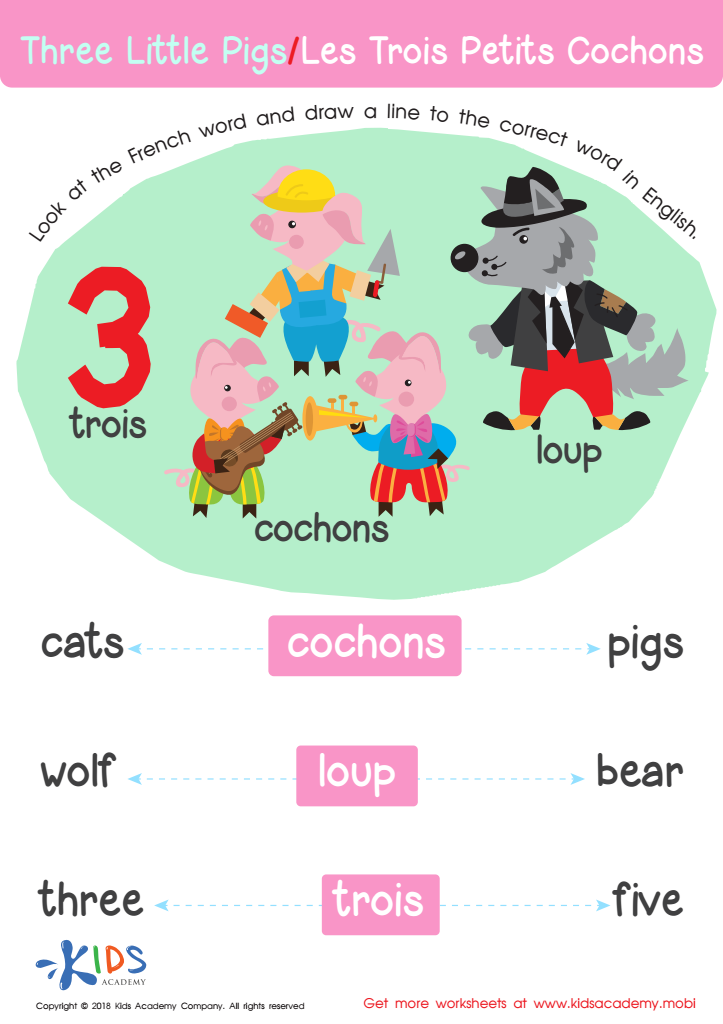
Three Little Pigs / Les Trois Petits Cochons Worksheet
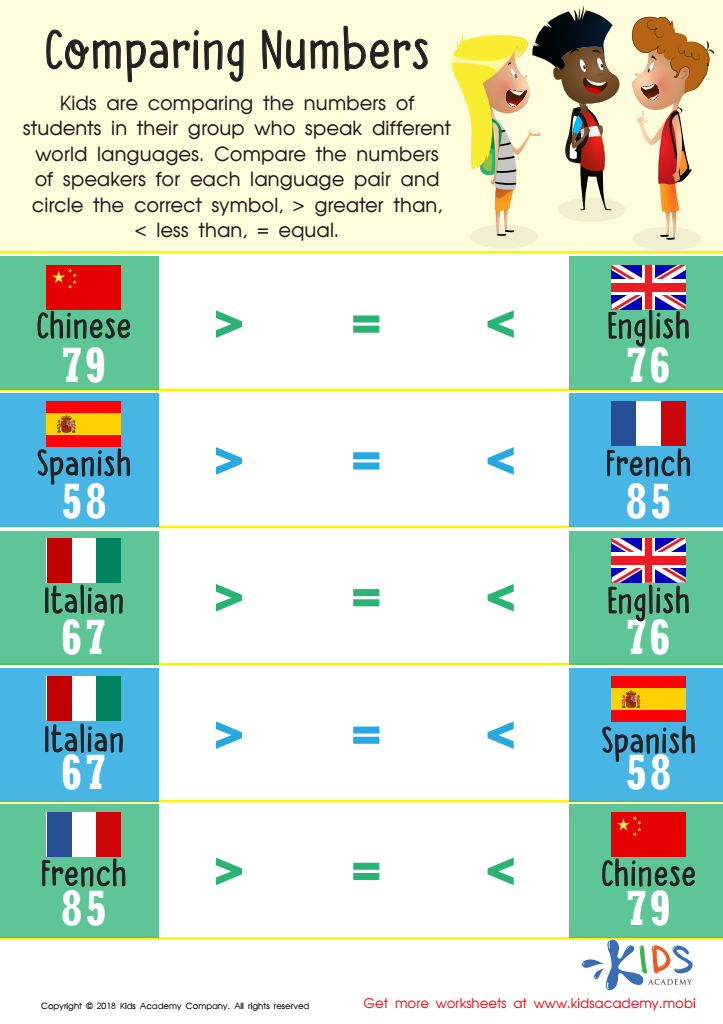
Comparing Numbers Worksheet for 1st Grade







.jpg)
Basic counting skills are foundational building blocks for mathematical understanding in children aged 7-9. Parents and teachers should prioritize these skills as they lay the groundwork for more complex mathematical concepts such as addition, subtraction, multiplication, and division. At this critical stage, children transition from simple rote counting to grasping more abstract mathematical principles.
Solid counting skills foster a child's number sense – an intuitive understanding of numbers and their relationships. This sense is crucial for problem-solving and logical thinking. When children can count accurately, they gain confidence, which encourages a positive attitude towards math.
Furthermore, these skills are integral in daily life scenarios. From telling time to handling money and understanding measurements, counting permeates various everyday activities. Proper guidance and reinforcement from parents and teachers help children apply these skills practically, making learning more relevant and engaging.
In the classroom, strong counting foundations ensure children can keep pace with the curriculum, reducing frustration and setting a path for academic success. Early mastery reduces math anxiety and cultivates a growth mindset, where challenges are viewed as opportunities for learning.
Therefore, by ensuring that children develop robust counting skills, parents and teachers can significantly impact the child’s future academic and life skills, paving the way for more complex lifelong learning and thinking abilities.








