Comparing lengths Normal Worksheets for Ages 7-9
4 filtered results
-
From - To
Our "Comparing Lengths" worksheets for ages 7-9 offer engaging activities designed to enhance your child's measurement skills. Through fun exercises, kids compare various lengths using both standard and non-standard units. These worksheets encourage critical thinking and problem-solving as they measure, contrast, and record their findings. Perfect for both classroom and at-home learning, our printable materials provide ample practice to solidify understanding of measurement concepts. Help your child build confidence in their math abilities with these enjoyable, educational resources that make learning about lengths both interactive and rewarding. Ideal for young learners ready to explore the world of measurements!
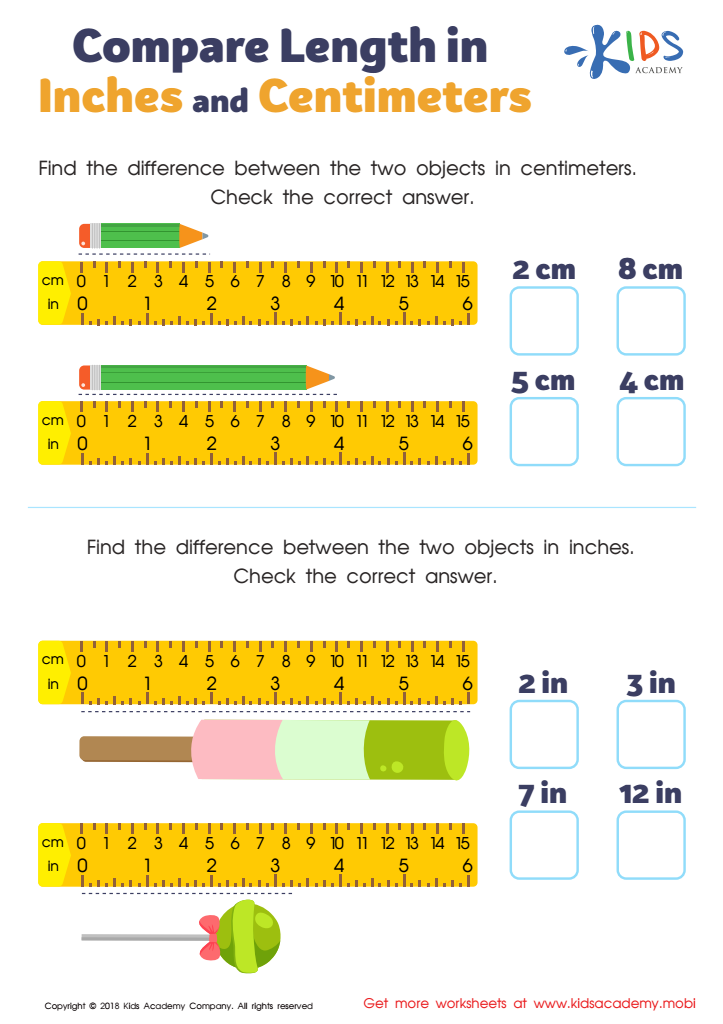
Compare Length in Inches and Centimeters Worksheet
 Assign to My Students
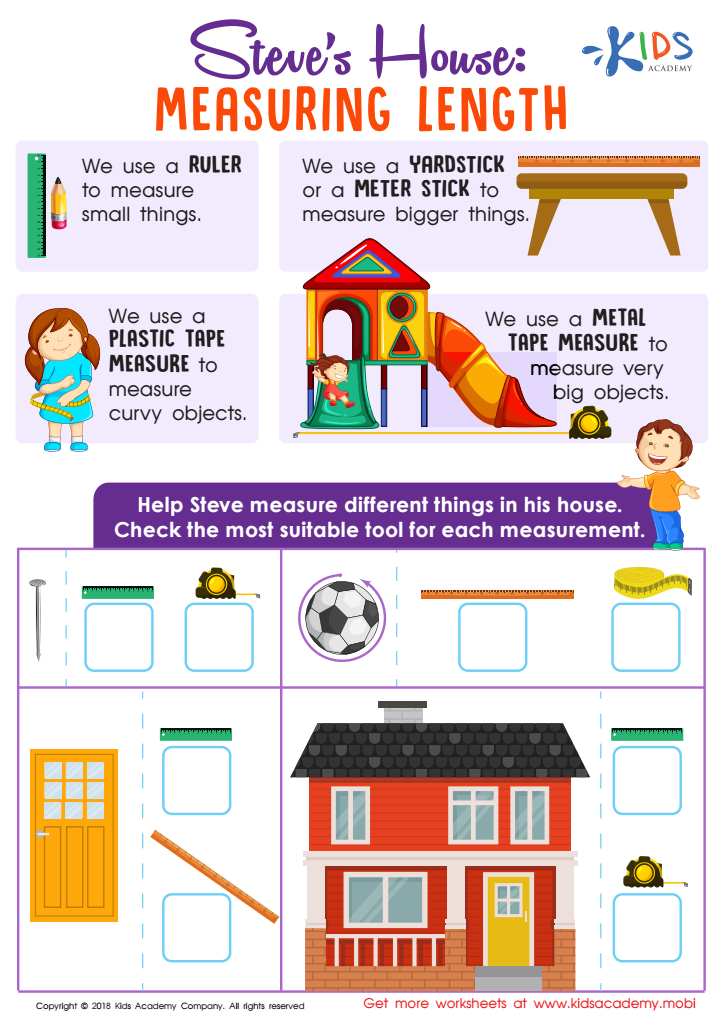
Steve's House: Measuring Length Worksheet
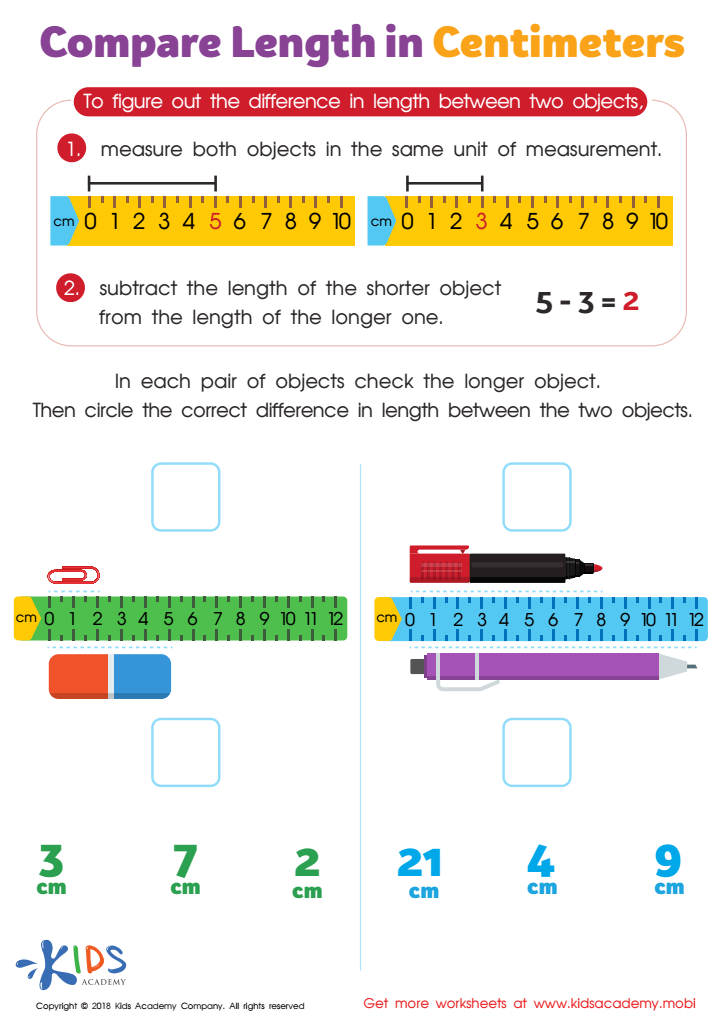
Compare Length in Centimeters Worksheet
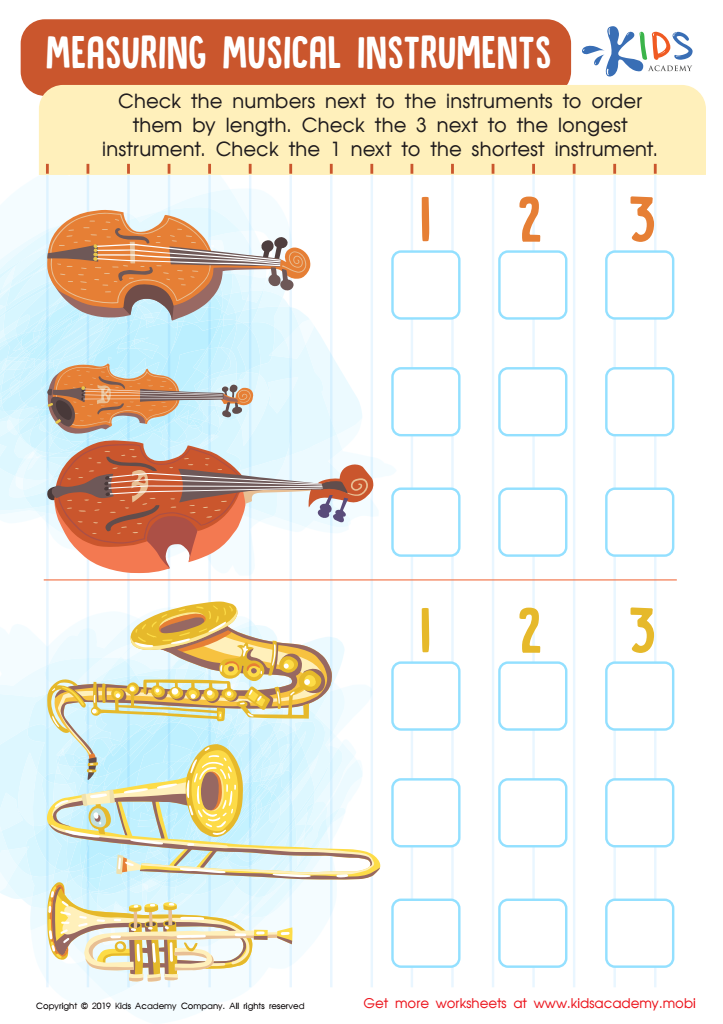
Measuring Musical Instruments Worksheet





Parents and teachers should prioritize teaching children aged 7-9 to compare lengths for several reasons. Firstly, it enhances mathematical understanding. Learning to compare lengths helps children grasp fundamental concepts of measurement and numbers, improving their overall math skills. This foundational knowledge aids in more advanced topics like fractions and algebra.
Secondly, comparing lengths fosters critical thinking and problem-solving abilities. When children measure and compare objects, they learn to make decisions, reason logically, and approach problems methodically. These skills are valuable across all areas of learning and daily life.
Moreover, comprehension of length and measurement plays a vital role in understanding the physical world. Whether it's grasping the height of a tree, the width of a table, or the distance between two points, these concepts enhance children's spatial awareness and environmental interaction.
Socially and emotionally, mastering these skills can boost a child's confidence. Accomplishing tangible tasks like measuring objects can provide a sense of achievement, fostering a positive attitude towards learning. Lastly, collabroative projects which involve measuring foster teamwork as children share tools and compare results.
In summary, teaching length comparisons is crucial as it underpins essential mathematical concepts, cultivates analytical thinking, enriches real-world understanding, promotes positive self-perception, and encourages cooperative learning.








