Contextual understanding Normal Worksheets for Ages 7-9
5 filtered results
-
From - To
Unlock your child’s potential with our Contextual Understanding Normal Worksheets, specially designed for ages 7-9. These engaging worksheets aim to enhance reading comprehension and critical thinking skills by encouraging students to analyze texts through relatable scenarios and real-life contexts. Our activities help children connect the dots between text and their own experiences, making learning both fun and meaningful. With various captivating topics and interactive exercises, your child will build the confidence and skills needed for successful learning. Perfect for both in-class and at-home practice, these worksheets support a well-rounded comprehension curriculum and foster a lifelong love for reading and learning.
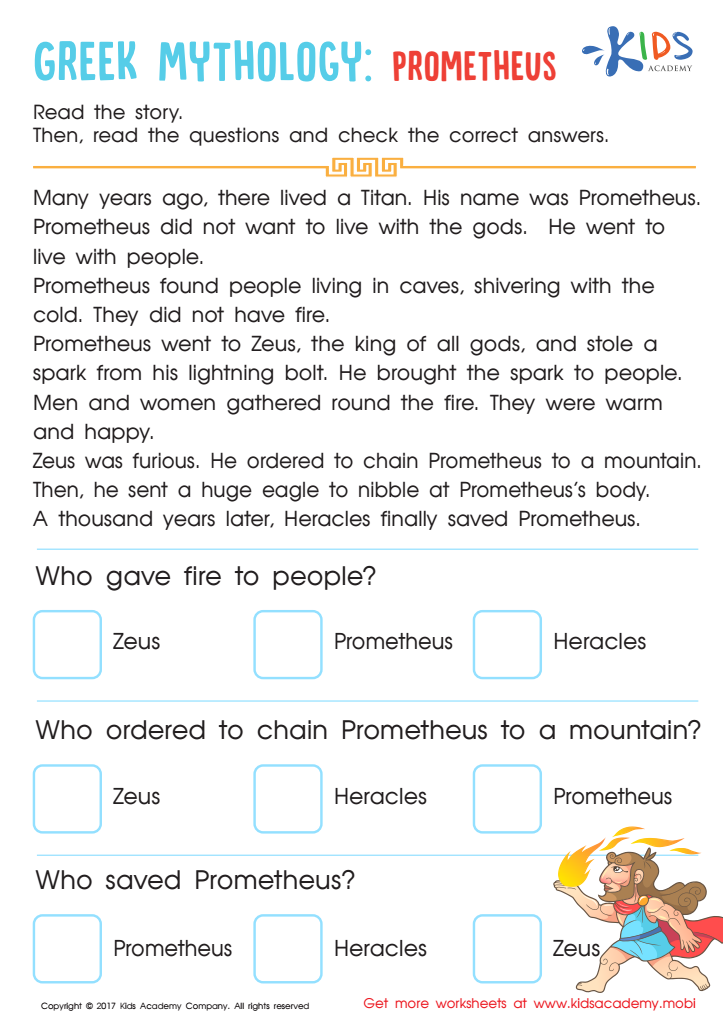
Prometheus Story Worksheet
 Assign to My Students
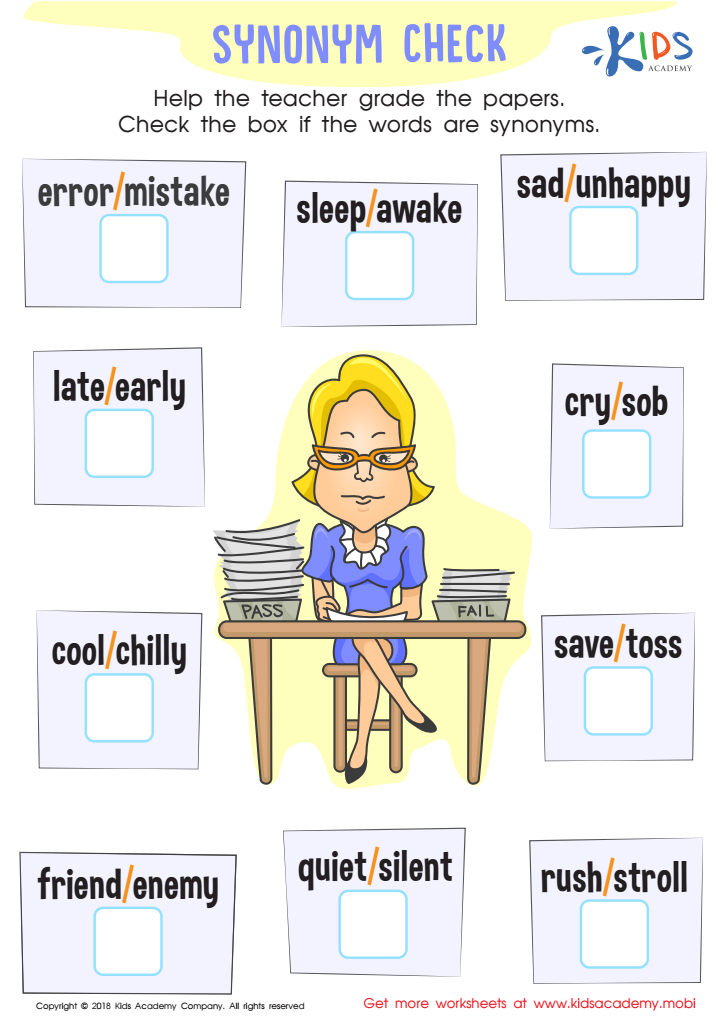
Synonym Check Worksheet
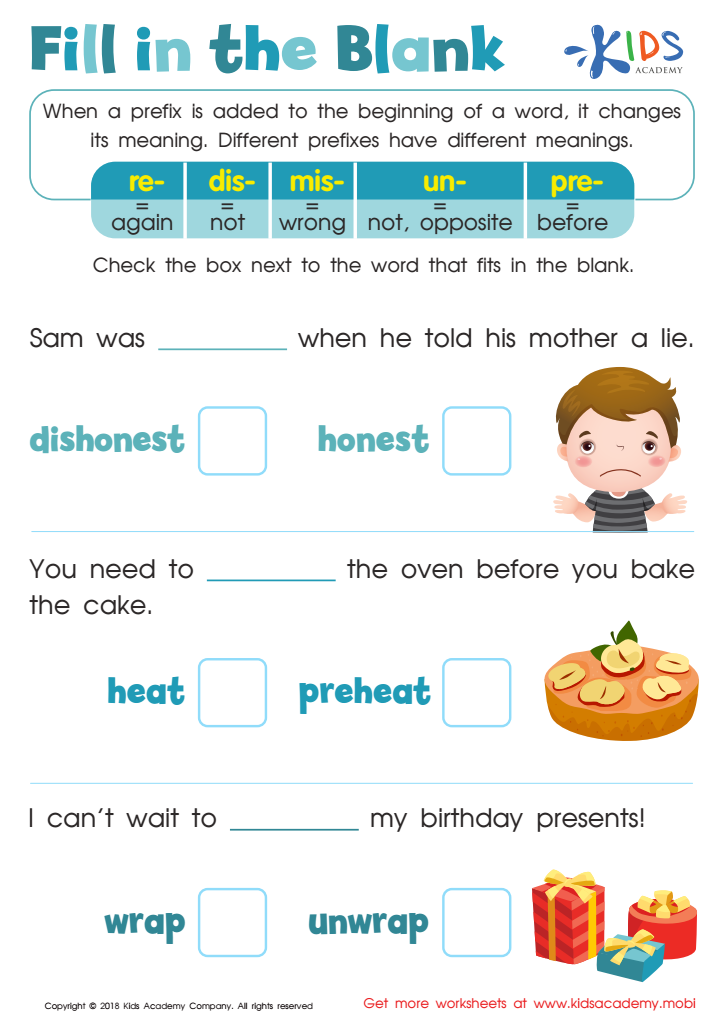
Reading: Fill in the Blank Worksheet
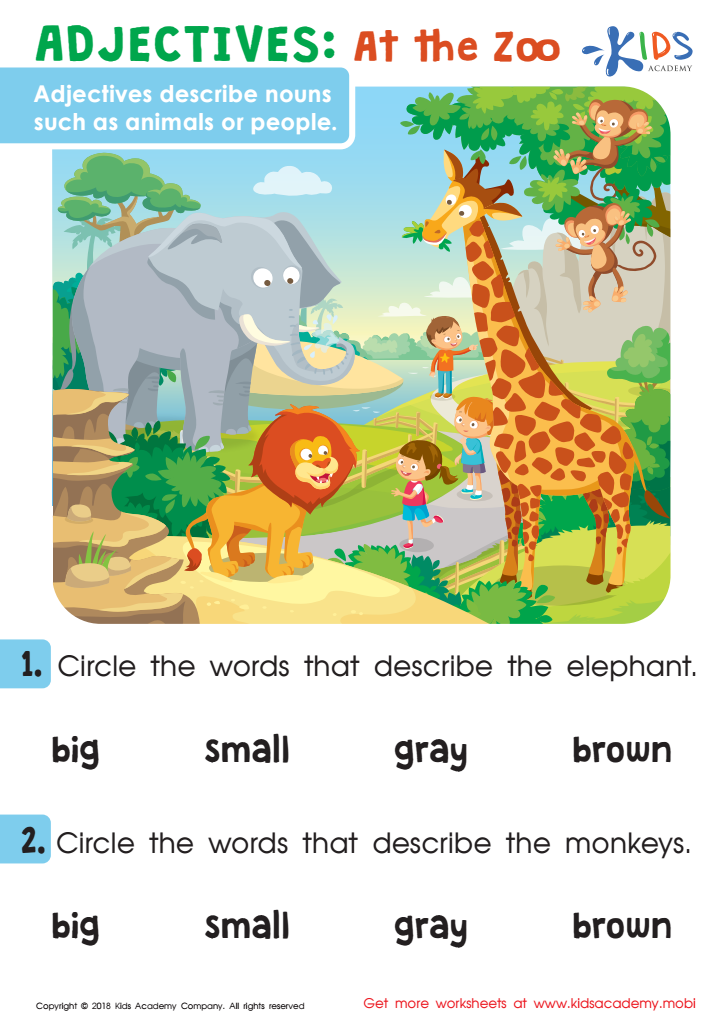
Adjectives: At The Zoo Worksheet
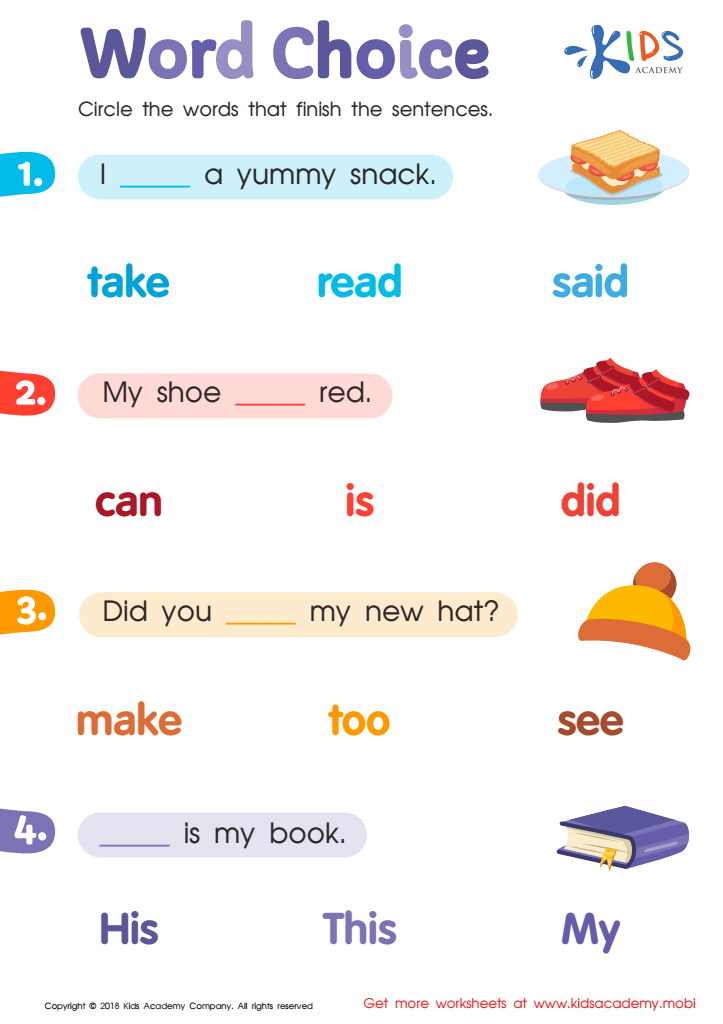
Word Choice Worksheet







Contextual understanding is essential for children aged 7-9, as it greatly influences their literacy skills and overall learning. At this developmental stage, children begin to make connections between what they read and their own experiences. When parents and teachers promote contextual understanding, they help children derive meaning from the text, enhancing comprehension and encouraging critical thinking.
Engaging with context allows children to grasp not just the words they read, but also the situations and emotions behind those words. For instance, exploring a character’s motivations in a story encourages empathy and social awareness. Additionally, contextual understanding aids in vocabulary development; when children learn new words within context, they are more likely to remember and use them correctly.
Teachers and parents play a crucial role in fostering this understanding by creating rich, relatable learning environments. This can be achieved through discussions about everyday scenarios, encouraging questions, and linking stories back to children's own lives. By showcasing the relevance of literature and learning to their experiences, educators and caregivers can enhance motivation and engagement. Ultimately, cultivating contextual understanding leads to confident, discerning readers who are better equipped to navigate both academic and real-world challenges.








