Differentiating goods/services Normal Worksheets for Ages 7-9
3 filtered results
-
From - To
Unlock your child's potential with our engaging Differentiating Goods/Services worksheets tailored for ages 7-9. These printable resources are designed to help young learners distinguish between goods and services through fun, interactive activities. Each worksheet encourages critical thinking and reinforces essential economic concepts while keeping the learning process enjoyable. Perfect for both classroom use and at-home reinforcement, our worksheets cater to diverse learning styles, ensuring that every child grasps these foundational skills. Download now and empower your child's understanding of how goods and services shape our world, preparing them for future economic lessons with confidence. Learning has never been so much fun!
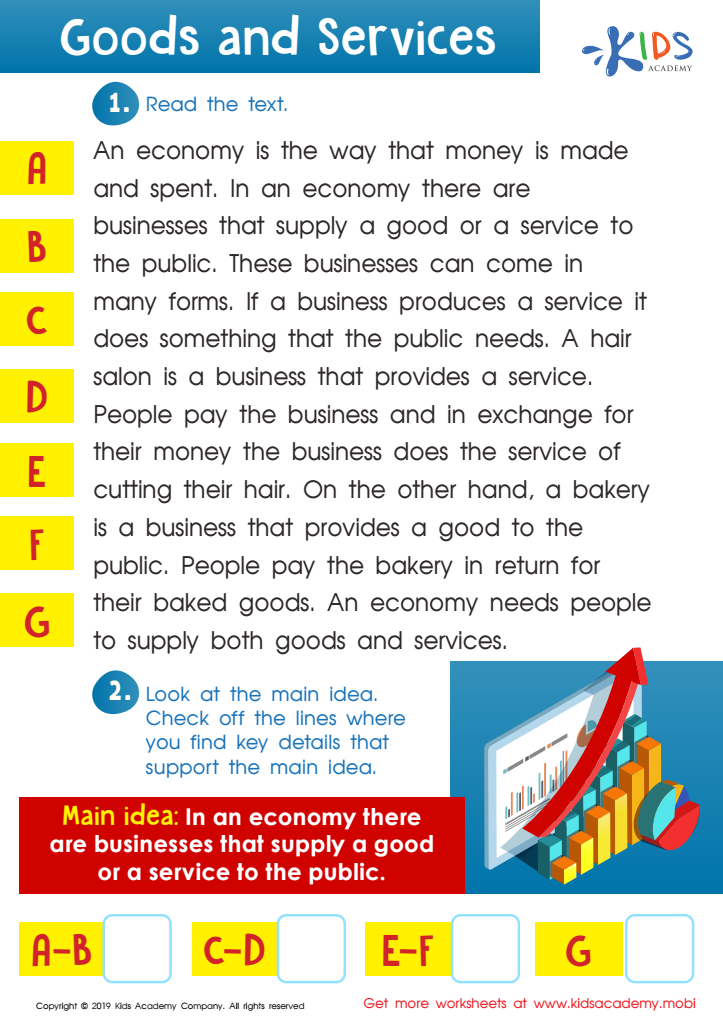
 Assign to My Students
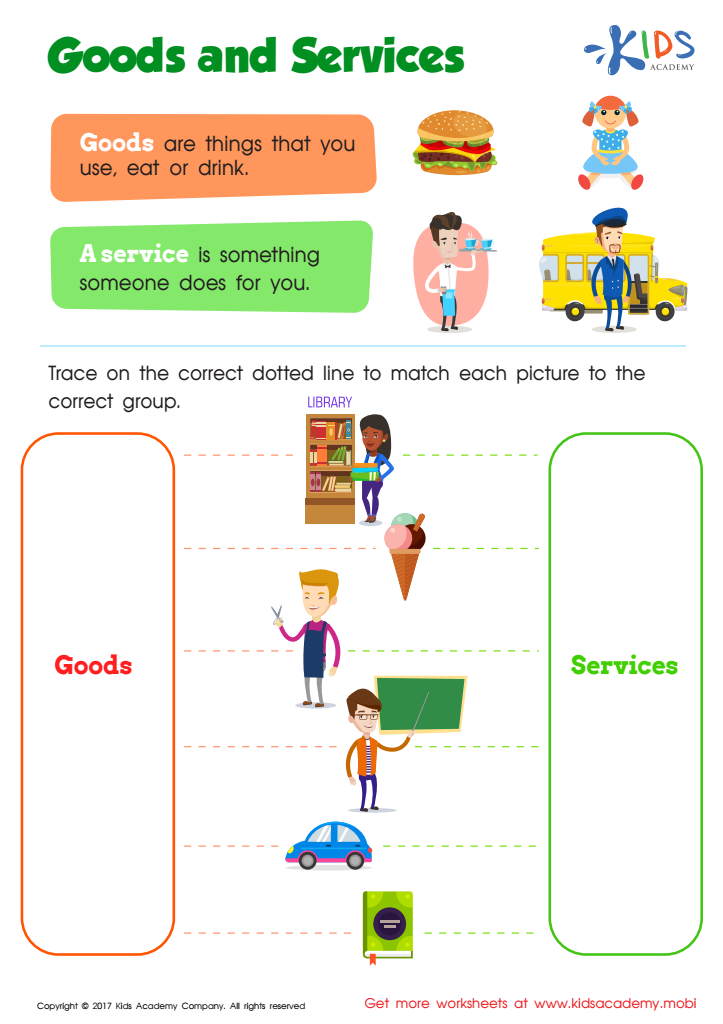
Goods and Services Worksheet
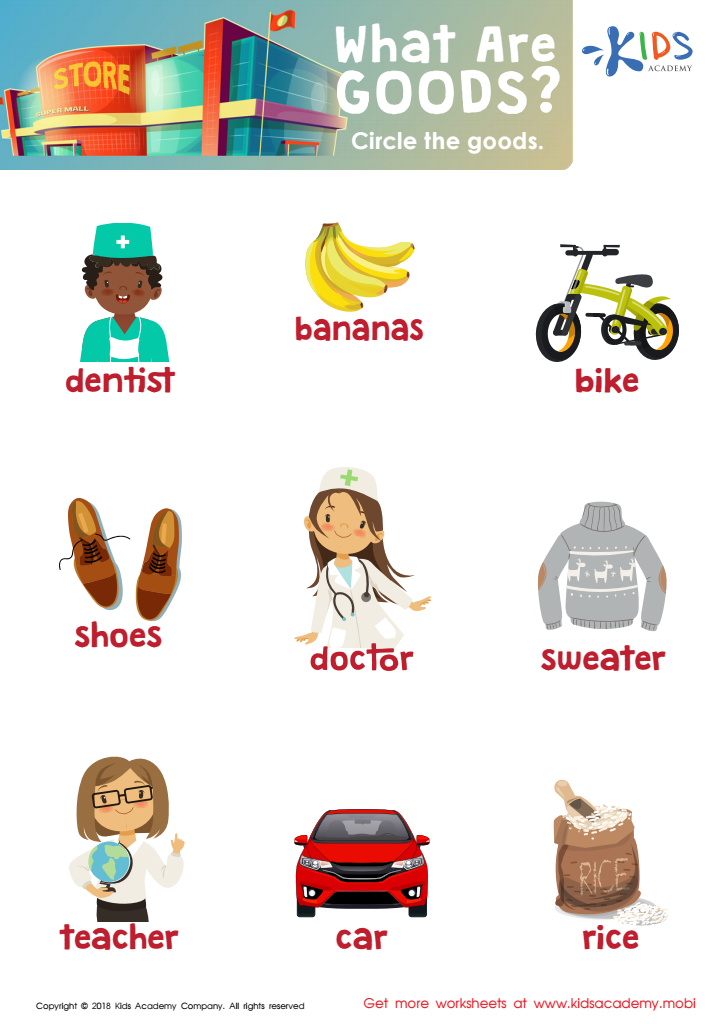
What Are Goods? Worksheet







Parents and teachers should care about differentiating goods and services for children aged 7-9 because this is a critical time for fostering cognitive and social development. At this age, children are beginning to understand the world around them and can benefit significantly from differentiated learning experiences tailored to their unique needs and interests.
By introducing a variety of goods and services, teachers can actively engage students with diverse learning styles—whether visual, auditory, or kinesthetic—ensuring that all children grasp concepts effectively. Differentiation allows for the tailoring of lessons to accommodate varying skill levels. For example, some children may excel in reading and require more challenging texts, while others may need additional support.
Moreover, introducing goods and services relevant to children's everyday experiences enhances their understanding and retention of knowledge. It also promotes critical thinking and problem-solving skills, essential for their academic growth. Parents can further support this by exploring products or activities at home that align with what their children learn. Ultimately, prioritizing differentiated goods and services facilitates a more inclusive and enriching educational environment, setting the stage for lifelong learning and curiosity.








