Geographic Understanding Normal Worksheets for Ages 7-9
3 filtered results
-
From - To
Enhance your child's geographic understanding with our engaging worksheets designed specifically for ages 7-9. These printable resources introduce young learners to essential concepts such as maps, landmarks, continents, and basic geographical terms in a fun and interactive way. Each worksheet is carefully crafted to promote critical thinking, observation skills, and spatial awareness while making learning enjoyable. Perfect for classroom settings or homeschooling, our worksheets encourage exploration and discussion about the world around us. Help your child build a strong foundation in geography with our easy-to-use, visually appealing exercises that make learning exciting and effective! Download and start exploring today!
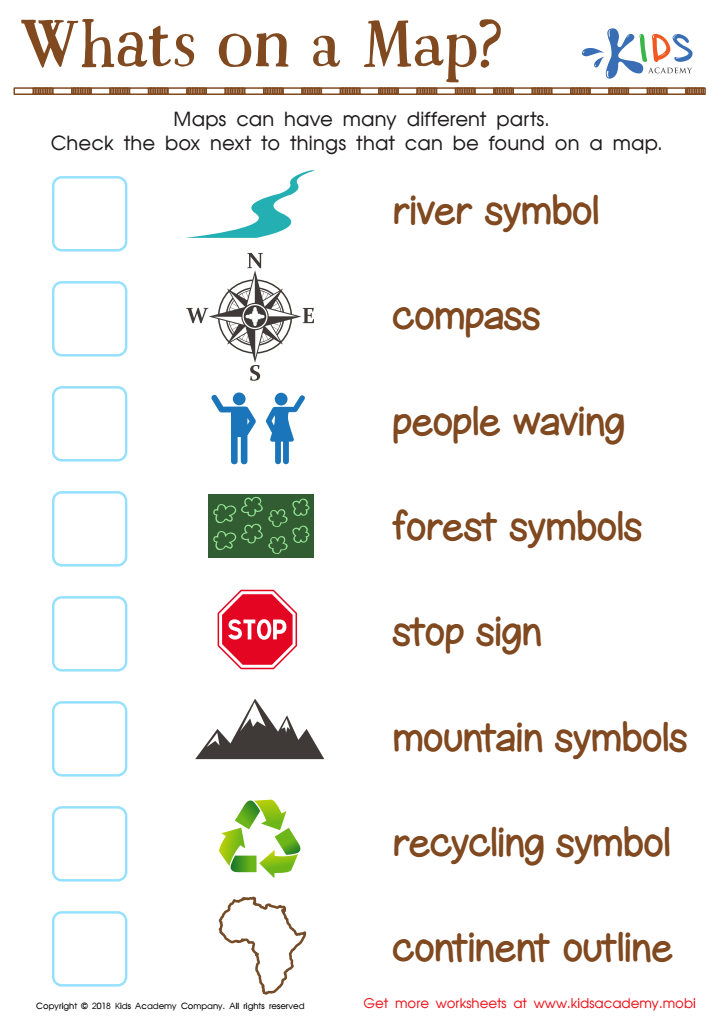
Whats on a Map? Worksheet
 Assign to My Students
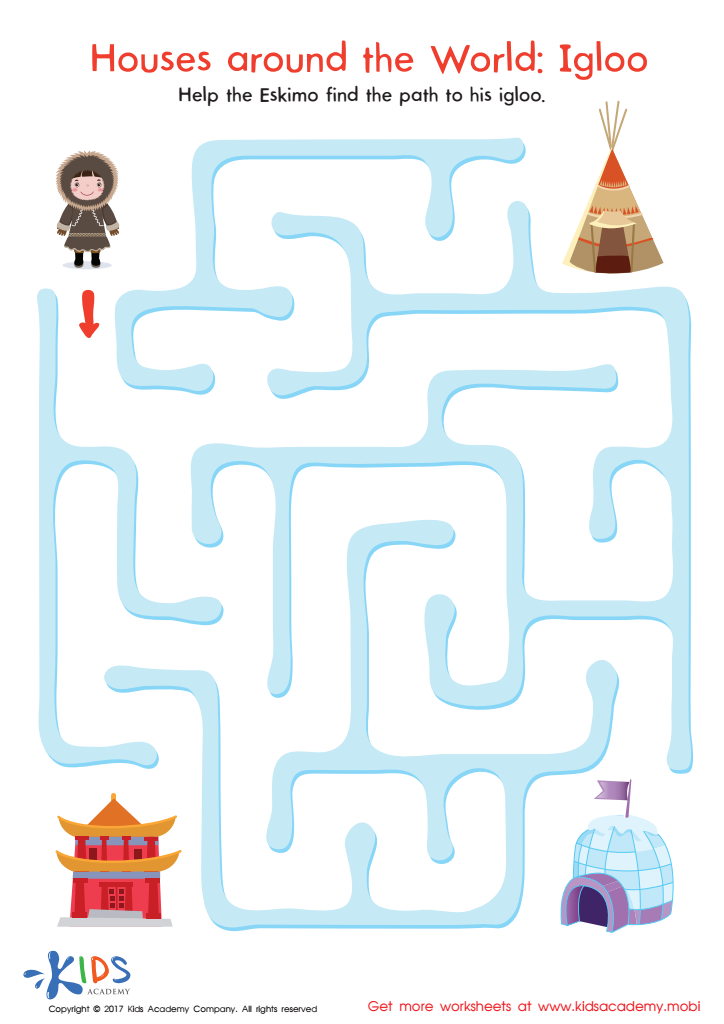
Houses Around the World: Igloo Printable
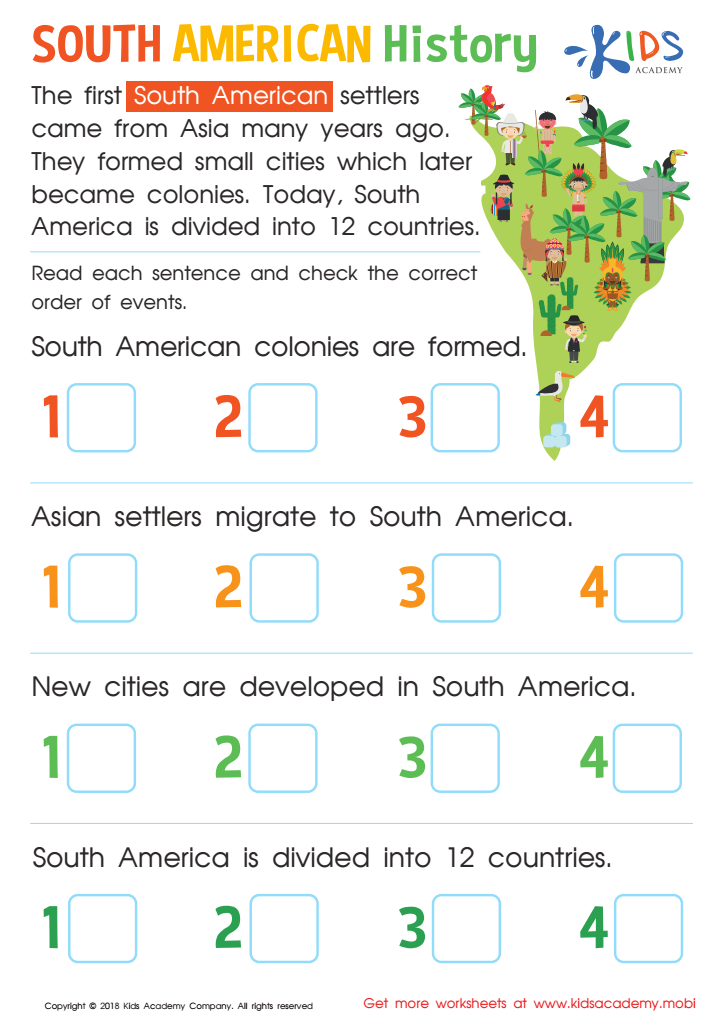
South American History Worksheet







Parents and teachers should recognize the significance of geographic understanding for children aged 7-9 as it lays the foundation for critical thinking, cultural awareness, and environmental consciousness. At this stage, children are naturally curious about the world around them, making it an ideal time to introduce them to geography concepts like maps, landforms, climate, and cultural diversity.
Geographic understanding helps children develop spatial skills, enabling them to comprehend how different places relate to one another. It fosters a sense of belonging and identity, as they learn about their own communities and broaden their perspectives to include global contexts. Moreover, understanding geography is vital for cultivating empathy and respect for other cultures, countering stereotypes and biases.
In our interconnected world, geography plays a crucial role in discussions around climate change, resource distribution, and global events. Teaching geographic concepts early cultivates informed, active citizens who can engage thoughtfully with world issues. Additionally, incorporating geography into everyday learning helps develop core skills like critical thinking, problem-solving, and collaboration. Overall, prioritizing geographic education equips young learners with the tools they need to navigate and understand a complex world.








