Improving categorization skills Normal Worksheets for Ages 7-9
3 filtered results
-
From - To
Enhance your child's critical thinking and organizational abilities with our "Improving Categorization Skills Worksheets" designed for ages 7-9. These engaging and interactive printables facilitate learning through fun activities that challenge young minds to group items based on characteristics like size, color, and function. Each worksheet fosters creativity and cognitive development while making learning enjoyable. Ideal for classroom settings or at-home reinforcement, these resources help students master categorization, an essential skill in various subjects. Visit our page today to access a variety of worksheets that promote educational growth and support your child's learning journey!
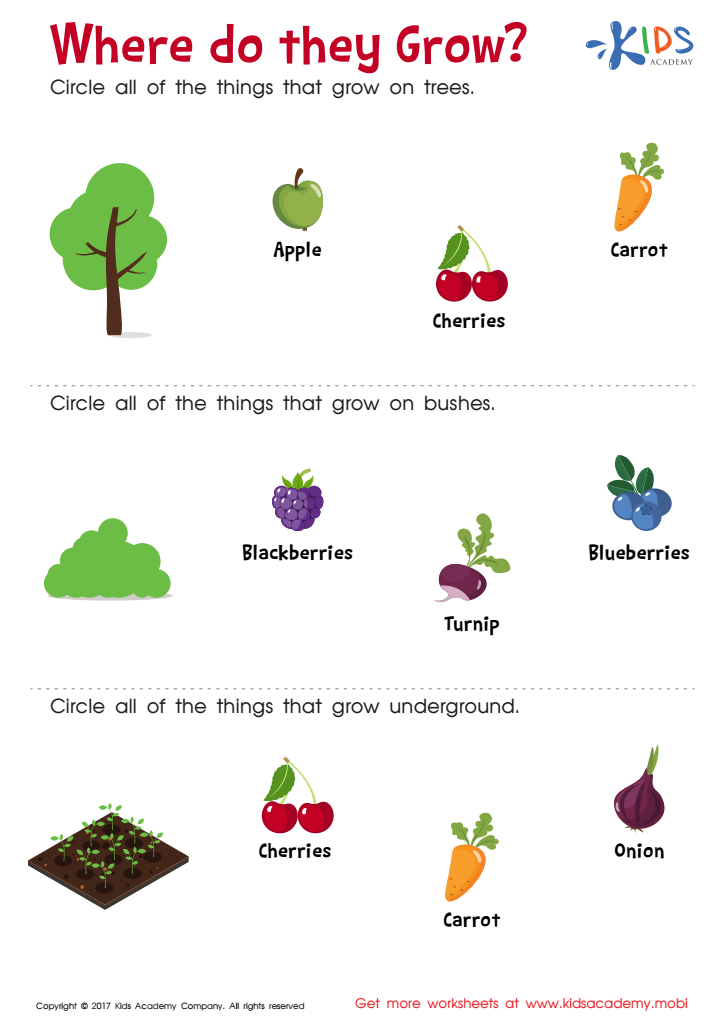
Where Do They Grow Worksheet
 Assign to My Students
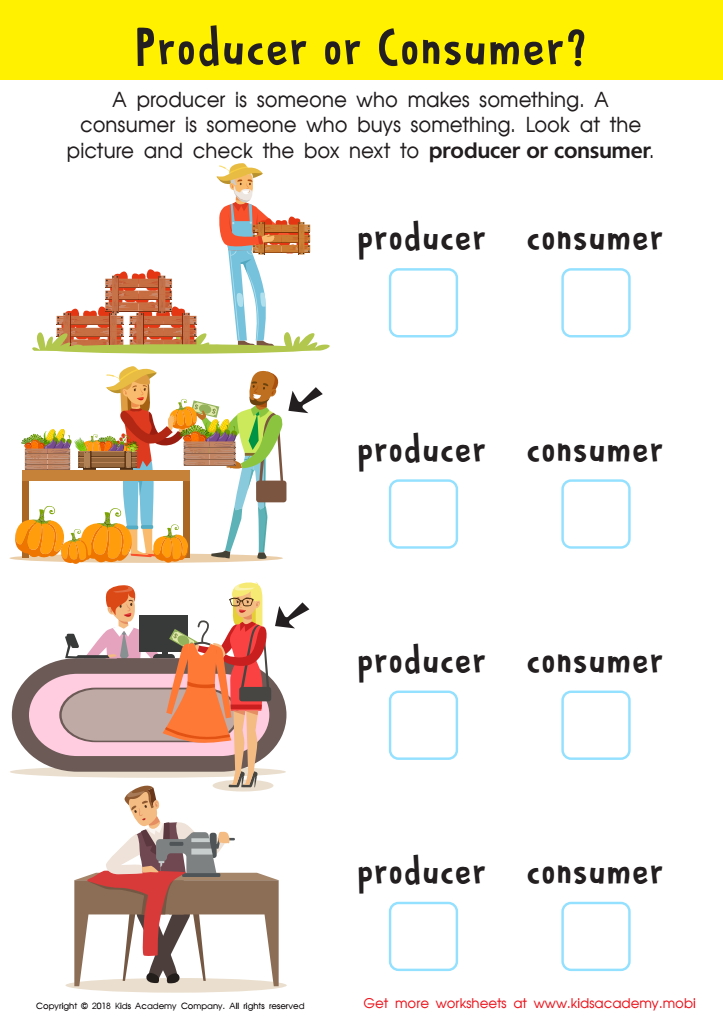
Producer or Consumer? Worksheet
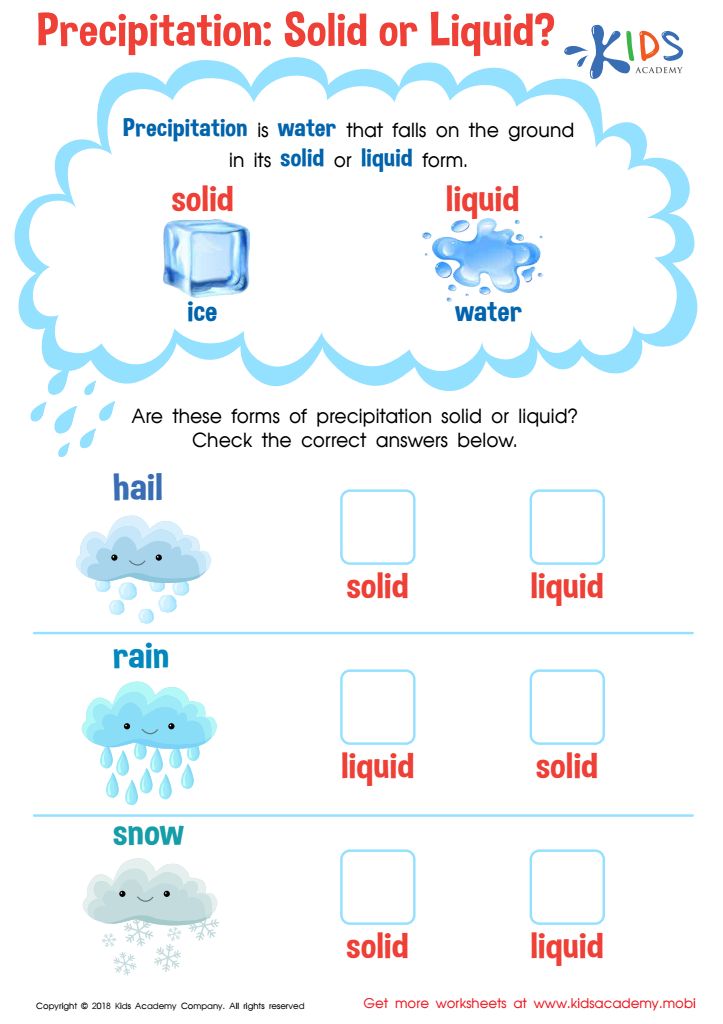
Precipitation: Solid or Liquid? Worksheet








Improving categorization skills for children ages 7-9 is crucial as it lays the foundation for critical thinking, problem-solving, and organizational skills. During this developmental stage, children begin to enhance their ability to classify and group information, making it easier for them to understand the world around them. Mastery of categorization helps students to sort items based on shared attributes, which fosters analytical skills necessary for academic success in subjects like math, science, and language arts.
Furthermore, strong categorization skills promote effective communication. When children learn to categorize, they can articulate their thoughts more clearly, grouping related ideas that can help them write better and discuss topics in a coherent manner.
Beyond academics, these skills aid in daily decision-making and can improve social interactions. For example, children who can categorize behaviors can better navigate social dynamics and establish meaningful relationships by recognizing patterns in peer interactions.
Teachers and parents should invest in nurturing these skills through engaging activities and discussions, as early development can have long-term benefits, aiding children in their ongoing educational journeys and preparing them for future challenges. By nurturing these vital skills, we pave the way for more organized, thoughtful, and confident individuals.








