Letter-sound association Normal Worksheets for Ages 7-9
3 filtered results
-
From - To
Unlock your child's reading potential with our engaging Letter-Sound Association Worksheets designed for ages 7-9! Tailored to support early literacy, these worksheets help children connect letters to their corresponding sounds, enhancing phonemic awareness. Each activity fosters essential skills through fun and interactive exercises, including matching games, tracing, and phonics practice. Perfect for classroom use or at-home learning, our worksheets are an excellent resource for reinforcing foundational literacy skills in a stress-free environment. Use these materials to inspire a love for reading while boosting confidence in your child's abilities. Start their journey to becoming proficient readers today!
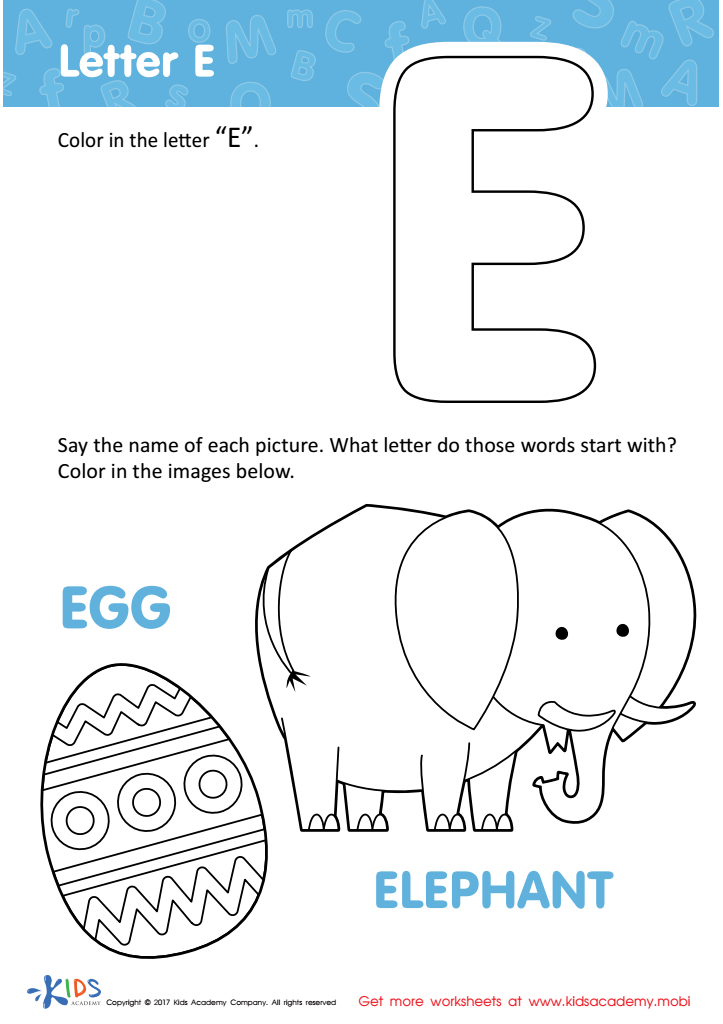
Letter E Coloring Sheet
 Assign to My Students
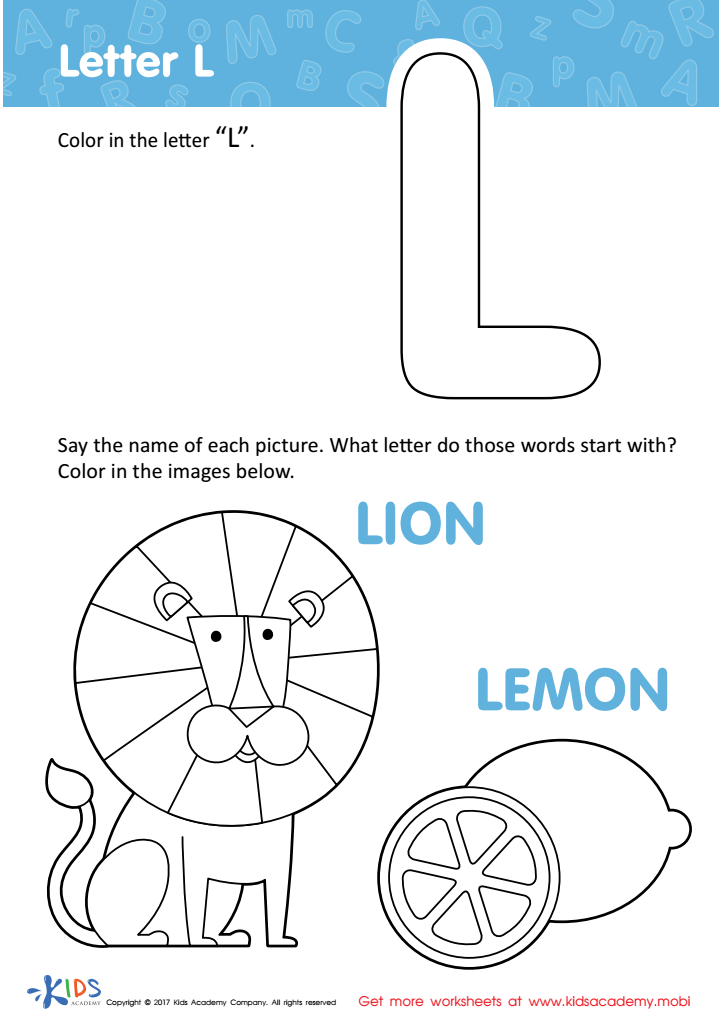
Letter L Coloring Sheet
Assign to My Students
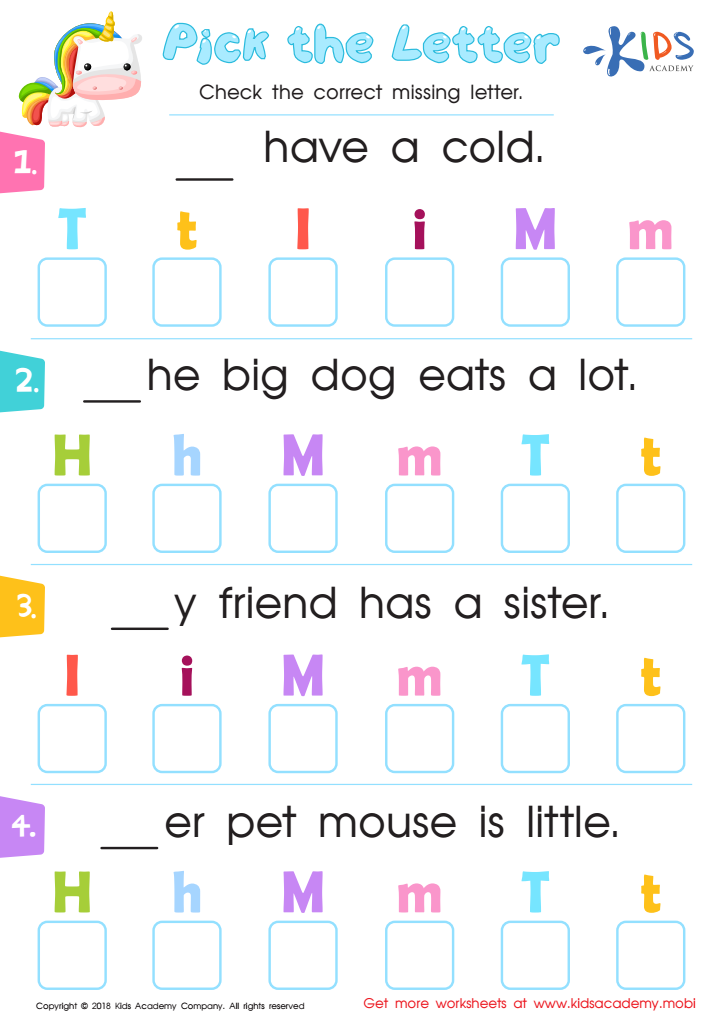
Pick the Letter Worksheet








Letter-sound association is a foundational aspect of literacy development for children aged 7-9, and it plays a crucial role in their overall academic success. At this stage, children are transitioning from learning to read to reading to learn. Understanding the relationship between letters and their corresponding sounds helps children decode words, allowing them to make sense of written text independently.
Parents and teachers should prioritize letter-sound association because it enhances reading fluency and comprehension, two critical components for academic achievement. When children grasp this concept, they can tackle unfamiliar words, which builds their confidence and encourages a love for reading. This skill not only impacts literacy but also affects various subjects as reading is integral to learning in areas like math, science, and social studies.
Additionally, strong letter-sound association lays the groundwork for spelling and writing abilities. As children learn to connect letters with sounds, they become more adept at expressing their thoughts through writing. Ultimately, fostering letter-sound associations equips children with essential tools for continuous learning and lifelong literacy, making it a priority for both parents and educators. Investing time and resources into this area benefits children in their current studies and sets the stage for future academic endeavors.








