Moral lesson understanding Normal Worksheets for Ages 7-9
5 filtered results
-
From - To
Enhance your child's moral development with our engaging Moral Lesson Understanding Normal Worksheets designed for ages 7-9. These thoughtfully crafted worksheets from Kids Academy help young learners grasp essential life values such as honesty, kindness, and respect through captivating stories and thought-provoking activities. Each worksheet encourages children to reflect on various moral scenarios, fostering critical thinking and ethical decision-making skills. Perfect for both classroom and home use, these printable resources offer a fun and effective way to instill strong moral foundations. Guide your child towards becoming a compassionate and responsible individual with our expertly designed moral lesson worksheets.
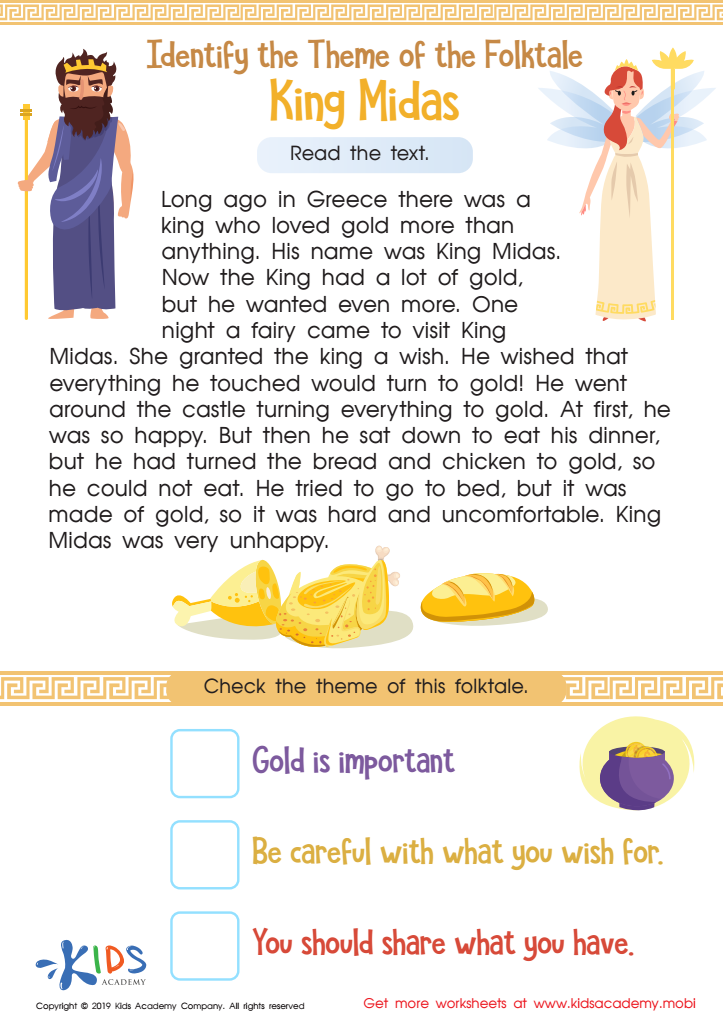
King Midas Worksheet
 Assign to My Students
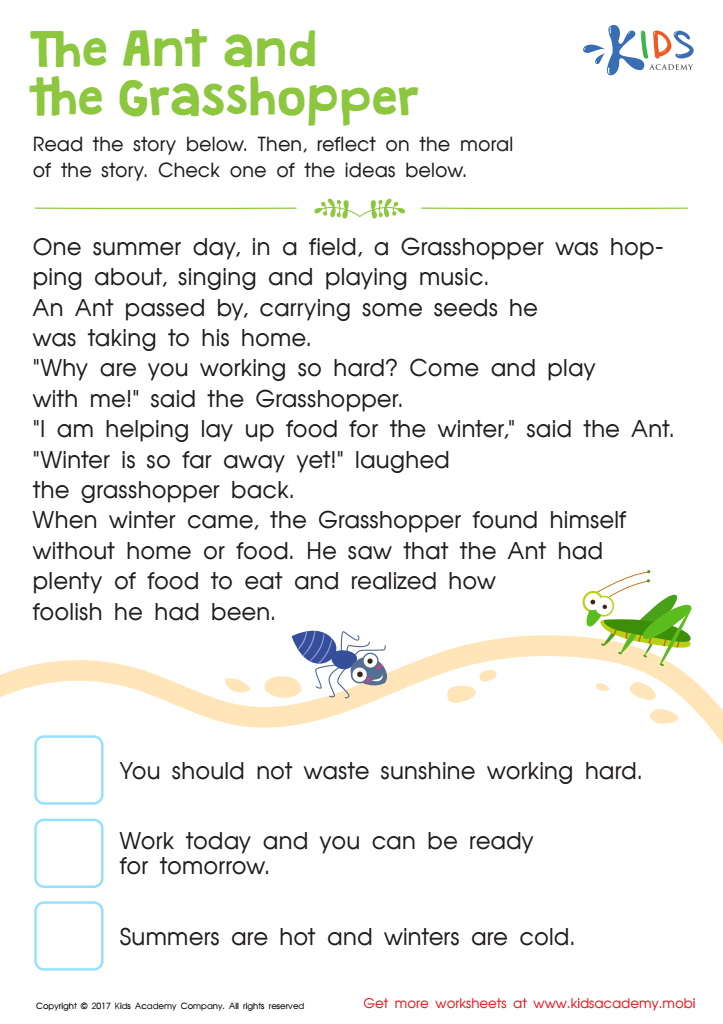
The Ant and The Grasshopper Printable
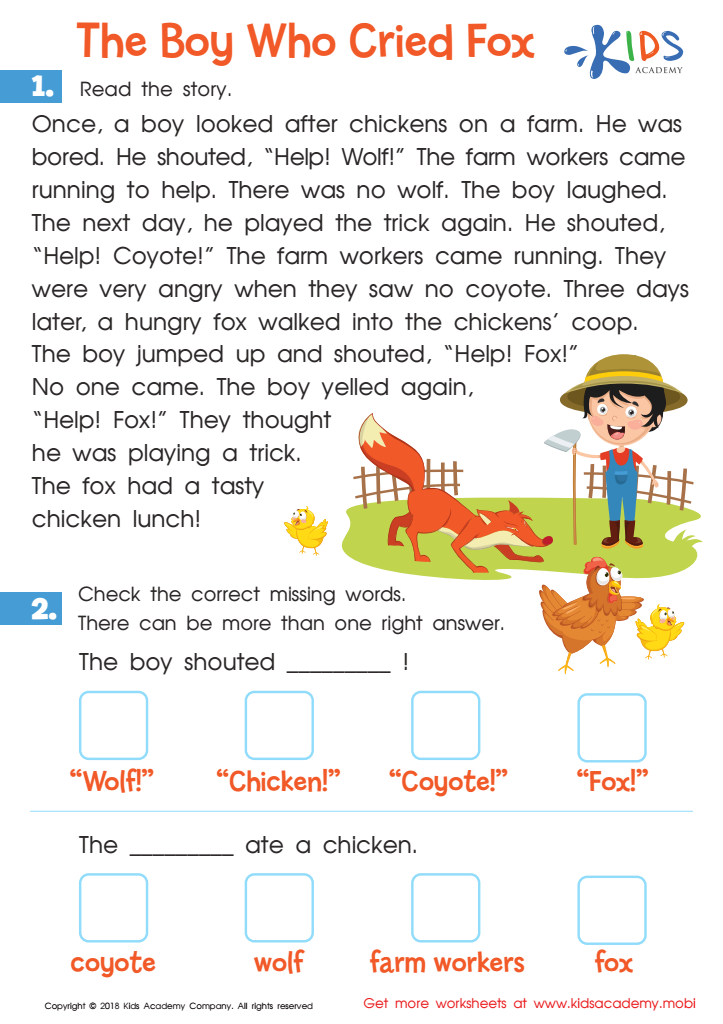
The Boy Who Cried Fox Worksheet
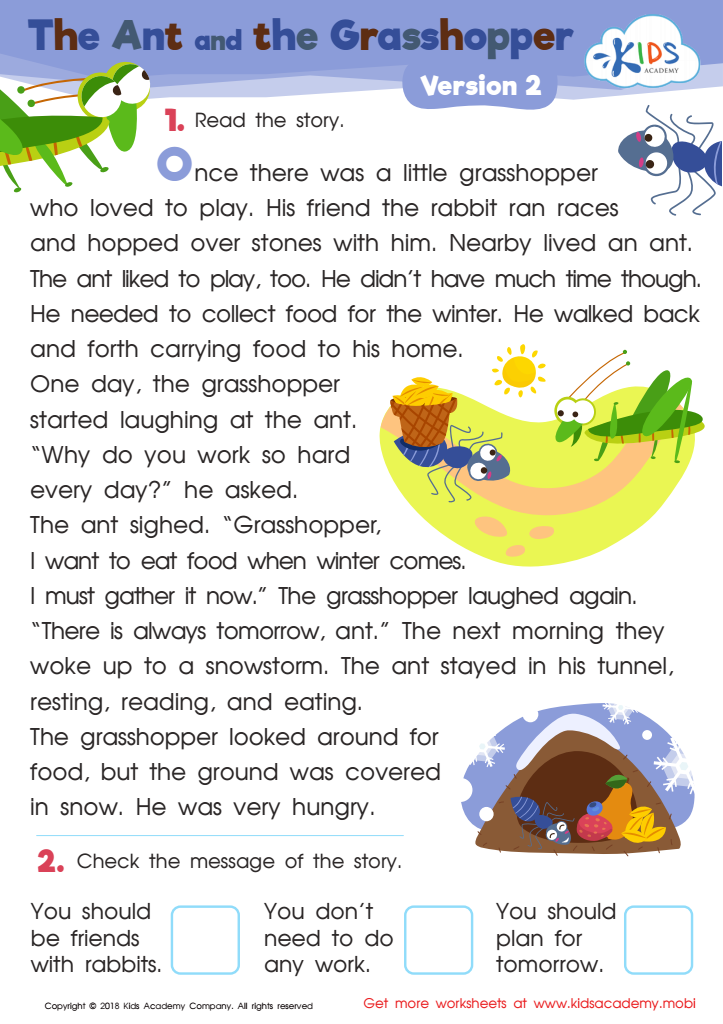
The Ant and The Grasshopper Version 2 Worksheet
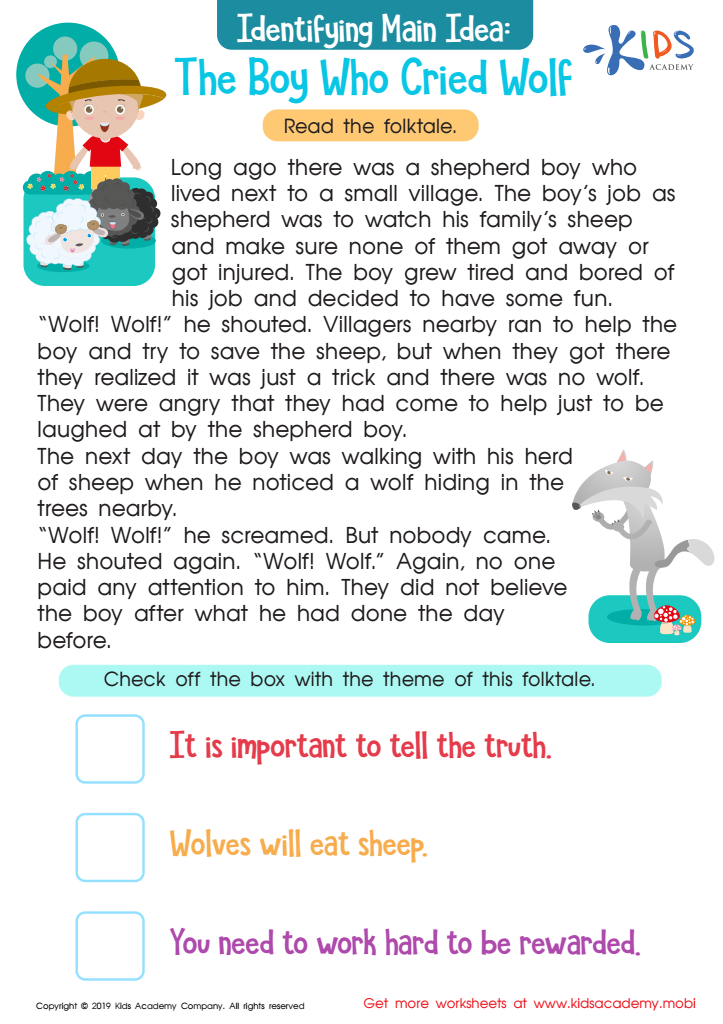
The Boy Who Cried Wolf Part 2 Worksheet



During the critical ages of 7 to 9, children undergo significant cognitive, emotional, and social development. Teaching moral lessons at this stage lays a strong foundation for their overall character and guides their future decision-making. Parents and teachers play a vital role in this formative period, helping children distinguish right from wrong and fostering a sense of empathy, fairness, and respect for others.
Understanding moral lessons helps children navigate social interactions more effectively, reducing instances of conflict and enhancing their ability to build positive relationships. Moral education encourages children to think about the consequences of their actions, promoting responsibility and accountability. By internalizing these values early on, children are more likely to exhibit pro-social behaviors such as sharing, helping, and cooperation.
Furthermore, a strong moral compass aids in tackling broader societal issues like bullying, discrimination, and intolerance. Children who understand and value concepts like kindness, honesty, and justice are better prepared to stand up against negative behaviors and contribute to a more inclusive, compassionate community.
Ultimately, by emphasizing moral lessons, parents and teachers help children not only in personal success but also in becoming conscientious, kind, and responsible adults. This foundational groundwork is essential for a well-rounded, ethical future society.








