Moral understanding Normal Worksheets for Ages 7-9
5 filtered results
-
From - To
Explore our engaging "Moral Understanding Normal Worksheets for Ages 7-9", designed to enhance children's ethical reasoning and social awareness. These carefully crafted worksheets help young learners grasp important concepts like empathy, kindness, and fairness through relatable scenarios and interactive activities. Perfect for both home and classroom settings, these resources facilitate discussions about values and help children develop critical thinking skills. Fun illustrations and age-appropriate exercises keep kids motivated while they learn essential life skills. Visit us today and support your child's moral development with our comprehensive collection of printable worksheets tailored to their needs!
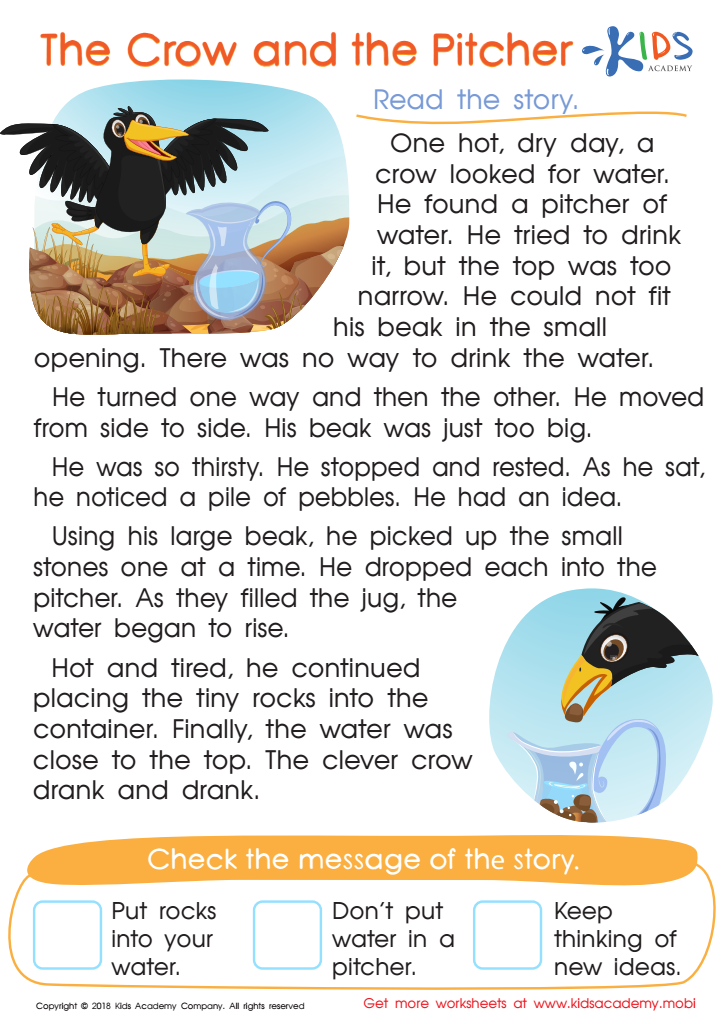
The Crow and the Pitcher Worksheet
 Assign to My Students
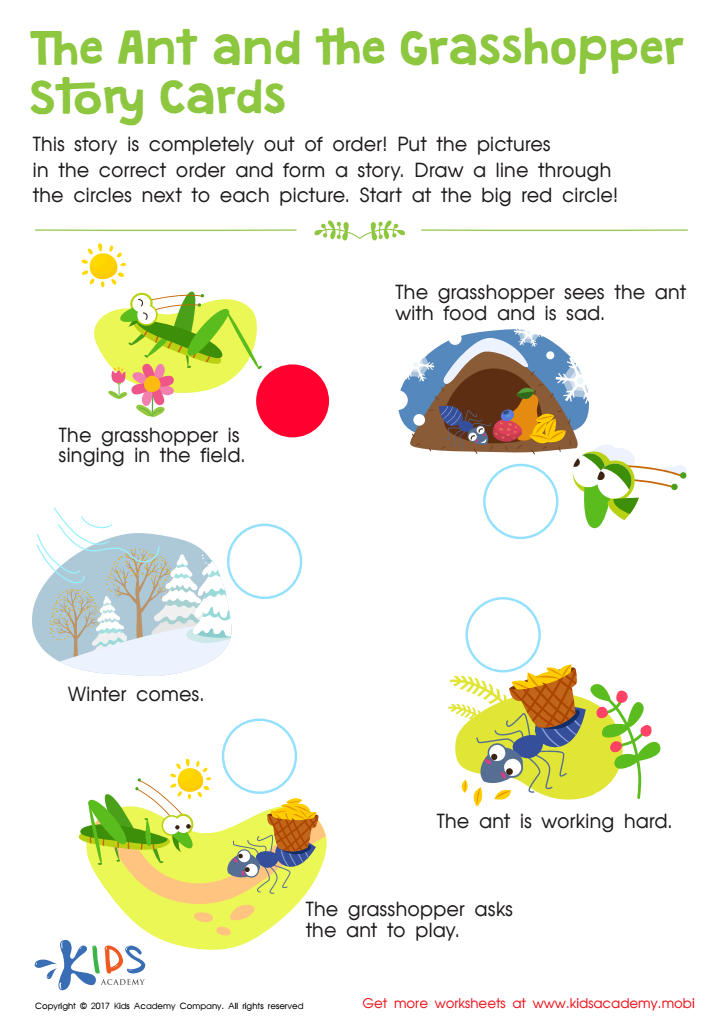
The Ant and The Grasshopper Worksheet
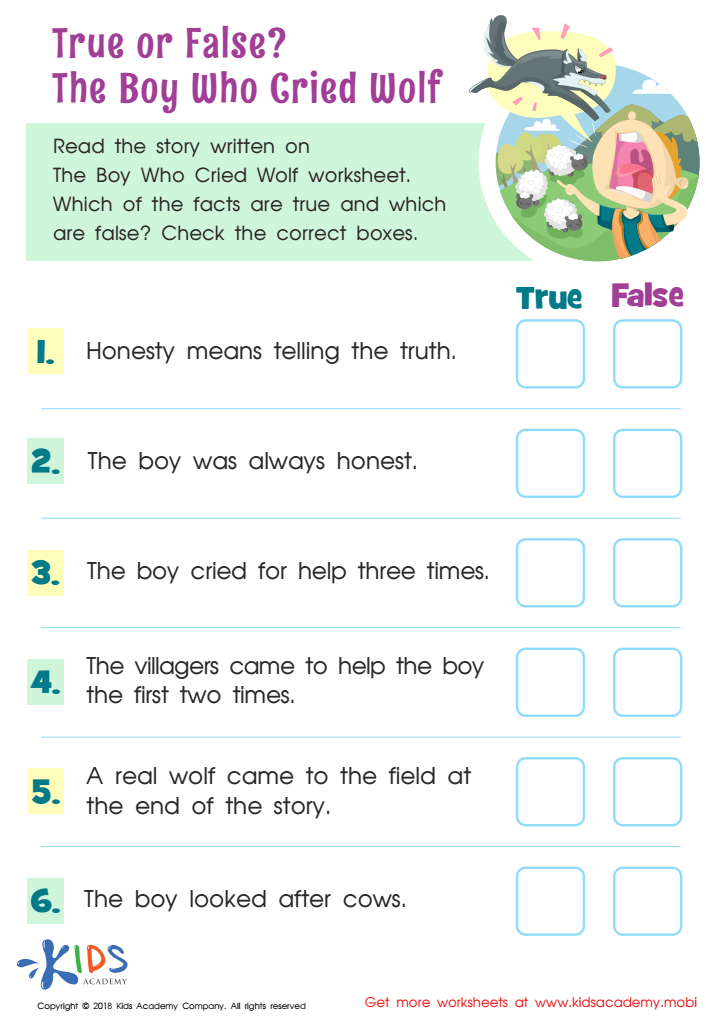
True or False? The Boy Who Cried Wolf Worksheet
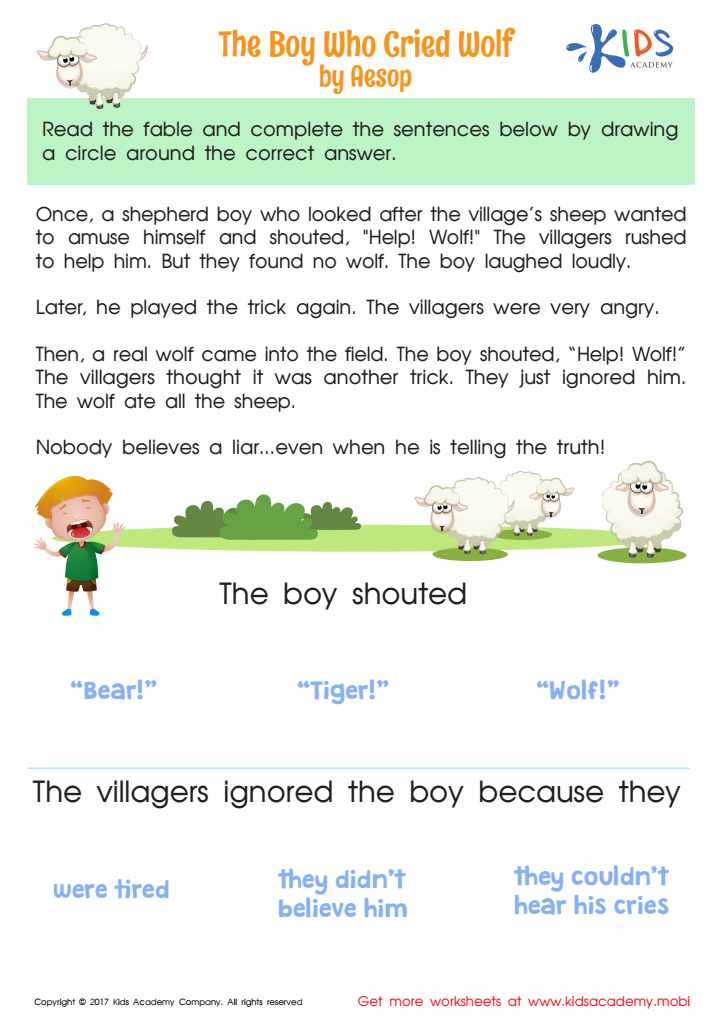
The Boy Who Cried Wolf Worksheet
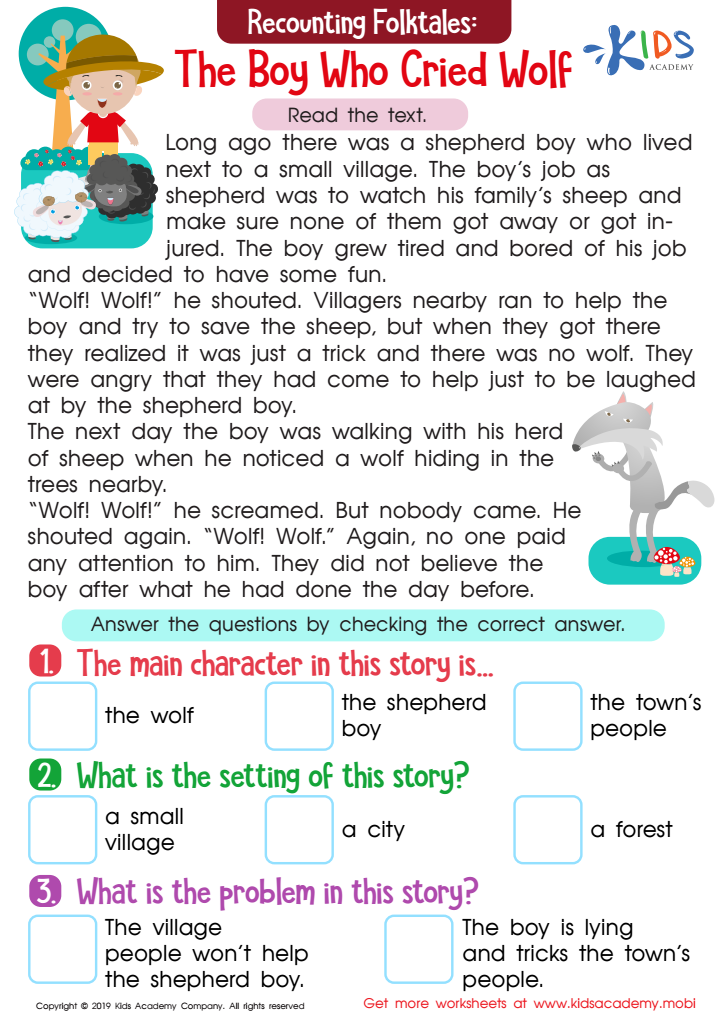
The Boy Who Cried Wolf Part 1 Worksheet








Moral understanding is crucial for children aged 7-9 as it lays the foundation for their social interactions and personal development. At this age, children begin to grasp concepts of right and wrong more intricately, moving beyond simple rules to understand the reasons behind them. By nurturing moral understanding, parents and teachers play a critical role in helping children develop empathy, fairness, and compassion.
As children engage with their peers, they encounter diverse perspectives and experiences. A strong moral foundation helps them navigate conflicts constructively and fosters a sense of responsibility toward others. It encourages them to consider the impact of their actions, cultivating deeper relationships and a sense of community.
Moreover, moral understanding supports academic success. Children who engage in ethical reasoning are more likely to collaborate meaningfully, participate in group activities, and understand complex narratives, attracting them toward social studies and literature.
Athough standards of good behavior can vary among families and cultures, helping children articulate their values fosters resilience in the face of peer pressure. Ultimately, when parents and teachers prioritize moral understanding, they empower children to become thoughtful, engaged citizens who will contribute positively to society.








