Observational skills development Normal Worksheets for Ages 7-9
3 filtered results
-
From - To
Kids Academy’s Observational Skills Development Normal Worksheets for Ages 7-9 are designed to enhance children's ability to notice key details in their surroundings, sharpen their memory, and improve focus. These engaging activities help students practice identifying patterns, differences, and similarities in various objects and scenes. By using these worksheets, children can strengthen their cognitive abilities, which are crucial for academic success. Crafted by educational experts, each worksheet offers a fun and interactive way to boost observational skills, ensuring a solid foundation for future learning. Perfect for use at home or in the classroom, they support the development of attentive and perceptive young minds.
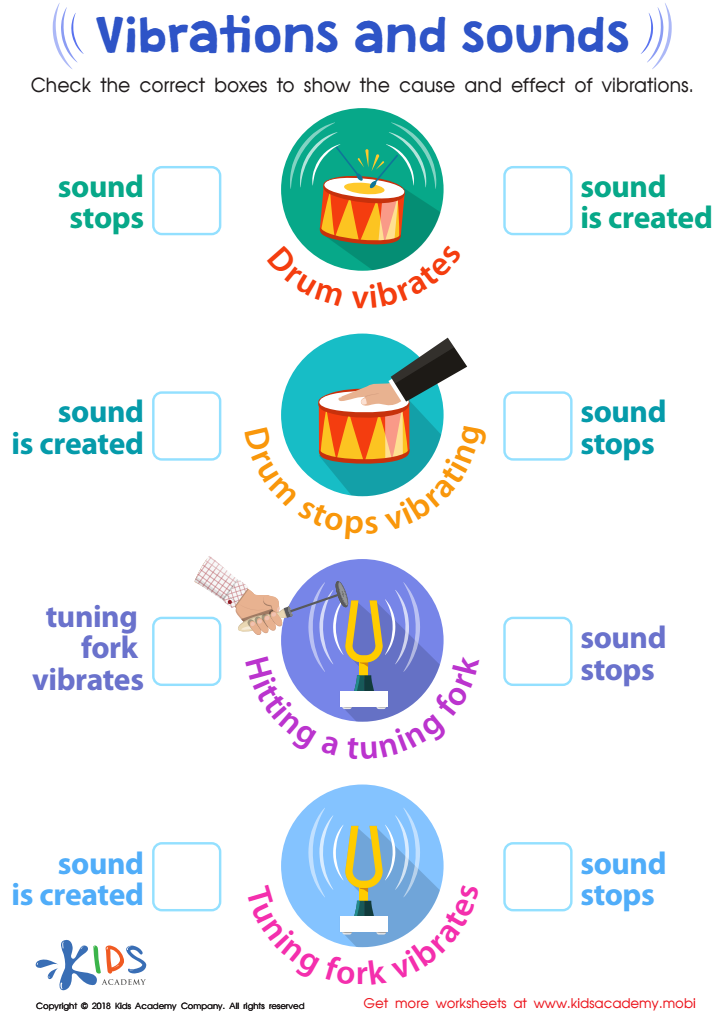
Vibrations and Sounds Worksheet
 Assign to My Students
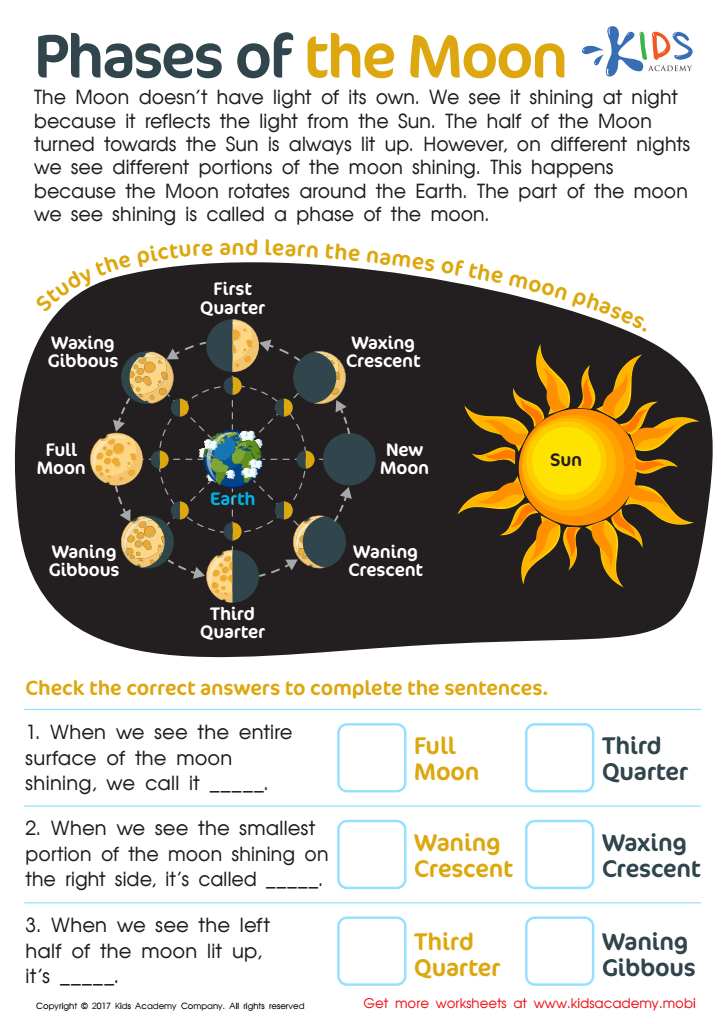
Phases of The Moon Worksheet
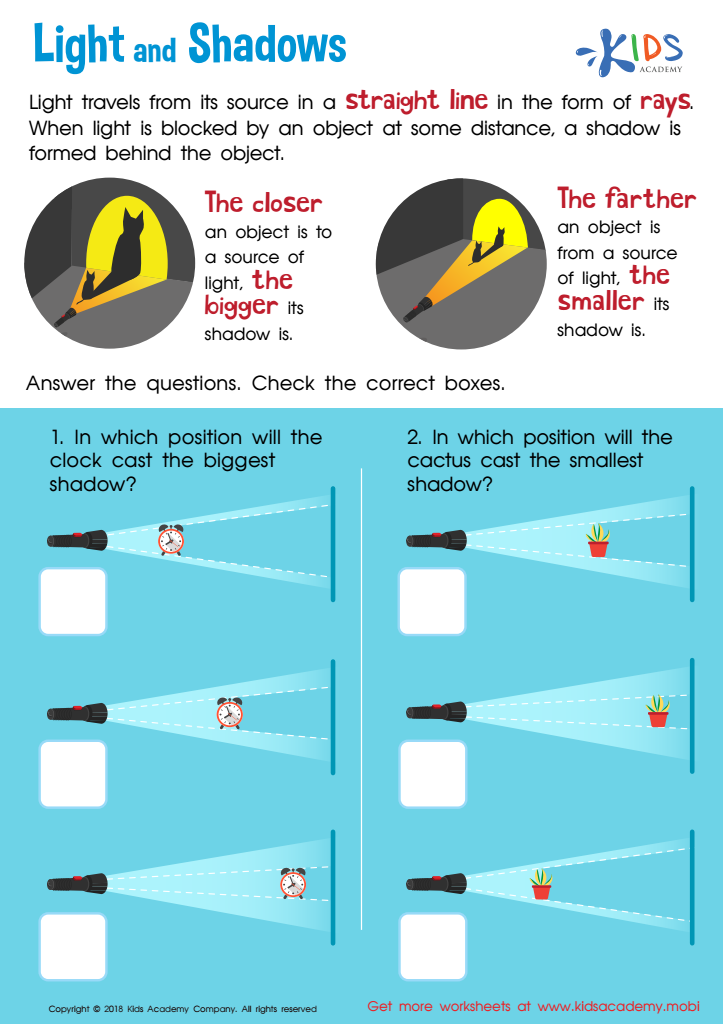
Light and Shadow Worksheet for Grade 3






%20(1).jpg)

Developing observational skills in children aged 7-9 is crucial for several reasons, as these skills form the bedrock of their cognitive and social development. At this age, children transition from basic learning to more complex comprehension and critical thinking. Observational skills help them notice details, patterns, and changes in their surroundings, which in turn enhances their ability to learn and understand new concepts in subjects like science, math, and reading.
For parents and teachers, nurturing these skills means fostering a child's curiosity and engagement. By encouraging children to observe their environment closely, adults help them develop important life skills such as attention to detail, situational awareness, and problem-solving abilities. Kids become better equipped to ask questions, infer meaning, and draw connections between different pieces of information, which are foundational for lifelong learning.
Furthermore, observational skills are pivotal in social interactions. Children learn to read facial expressions, body language, and social cues, helping them navigate social situations more effectively. This bolsters their empathy and communication skills.
Investing in a child's observational skills also serves to improve their focus and concentration, which are essential for academic success. Ultimately, parents and teachers who prioritize observational skill development lay a strong foundation for both academic achievements and personal growth.








