Recognizing number patterns Normal Worksheets for Ages 7-9
4 filtered results
-
From - To
Unlock your child's potential with our "Recognizing Number Patterns Worksheets" designed for ages 7-9. These engaging and educational worksheets help young learners develop essential math skills, focusing on identifying and understanding number patterns. Perfect for classroom or home use, each worksheet challenges students to recognize sequences, transitions, and relationships between numbers. The vibrant layouts and fun exercises make learning enjoyable, boosting confidence and problem-solving abilities. Tailored to meet educational standards, these worksheets support both independent and guided learning, ensuring your child grasps key concepts to thrive in mathematics. Explore our collection and cultivate a love for numbers today!
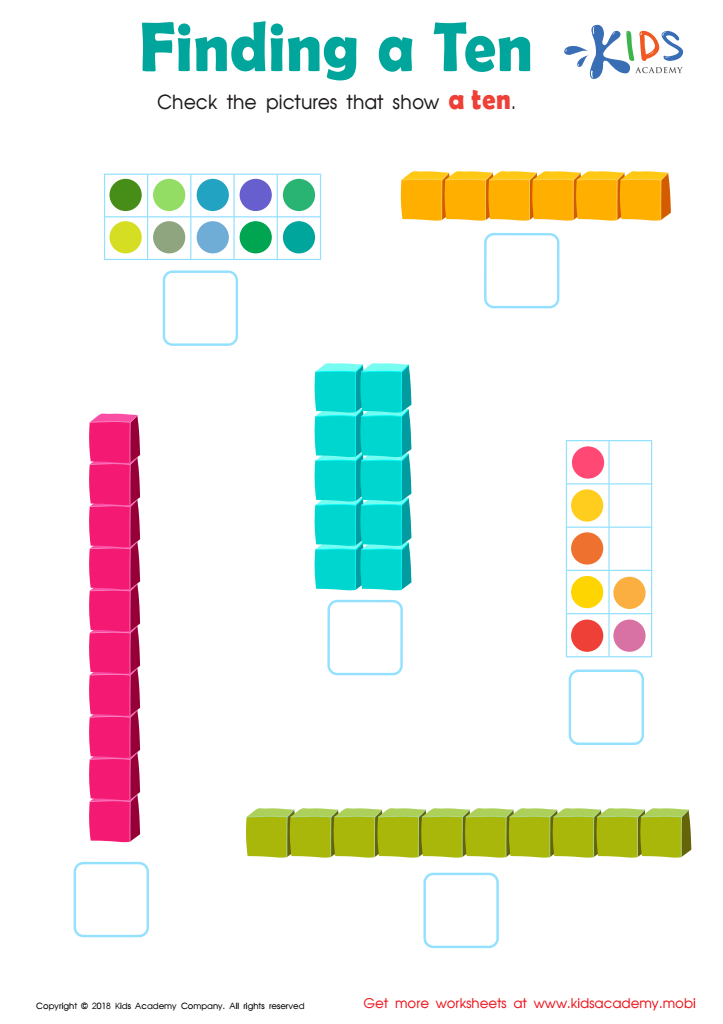
Finding a Ten Worksheet
 Assign to My Students
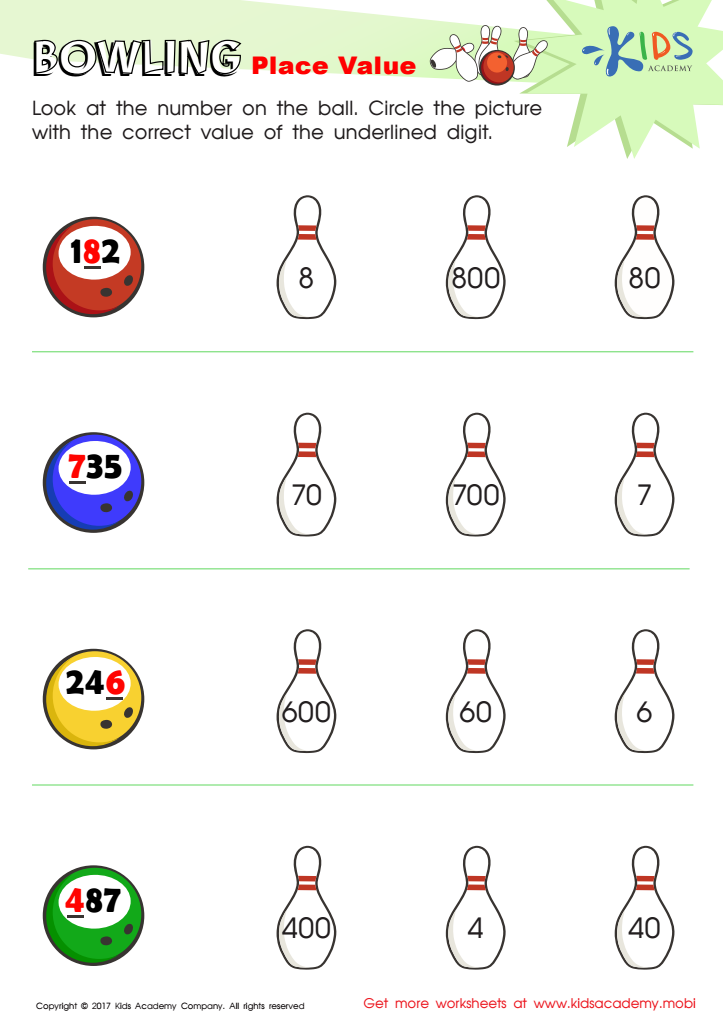
Place Value Worksheet
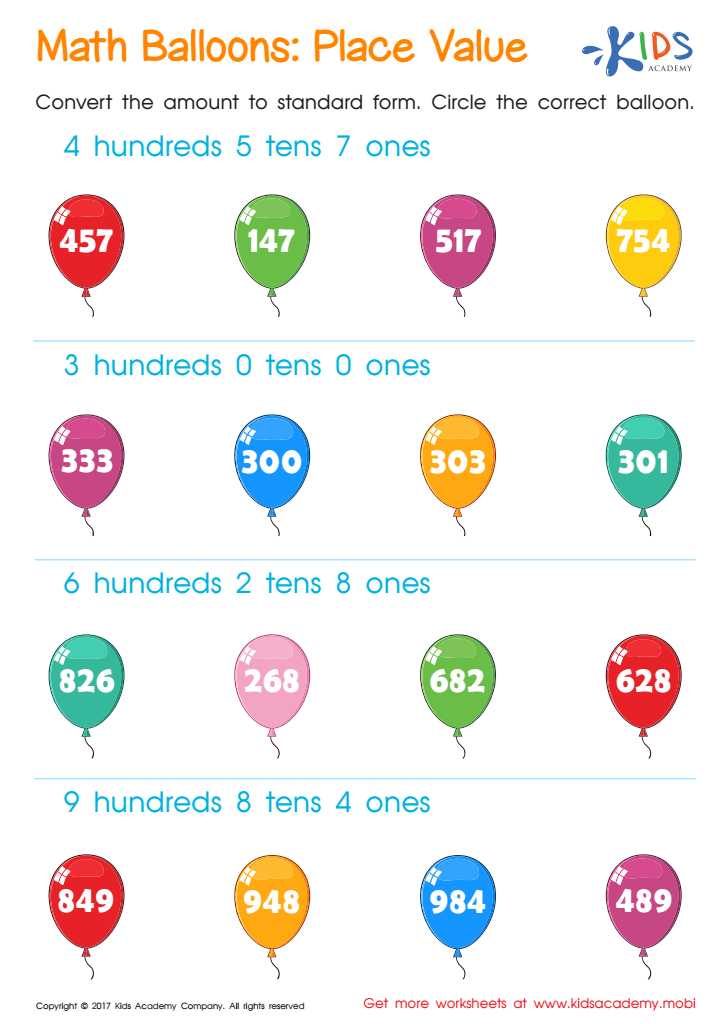
Place Value Printable Worksheet
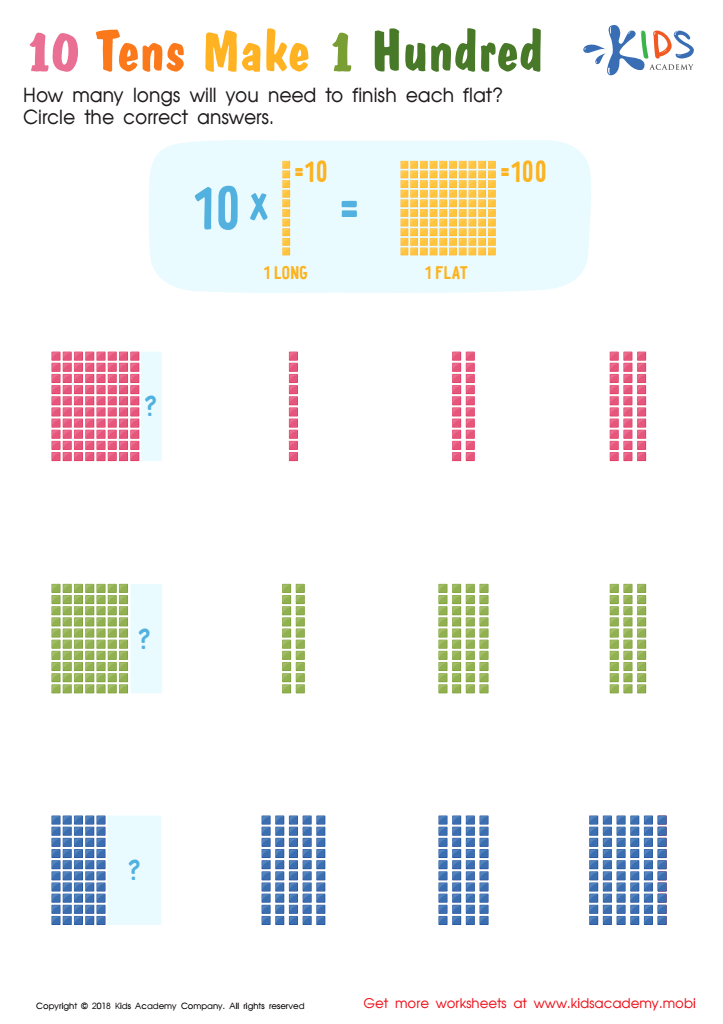
10 Tens Make 1 Hundred Worksheet






Recognizing number patterns is a vital skill for children aged 7-9, providing foundational knowledge for their future mathematical understanding and problem-solving abilities. Patterns help children predict and make educated guesses, which sharpens their logical thinking and analytical skills. These skills extend beyond mathematics, aiding in subjects like science and coding, where recognizing sequences and structures is crucial.
Parents and teachers play a critical role in fostering this skill. When children spot patterns in numbers, they grasp core concepts like addition, subtraction, multiplication, and division more intuitively. For example, understanding that multiplying by 10 always shifts numbers one place to the left simplifies other math tasks. Patterns also make math more engaging and less abstract. Recognizing a repetitive sequence can be both fun and encouraging for children, boosting their confidence in the subject.
Moreover, patterns stimulate curiosity and investigative thinking. Children learn to ask vital questions like "What comes next?" or "Why does this happen?" This curiosity-driven approach cultivates a mindset geared towards lifelong learning.
For parents and teachers, integrating number patterns into daily activities or lessons helps link math to real-world situations, reinforcing its relevance and making learning a more enriching experience for children.








