Understanding chess rules Normal Worksheets for Ages 7-9
5 filtered results
-
From - To
Discover the joy of chess with our "Understanding Chess Rules" worksheets, specifically designed for children aged 7-9. These engaging worksheets make learning the fundamentals of chess fun and interactive. Young players will grasp essential concepts such as piece movement, game objectives, and strategic thinking. Perfect for beginners, our materials foster critical thinking and problem-solving skills. Whether your child is new to chess or refining their knowledge, our worksheets provide a solid foundation for a lifetime of enjoyment. Empower young minds with the cognitive benefits of chess through these expertly crafted resources. Start your child's chess journey today!
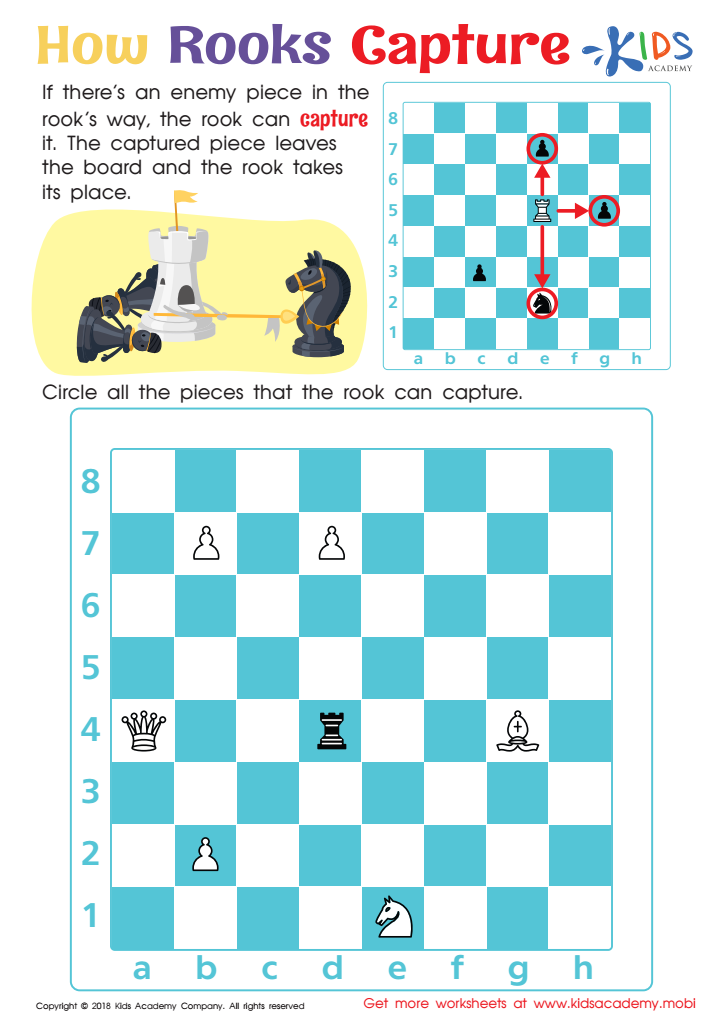
How Rooks Capture Worksheet
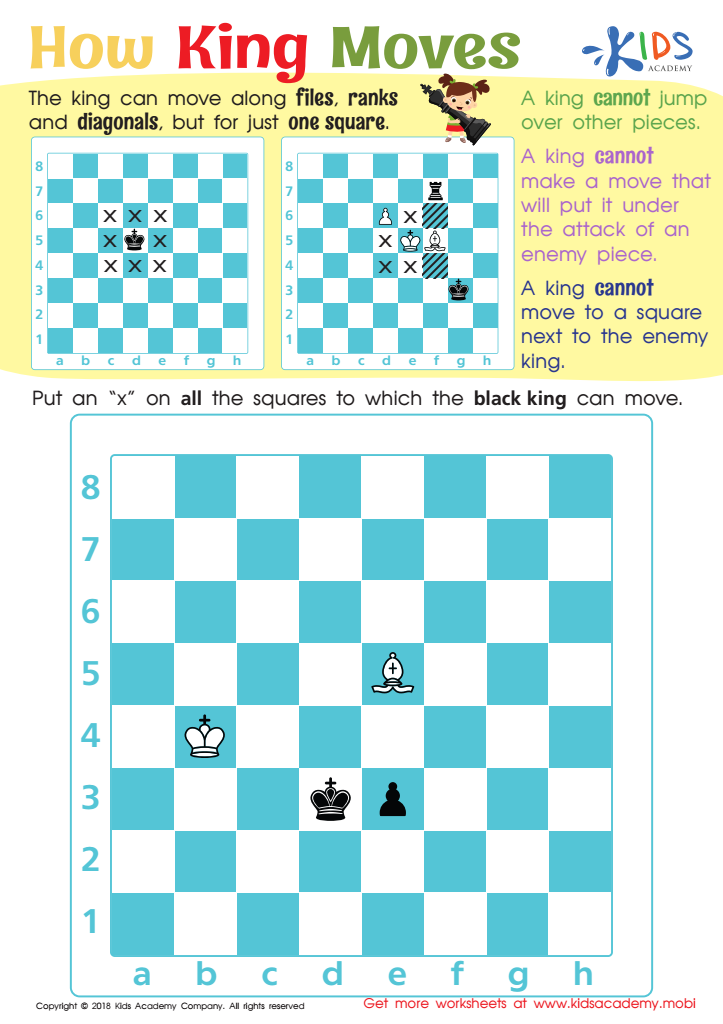
How King Moves Worksheet
 Assign to My Students
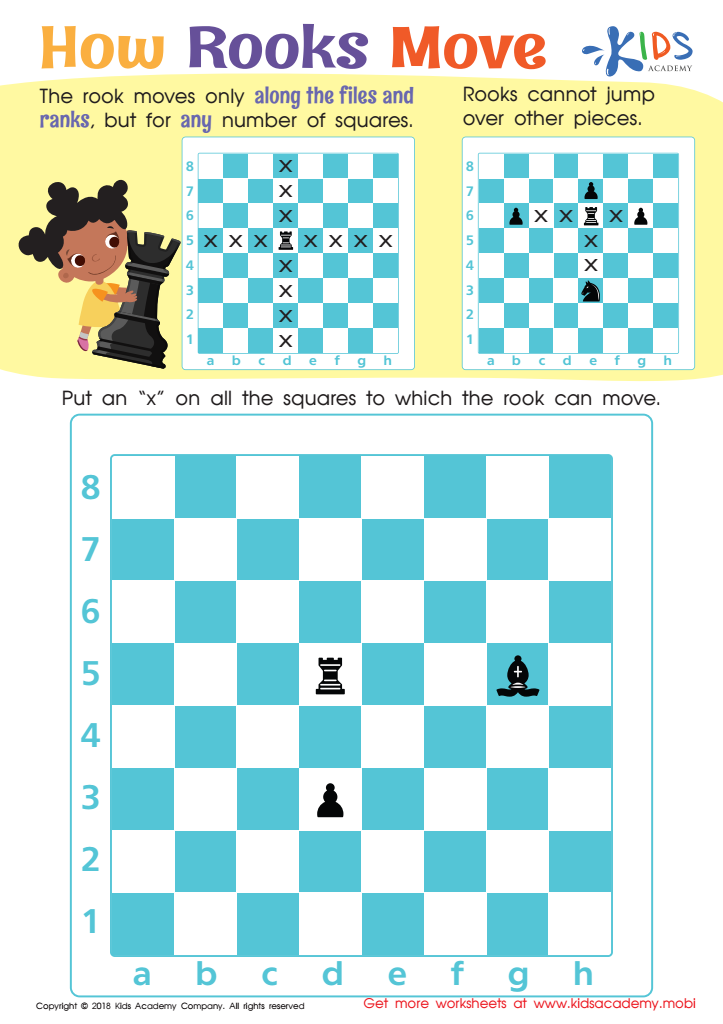
How Rooks Move Worksheet
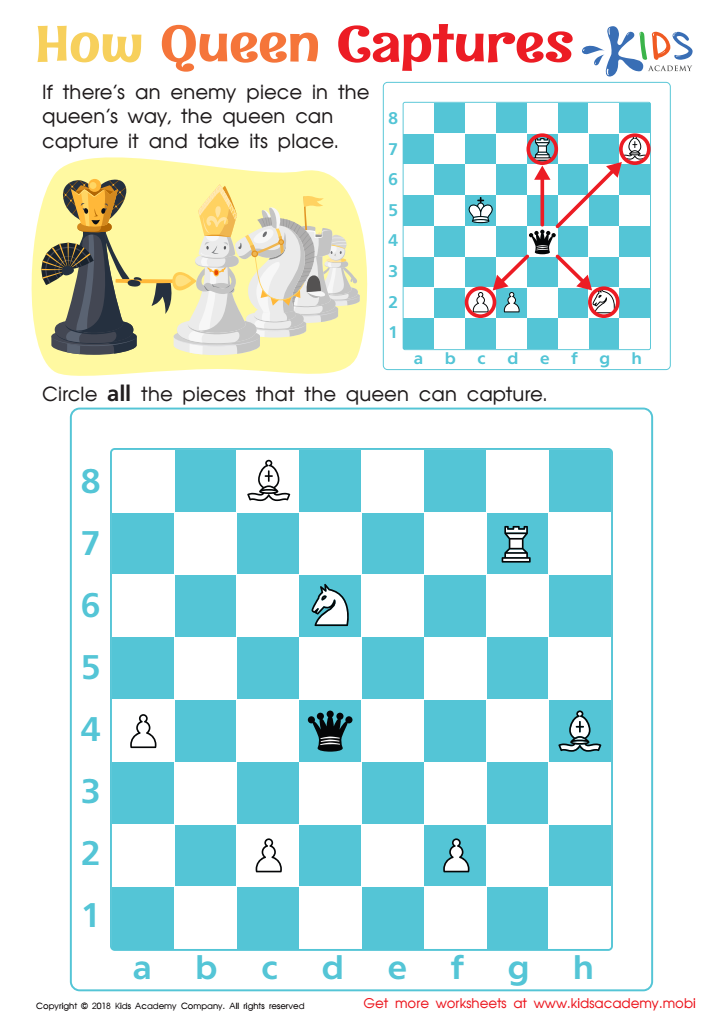
How Queen Captures Worksheet
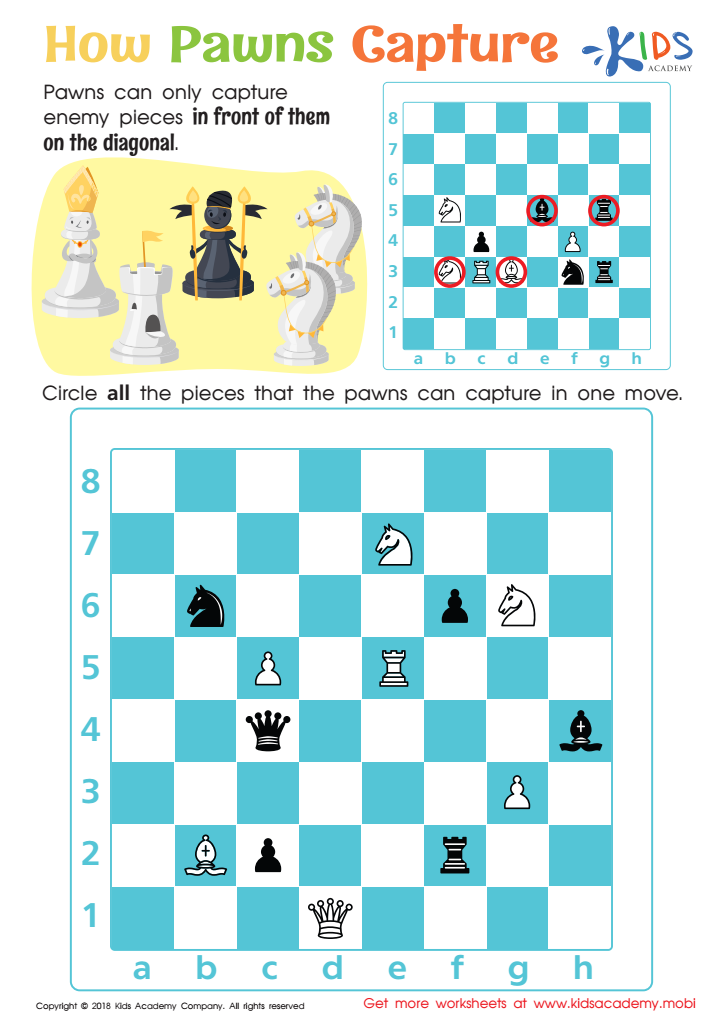
How Pawns Capture Worksheet






.jpg)

Understanding chess rules at ages 7-9 provides numerous cognitive and social benefits, making it important for parents and teachers to foster chess learning in children. Chess is not just a game; it is a powerful educational tool that enhances critical thinking, problem-solving, and patience. When children learn and practice the rules of chess, they engage in strategic thinking and planning several moves ahead, which boosts their ability to think logically and make thoughtful decisions.
Additionally, chess is an excellent way to improve concentration and memory. Remembering the positions of pieces, recognizing patterns, and recalling past games hones short-term and long-term memory skills. This mental exercise translates into academic benefits, particularly in mathematics and reading comprehension.
Beyond cognitive skills, chess teaches important life skills such as perseverance, sportsmanship, and dealing with wins and losses gracefully. Playing chess with peers also fosters social interaction and communication, which is critical at this developmental stage.
Engaging with chess can be particularly rewarding for children as it encourages them to set goals and work towards achieving them. Whether a child emerges victorious or faces setbacks, the lessons learned through playing chess are enduring. Therefore, encouraging an understanding of chess rules in early childhood can lead to a holistic development, preparing children for diverse academic and life challenges.








