
Understanding Sequences Normal Worksheets for Ages 7-9
6 filtered results
Difficulty Level
Grade
Age
-
From - To
Subject
Activity
Standards
Discover engaging and educational worksheets designed to help children aged 7-9 grasp the concept of sequences. Our collections of printable activities from Kids Academy cover patterns, chronological events, and logical order, enhancing critical thinking and problem-solving skills in young learners. Each worksheet is crafted to be fun and interactive, ensuring that your child stays engaged while learning. From simple ABC sequences to more complex number patterns, these exercises build a solid foundation in an essential math skill. Perfect for both classroom and home use, our worksheets pave the way for academic success through engaging practice.
Favorites
With answer key
Interactive
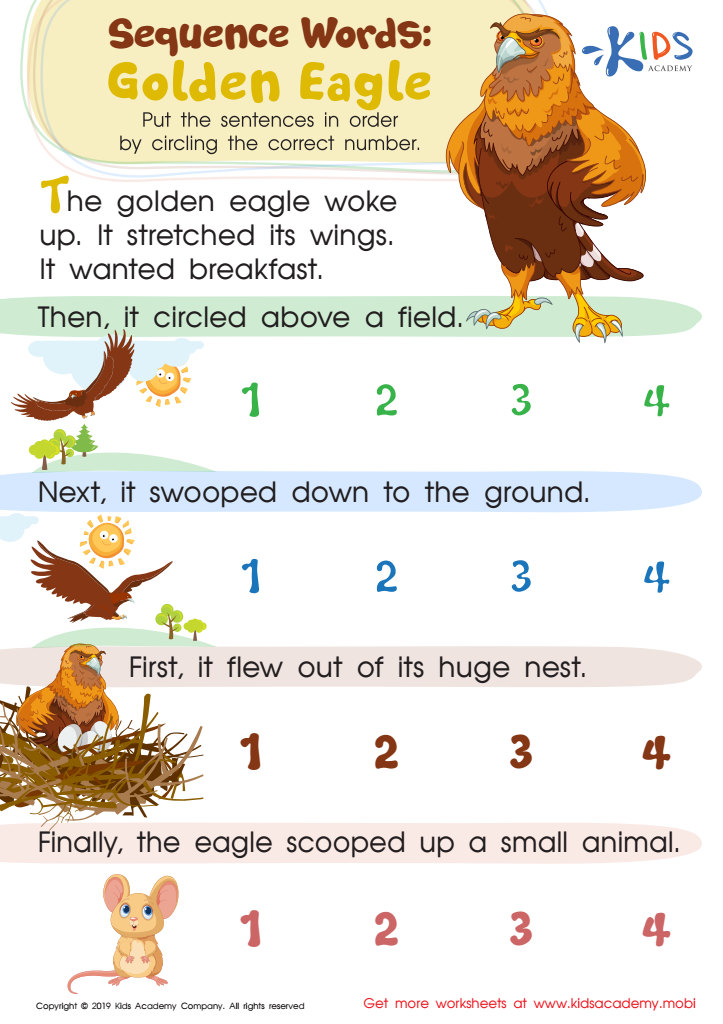
Sequence Word Eagle Worksheet
Help your child brush up on reading and writing with this fun worksheet. Read the story of the golden eagle's day, then have the child circle the numbers in the right order. Point out the sequence words that tell the order of events. This helps learners understand how to make their writing clear and understandable to others.
 Assign to My Students
Sequence Word Eagle Worksheet
Worksheet
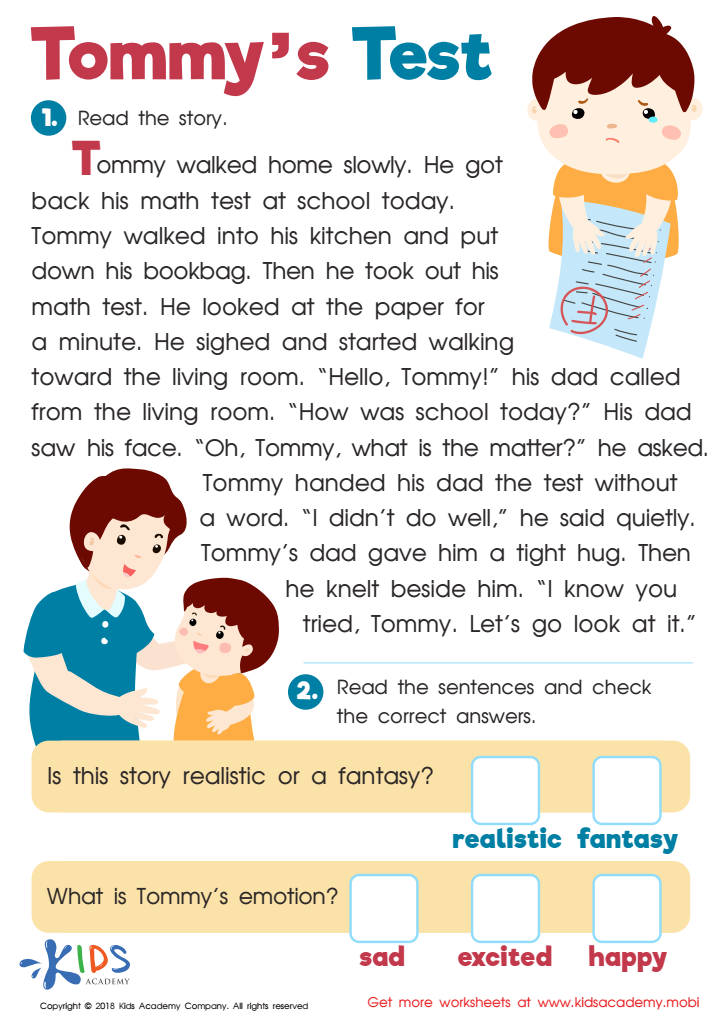
Tommys Test Worksheet
Reading short stories to your students builds a bond, teaches new words and lessons. Read the story aloud and then have them listen for details. Ask them the questions at the bottom and help them check the answers.
Tommys Test Worksheet
Worksheet
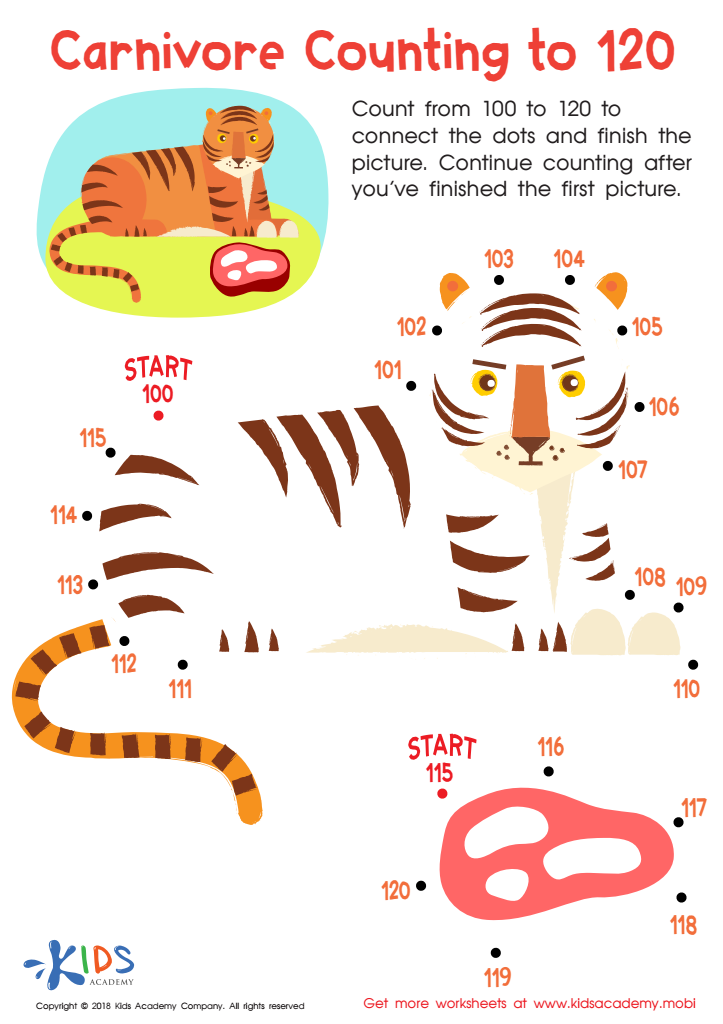
Carnivore Counting to 120 Worksheet
Ask your child to name some popular carnivores. Can they tell you what the animal in the worksheet is? A Tiger? Get them to count from 100 to 120 to connect the dots. After they finish the first picture, keep counting to help them practice!
Carnivore Counting to 120 Worksheet
Worksheet
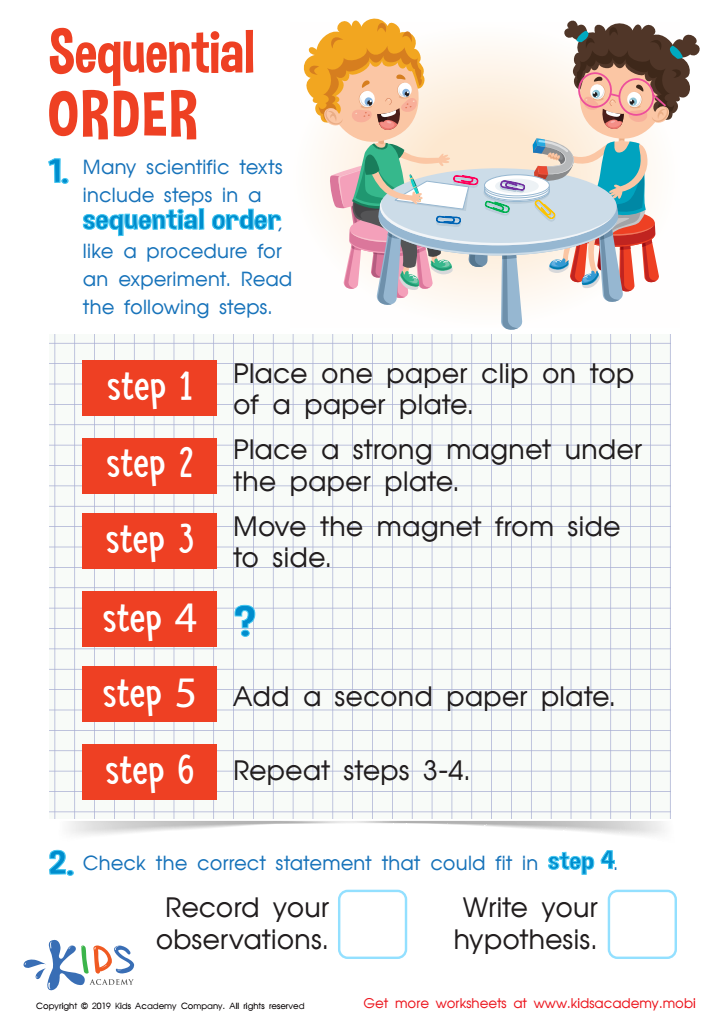
Sequencential Order Worksheet
This worksheet is perfect for science-lovers: it'll test how good your child is at following instructions by asking them to complete the steps in the right order. Have them read the steps and then choose the statements that correctly fill in the blanks. It's more than just fun experiments and results - science also requires careful procedure.
Sequencential Order Worksheet
Worksheet
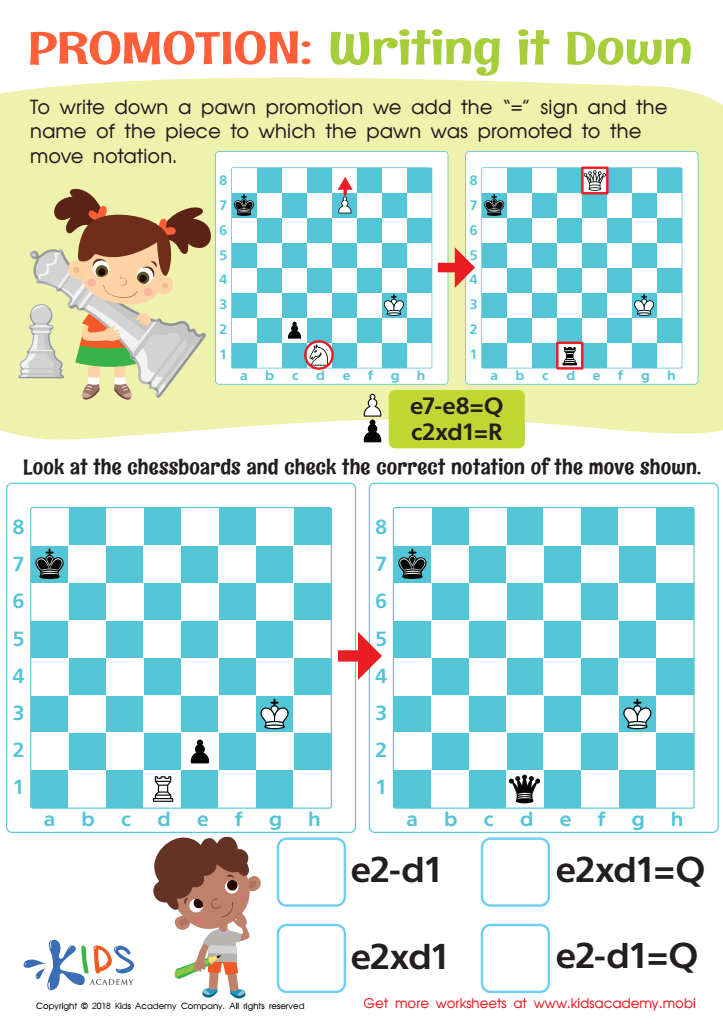
Writing it Down Worksheet
To document pawn promotion, add "=<piece name>" to the move notation. For example: e7-e8=Q. Ask your child to look at the chessboard and take note of the moves. Check the notations are correct. (80 words)
Writing it Down Worksheet
Worksheet
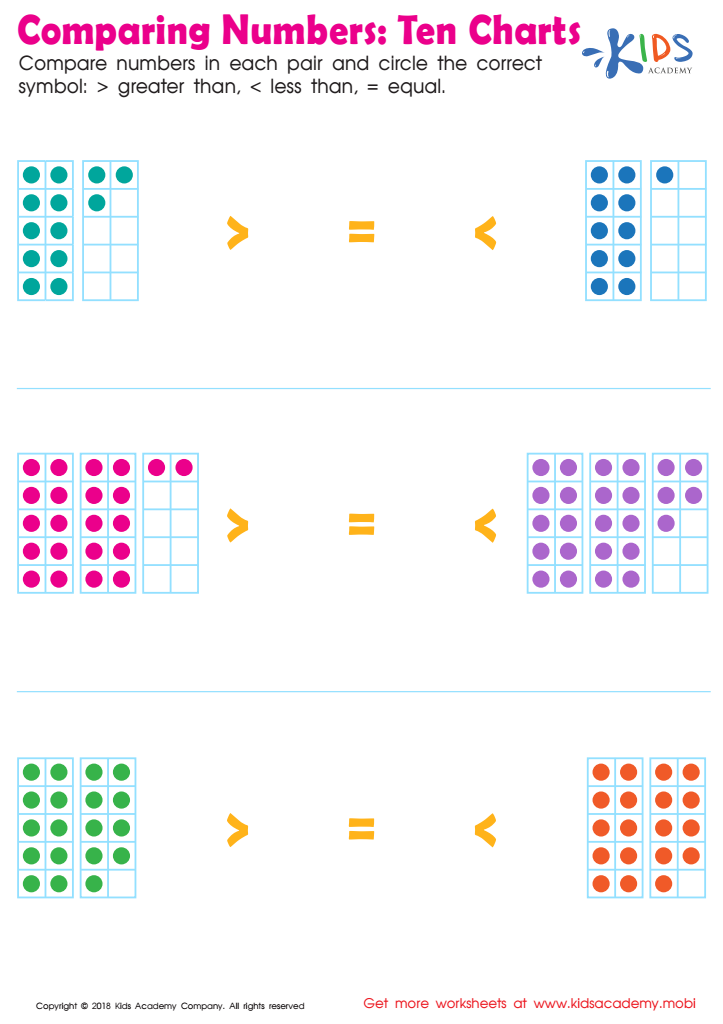
Ten Charts Worksheet
Help your child learn numbers in a creative way using this printable worksheet. They'll learn the difference between numbers, how to add them, and the symbols of "greater than", "less than" and "equals to". They can compare two sides, and identify which is greater, less or equal. Let their maths knowledge bloom!
Ten Charts Worksheet
Worksheet
Join Kids Academy for Free
Who is primarily going to use this learning content?








Understanding sequences at an early age lays the foundation for critical thinking and problem-solving skills important in many areas of life. For children aged 7-9, sequences help in developing their ability to recognize patterns and order, providing a crucial stepping stone for more advanced mathematical concepts. When parents and teachers dedicate time to teaching sequences, they foster a child's number sense and operational understanding, which are imperative for future academic success.
Sequences also strengthen young learners' ability to predict and reason logically. These skills transcend the classroom, aiding in everyday functioning – from organizing school tasks to following directions and even automating routines that reinforce positive habits. The practice of predicting the next item in a sequence mirrors real-world situations where forecasting and preparing in advance can lead to better decisions.
Moreover, understanding sequences enhances critical literacy skills. Stories have a natural order – beginning, middle, and end – and recognizing these patterns can improve comprehension. Everyone leads a sequence-driven life traceable through calendars, schedules, and storytelling, so supporting children's abilities in this area equips them with the tools needed for both systematic thinking and creativity. Overall, parents’ and teachers’ efforts to nurture sequence recognition ultimately ensure well-rounded cognitive development for young learners.








