Normal Addition and Subtraction Word Problems Worksheets for Ages 7-9 - Page 2
29 filtered results
-
From - To
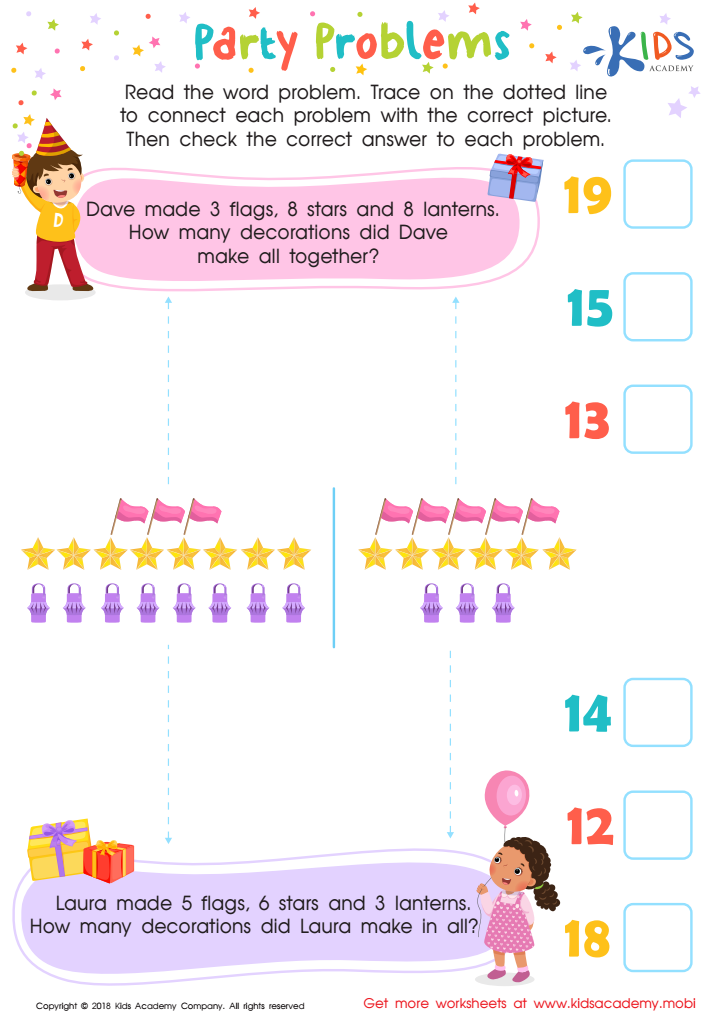
Party Problems Worksheet
 Assign to My Students
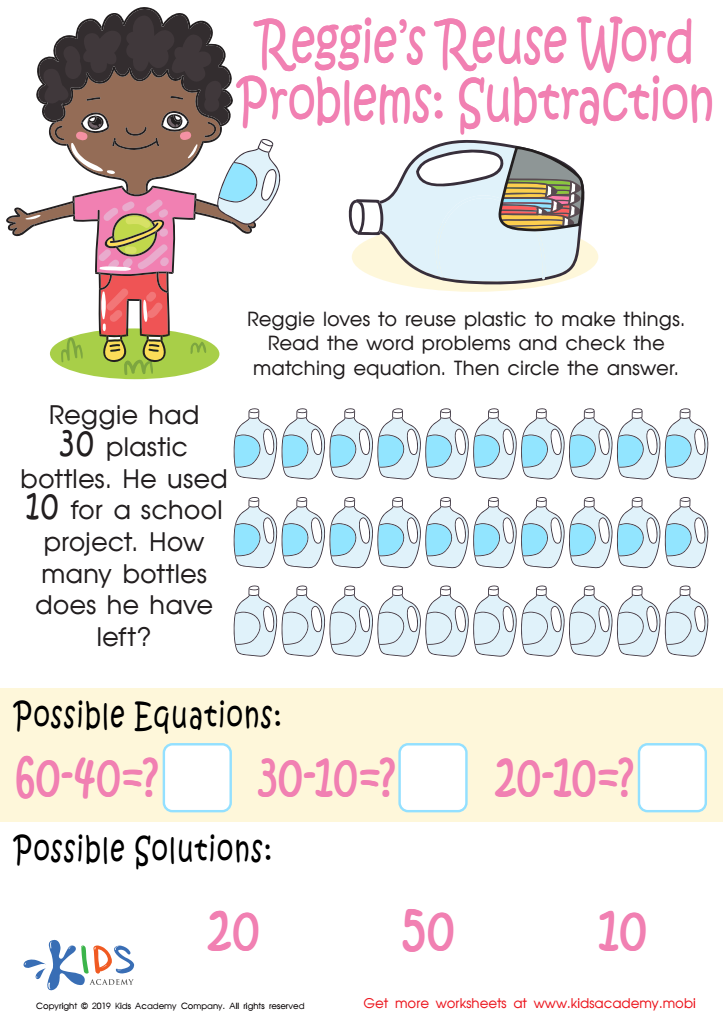
Reggie's Reuse Word Problems: Subtraction Worksheet
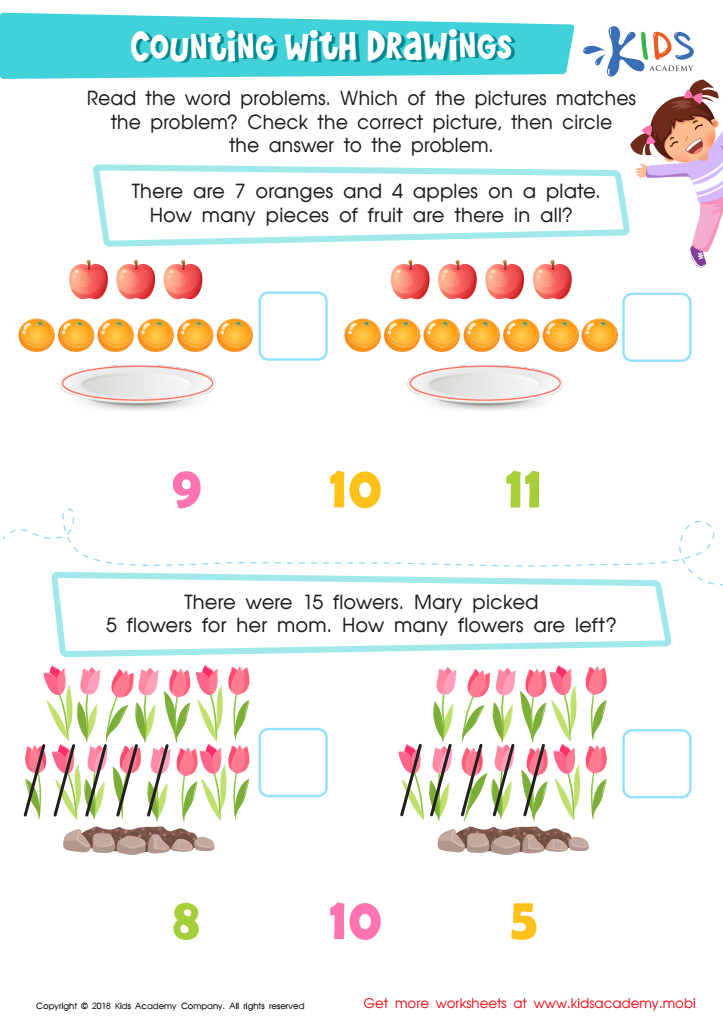
Counting with Drawings:Fruits & Flowers Worksheet
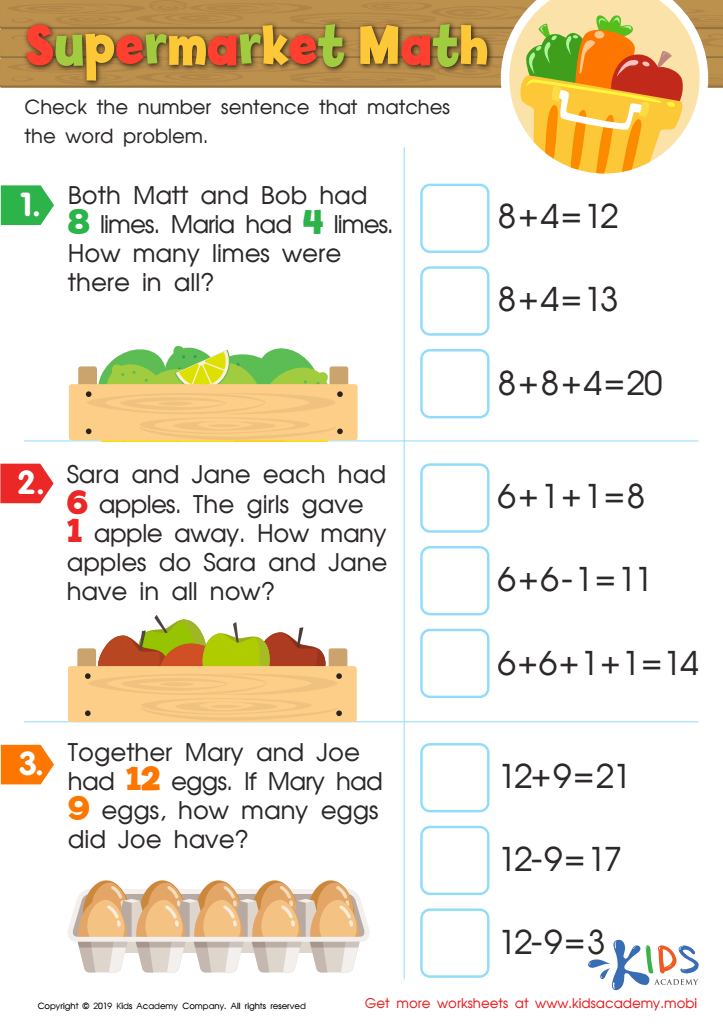
Supermarket Math Worksheet
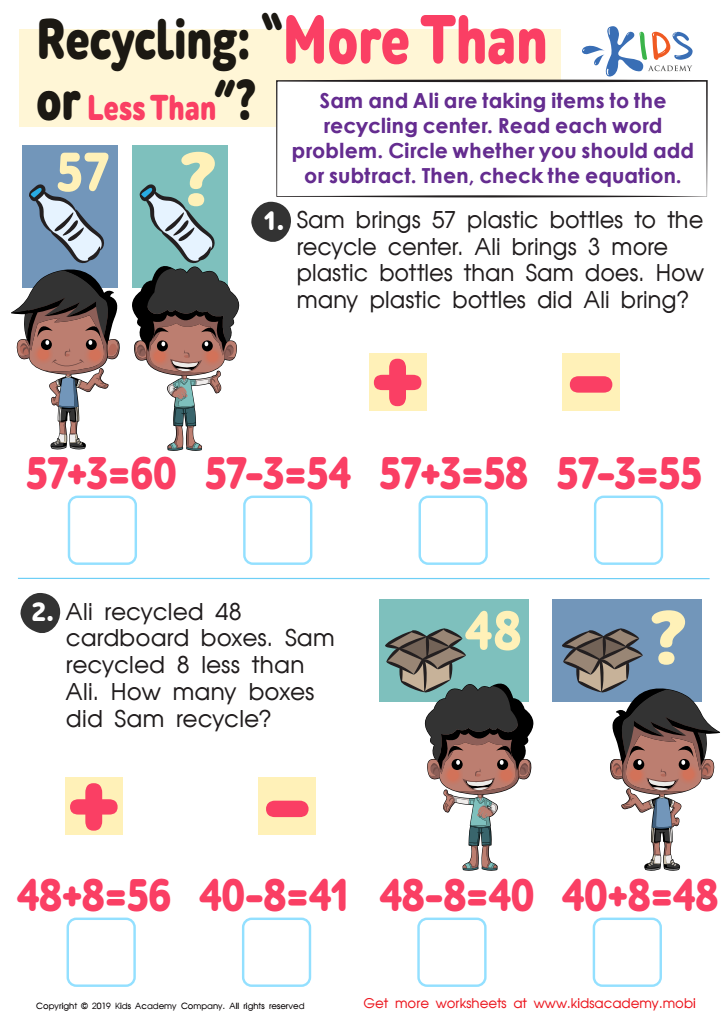
Recycling - More or Less Worksheet








Parents and teachers should care about normal addition and subtraction word problems for ages 7-9 because these activities play a critical role in the foundational development of children's mathematical skills. At this age, children transition from concrete to more abstract thinking, and word problems help solidify this shift. By framing mathematical concepts within the context of real-life scenarios, kids can understand the application and relevance of what they are learning. This increased relevancy can boost motivation and engagement.
Additionally, solving word problems enhances critical thinking and problem-solving skills. It requires children to read carefully, interpret the problem, and determine which mathematical operations to use. This fosters a sense of logic and strengthens reasoning abilities beyond just performing calculations.
Moreover, these skills are cumulative. A strong grasp of basic addition and subtraction prepares students for more complex mathematical concepts they will encounter in later grades, such as multiplication, division, and beyond. Early exposure to these types of problems helps identify and address any learning gaps or difficulties before they affect more advanced learning later on.
In short, normal addition and subtraction word problems are not just about learning to add and subtract, but about developing a thorough understanding of mathematics and problem-solving that will benefit children throughout their education and daily lives.