Addition skills Normal Addition and Subtraction Word Problems Worksheets for Ages 7-9
4 filtered results
-
From - To
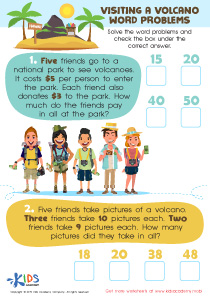
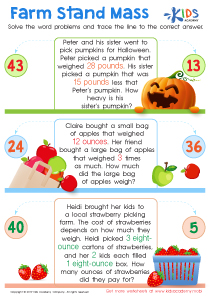
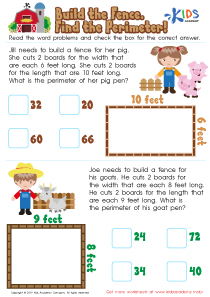
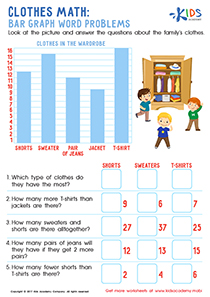
Enhance your child's math abilities with our engaging addition and subtraction word problems worksheets specially designed for ages 7 to 9. These printable resources help young learners develop essential addition skills through real-life scenarios, encouraging them to apply mathematical concepts in everyday situations. Each worksheet uses relatable contexts that spark interest and foster critical thinking, making math fun and engaging. Perfect for home or classroom use, our series of worksheets provides plenty of practice opportunities tailored to your child's learning pace. Unlock the power of addition and subtraction with these expertly crafted materials that build confidence and proficiency in mathematical reasoning.
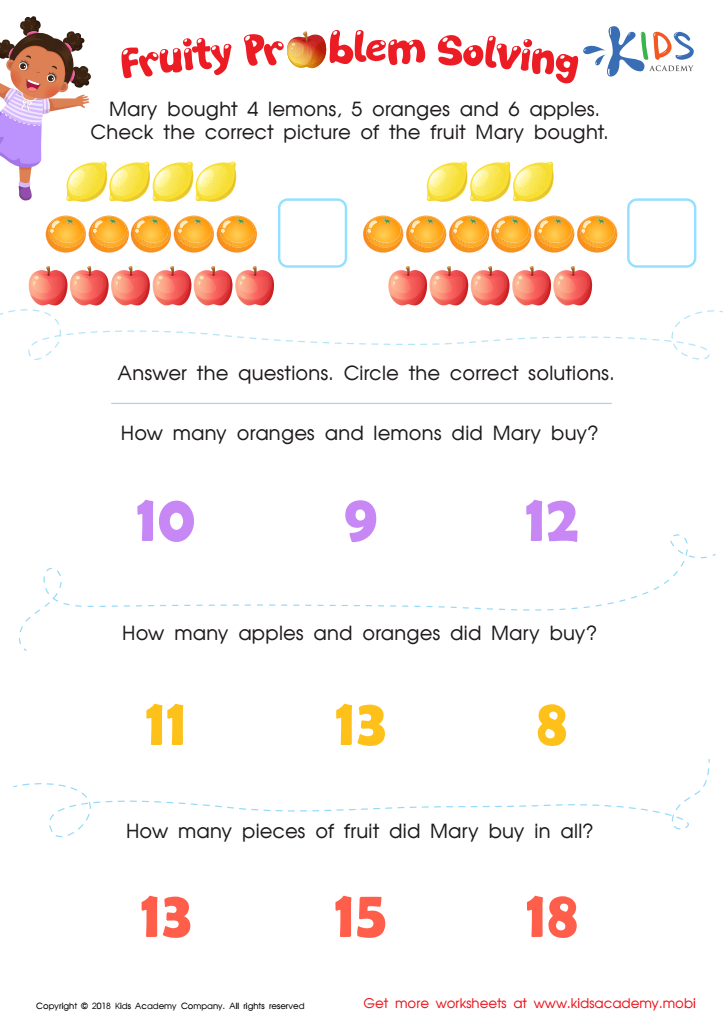
Fruity Problem Solving Worksheet
 Assign to My Students
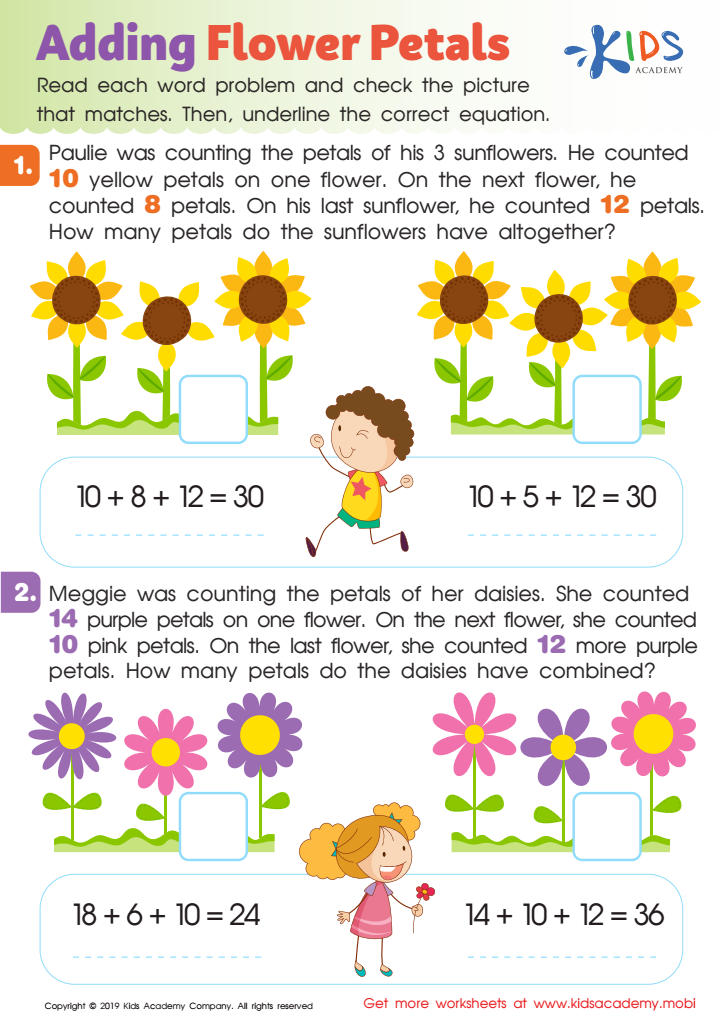
Adding Flower Petals Worksheet

Adding at the Hospital Worksheet
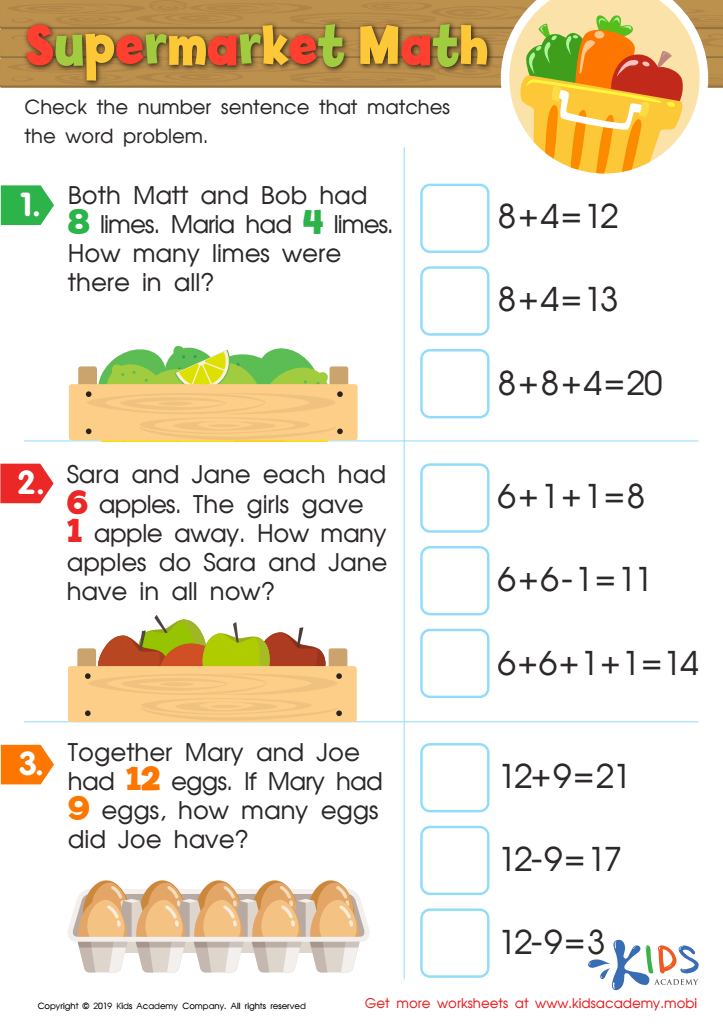
Supermarket Math Worksheet








Addition and subtraction skills are foundational for children aged 7-9, as they support not only future academic success but also everyday problem-solving abilities. At this age, children begin encountering more complex word problems that require critical thinking and comprehension. Mastery of normal addition and subtraction allows them to interpret problems accurately and determine the best strategies to find solutions.
Parents and teachers should care about these skills because they contribute significantly to a child's confidence and independence in math. Proficient addition and subtraction help students build a strong mathematical foundation, enabling them to tackle more challenging concepts such as multiplication, division, and fractions in later grades. Moreover, these skills foster cognitive development, enhancing analytical and reasoning abilities while improving language skills through the comprehension of word problems.
Supporting children in developing these skills can also impact their overall attitudes toward math. Early intervention can prevent math anxiety and build resilience, encouraging a growth mindset. By prioritizing addition and subtraction word problems, educators and parents can inspire curiosity in mathematics, leading to a lifetime appreciation and mastery of the subject. In turn, this empowers children to approach real-world scenarios with confidence, reinforcing the relevance of math in their daily lives.