Critical Thinking Normal Addition & Subtraction Worksheets for Ages 7-9
6 filtered results
-
From - To
Enhance your child's mathematical skills with our specially designed Critical Thinking Normal Addition & Subtraction Worksheets for Ages 7-9! These engaging worksheets not only reinforce essential math concepts but also encourage critical thinking and problem-solving abilities. As kids work through thoughtfully crafted exercises, they develop a deeper understanding of addition and subtraction while honing their analytical skills. Perfect for classroom use or at-home practice, these worksheets cater to various learning styles and keep students motivated while challenging their minds. Equip your young learners with the tools they need to succeed in math and beyond. Explore, learn, and think critically today!
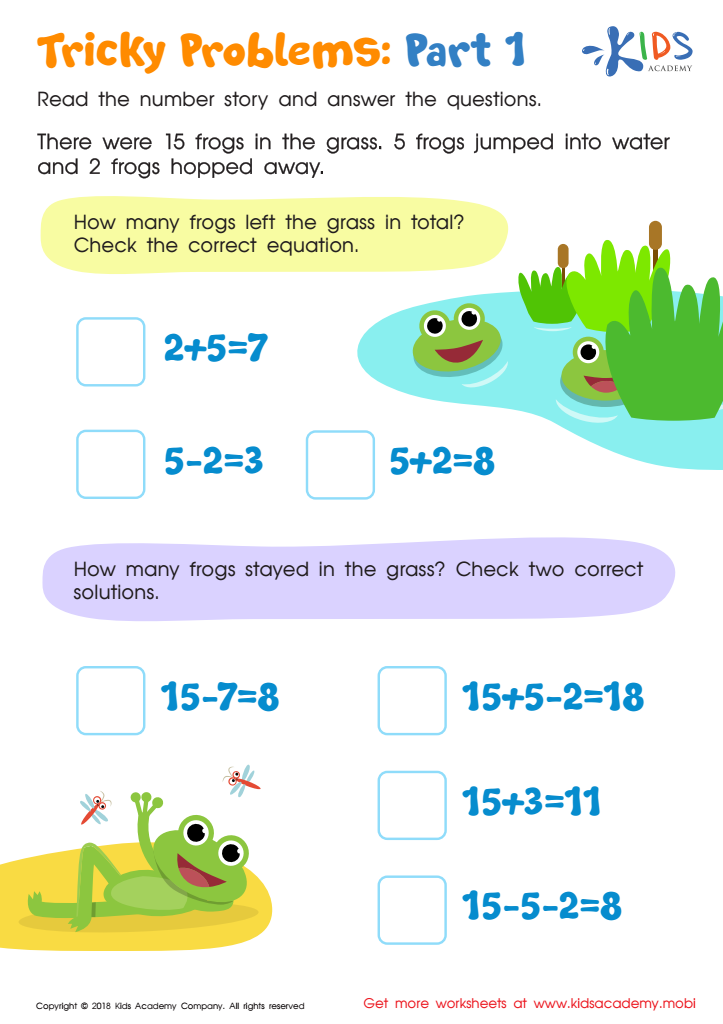
Tricky Problems Worksheet: Part 1
 Assign to My Students
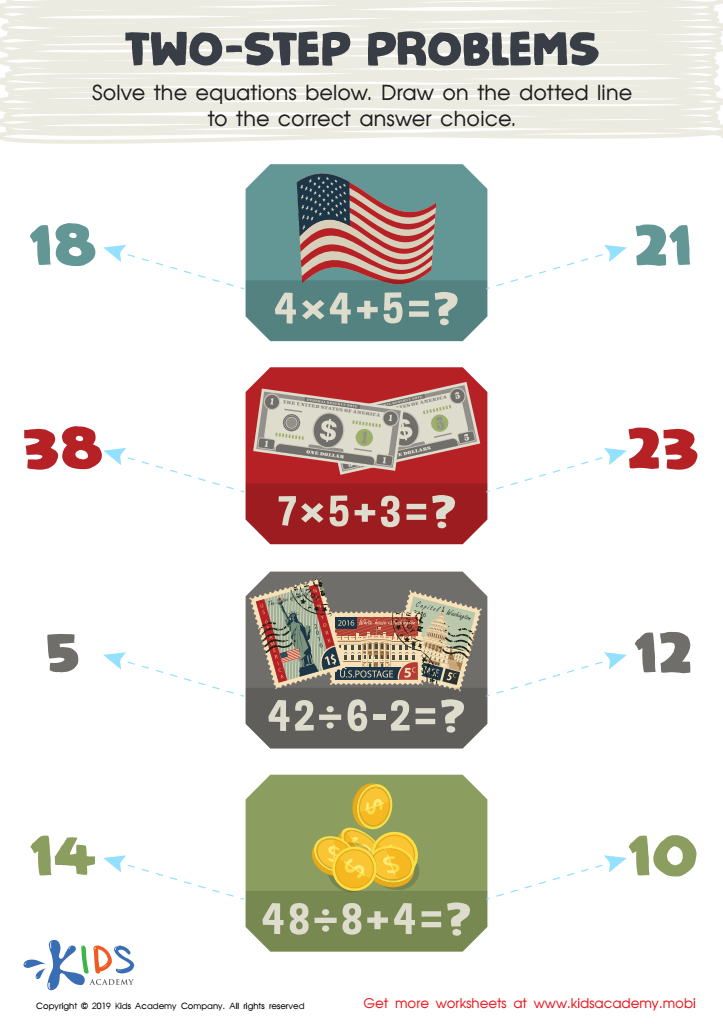
Two-Step Problems Worksheet
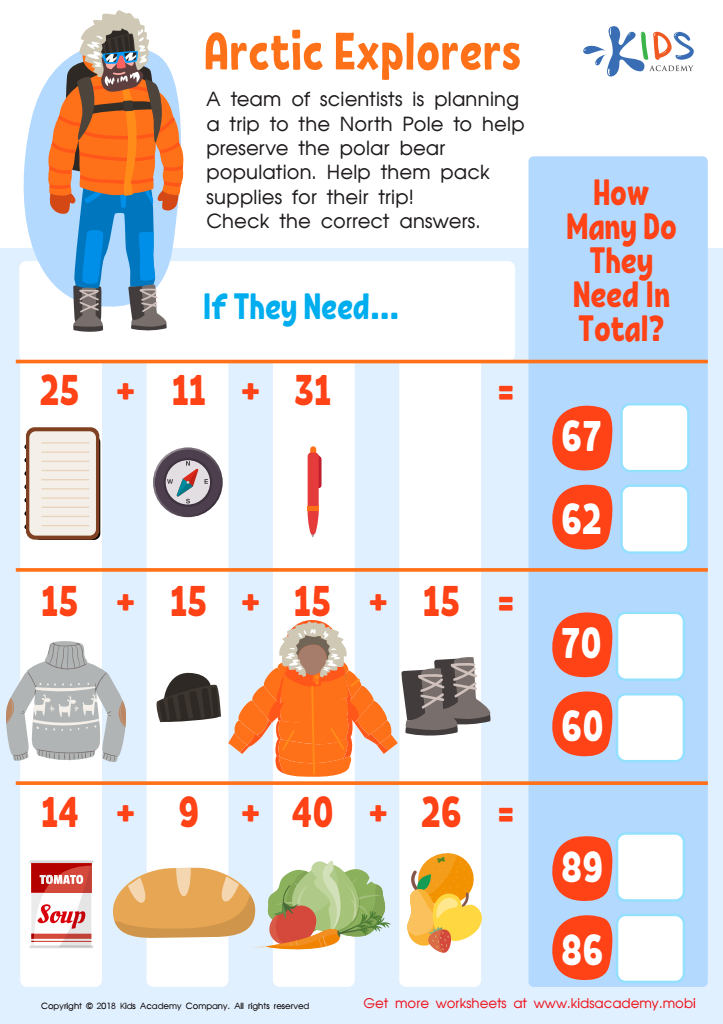
Arctic Explorers Worksheet
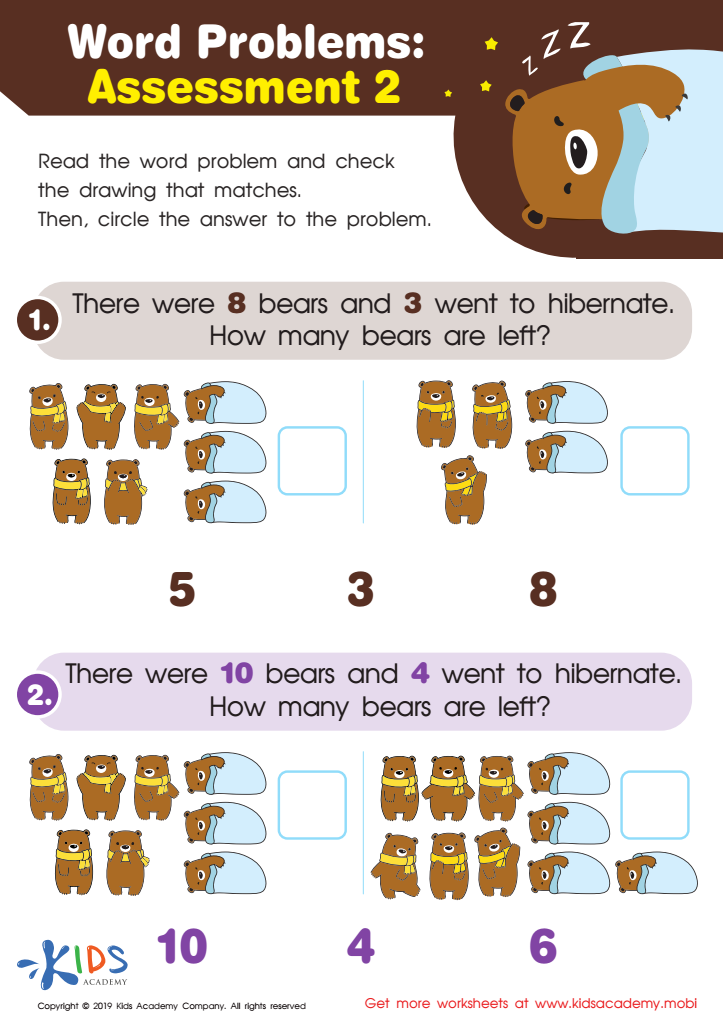
Word Problems: Assessment 2 Worksheet
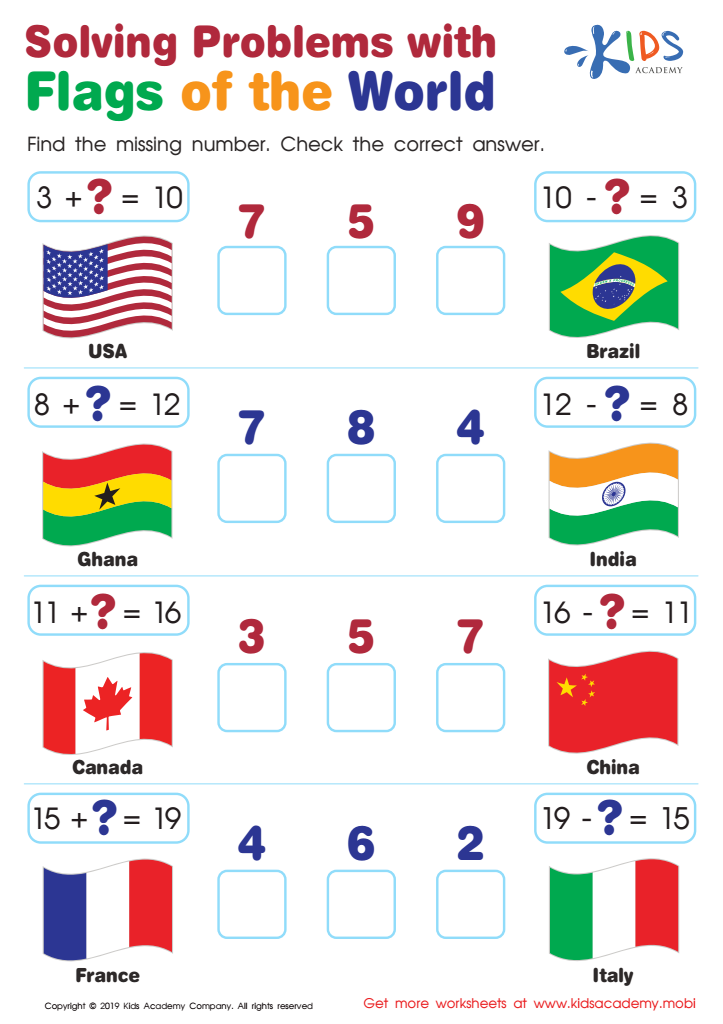
Solving Problems with Flags of the World Worksheet
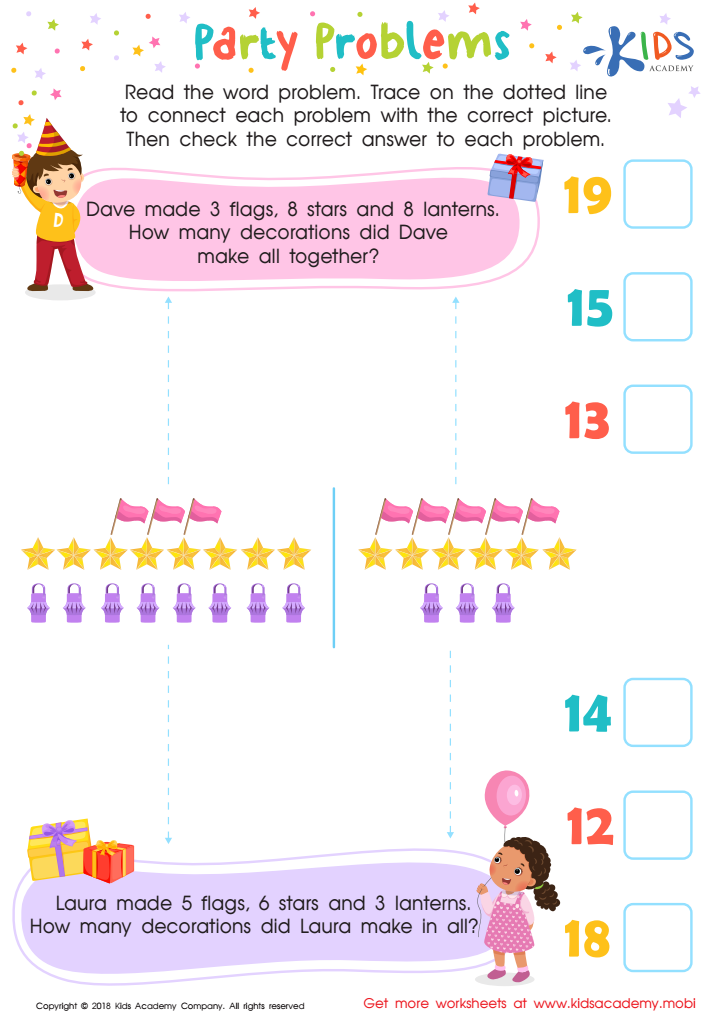
Party Problems Worksheet








Critical Thinking in normal addition and subtraction is crucial for children ages 7-9 as it lays the foundation for their overall mathematical competence and cognitive development. At this age, children are transitioning from concrete understanding to more abstract reasoning. Teaching them to think critically about basic operations fosters problem-solving skills that extend beyond math, equipping them to tackle diverse challenges in everyday life.
When students engage in critical thinking with addition and subtraction, they learn to analyze problems, anticipate outcomes, and explore multiple strategies. This empowers them to become active learners rather than passive recipients of information, enabling them to express their understanding in various ways. Furthermore, by integrating critical thinking into these fundamental operations, teachers and parents can help strengthen a child’s confidence and motivation in mathematics, reducing math anxiety that is often rooted in rigid approaches to learning.
Encouraging this skill set promotes a growth mindset, instilling resilience and the capacity to learn from mistakes. Ultimately, a strong grounding in critical thinking not only bolsters arithmetic skills but also prepares children to succeed in higher-level mathematics and diverse life experiences, thus underscoring its significance in early education.








