Problem-solving practice Normal Addition & Subtraction Worksheets for Ages 7-9
3 filtered results
-
From - To
Improve your child's math skills with our engaging Problem-solving Practice worksheets focusing on normal addition and subtraction tailored for ages 7-9. Designed to strengthen critical thinking and reasoning abilities, these worksheets provide a variety of real-world scenarios where kids can apply their math knowledge. Each worksheet enhances proficiency in basic operations through fun challenges that boost confidence and spark an interest in mathematics. Perfect for classroom use or supplemental home practice, our resources cater to diverse learning styles, ensuring every child can excel. Unlock your child's potential and make math enjoyable with our comprehensive problem-solving worksheets today!
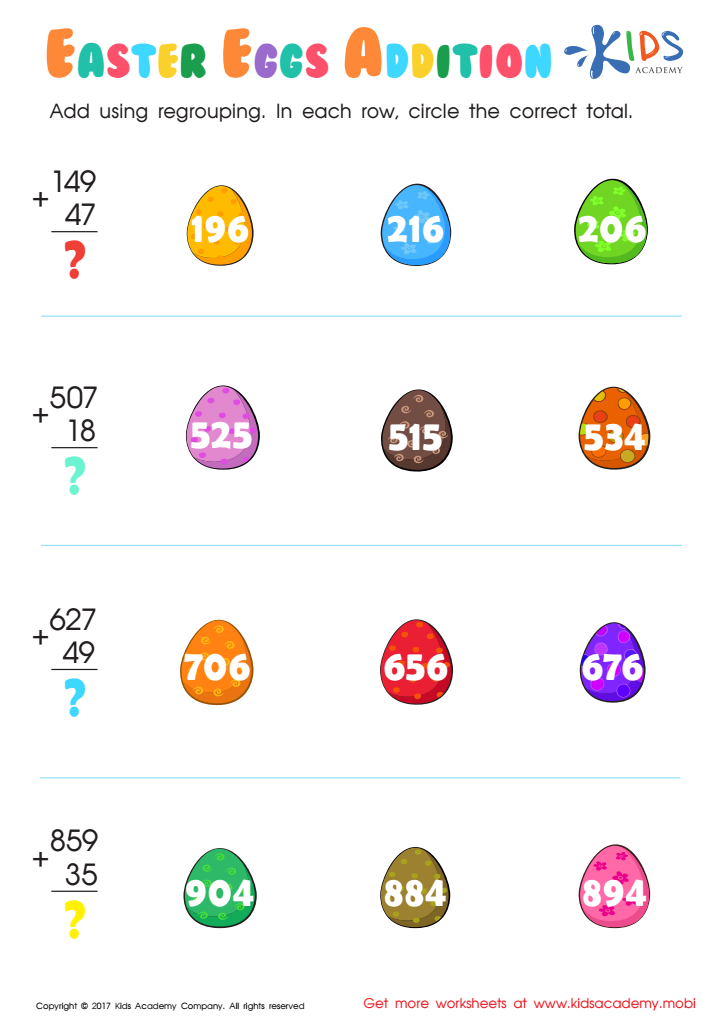
Addition with Regrouping Worksheet
 Assign to My Students
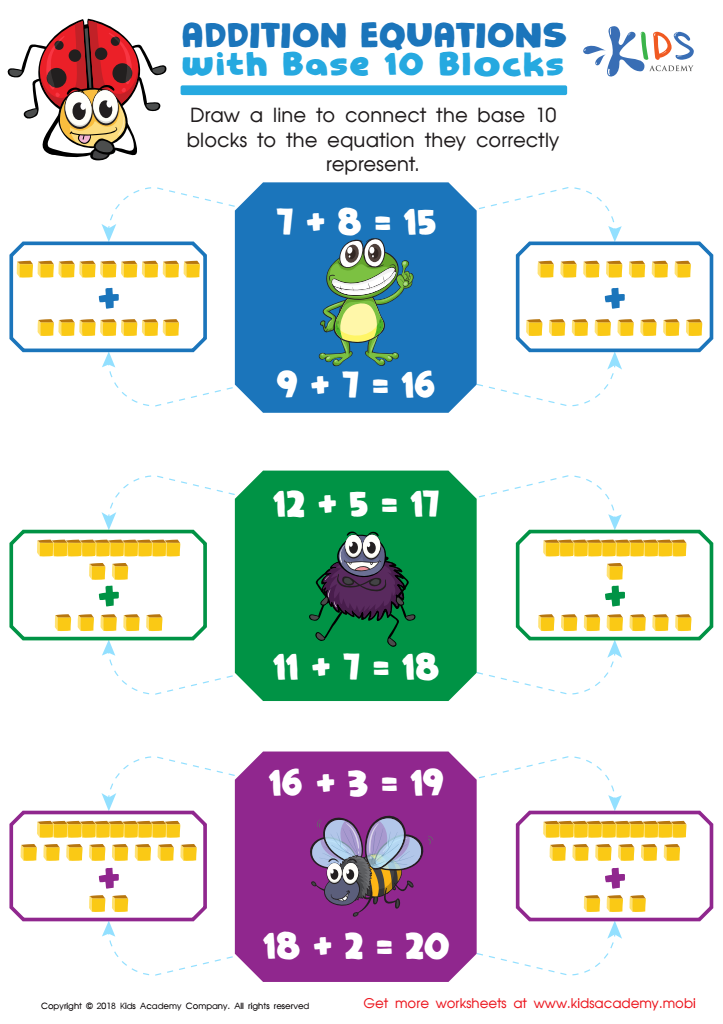
Addition Equations With Base 10 Blocks Worksheet
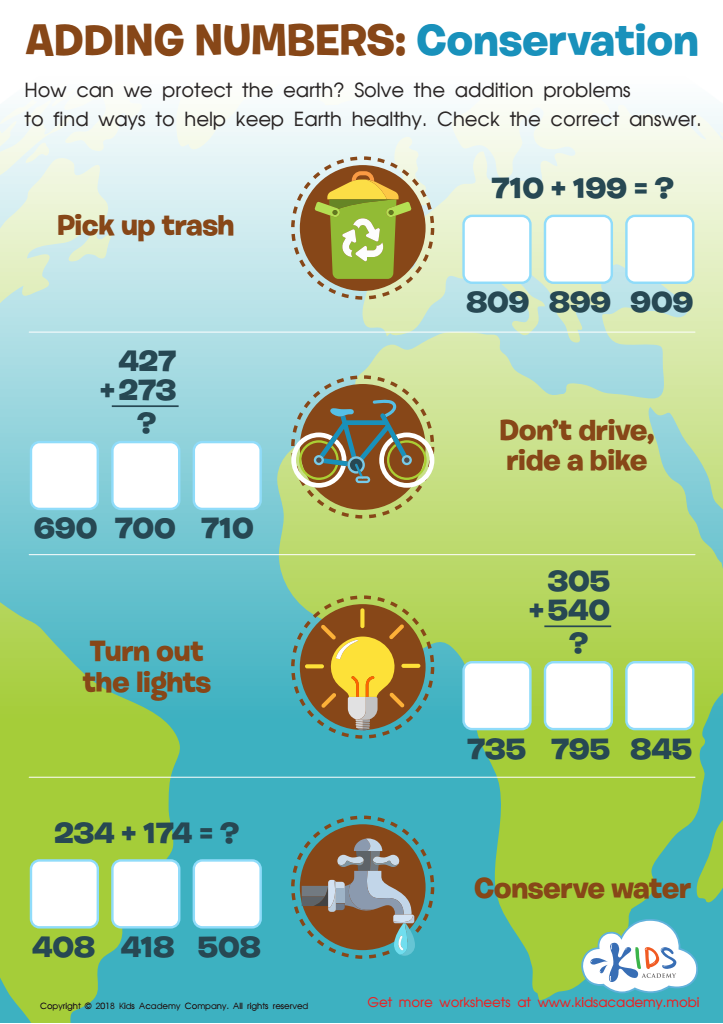
Adding Numbers: Conservation Worksheet








Problem-solving practice in normal addition and subtraction is crucial for children ages 7-9, as it lays the foundation for their mathematical understanding and critical thinking skills. At this age, children are transitioning from basic computation to applying mathematical concepts in real-life scenarios. By engaging in problem-solving activities, children develop a deeper understanding of numbers and how they relate to one another, enhancing their fluency in mathematics.
Moreover, these practices enable children to approach challenges methodically, fostering resilience and persistence. When educators and parents prioritize problem-solving, they inadvertently teach valuable life skills such as analytical thinking, decision-making, and the ability to evaluate different strategies, which have applications beyond mathematics.
Additionally, collaborative problem-solving can enhance communication skills and teamwork, helping children articulate their thought processes and reasoning. Teachers and parents can observe how children apply their knowledge, allowing for tailored support as needed. By fostering a supportive environment for problem-solving, caregivers contribute to building confidence in young learners, making them more likely to enjoy and succeed in mathematics and other academic disciplines. Ultimately, nurturing these skills at this pivotal age sets the stage for lifelong learning and adaptability in various contexts.








