Logical thinking development Normal Addition Worksheets for Ages 7-9
3 filtered results
-
From - To
Our Logical Thinking Development Normal Addition Worksheets for Ages 7-9 are expertly designed to enhance your child's addition skills in an engaging and effective way. These printable worksheets help young learners master the basics of addition while simultaneously boosting their logical thinking abilities. Each exercise encourages critical thinking, problem-solving, and mathematical reasoning, making learning both challenging and fun. Perfect for classroom activities or homeschool lessons, these worksheets offer a well-rounded approach to early math education. Foster your child's confidence and love for math with carefully structured addition exercises tailored to their learning level. Start your child’s journey to math success today!
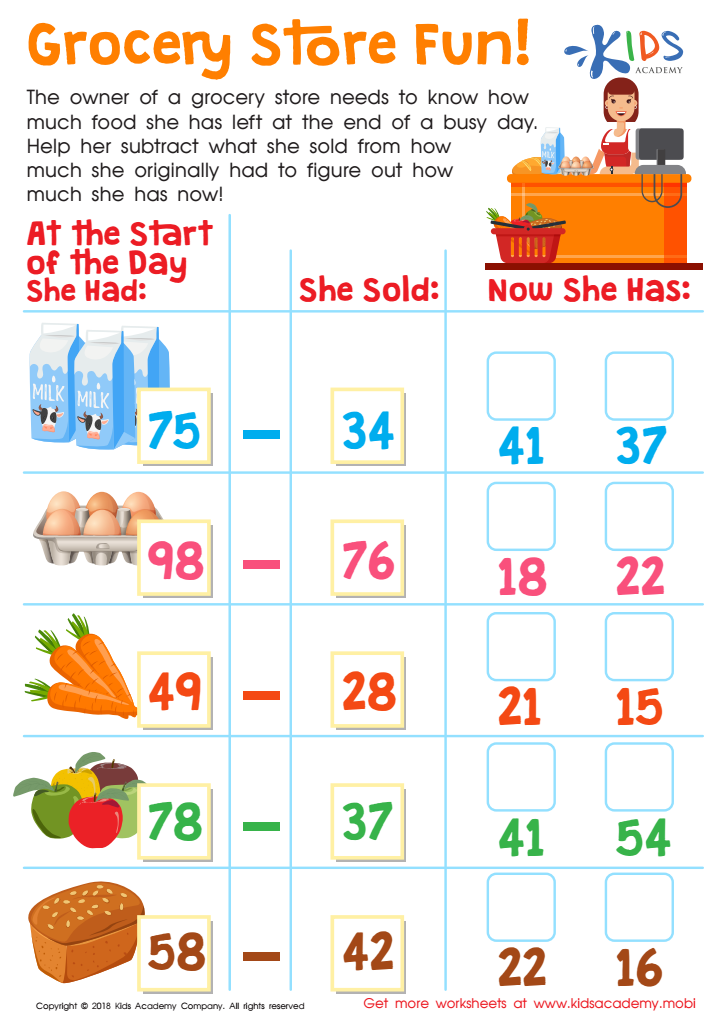
Grocery Store Fun! Worksheet
 Assign to My Students
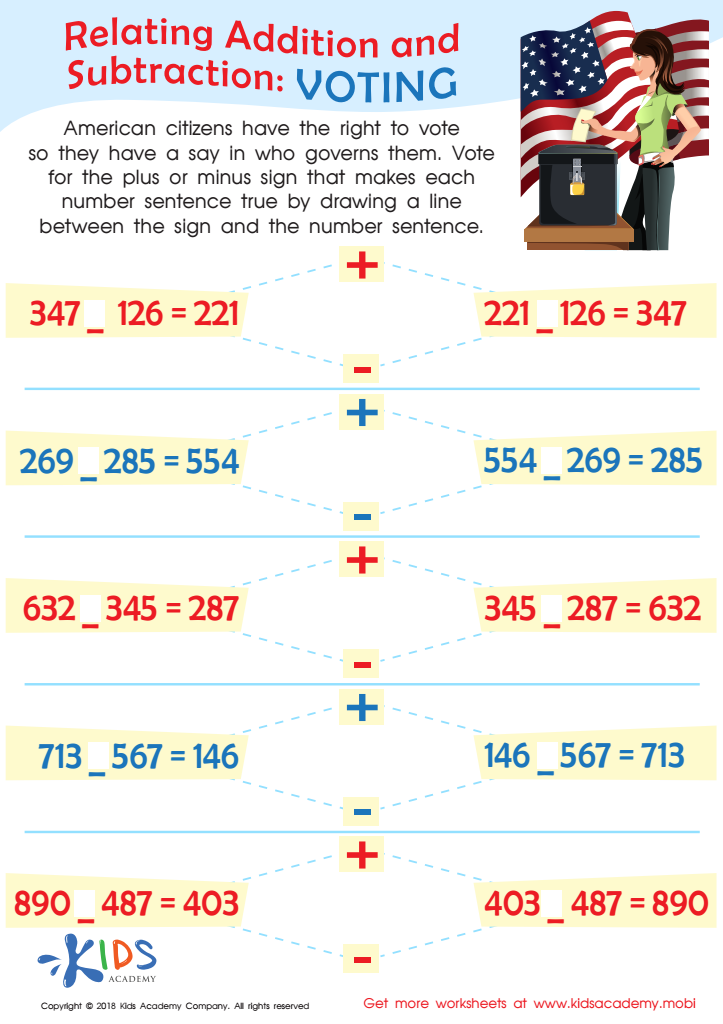
Voting Worksheet
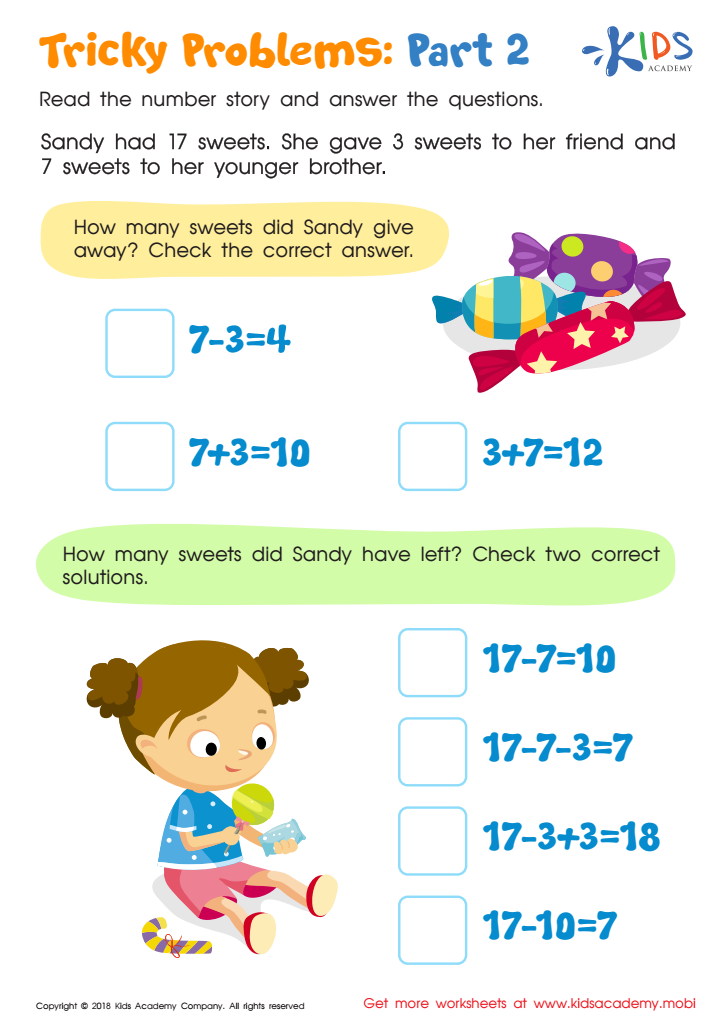
Tricky Problems Worksheet: Part 2








Logical thinking development and normal addition skills are foundational to a child’s overall cognitive growth, particularly for ages 7-9. During these years, children transition from concrete to more abstract reasoning. Parents and teachers should prioritize logical thinking because it empowers children to analyze situations, make sound decisions, and solve problems systematically.
Logical thinking underpins success not just in mathematics, but across all subject areas and everyday life. When children engage in logical reasoning, they learn to identify patterns, establish connections, and draw inferences, which are crucial skills for academic achievement and critical thinking.
Addition is often one of the first mathematical operations children learn, and mastering it paves the way for more complex arithmetic. It helps in developing number sense, understanding of relationships between numbers, and confidence in tackling math tasks. Furthermore, early proficiency in addition fosters a positive attitude towards learning mathematics, reducing math anxiety later in life.
By encouraging logical thinking and addition practice, parents and teachers equip children with tools for lifelong learning. These skills are fundamental to understanding cause and effect, following multi-step procedures, and handling higher-level math with ease. Overall, nurturing these abilities supports academic success and prepares children for real-world challenges, ensuring a well-rounded development.