Comparing Fractions Normal Numbers Worksheets for Ages 7-9
4 filtered results
-
From - To
Unlock the world of fractions with our engaging "Comparing Fractions" worksheets designed for children ages 7-9! These resources offer a fun and interactive way for young learners to develop essential math skills. Through colorful illustrations and varied exercises, kids will grasp the concept of comparing fractions, enhancing their ability to analyze and interpret numerical values effectively. Each worksheet encourages critical thinking and builds confidence in math, making learning enjoyable. Perfect for at-home practice or supplementary classroom activities, these worksheets provide a solid foundation in math literacy, helping students excel as they embark on their educational journey. Explore our collection today!
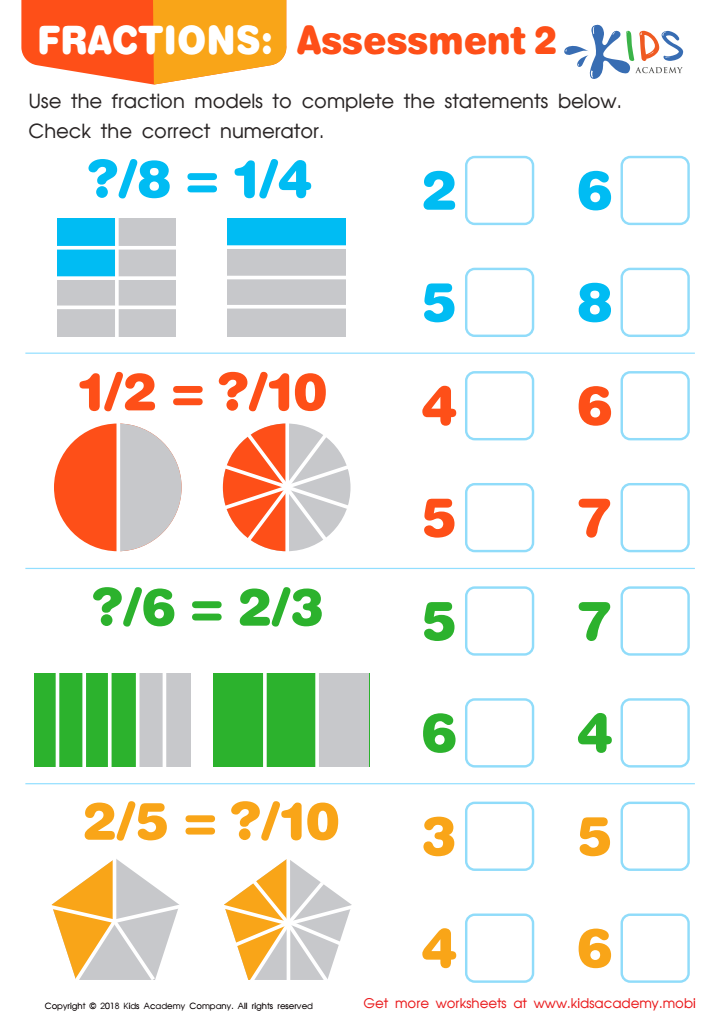
Fractions: Assessment 2 Worksheet
 Assign to My Students
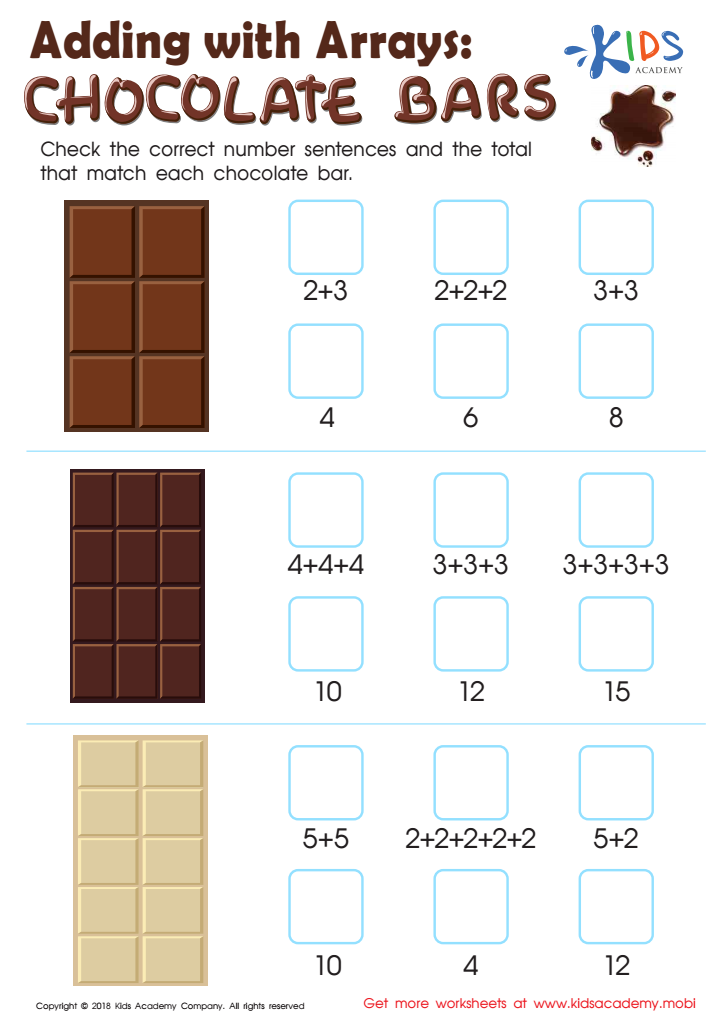
Adding with Arrays: Chocolate Bars Worksheet
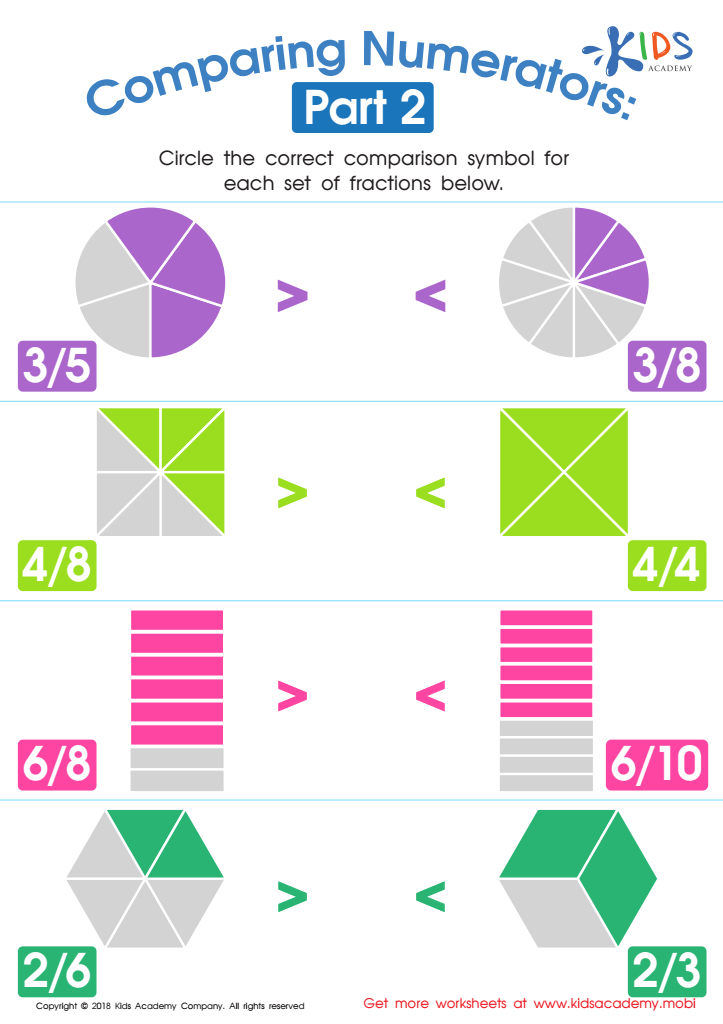
Comparing Numerators Part 2 Worksheet
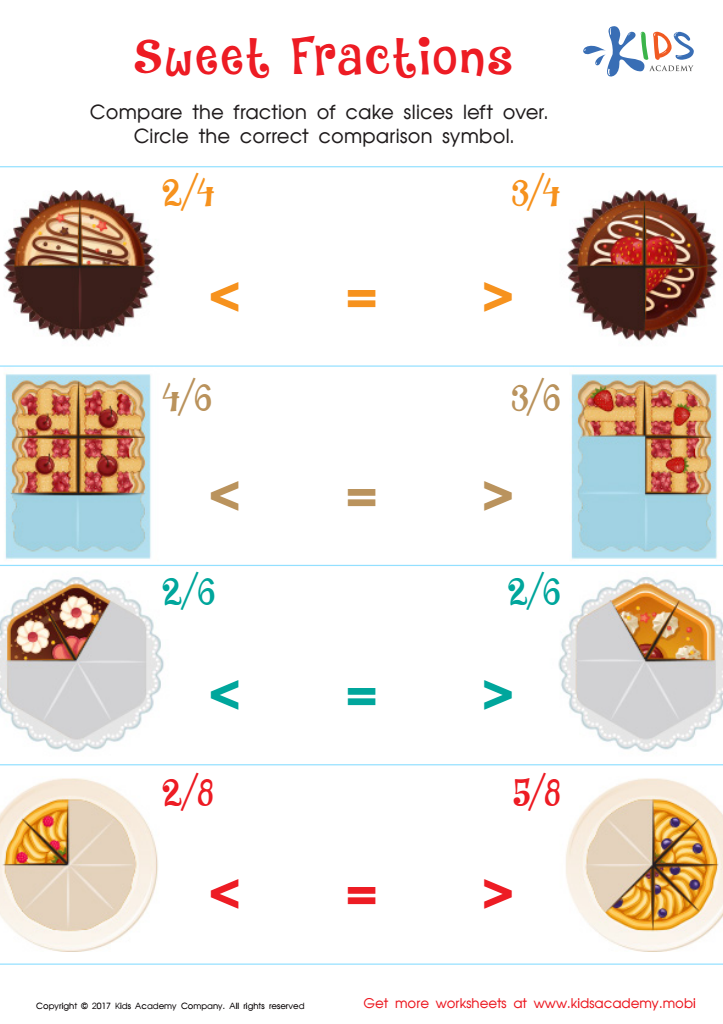
Compare Fractions Worksheet








Understanding how to compare fractions is an essential math skill for children aged 7-9 as it lays the foundation for more complex mathematical concepts. By learning to compare fractions, children not only develop number fluency but also enhance their critical thinking and problem-solving skills.
When parents and teachers emphasize the importance of comparing fractions, they enable children to grasp fundamental ideas about part-to-whole relationships. Young learners start to recognize that not all fractions are created equal and learn how to determine which fraction is larger or smaller. This skill has real-life applications, such as sharing food, measuring, or understanding time, making math relevant and engaging.
Furthermore, the process of comparing fractions encourages the development of reasoning abilities. Children learn how to utilize visual aids, like fraction strips or number lines, which fosters better conceptual understanding. Participating in discussions about why one fraction is greater can also promote communication skills.
In summary, focusing on comparing fractions helps children build confidence in math while equipping them with skills they will need in higher grades and everyday life. It empowers them to make informed choices and understand their world through a mathematical lens. Therefore, it is crucial for parents and teachers to prioritize this area of learning.








